Qualcomm Snapdragon X Plus vs X Elite – Consider Your Choice Carefully
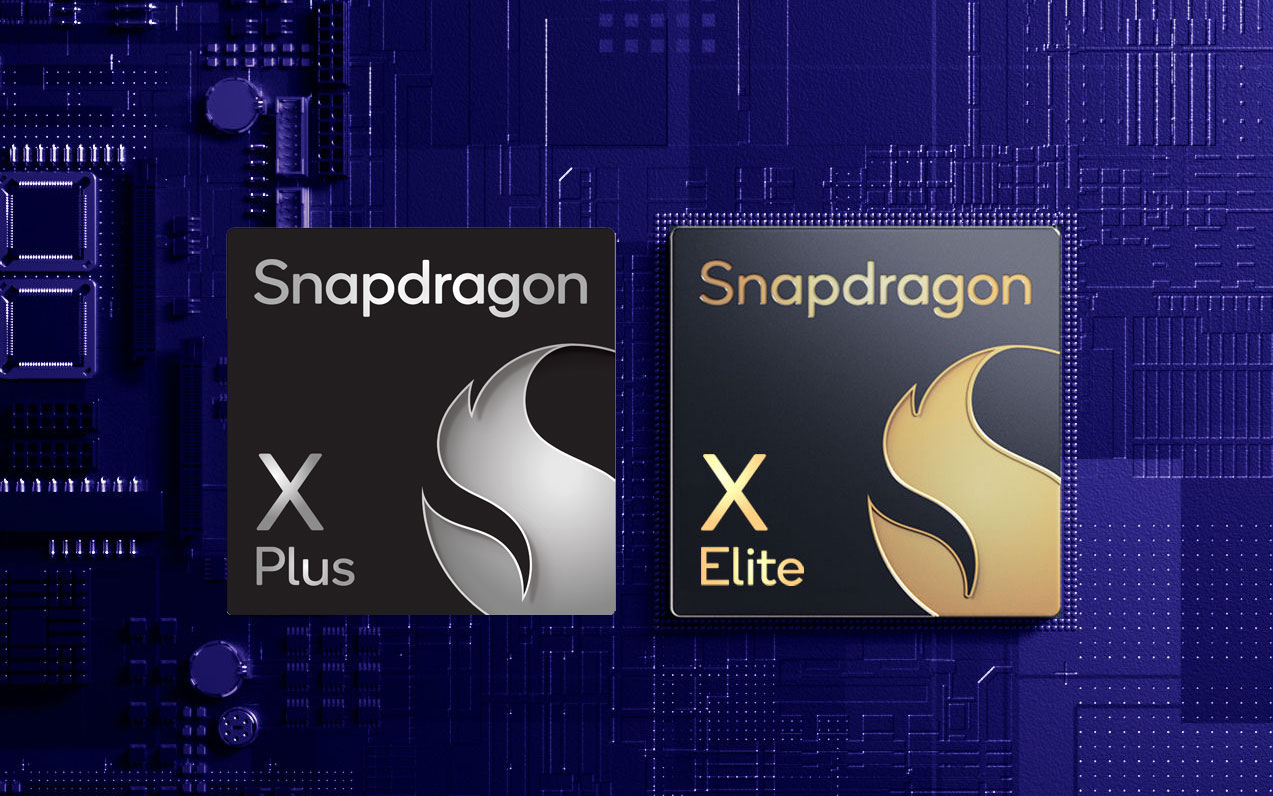 With Qualcomm becoming a major player in the laptop processor market, choosing between the Snapdragon X Plus and X Elite depends on your specific needs. Both processors offer strong AI capabilities, but they differ significantly in CPU and GPU performance, making one better suited for everyday tasks and the other a powerhouse for demanding workloads.
We’ve got the entry-level Snapdragon X Plus, and today we’re going to compare it to the entry-level X Elite.
However, as you’ll see in our Qualcomm Snapdragon X Showdown: Specs, Performance, and Differences article, the weakest X Elite isn’t far from the most powerful one.
Best offers for Qualcomm Snapdragon X Plus (X1P-42-100) laptops:

Best offers for Qualcomm Snapdragon X Elite (X1E-78-100) laptops:

Specs Comparison
| Processor | Qualcomm Oryon CPU | Qualcomm Adreno GPU | Qualcomm Hexagon NPU | Memory | |||
|---|---|---|---|---|---|---|---|
| Cores | Cache | Max frequency | Dual-core boost | TFLOPS | NPU TOPS | Type | |
| Qualcomm Snapdragon X Plus (X1P-42-100) | 8 | 30MB | 3.2 GHz | 3.4 GHz (Single-core) | 1.7 | 45 | LPDDR5x |
| Qualcomm Snapdragon X Elite (X1E-78-100) | 12 | 42MB | 3.4 GHz | None | 3.8 | 45 | LPDDR5x |
AI Performance
Both the Snapdragon X Plus and X Elite share the same Qualcomm Hexagon NPU, rated at 45 TOPS. However, in real-life benchmarks, there’s a slight difference in performance.
| Processor | Computer Vision Benchmark (INT8) |
| Qualcomm Snapdragon X Plus | 1722 |
| Qualcomm Snapdragon X Elite | 1674 |
While the X Plus edges out the X Elite in the Computer Vision Benchmark with a score of 1722 vs. 1674, the 2.8% difference can be attributed to the margin of error.
Both processors handle AI-related tasks efficiently and meet Microsoft’s Copilot+ PC requirements of 40 TOPS or more.
| Processor | NPU Performance (INT8 TOPS) | Copilot+ |
| Qualcomm Snapdragon X Plus | 45 TOPS | ✅ |
| Qualcomm Snapdragon X Elite | 45 TOPS | ✅ |
CPU Performance
When it comes to raw CPU power, the Snapdragon X Elite takes a commanding lead, particularly in multi-core tasks, making it more suitable for intensive workloads such as 3D rendering or video editing. Snapdragon X Elite shows a ~45% improvement in multi-core tasks over the X Plus. However, the difference in single-core performance is minimal, with the X Elite scoring 2462, only slightly ahead of the X Plus at 2408.
GPU Performance
For users interested in graphics-heavy applications or gaming, the X Elite offers substantially better performance than the X Plus. The Snapdragon X Elite’s GPU performance nearly doubles that of the X Plus in both benchmarks, making it a far better choice for gaming or rendering tasks.
However, the X Plus we’re testing (X1P-42-100) is significantly less powerful than the X1P-64 and X1P-66 which should perform similarly to the entry-level X Elite. It sounds a bit confusing but the table in our Qualcomm Snapdragon X Showdown: Specs, Performance, and Differences article will help you understand it better.
Conclusion
When to choose X Plus:
If you’re going to use your machine for everyday tasks, X Plus and X Elite will perform equally well but since X Plus is cheaper, it is the better option for you. Since they use the same Hexagon NPU, X Plus is the better variant for AI tasks as well.
When to choose X Elite:
For heavy work-related tasks like 3D Rendering or Video Editing, X Elite is the better option as it has 20% to 50% more cores, depending on the exact CPU variant.
Important:
As there are many differences between the different variants of X Plus and X Elite, check out our Snapdragon X Showdown before making your choice!
Best offers for Qualcomm Snapdragon X Plus (X1P-42-100) laptops:
Best offers for Qualcomm Snapdragon X Elite (X1E-78-100) laptops:
 Author: Simeon NikolovEditor-in-Chief at LaptopMedia.com with 20+ years of experience in testing and analyzing laptops and mobile devices.

![[May 2026] Global Ranking of Best-Selling Laptop GPUs on Amazon – Apple Dominates with 45% Share, Sweeps Top 3 Spots; NVIDIA’s RTX 5060 Leads the Dedicated GPU Pack](https://laptopmedia.com/wp-content/uploads/2026/06/Best-Selling-GPUs-GLOBAL-Top-10-400x225.jpg)
![[May 2026] Global Ranking of Best-Selling Laptop CPUs on Amazon – Apple Crushes Competition with 45.2% Market Share, M5 Dominates](https://laptopmedia.com/wp-content/uploads/2026/06/Best-Selling-CPUs-GLOBAL-Top-10-400x225.jpg)
![[May 2026] Amazon Germany: Top 7 Best-Selling Gaming Laptops – Lenovo Legion 5i Crowned Champion Amidst Fierce Mid-Range Competition](https://laptopmedia.com/wp-content/uploads/2026/06/Best-Selling-Gaming-Laptops-DE-Top-10-1-400x225.jpg)
![[May 2026] Amazon Italy: Top 10 Best-Selling Laptops – Apple MacBook Neo Reigns Supreme, Premium Models Capture Dominant Revenue Share](https://laptopmedia.com/wp-content/uploads/2026/06/Best-Selling-Laptops-IT-Top-10-400x225.jpg)
![[May 2026] Best-Selling Laptop Brands on Amazon Italy – Apple Dominates Across All Metrics](https://laptopmedia.com/wp-content/uploads/2026/06/IT-Best-Brands-400x225.jpg)