Juni 08, 2026
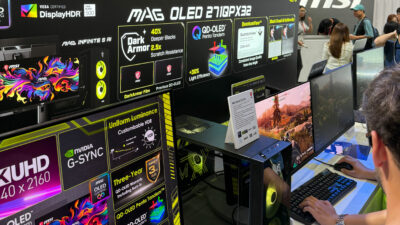
0De interessantste beeldschermen die we op COMPUTEX 2026 hebben gezien: OLED, 1000 Hz, Creator-schermen en hun valkuilen
Op COMPUTEX 2026 was er volop aandacht voor AI, nieuwe chips, gaminglaptops, handhelds en compacte werkstations. Maar enkele van de nuttigste hardware op de beursvloer was veel eenvoudiger te begrijpen: de beeldschermen. Dat is belangrijk…

Juni 06, 2026
0Samsung Display op COMPUTEX 2026: Snellere OLED, dunnere laptoppanelen en geen AI!
COMPUTEX 2026 stond bol van AI-branding. Op bijna elke stand stond wel een AI-demo, chip of workflow. Maar het is makkelijk om één simpele waarheid te vergeten: hoe slim de hardware ook is, het scherm…

November 18, 2024
29What is PWM, Why is it Important, and Why Did We Add This Test to Our Reviews?
Published: July 2015 Updated: November 2024 Perhaps you’ve noticed that the LaptopMedia team has started testing every laptop for Pulse-Width Modulation. PWM is used to regulate the brightness of LCD and LED displays. How does…
November 05, 2020
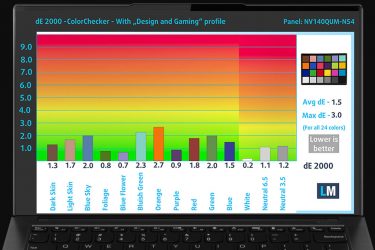
0Lenovo’s Yoga 9i (14) surprises us with one of the best displays that we’ve tested
While shopping for a new laptop, the screen isn’t the first thing that you think of. However, it’s one of the most important parts of the laptop, since it’s the thing that we look at…
Juli 11, 2018
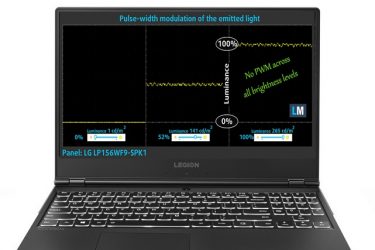
2Lenovo Legion Y530 is not PWM-adjusted across all brightness levels
As you may have read in our in-depth review, Lenovo Legion Y530 offers a pretty decent IPS panel with Full HD resolution, comfortable viewing angles, a good contrast ratio of 1100:1 and not bad maximum brightness…
Juni 06, 2018
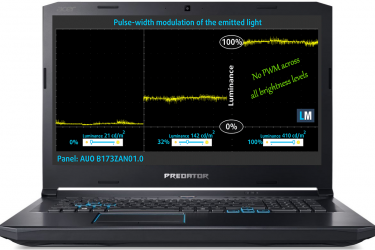
0Acer Predator Helios 500’s IPS display is PWM-free for all brightness levels
We are pleased to inform you that the gaming Acer Predator Helios 500 offers one of the best displays we have tested. It boasts a very high maximum brightness of 410 nits and a decent…
Mei 30, 2018
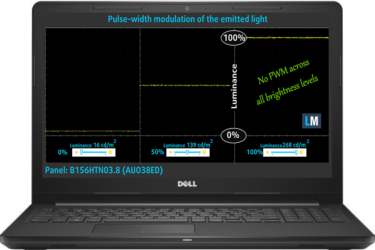
0Dell Inspiron 15 3576 is PWM-free for all brightness levels
In recent times, more and more users decide to rely on a laptop that doesn’t use PWM for regulating screen brightness. So we are pleased to inform you that not only does the Dell Inspiron 15…
Mei 26, 2018
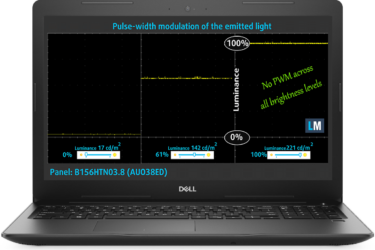
0Dell Latitude 15 3590 is PWM-free for all brightness levels making it safe to use for long hours
Nowadays, it has become of greater importance for the users that the laptop of their choice doesn’t use PWM for regulating screen brightness. We are pleased to confirm that this is exactly the case with Dell…
Mei 25, 2018
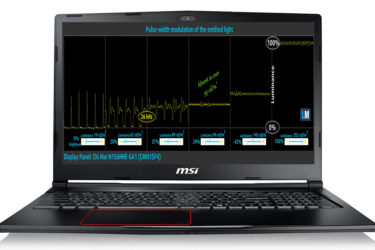
0MSI GE63VR 7RF Raider’s screen uses PWM under 28% brightness
The tests we conducted on the MSI GE63VR 7RF Raider show some good and some bad news. What you may find rather disturbing is that the panel uses PWM from 0 to 28% brightness, but here…
Mei 23, 2018
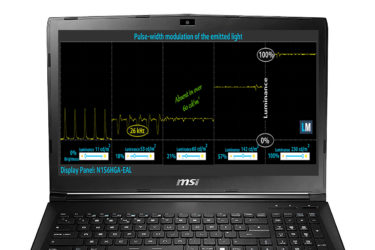
0MSI GL62M 7RDX uses PWM from 0 to 21% brightness
We put the MSI GL62M 7RDX to some tests in order to evaluate the quality of its screen and the results were both positive and negative. Unfortunately, the brightness level of the device is PWM-adjusted…
Mei 18, 2018
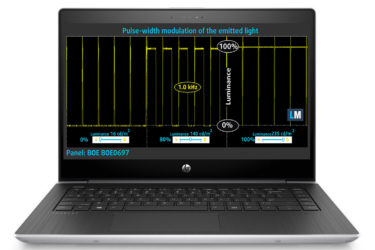
0HP ProBook 440 G5’s TN display doesn’t use PWM only at maximum brightness
We put the HP ProBook 440 G5 to several tests the results of which were rather contradictory. Starting with the bad news – the TN display uses PWM from 0 to 99% brightness that may cause unnecessary…
Mei 17, 2018
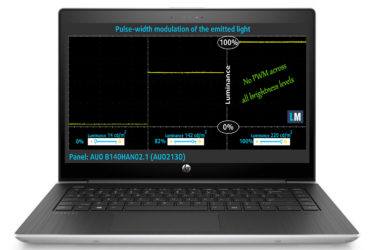
0HP ProBook 440 G5’s IPS display doesn’t use PWM so it’s safe to use for long hours of work
As you may have read in our in-depth review, HP ProBook 440 G5 comes with two display options and we are pleased to inform you that the configurations that sport an IPS panel not only offer great…
Mei 16, 2018
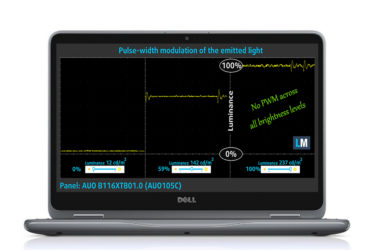
0Dell Inspiron 11 3179 is PWM-free so it’s safe to use for long hours
With each passing day more and more users decide to opt for a laptop which doesn’t use PWM for regulating screen brightness. We are pleased to confirm that this is exactly the case with Dell Inspiron…
Mei 10, 2018
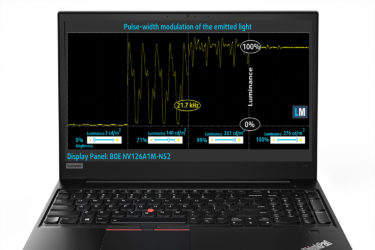
2The Lenovo ThinkPad E580 display doesn’t use PWM only at maximum brightness
The Lenovo ThinkPad E580 has undergone several tests the results of which are a rather mixed bag. Unfortunately, the panel uses pulse-width modulation for regulating the brightness of the screen resulting in the so-called flickering…
Mei 05, 2018
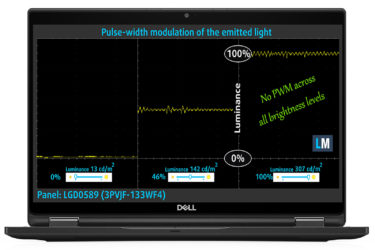
0The Dell Latitude 7390 2-in-1 is PWM-free for all brightness levels
We are pleased to inform you that the convertible Dell Latitude 7390 boasts a nice Full HD IPS touchscreen panel that offers comfortable viewing angles, high contrast ratio (1160:1) and 97% sRGB coverage. On top of that,…
April 05, 2018
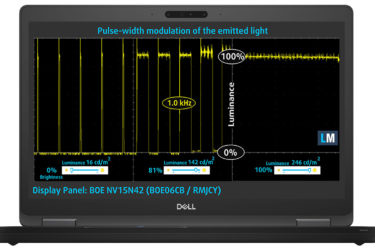
0The Dell Latitude 15 5590 display doesn’t use PWM only at maximum brightness
The results regarding Dell’s Latitude 15 5590 screen quality just came and we have some disturbing news for you. Unfortunately, the panel uses pulse-width modulation for regulating the brightness of the screen resulting in the so-called…
April 04, 2018
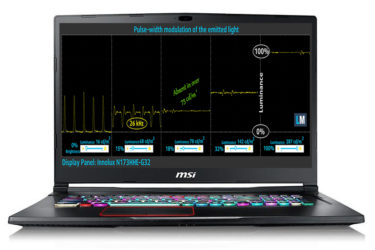
0The MSI GE73VR 7RF doesn’t use PWM above 17% brightness
We put the MSI GE73VR 7RF to some tests in order to evaluate the quality of its screen and the results were a rather mixed bag. Unfortunately, the brightness level of the device is PWM-adjusted from…
March 28, 2018
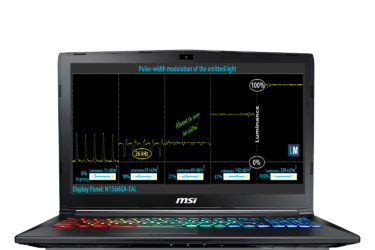
0MSI GP62M 7REX Leopard Pro uses PWM from 0 do 21% brightness
The results we got from the conducted tests regarding the MSI GP62M 7REX Leopard Pro screen quality show that the panel uses PWM from 0 to 21% brightness. However, there is also some good news – the display…
March 27, 2018
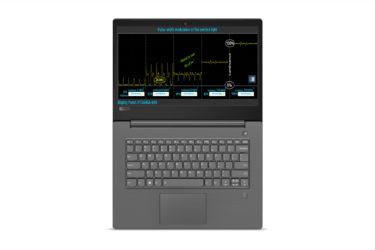
0Lenovo V330 uses high-frequency PWM so it’s relatively safe for extended periods of use
Results from our tests regarding the screen of Dell Latitude 15 3570 just came in and we have some good and some bad news. The bad is that the display is PWM-adjusted from 0 to…
March 26, 2018
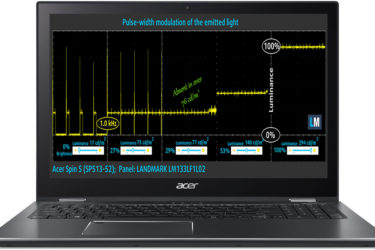
0Acer Spin 5 (SP513-52) uses PWM from 0 to 28% brightness
The results we got from the conducted tests regarding the Acer Spin 5 (SP513-52) screen quality show that the panel uses PWM from 0 to 28% brightness which translates into 76 nits of luminance. This means that you won’t…


![[september 2026] Bestverkochte laptopmerken op Amazon Global – Apple domineert de markt met een omzetaandeel van meer dan 70%](https://laptopmedia.com/wp-content/uploads/2026/10/GLOBAL-Best-Brands-400x225.jpg)
![[september 2026] Amazon Global: Top 10 bestverkochte laptops – Apple’s MacBook Neo staat op nummer 1, terwijl budget- en premiummodellen de markt domineren](https://laptopmedia.com/wp-content/uploads/2026/10/Best-Selling-Laptops-GLOBAL-Top-10-400x225.jpg)
![[september 2026] Amazon Global: Top 10 van best verkochte gaminglaptops – ASUS ROG Strix G16 domineert de markt met een recordaantal verkochte exemplaren](https://laptopmedia.com/wp-content/uploads/2026/10/Best-Selling-Gaming-Laptops-GLOBAL-Top-10-400x225.jpg)
![[september 2026] Wereldwijde ranglijst van bestverkochte laptop-GPU’s op Amazon – De M5-chip van Apple laat NVIDIA ver achter zich in de categorie premium-laptops, maar de RTX 5060 is de enige speciale GPU die de top 10 weet te halen](https://laptopmedia.com/wp-content/uploads/2026/10/Best-Selling-GPUs-GLOBAL-Top-10-400x225.jpg)
![[september 2026] Wereldwijde ranglijst van bestverkochte laptop-CPU’s op Amazon – Apple’s M5 verslaat Intel ruimschoots nu de premiummarkt een eenzijdige strijd is geworden](https://laptopmedia.com/wp-content/uploads/2026/10/Best-Selling-CPUs-GLOBAL-Top-10-400x225.jpg)
