Can an Integrated GPU BEAT the NVIDIA GeForce RTX 5060?
 For years, “integrated graphics” meant “don’t even try to play games on it”. If you wanted real gaming performance from a laptop, you needed a dedicated graphics card, along with the extra weight, heat, and shorter battery life that come with it.
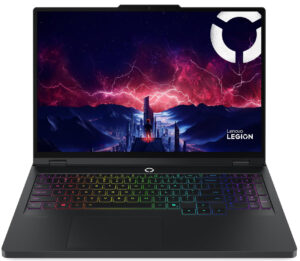
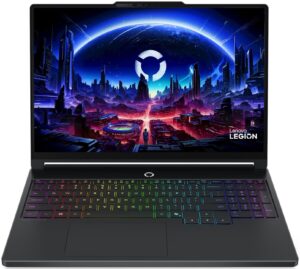
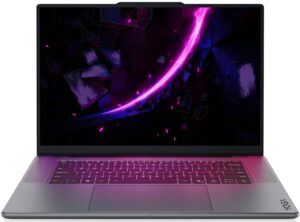
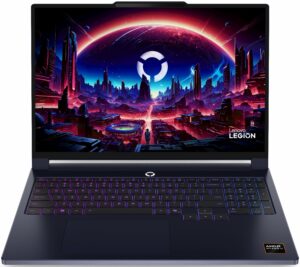
Our latest review suggests that this rule no longer holds. The Lenovo Legion 7a (15″, Gen 11) (detailed review) has no dedicated GPU at all. Instead, it relies on the AMD Radeon 8060S built into its Ryzen AI Max+ processor. In our 3DMark Time Spy test, it scored higher than the GeForce RTX 5060 in its 16-inch sibling, the Lenovo Legion 7a (16″, Gen 11) (detailed review).
So, can an integrated GPU really beat an RTX 5060? The short answer: in 3DMark, sometimes. In games, not yet. Here is the longer one.
Contents
What is the Radeon 8060S?
 The Radeon 8060S is the integrated GPU of AMD’s Ryzen AI Max+ processors, including the Ryzen AI Max+ 395, 392, and 388. It uses the RDNA 3.5 architecture and has 40 Compute Units (2,560 shaders). For comparison, the Radeon 890M in AMD’s regular Ryzen AI 9 HX processors has 16 Compute Units. In our 3DMark Time Spy (Graphics) results, the Radeon 8060S is more than three times faster than the 890M. There is also a cut-down Radeon 8050S with 32 Compute Units, which you will find in the Ryzen AI Max 390 and 385.
The 8060S has no memory of its own. It shares the system RAM, which is LPDDR5X-8000 on a 256-bit bus. That gives it about twice the memory bandwidth of typical integrated graphics (256 GB/s), although it is still below the 384 GB/s of the RTX 5060’s dedicated 8GB of GDDR7. In return, it can use much more memory than 8GB. AMD allows these systems to assign a large part of their RAM to graphics, up to 96GB on machines with 128GB. This matters more for local AI models than for games. The catch is that the RAM is always soldered, so you have to choose the right capacity when you buy the laptop.
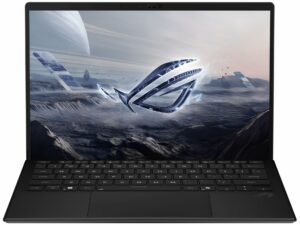
Last year, the Radeon 8060S in the ASUS ROG Flow Z13 GZ302 (detailed review) was challenging the RTX 4060. Now it’s the RTX 5060’s turn.
3DMark: Right in the RTX 5060 pack
In 3DMark Time Spy (Graphics), the Legion 7a (15″) scored 11,530 points. That is practically identical to the 11,520-point average of the 22 RTX 5060 laptops in our Top Laptop Graphics Ranking. More specifically, it is:
— 8% faster than the slim, power-limited RTX 5060 in the Lenovo Legion 7a (16″, Gen 11) (detailed review)
— about 10% slower than the full-power RTX 5060 in the Lenovo Legion 5i (15″, Gen 11) (detailed review)
— ahead of 9 of the 22 RTX 5060 laptops we have tested so far
The laptop around the GPU matters just as much as the GPU itself. The Radeon 8060S average in our ranking is lower (10,928 points), because it also includes the ROG Flow Z13, a tablet with much less room for cooling, which scored 10,325 points. RTX 5060 laptops show the same effect: our results range from 8,956 to 12,907 points, depending on the power limit and cooling.
➡️ To the full Top Laptop Graphics Ranking ⬅️
परिणाम 3DMark Time Spy (Graphics) से हैं। उच्चतर बेहतर है।


परिणाम 3DMark Wild Life Extreme Unlimited से हैं। उच्चतर बेहतर है।
Games: Close, but the RTX 5060 stays ahead
Synthetic benchmarks are one thing, but games are what matters. Here is how the Legion 7a (15″) compares to the two RTX 5060 laptops we just mentioned, using the same games and settings at 2560 x 1600.
| Game and preset (1600p) | Legion 7a (15″, Gen 11) Radeon 8060S | Legion 7a (16″, Gen 11) RTX 5060 (slim) | Legion 5i (15″, Gen 11) RTX 5060 (full power) |
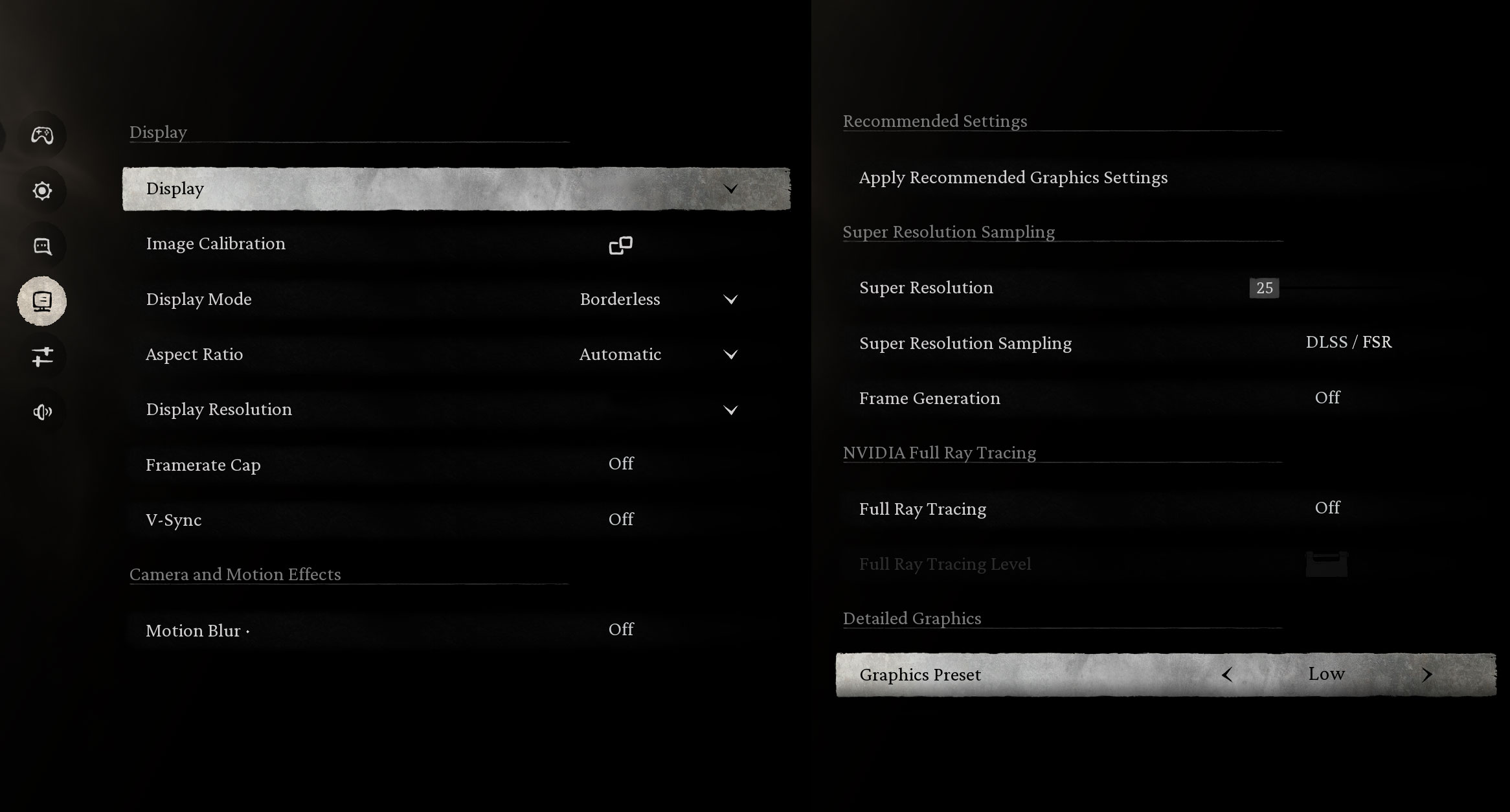
| Black Myth: Wukong, Low (Check settings) | 155 FPS | – | 157 FPS |
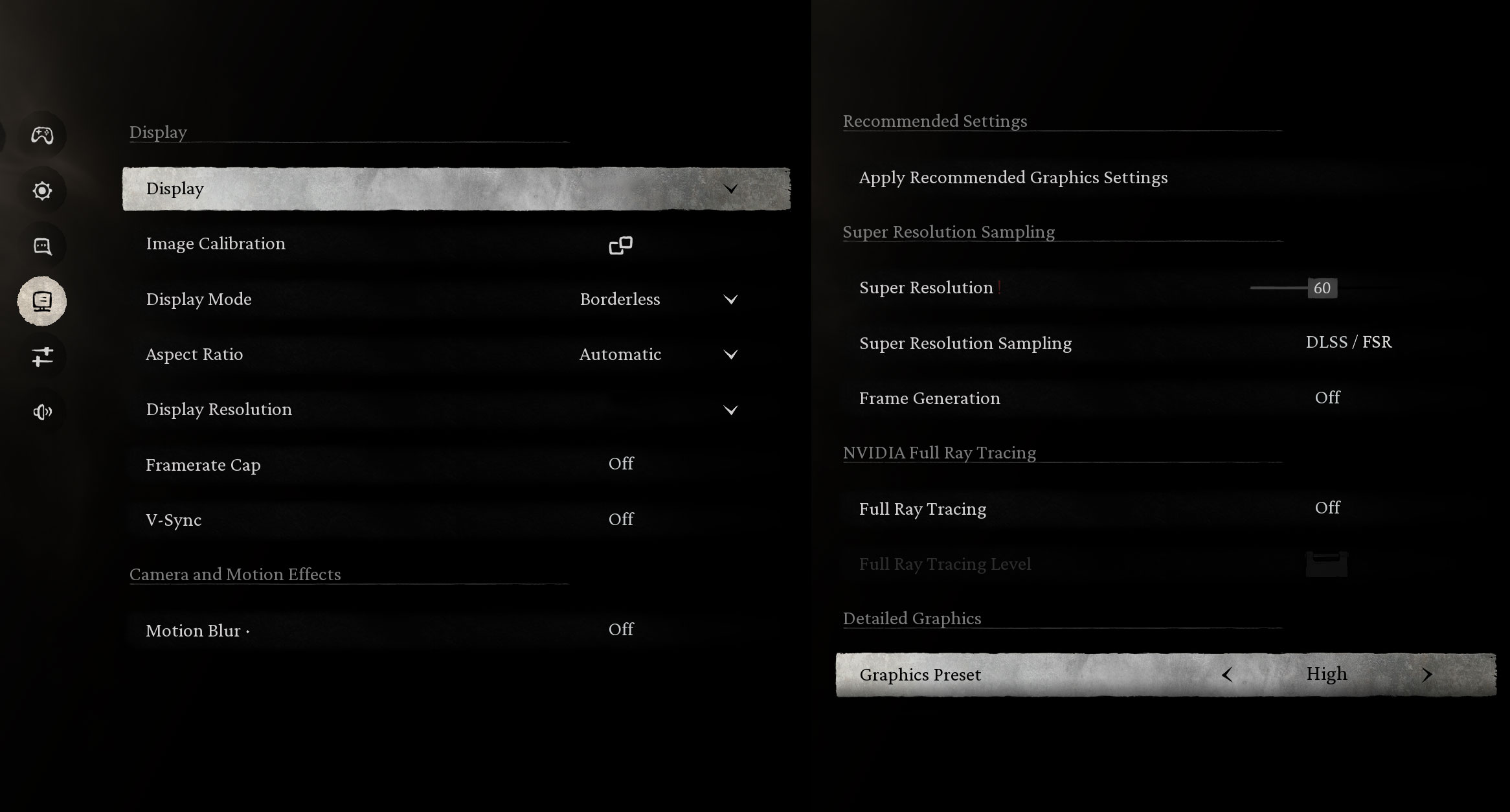
| Black Myth: Wukong, High (Check settings) | 67 FPS | – | 75 FPS |
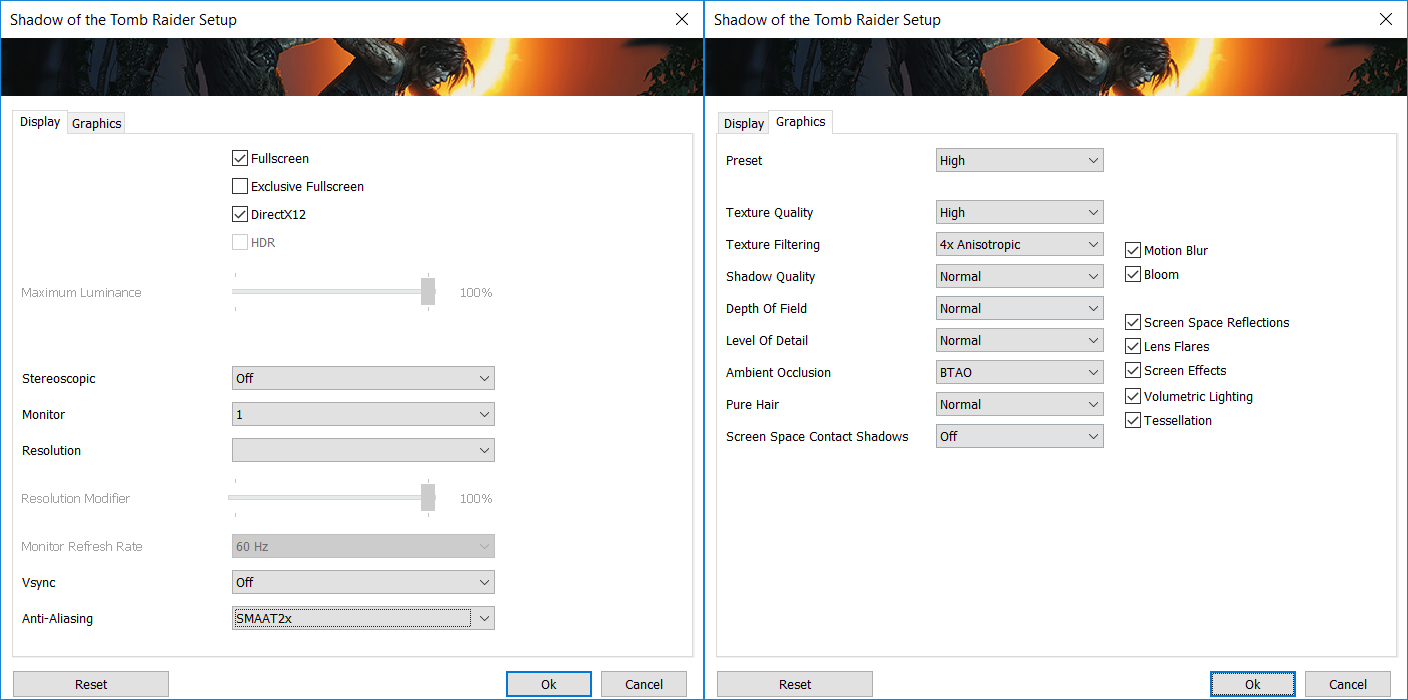
| Shadow of the Tomb Raider, High (Check settings) | 89 FPS | 96 FPS | 112 FPS |
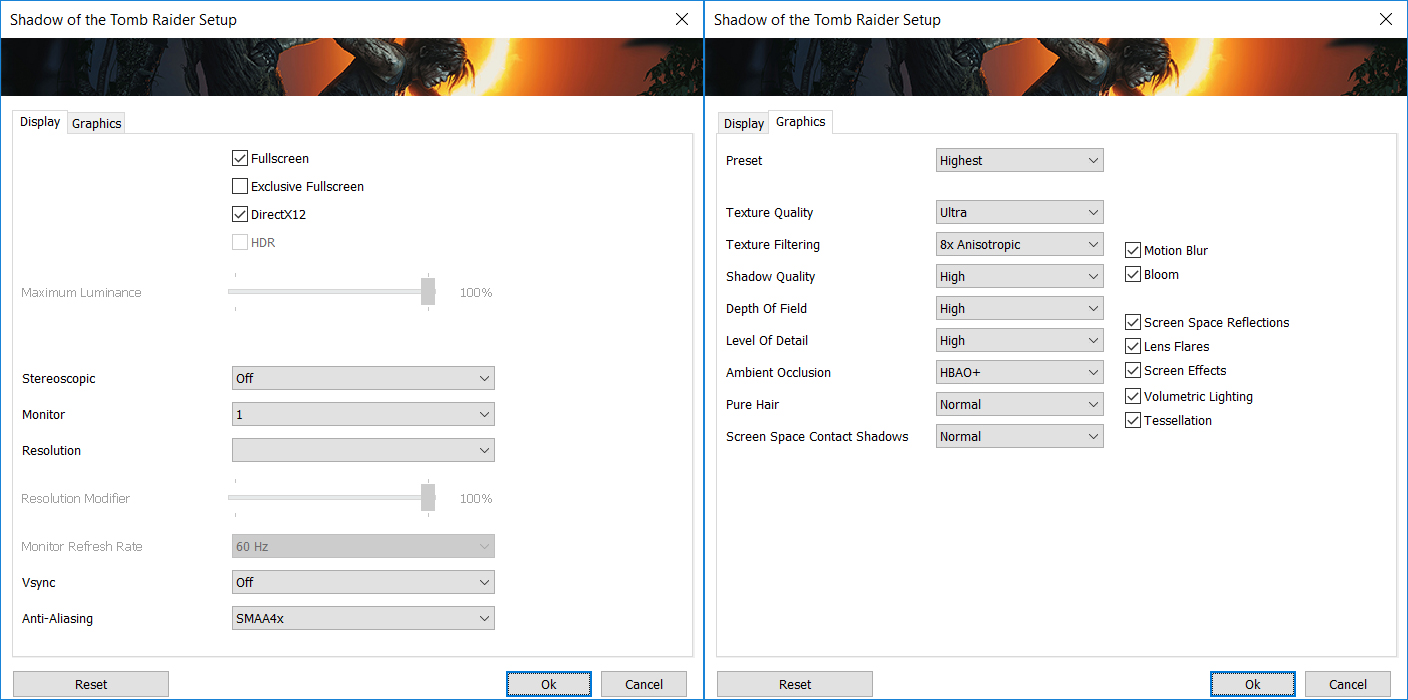
| Shadow of the Tomb Raider, Highest (Check settings) | 52 FPS | 65 FPS | 70 FPS |
In games, the picture changes. In Shadow of the Tomb Raider, the Radeon 8060S is 7% slower than the slim RTX 5060 on High and 20% slower on Highest, even though it beat the same laptop in 3DMark. Against the full-power RTX 5060 in the Legion 5i, it is 21% to 26% slower. In Black Myth: Wukong, the gap shrinks to 11% on High, and on Low the two laptops are practically tied. That preset renders the game at only 25% of the resolution and upscales it, so the GPU matters much less there.
The other RTX 5060 laptops we have tested at 1600p show the same pattern. Keep in mind that these are complete laptops with different processors and power limits, not isolated graphics cards.
🟢 Where the RTX 5060 wins
— Games. As the results above show, the RTX 5060 is still faster in real games, especially in laptops that give it full power.
— Price. RTX 5060 laptops start at under $1,000 in our Specs System, while the cheapest Radeon 8060S laptop we currently track costs more than $2,100 (US prices at the time of writing).
— DLSS 4 and Multi Frame Generation. NVIDIA’s upscaling and frame generation are supported by many recent games. The Radeon 8060S relies on AMD FSR instead.
— Ray tracing and CUDA. NVIDIA’s ray-tracing hardware is stronger, and many creative and AI applications are built around CUDA.
— Upgradeable RAM. Many RTX 5060 laptops, including the Legion 5i, use SO-DIMM slots. Radeon 8060S laptops always have soldered memory.
🔴 Where the Radeon 8060S wins
— Size and weight. The Legion 7a (15″) is less than 16 mm thick and, according to Lenovo, weighs under 1.55 kg, which is rare for a laptop with this level of graphics performance.
— Battery life. It lasted 9 hours and 34 minutes in our video playback test, compared to 5 hours and 19 minutes for the RTX 5060 Legion 7a (16″). Both have 84Wh batteries, although the different displays also play a role.
— Memory for AI. Radeon 8060S laptops come with up to 128GB of RAM, and the GPU can use a large part of it. The RTX 5060 is limited to its 8GB of VRAM.
— Stable performance. In our one-hour gaming stability test, the 8060S in the Legion 7a held an average of 2,393 MHz with almost no fluctuation.
So, can an integrated GPU beat an RTX 5060?
In synthetic benchmarks, yes. A well-cooled Radeon 8060S matches the average RTX 5060 laptop in 3DMark and beats slim, power-limited ones. In real games, it is not quite there yet: in our tests, it trailed the slim RTX 5060 by 7% to 20% and the full-power one by up to 26%. That is still a remarkable result for integrated graphics.
It doesn’t make the RTX 5060 obsolete, though. If you want the most FPS for your money, a laptop with a dedicated RTX 5060 is the better buy: it is faster in games, costs much less, and gives you DLSS 4. The Radeon 8060S makes sense if you want solid gaming performance in a thin and light laptop with long battery life, or a lot of graphics memory for local AI.
In our Specs System, the Radeon 8060S currently appears in these series:
— Lenovo Legion 7a (15″, Gen 11)
— ASUS ROG Flow Z13 GZ302
— ASUS TUF Gaming A14 (FA401, 2026)
— ASUS ProArt PX13 (HN7306), including the GoPro Edition
— HP ZBook Ultra G1a
Here are all laptops with Radeon 8060S in our Specs System:

 Author: Simeon NikolovEditor-in-Chief at LaptopMedia.com with 20+ years of experience in testing and analyzing laptops and mobile devices.