RTX Spark at COMPUTEX 2026: The Most Interesting AI PC Story Was Not Just About TOPS
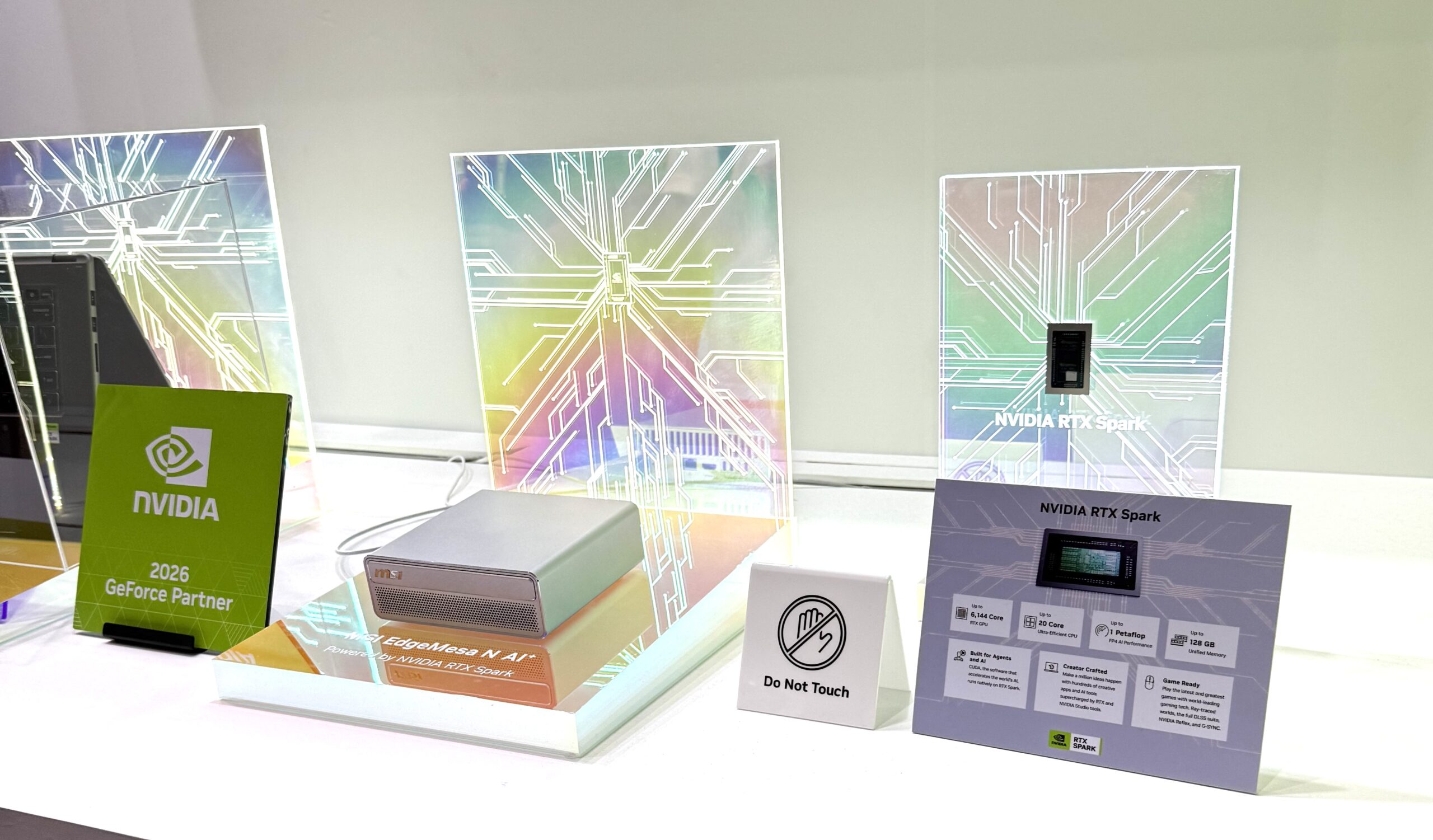 AI PCs were everywhere at COMPUTEX 2026, but most of the messaging sounded familiar: more TOPS, more AI features, more local assistants, and more productivity claims. NVIDIA RTX Spark stood out because the story was not only about one bigger number.
The interesting part is the platform idea. RTX Spark brings together an Arm-based NVIDIA Grace CPU, a Blackwell RTX GPU, a large unified memory pool, and the RTX / CUDA software ecosystem in Windows laptops and compact desktops. That makes it one of the more serious AI PC stories from the show, especially for creators, developers, and users who want heavier local AI workloads without relying on the cloud for everything.
Read our COMPUTEX 2026 recap here:
The Most Interesting Laptop and PC Hardware We Saw at COMPUTEX 2026
Why RTX Spark attracted attention
The AI PC market is already crowded with NPU claims, but many of those claims are hard to connect to real work. RTX Spark is different because it is a full platform built around CPU, GPU, memory, software acceleration, and Windows on Arm.
Real AI and creator workloads are rarely limited by one metric. Local language models need enough memory. Video and image tools need GPU acceleration. 3D workflows need driver and software support. Developers need frameworks that actually work. A fast chip is useful, but a fast chip without software support becomes a demo machine.
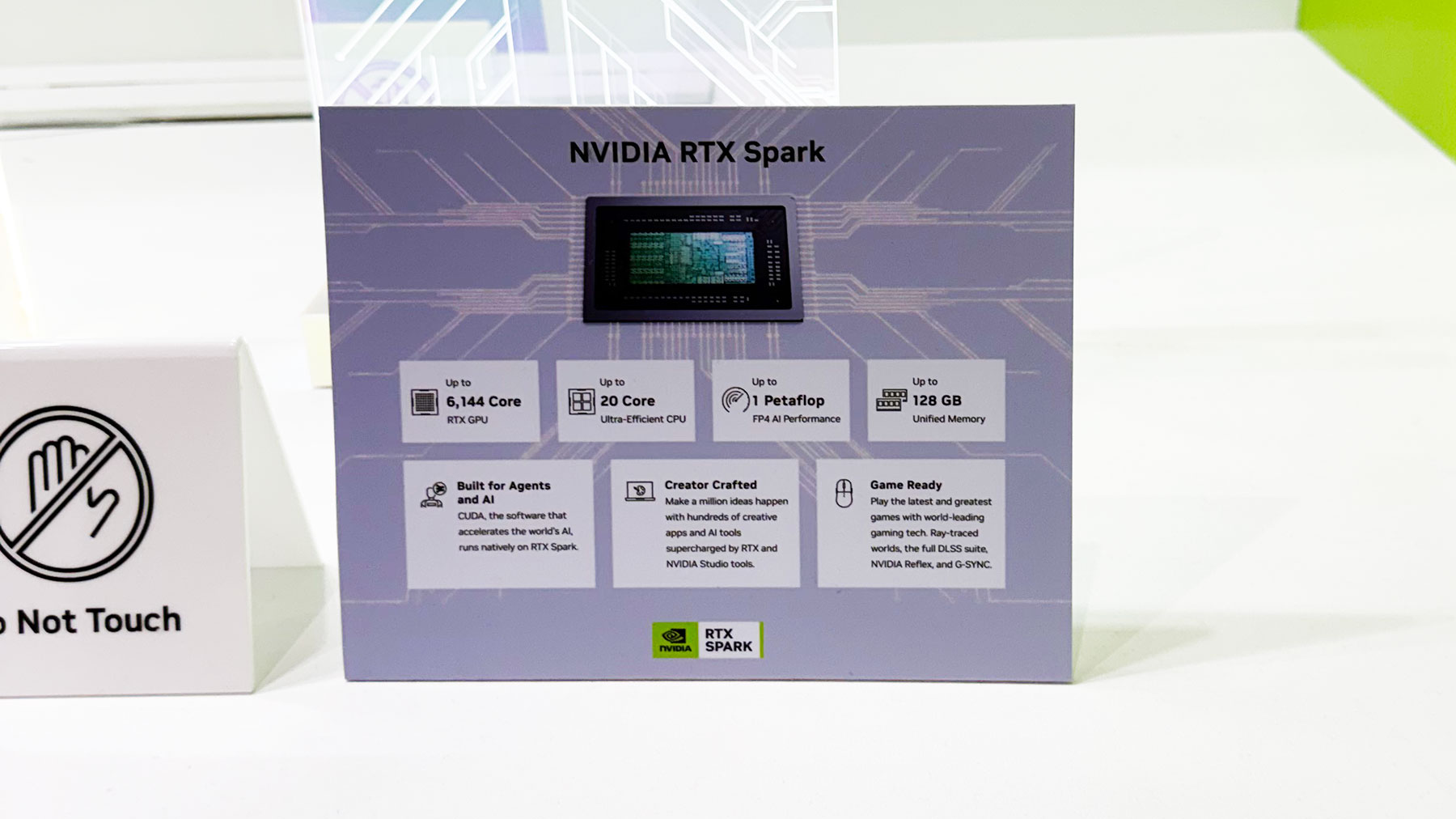
| Platform | NVIDIA RTX Spark |
| CPU | 20-core NVIDIA Grace CPU |
| GPU | NVIDIA Blackwell RTX GPU |
| CUDA cores | 6144, according to partner materials |
| Tensor Cores | 5th Gen Tensor Cores with FP4 support |
| Memory | Up to 128GB unified LPDDR5X memory |
| AI performance | Up to 1 petaflop FP4 AI performance, according to NVIDIA / partners |
| Software ecosystem | RTX, CUDA, TensorRT, OptiX, NVIDIA Studio, AI frameworks, and RTX-accelerated creator tools |
| Main target | Local AI, creator workflows, developers, compact workstations, and premium Windows laptops |
Unified memory may matter more than the headline TOPS
TOPS are easy to advertise, but they do not tell the full story. For local AI work, memory can become the real limit very quickly. A model can be theoretically supported by the compute hardware and still feel impractical if it does not fit comfortably in memory, if it needs too much data movement, or if performance drops under sustained load.
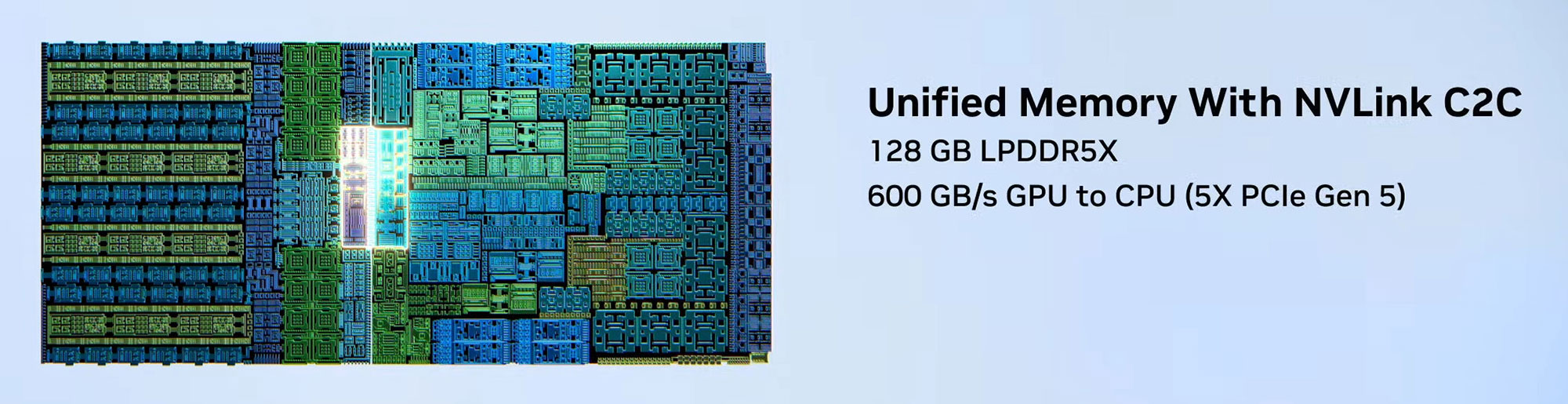
This is why the up to 128GB unified memory configuration is one of the most important parts of RTX Spark. CPU and GPU access to a large shared memory pool can help with workloads such as local LLMs, AI agents, large 3D scenes, AI-assisted video workflows, and heavy creator projects.
That does not automatically make every RTX Spark laptop a portable AI workstation. Thermals, memory bandwidth, model format, quantization, software support, and sustained power still matter. But the architecture is more interesting than a normal “AI PC” sticker because it addresses one of the real problems: fitting larger workloads into a portable machine.
Creator laptops may benefit first
RTX Spark makes the most sense where users already have heavy local workloads. That is why creator laptops are a more convincing starting point than generic productivity machines. Creators and developers already use tools that can benefit from GPU acceleration and large memory pools: video editing, 3D rendering, AI image generation, AI video tools, coding assistants, local document processing, media organization, and model experimentation. In those workflows, local compute can save time, protect data, and reduce dependence on cloud services.
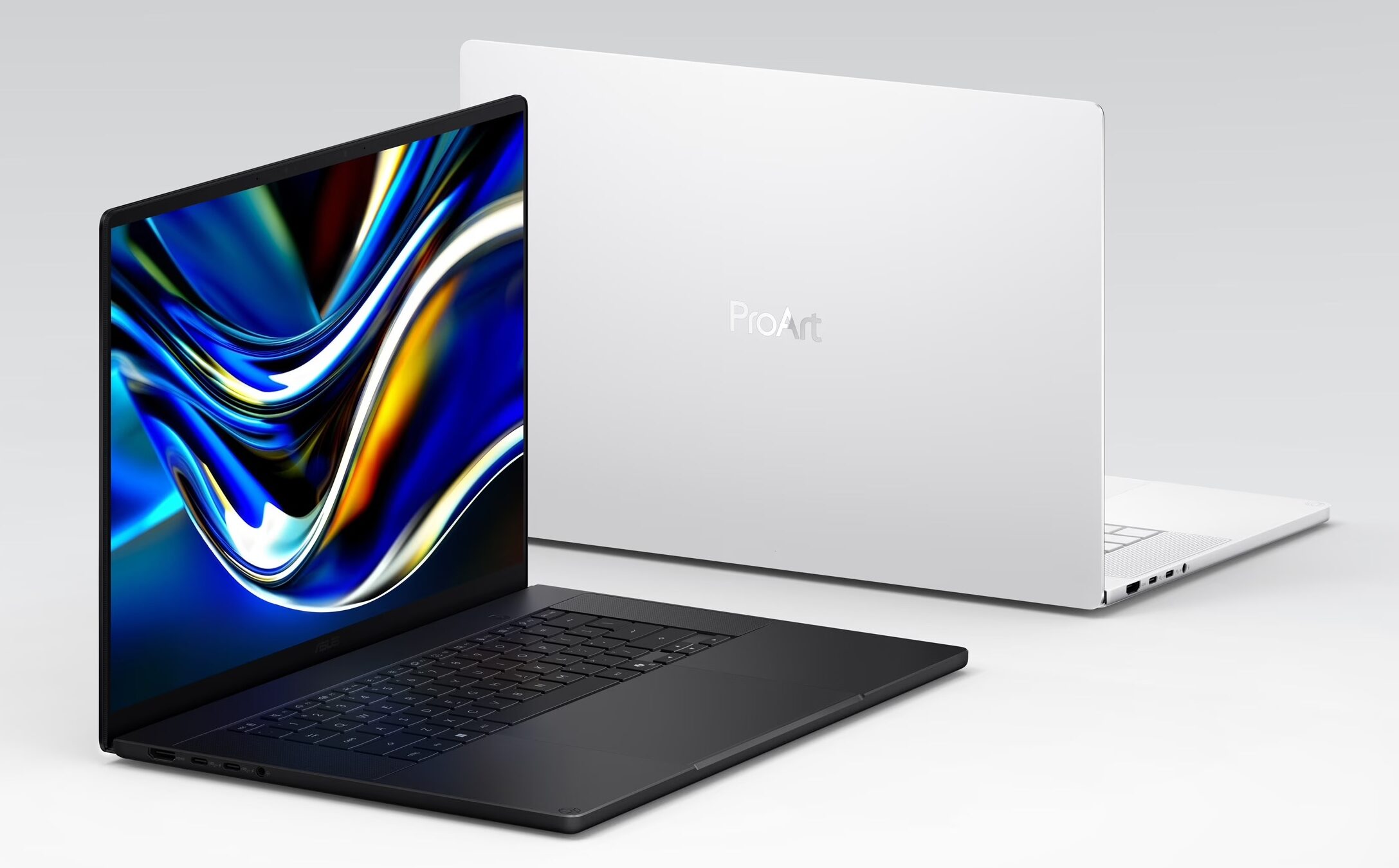
ASUS ProArt and MSI Prestige are good examples – they are machines aimed at people who may actually have a reason to use local AI and GPU acceleration every day.
Learn more about the new ASUS ProArt here: ASUS ProArt at COMPUTEX 2026: 128GB Unified Memory, OLED Displays, and Local AI
Learn more about the new MSI Prestige here: MSI Brought a Dragon Laptop to COMPUTEX, But the Claw 8 EX AI+ May Matter More
Surface, ProArt, and Prestige: three interpretations of RTX Spark
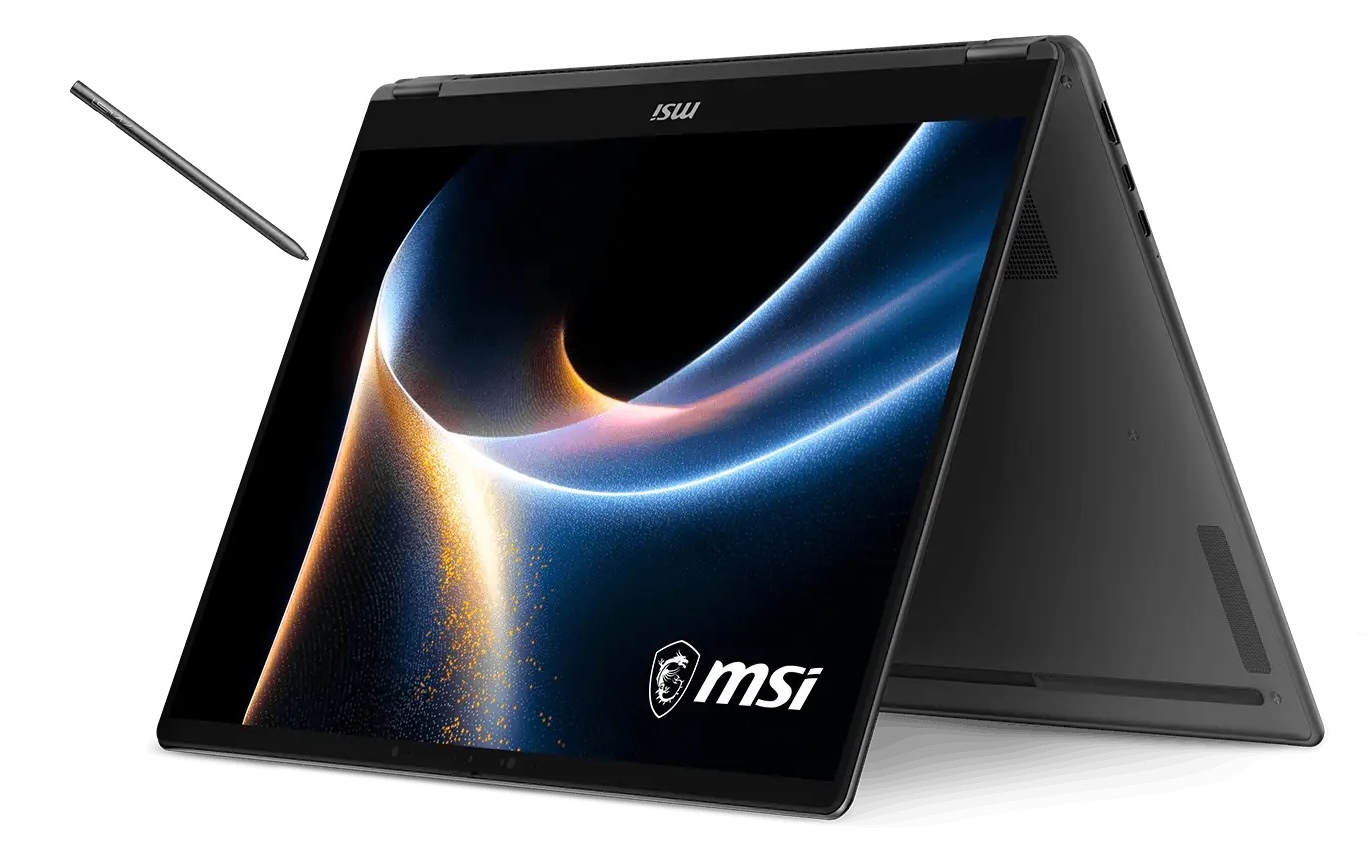
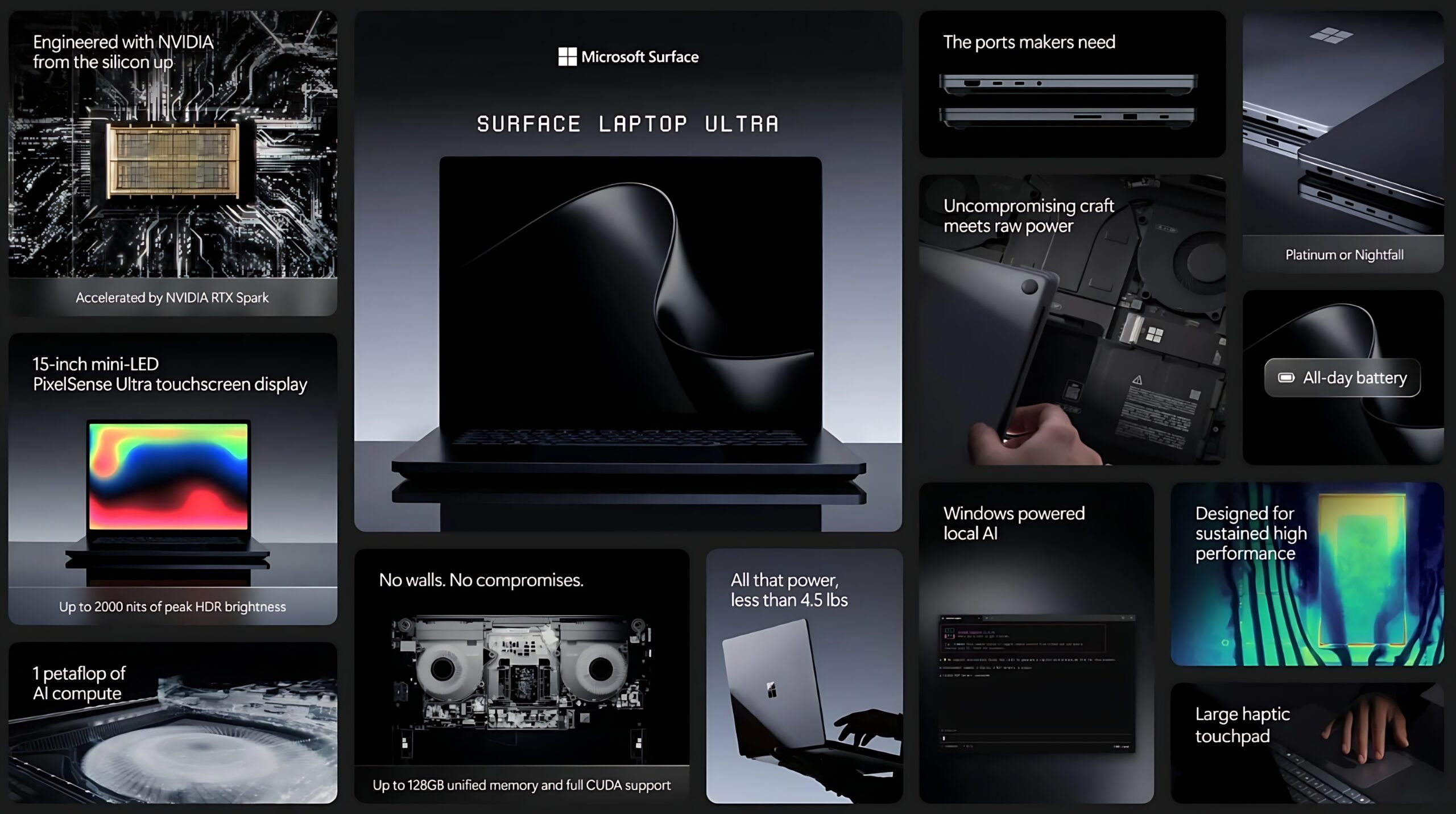
The most useful way to understand RTX Spark at COMPUTEX 2026 is to look at how different brands used it. Microsoft’s Surface direction is important because it shows platform confidence. ASUS ProArt focuses on creators and local AI workstations. MSI Prestige turns RTX Spark into a convertible professional laptop with a high-end display and stylus support.
RTX Spark Systems at COMPUTEX 2026: Positioning Comparison
| Device / lineup | Interpretation of RTX Spark | Why it matters | Main question |
| Microsoft Surface Laptop Ultra | Premium Windows on Arm flagship | Microsoft is using RTX Spark to show a serious premium Windows AI PC direction | Software compatibility, battery life, thermals, app performance, and pricing |
| ASUS ProArt P16 / P14 | Creator laptops with RTX Spark and high-end OLED displays | Large unified memory and RTX acceleration make sense for local AI, video, 3D, and creator work | Whether creator apps, plugins, and AI tools are ready enough for daily use |
| ASUS ProArt Mini PC | Compact local AI workstation | It does not need to balance keyboard, display, battery, and ultra-thin laptop constraints | Sustained workloads, cooling, price, and real developer value |
| MSI Prestige N16 Flip AI+ | Convertible creator / professional AI laptop | The 2-in-1 form factor, Tandem OLED display, stylus, and large battery give RTX Spark a mobile creator angle | Whether the convertible design adds real workflow value or mainly complexity |
This comparison also shows why RTX Spark can be a premium laptop platform, a creator laptop platform, or a compact AI desktop platform. That flexibility is interesting, but it also makes real testing more important. A chip can look strong in every device category on paper, but each form factor has different limits.
Verdict
RTX Spark was one of the most interesting AI PC stories at COMPUTEX 2026 because it was not only about TOPS. The headline AI performance number is impressive, but the platform story is more important: large unified memory, RTX / CUDA acceleration, local AI workflows, and Windows machines built for creators and developers.
But RTX Spark still has to prove itself in the boring parts of computing: app compatibility, drivers, plugins, stability, battery life, thermals, fan noise, pricing, and long-term software support.
The software question: Windows on Arm has to be boringly reliable
RTX Spark has strong hardware ingredients, but Windows on Arm has to be reliable enough for demanding users. That means native app performance, emulation quality, drivers, plugins, installers, peripherals, calibration tools, game compatibility, anti-cheat systems, and professional software support. If a colorimeter driver, audio interface, capture card, camera utility, plugin, CAD tool, or production app fails before a deadline, the whole platform becomes hard to trust.
This is why RTX Spark needs boring compatibility, more than anything else.
Read our COMPUTEX 2026 recap here:
The Most Interesting Laptop and PC Hardware We Saw at COMPUTEX 2026
 Author: Simeon NikolovEditor-in-Chief at LaptopMedia.com with 20+ years of experience in testing and analyzing laptops and mobile devices.

![[August 2026] Best-Selling Laptop Brands on Amazon Japan – Apple Dominates Market Share and Revenue Led by Strong Unit Sales](https://laptopmedia.com/wp-content/uploads/2026/09/CO.JP-Best-Brands-1-400x225.jpg)
![[August 2026] Best-Selling Laptop Brands on Amazon USA – Apple Dominates Market Revenue and Volume Despite Lower Model Diversity](https://laptopmedia.com/wp-content/uploads/2026/09/COM-Best-Brands-1-400x225.jpg)
![[August 2026] Amazon Germany: Top 8 Best-Selling Gaming Laptops – Acer Dominates the Market as the Premium Nitro V 17 AI Takes the #1 Spot](https://laptopmedia.com/wp-content/uploads/2026/09/Best-Selling-Gaming-Laptops-DE-Top-10-1-400x225.jpg)
![[August 2026] Best-Selling Laptop Brands on Amazon France – Apple Dominates Revenue Despite Lenovo and HP Leading in Catalog Breadth and Volume](https://laptopmedia.com/wp-content/uploads/2026/09/FR-Best-Brands-1-400x225.jpg)
![[August 2026] Amazon Italy: Top 10 Best-Selling Laptops – Apple MacBook Neo Claims the Crown as Budget and Mid-Range Windows Machines Dominate Volume](https://laptopmedia.com/wp-content/uploads/2026/09/Best-Selling-Laptops-IT-Top-10-400x225.jpg)
128GB unified memory is much more interesting than another NPU benchmark – local AI needs memory first