ASUS ROG Strix G18 G815 (2025) Review – The Desktop Replacement That Gets Everything Right
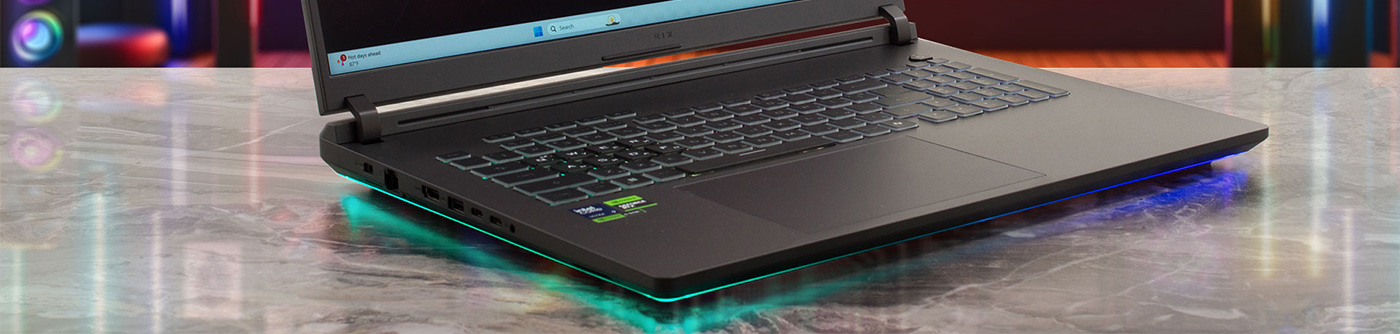
In the world of high-performance gaming laptops, size is often a direct indicator of power. The ASUS ROG Strix G18 G815 (2025) takes this principle to heart, using its massive 18-inch frame not just for a bigger screen, but to house a cooling system that sets a new standard for thermal performance. The result is a machine that doesn’t just contain powerful components – it unleashes them, allowing them to run faster and cooler than nearly any competitor. This isn’t just another big laptop; it’s a statement about what’s possible when a manufacturer fully commits to a no-compromise desktop replacement philosophy.
You can check the prices and configurations in our Specs System: https://laptopmedia.com/series/asus-rog-strix-g18-g815/
Contents
- Specs, Drivers, What’s in the box
- Design and construction
- Display and Sound Quality, Display Profiles
- Get our profiles
- Work Performance: CPU, Storage, AI
- GPU and Gaming Performance
- [eBook Guide + Tools] How to MAX OUT Your Laptop
- Temperatures and Comfort, Noise, Stability
- Battery Life
- Disassembly, Upgrade options, and Maintenance
- Verdict
Specs, Drivers, What’s in the box
ASUS ROG Strix G18 G815 - Specs

- HDD/SSD
- up to 16000GB SSD
- M.2 Slot
- 2x 2280 M.2 NVMe PCIe 4.0 x4 See photo
- RAM
- up to 96GB
- OS
- Windows 11 Home, Windows 11 Pro, No OS, DOS, Chrome OS
- Battery
- 90Wh
- Dimensions
- 399 x 298 x 23.5 ~ 32.0 mm (15.71" x 11.73" x 0.93")
- Weight
- 3.42 kg (7.5 lbs)
- Ports and connectivity
- 3x USB Type-A
- 3.2 Gen 2 (10 Gbps)
- 2x USB Type-C
- Thunderbolt 5, Power Delivery (PD), DisplayPort
- HDMI
- 2.1
- Card reader
- Ethernet LAN
- 10, 100, 1000, 2500 Mbit/s
- Wi-Fi
- Wi-Fi 7
- Bluetooth
- 5.4
- Audio jack
- 3.5mm Combo Jack
- Features
- Fingerprint reader
- Web camera
- FHD IR with Windows Hello
- Backlit keyboard
- optional
- Microphone
- Array Microphone with AI noise-canceling technology
- Speakers
- 2x Stereo Speakers with Smart Amplifier Technology, Dolby Atmos
- Security Lock slot
All ASUS ROG Strix G18 G815 configurations
Drivers
All drivers and utilities for this notebook can be found here: https://rog.asus.com/laptops/rog-strix/rog-strix-g18-2025/helpdesk_download/
What’s in the box?
Opening the box for the new ASUS ROG Strix G18 G815 (2025) is always a bit of a fun regional lottery when it comes to bundled extras.
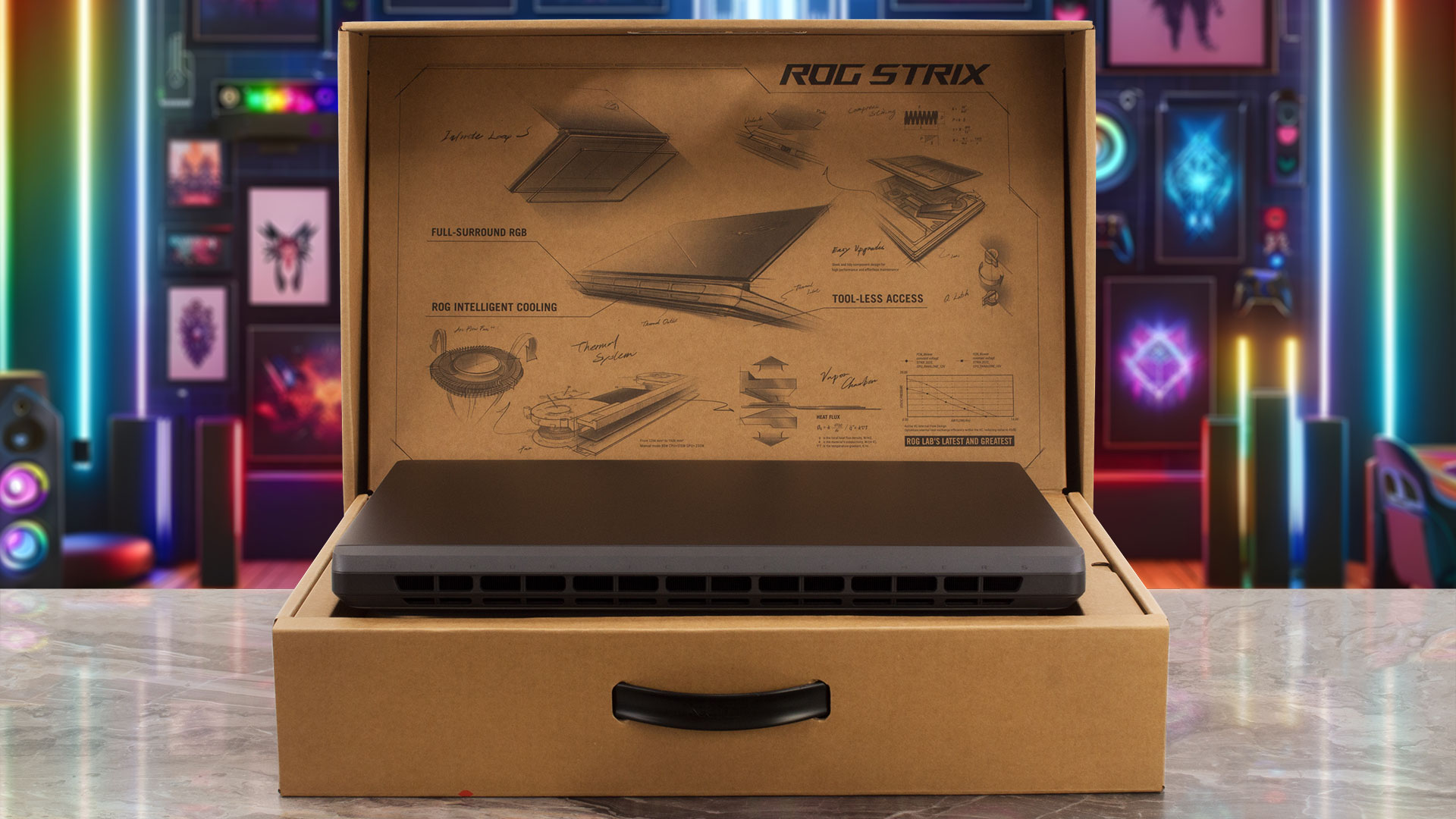
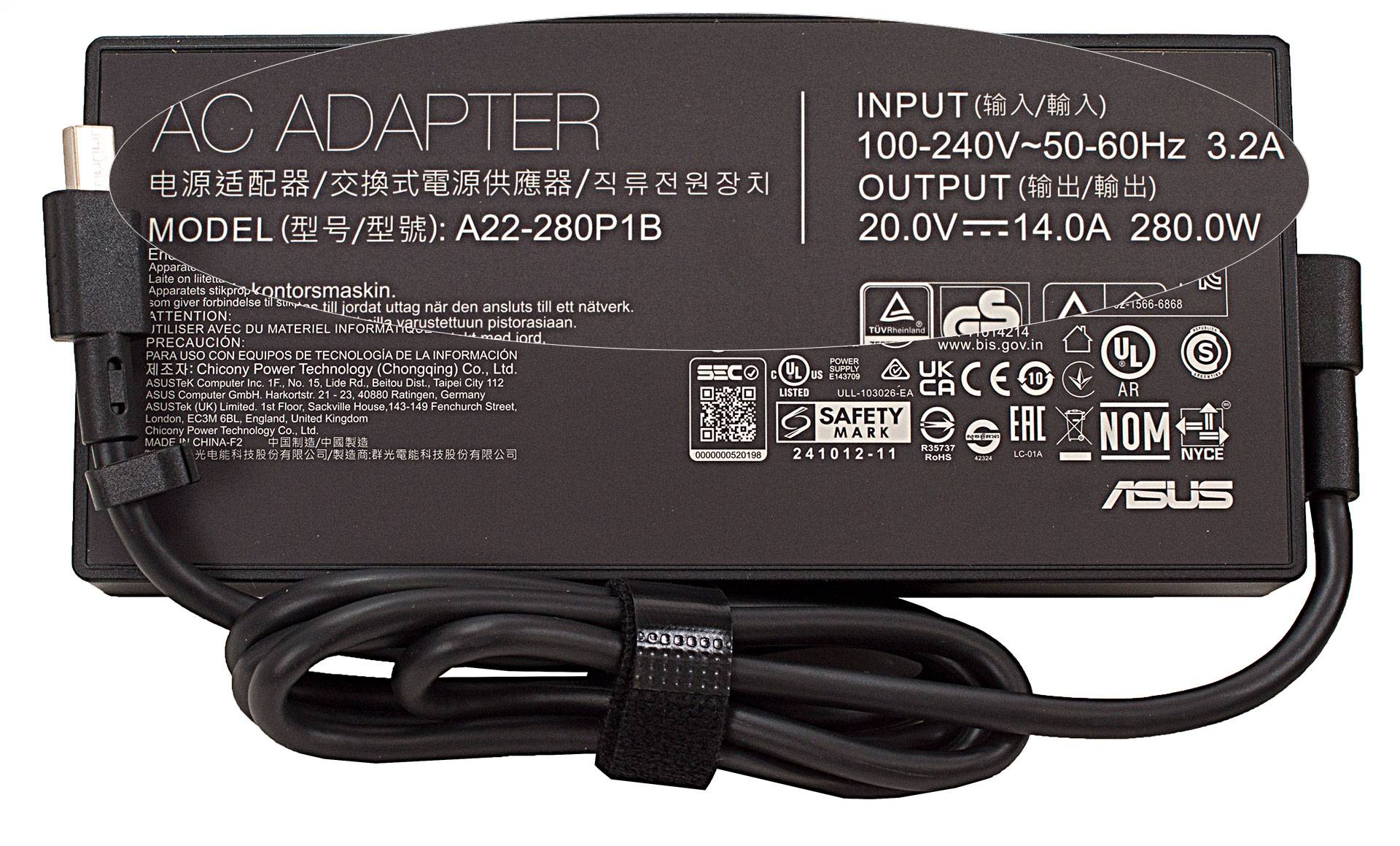
While you’re guaranteed to get the laptop and its beefy 280W power adapter, you might also find a ROG backpack, a ROG Impact Gaming Mouse, or even both depending on your territory.
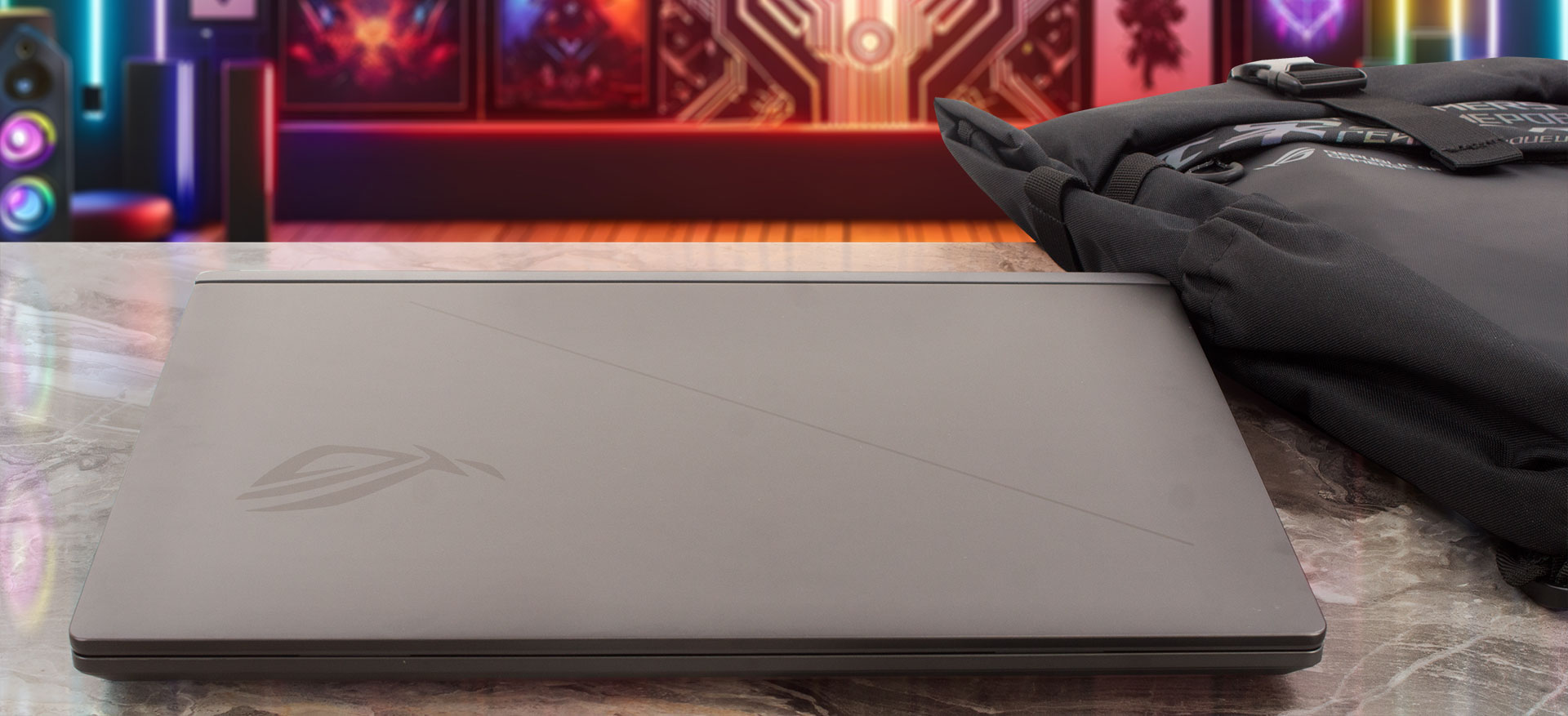
Our European unit, for instance, came with the very welcome ROG backpack to help carry this beast around.
Design and construction
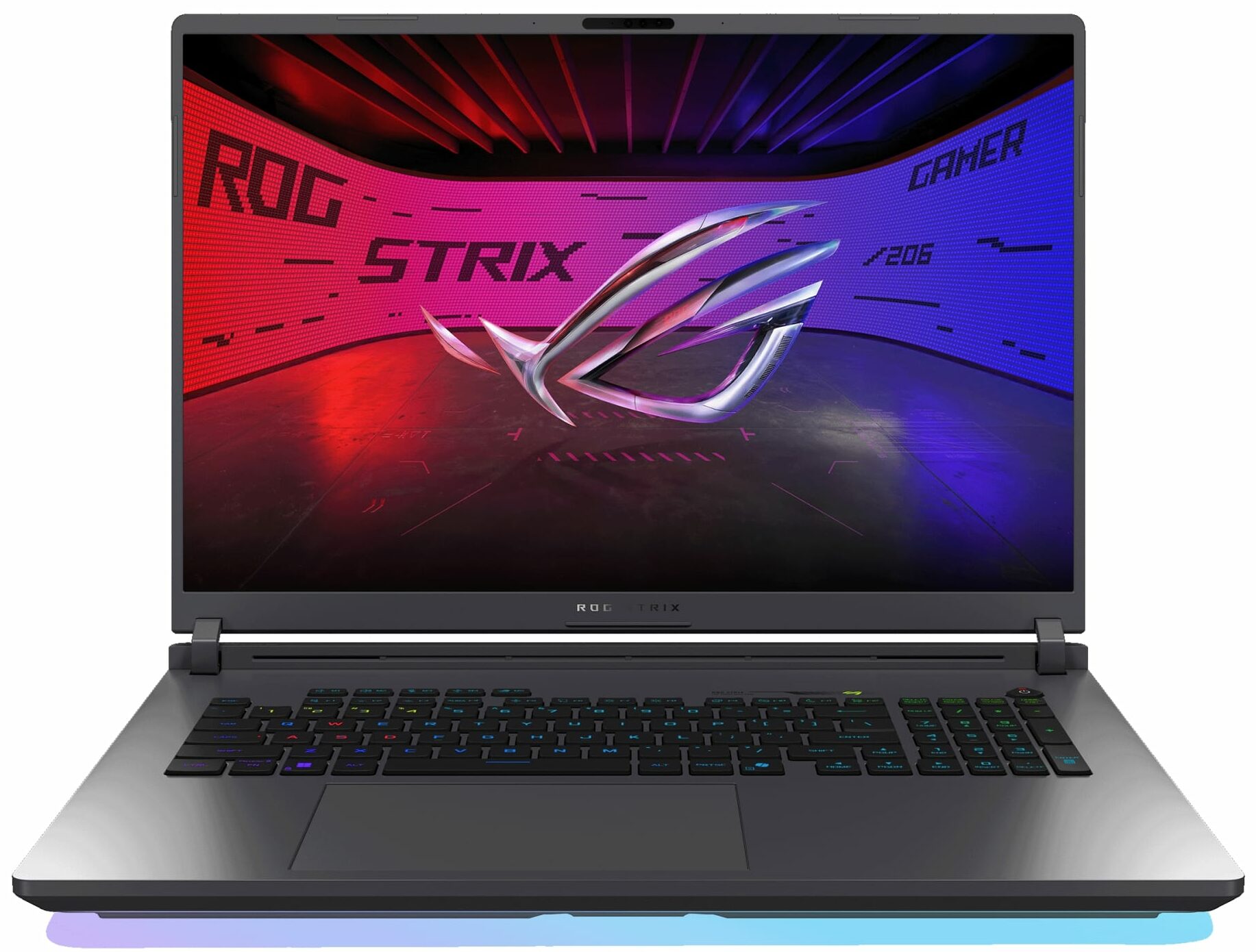
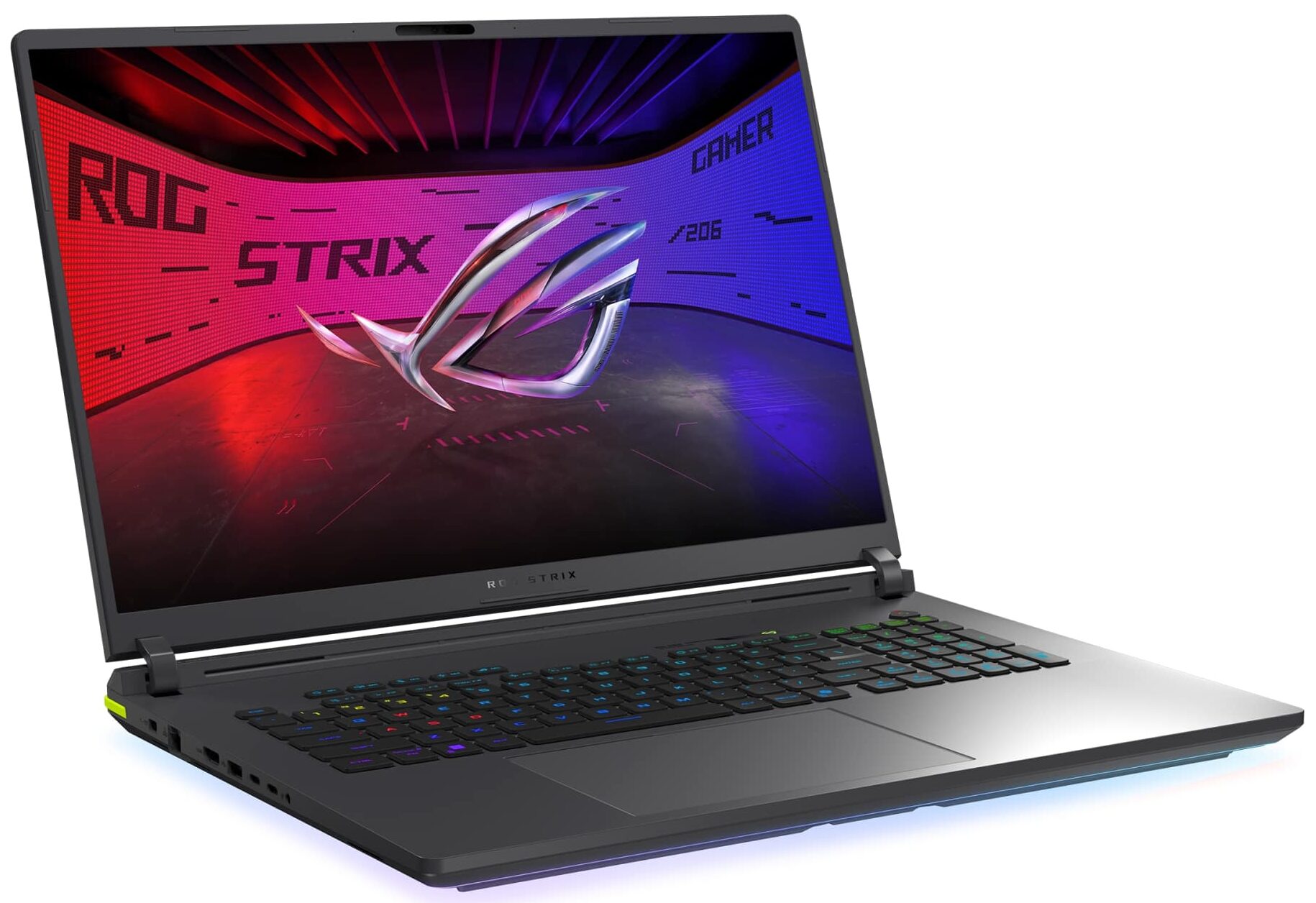
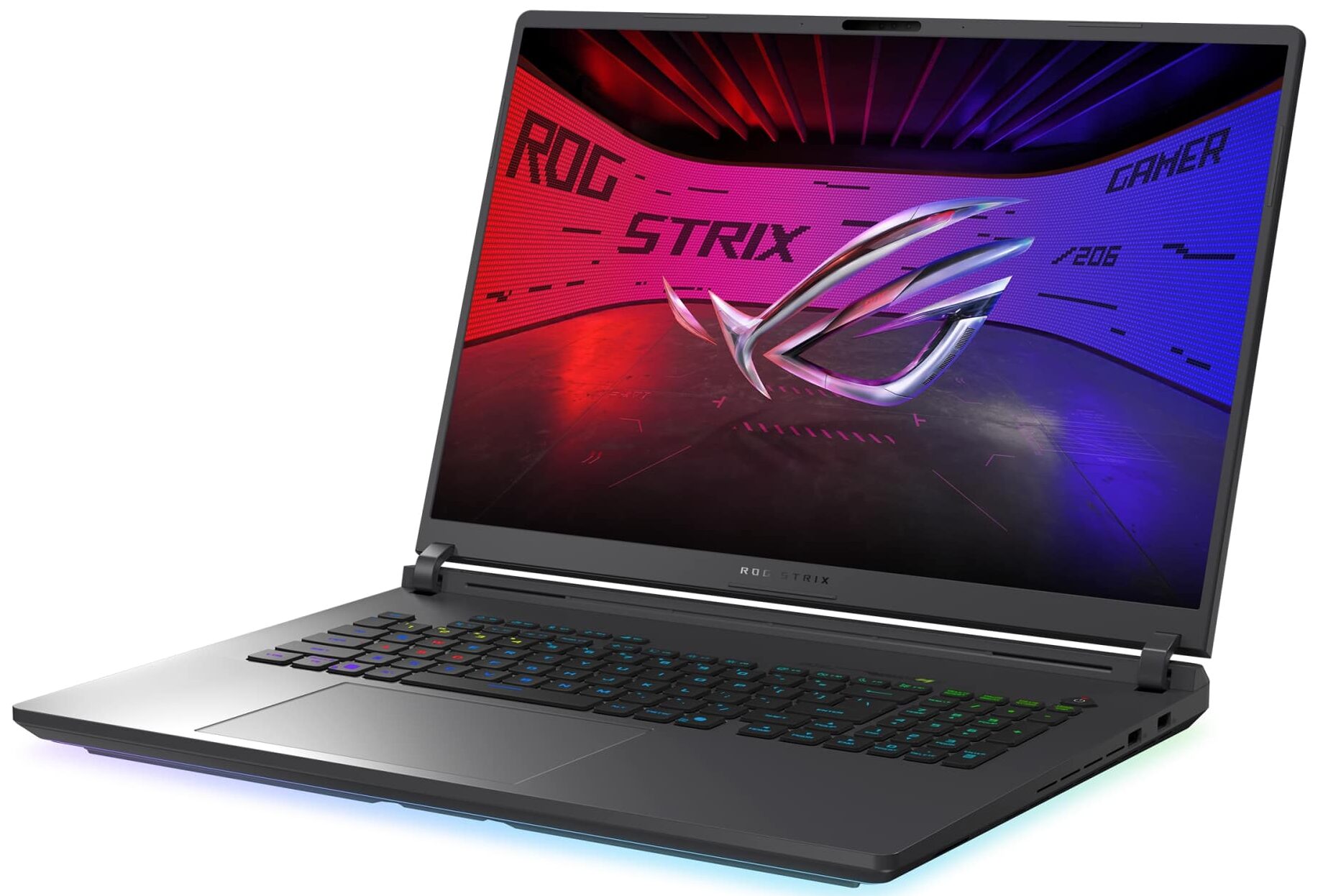
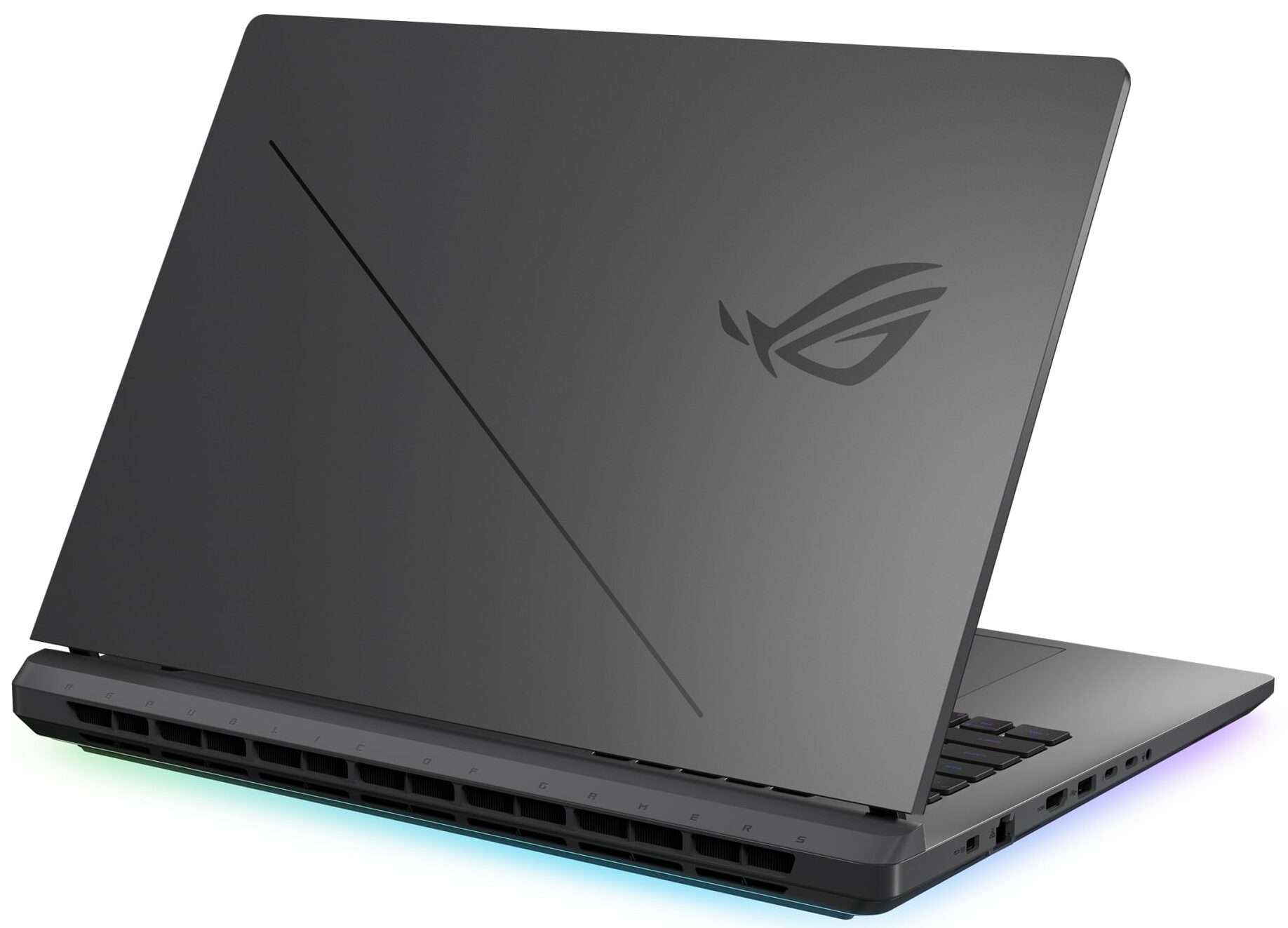
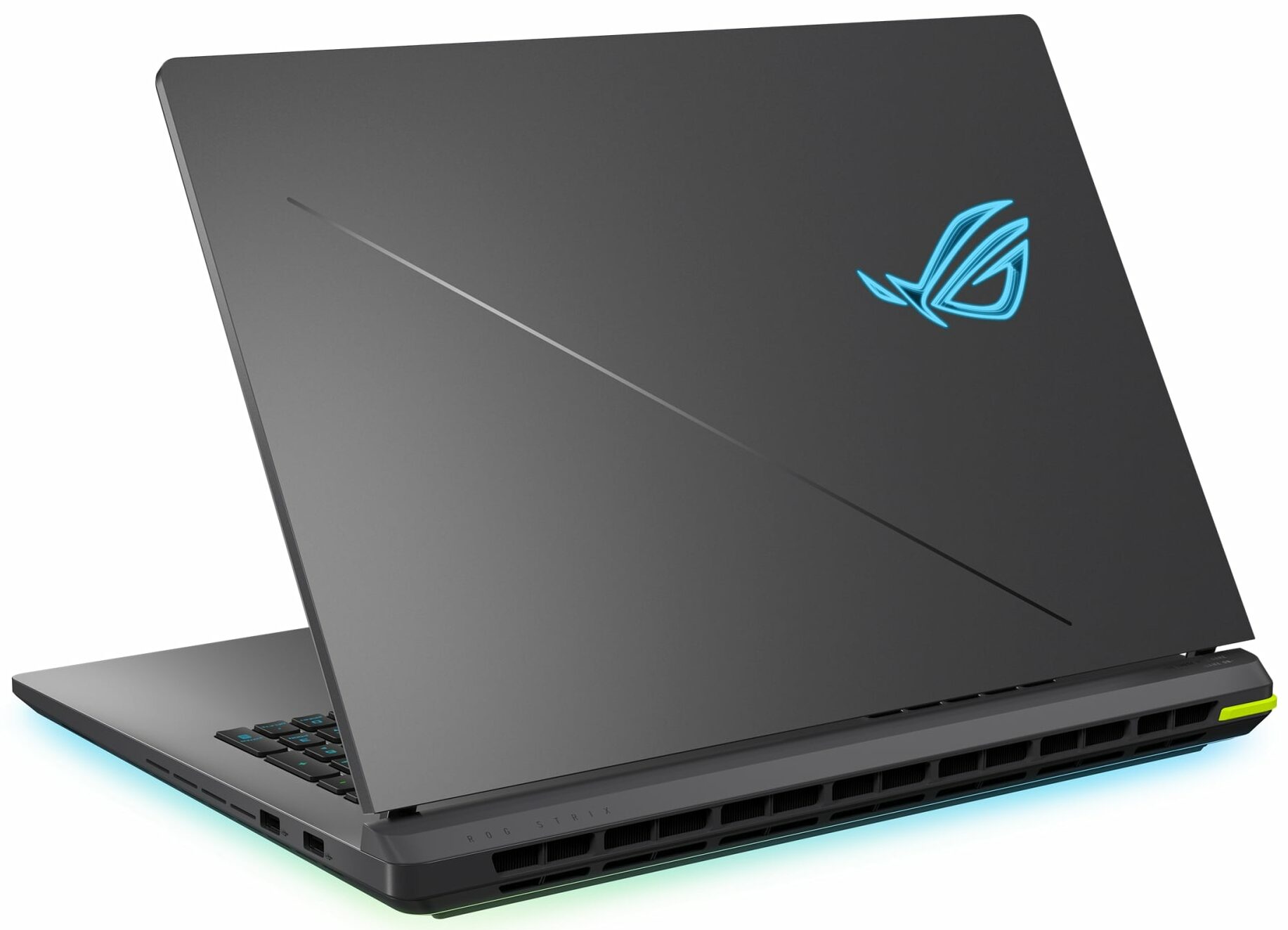
The ASUS ROG Strix G18 G815 (2025) is a quintessential ROG machine: massive, powerful, and unapologetically a gaming laptop. Yet, it possesses an interesting design duality. With its 360-degree Aura LED lighting system disabled, its clean lines, dark “Eclipse Gray” finish (a “Volt Green” version with minor green accents is also available), and premium feel could almost allow it to pass for a very elegant, albeit large, mobile workstation.
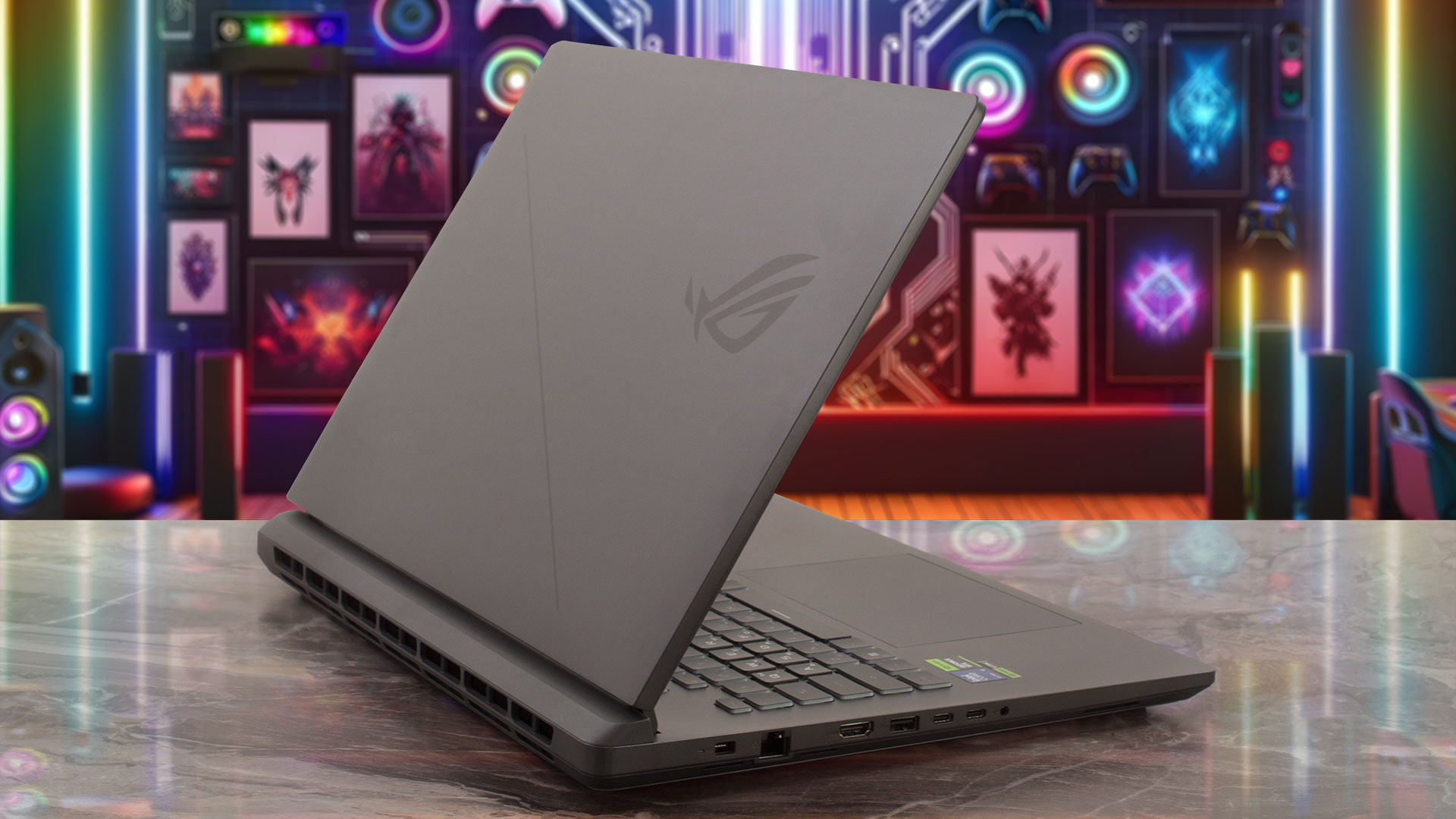
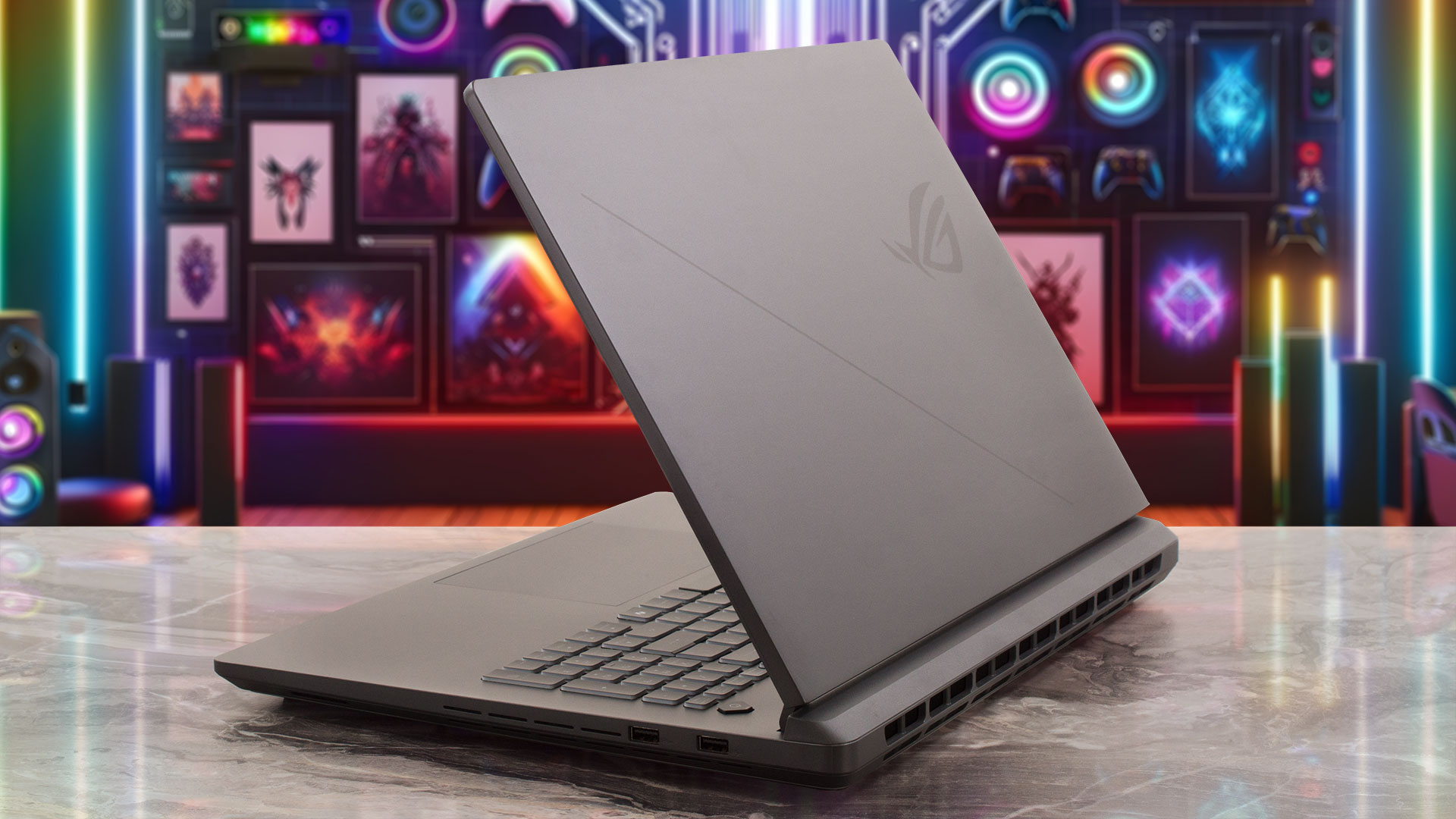
Turn the lights on, however, and its true gaming nature bursts forth in a vibrant display.
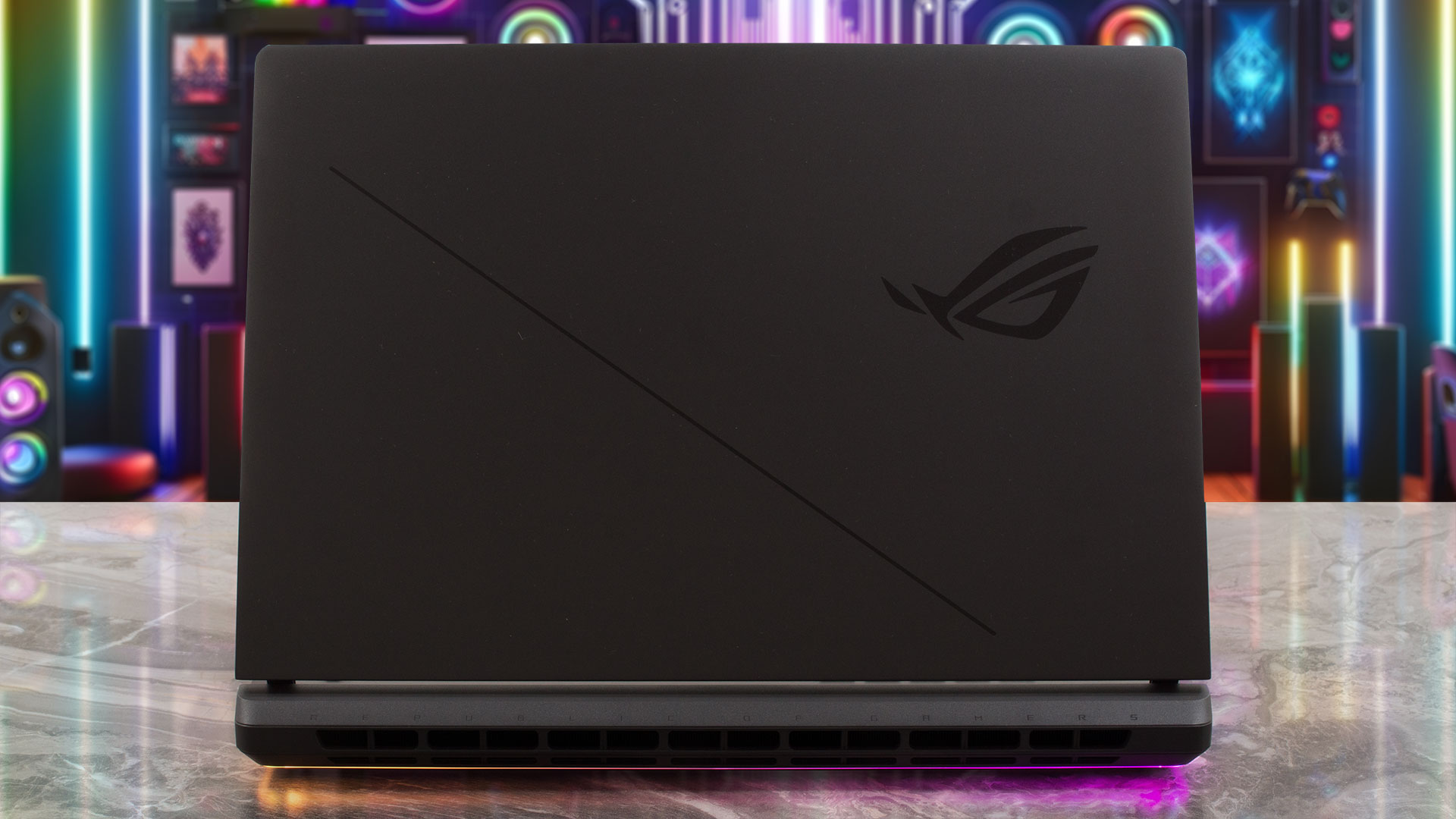
This isn’t a laptop that’s trying to be a featherweight. It’s a substantial piece of hardware, weighing in at 3.20 kg (7.05 lbs) and measuring 39.9 x 29.9 x 2.35 ~ 3.20 cm (15.71″ x 11.77″ x 0.93″ ~ 1.26″). Frankly, given the high-end components it’s built to house, we wouldn’t want it any other way; this size and weight signal a commitment to robust cooling, and we know ASUS engineers have put in the work.
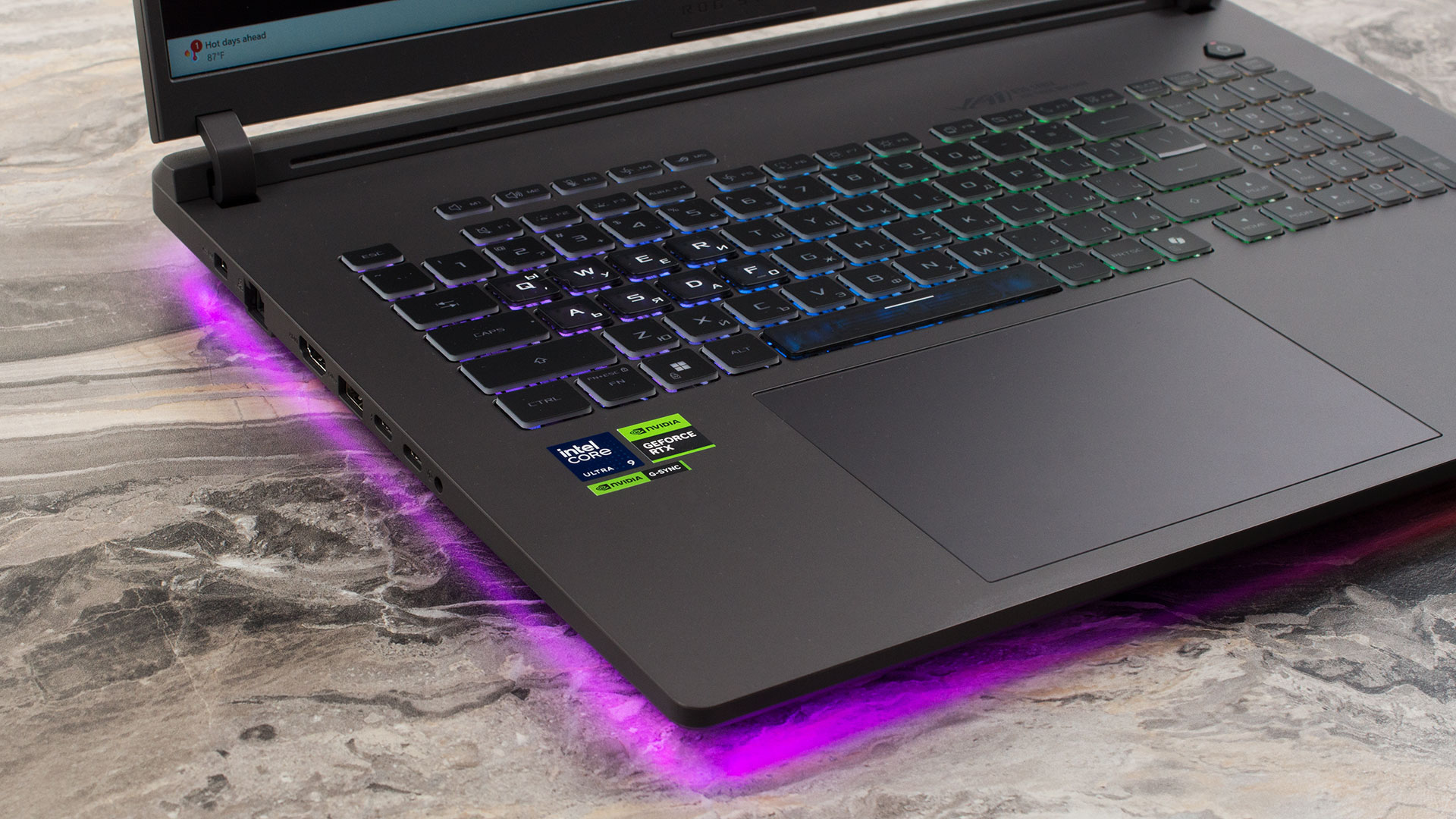
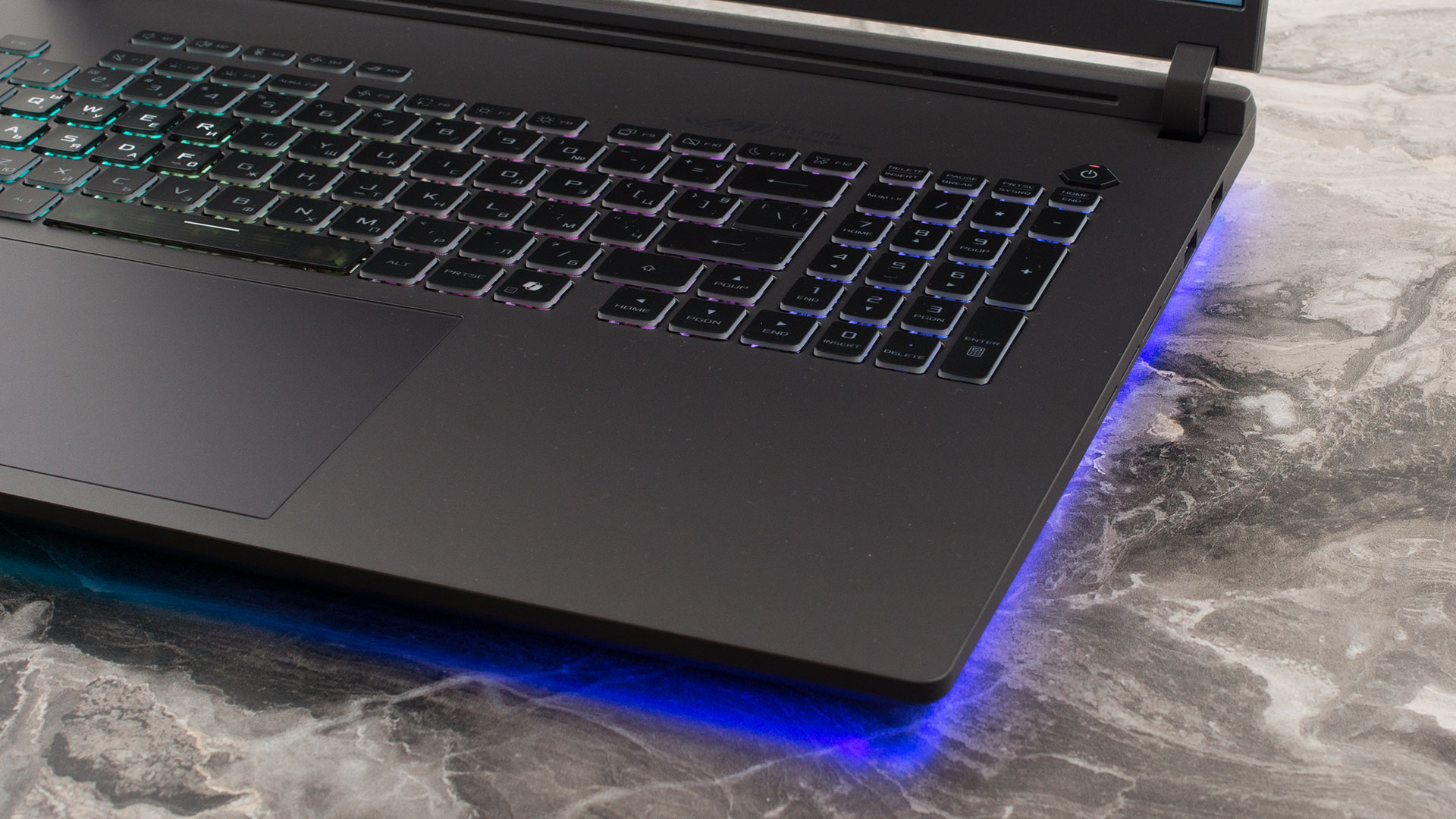
The build quality is immediately impressive. The lid is crafted from cool-to-the-touch metal, while the interior chassis is made of high-quality plastic, but the combination feels decidedly premium. What’s most remarkable is its rigidity. Often, laptops of this size exhibit noticeable flex, especially in the area behind the keyboard. The ROG Strix G18, however, is built like a fortress; even with deliberate pressure, there is no discernible sinking or creaking – it is absolutely solid. The finish also does a decent job of resisting fingerprints; after several weeks of use, we only see very faint, almost unnoticeable smudges in some areas.
Opening the lid is a smooth, one-handed affair, with hinges that are perfectly tensioned to be fluid enough for an easy lift (the heavy base certainly helps) while remaining completely stable at any angle.
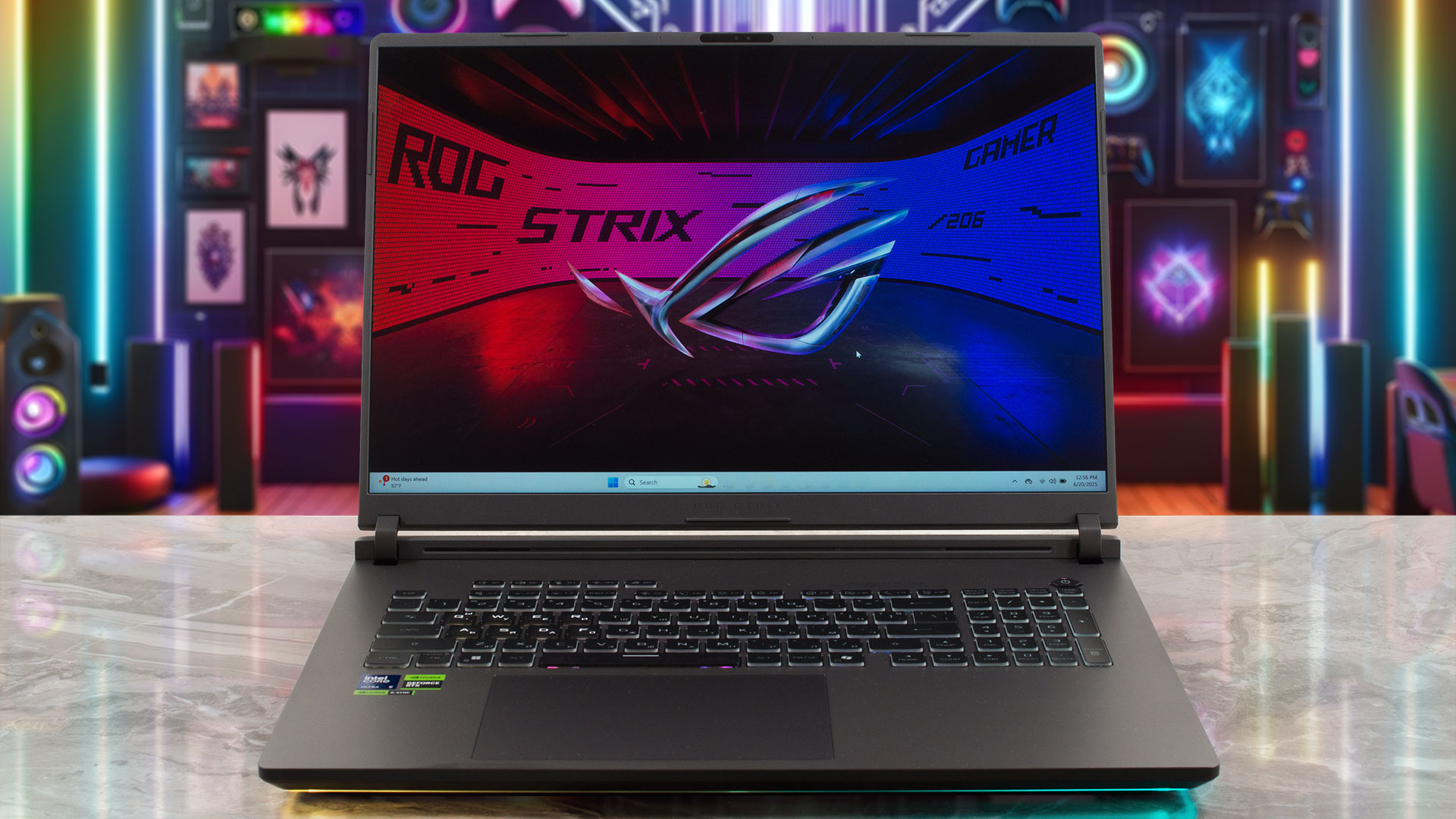
Once open, the massive 18-inch display is framed by very thin bezels, which are almost unnoticeable and create a hugely immersive experience. The side bezels measure just 5.5 mm (0.22 inches), and the top bezel is a slim 10 mm (0.39 inches). However, a recurring point of contention with the ROG line surfaces here: despite having space, ASUS has once again opted to omit a physical privacy shutter for the webcam. This continues to be a feature we believe should be standard on all premium laptops. The screen itself opens to a maximum angle of about 120 degrees, which is perfectly sufficient for any normal gaming or work scenario, especially since this is not a touchscreen device.
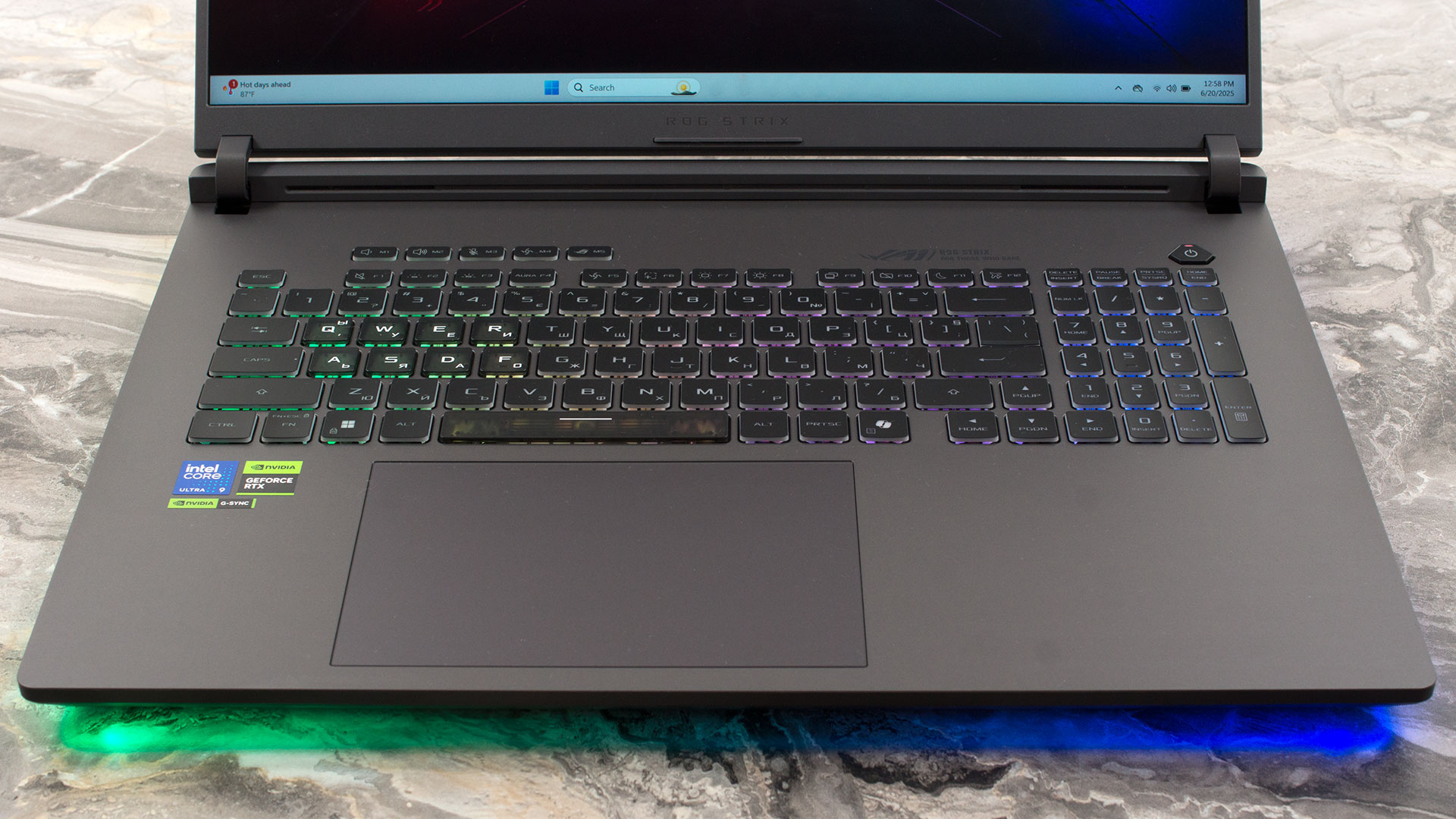
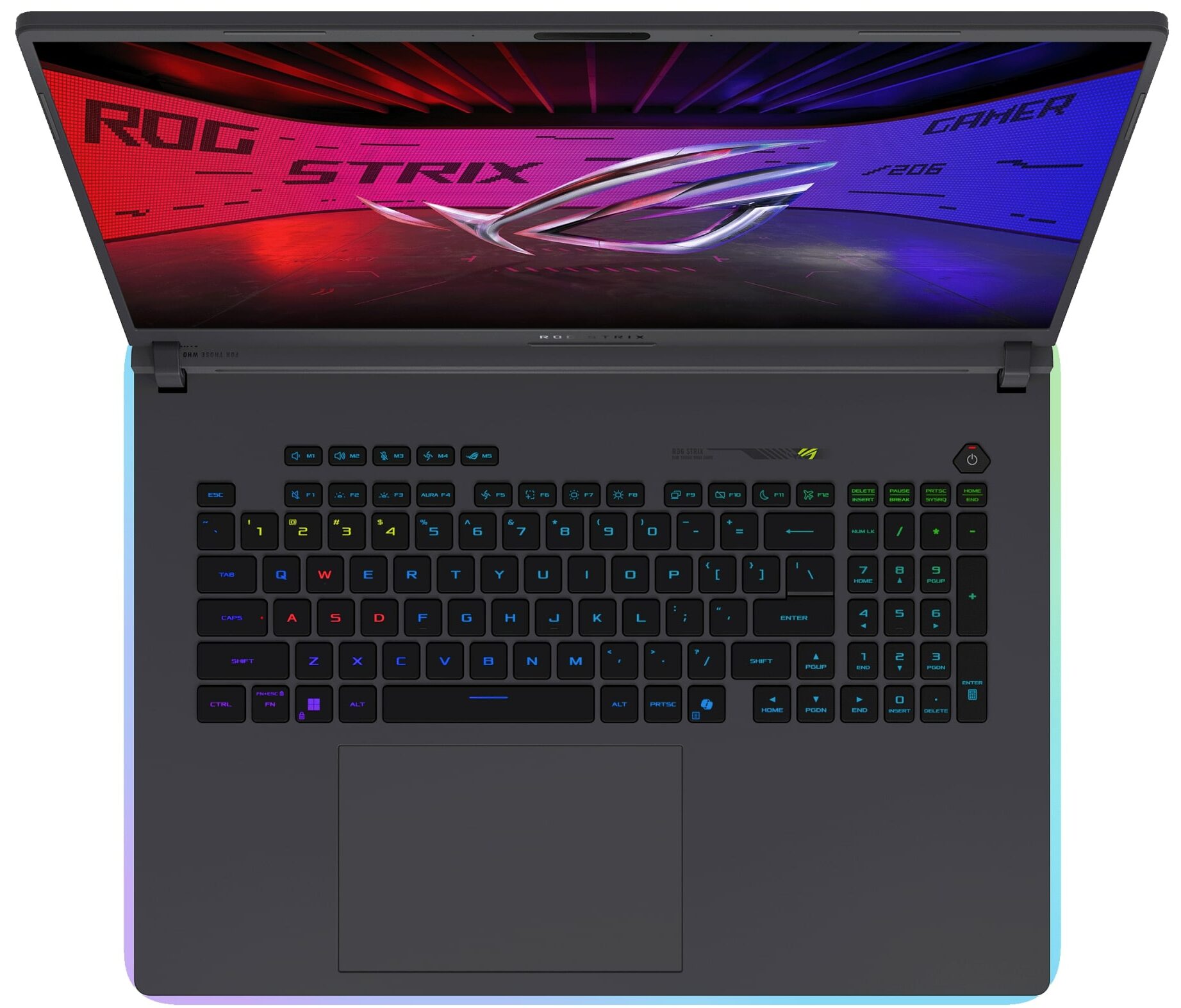
The expansive chassis provides ample room for a fantastic keyboard deck. ASUS has taken full advantage of the space to include a comfortable, backlit chiclet keyboard with per-key RGB customization, as well as a full NumPad for productivity. The typing and gaming experience is excellent, with satisfying key travel and feedback. Below the keyboard lies an enormous trackpad, measuring a vast 150 x 100 mm (5.91 x 3.94 inches). It’s not just big; it’s also very precise and comfortable to use, providing a superb navigation experience when you’re not plugged in with a dedicated gaming mouse.
Ports and Connectivity
The ASUS ROG Strix G18 G815 (2025) offers a comprehensive and high-performance port selection, with the majority of connections conveniently located on the left side of the chassis. Power is supplied via a dedicated connector, leaving all other ports free. For networking, it includes an RJ45 LAN port for stable wired connections. Video output is exceptionally well-covered with an HDMI 2.1 port specified with Full Rate Link (FRL), guaranteeing full bandwidth for high-resolution, high-refresh-rate displays. This is complemented by two distinct USB-C ports: one is a USB 3.2 Gen 2 port (10Gbps) with DisplayPort and Power Delivery support, while the second is a more powerful Thunderbolt 4 port. This Thunderbolt 4 connection provides up to 40Gbps data transfer, also supports Power Delivery, and crucially for gamers, features G-SYNC compatibility for external displays. A high-speed USB 3.2 Gen 2 Type-A port (10Gbps) and a standard 3.5mm combo audio jack complete the left-side I/O.

The right side of the laptop is dedicated to peripheral connectivity, featuring two additional USB 3.2 Gen 2 Type-A ports. It is an excellent design choice that all three of the Strix G18’s USB-A ports operate at the faster 10Gbps speed, ensuring no performance compromise when connecting external drives or other high-speed accessories.

The rear of the chassis is entirely dedicated to cooling vents, with no ports located there, so all cable management will be handled from the sides.

Wireless connectivity is state-of-the-art. The Strix G18 is equipped with a Wi-Fi 7 (802.11be) wireless card that supports triple-band operation (2.4 GHz, 5 GHz, and 6 GHz) and a 2×2 antenna configuration. This ensures access to the fastest wireless standard currently available for lower latency and optimal performance on compatible networks. It is paired with Bluetooth 5.4 for robust and efficient connection to a wide range of wireless accessories, though it’s worth noting that the specific Bluetooth version may change with future operating system updates.
Display and Sound Quality, Display Profiles
| ASUS ROG Strix G18 G815 (2025) | BOE NE180QDM-NZC (BOE0CE4) |
| Diagonal | 18.0 inches (45.7 cm) |
| Panel Type | IPS |
| Resolution | 2560 x 1600 pixels |
| Max Refresh Rate | 240 Hz |
| Aspect Ratio | 16:10 |
| Pixel Density | 168 PPI |
| ‘Retina’ Distance | Greater than or equal to 52 cm |
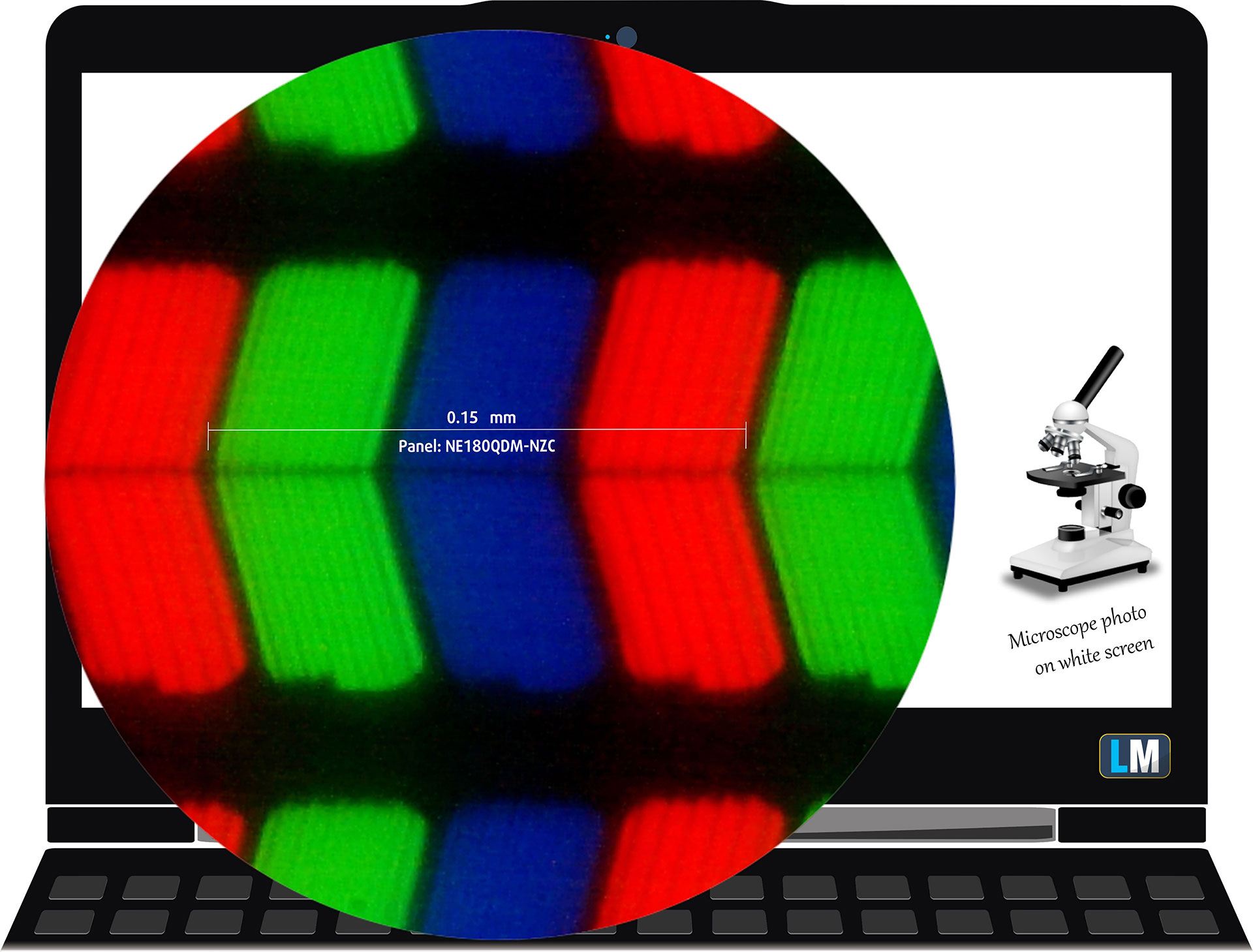
The 2.5K (2560 x 1600), 240 Hz, IPS display under our microscope
Viewing Angles
Viewing angles are good. We take photos from different angles to evaluate the quality.

Also, a video with locked focus and exposure.
Color Coverage
The whole “sail-shaped” map below (Fig. 1) consists of all the colors we can see, while the black crooked line shows all the colors from real-world scenes and nature around us.
Then, we’ve drawn some of the most important and interesting color spaces, compared to the colors the panel of ASUS ROG Strix G18 G815 (2025) can show:
Standard/For Web: sRGB – widely used color space for most consumer devices, ideal for Web design and development
For Print: AdobeRGB – used in professional photo editing, graphic design, and print
For Photographers/Video Editors: DCI-P3 – used in high-end film production, post-production, and digital cinema
Premium HDR: Rec.2020 – the widest consumer ITU color standard, covering a massive 75.8% of the visible spectrum, a benchmark for premium HDR content
ASUS ROG Strix G18 G815 (2025): the yellow dashed triangle (– – – – – –) represents the range of colors this monitor can show.
In our tests, we calculated the total color coverage of the display at 99% of the sRGB color gamut and 98% of the DCI-P3 color gamut.
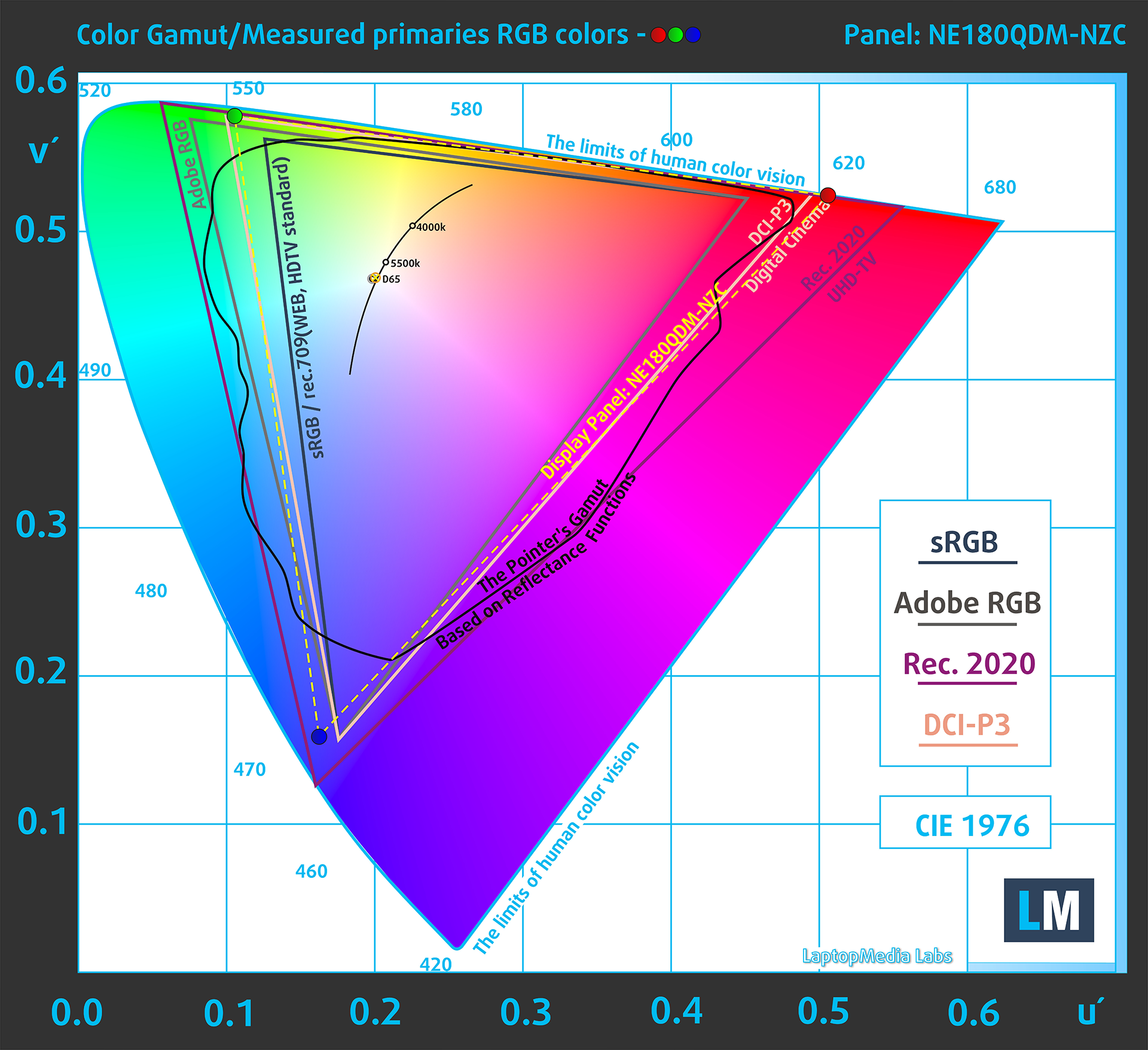
(Fig.1) ASUS ROG Strix G18 G815 (2025) covers 98% of the DCI-P3 gamut
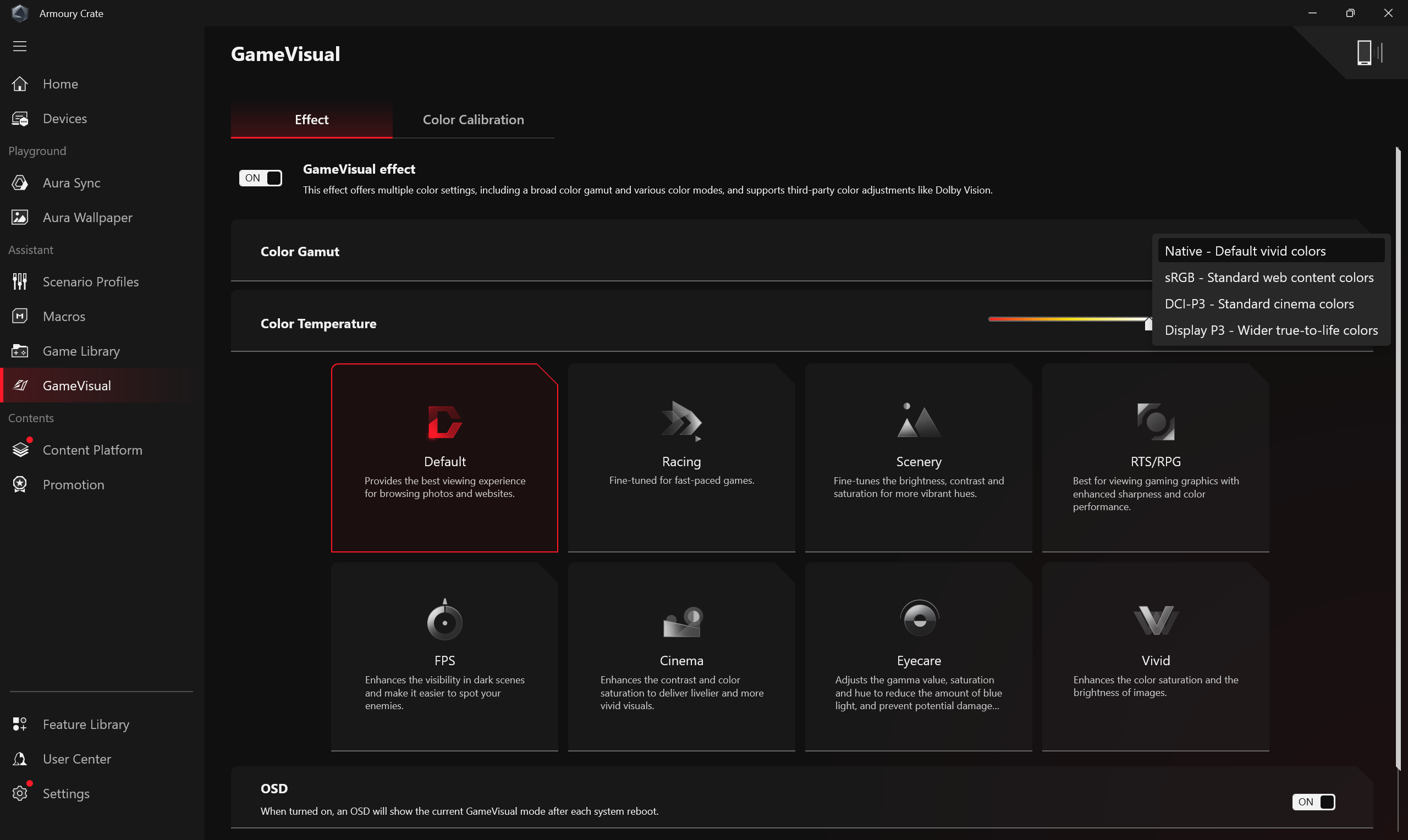
The “Armoury Crate” app emulates Display P3 and sRGB color spaces.
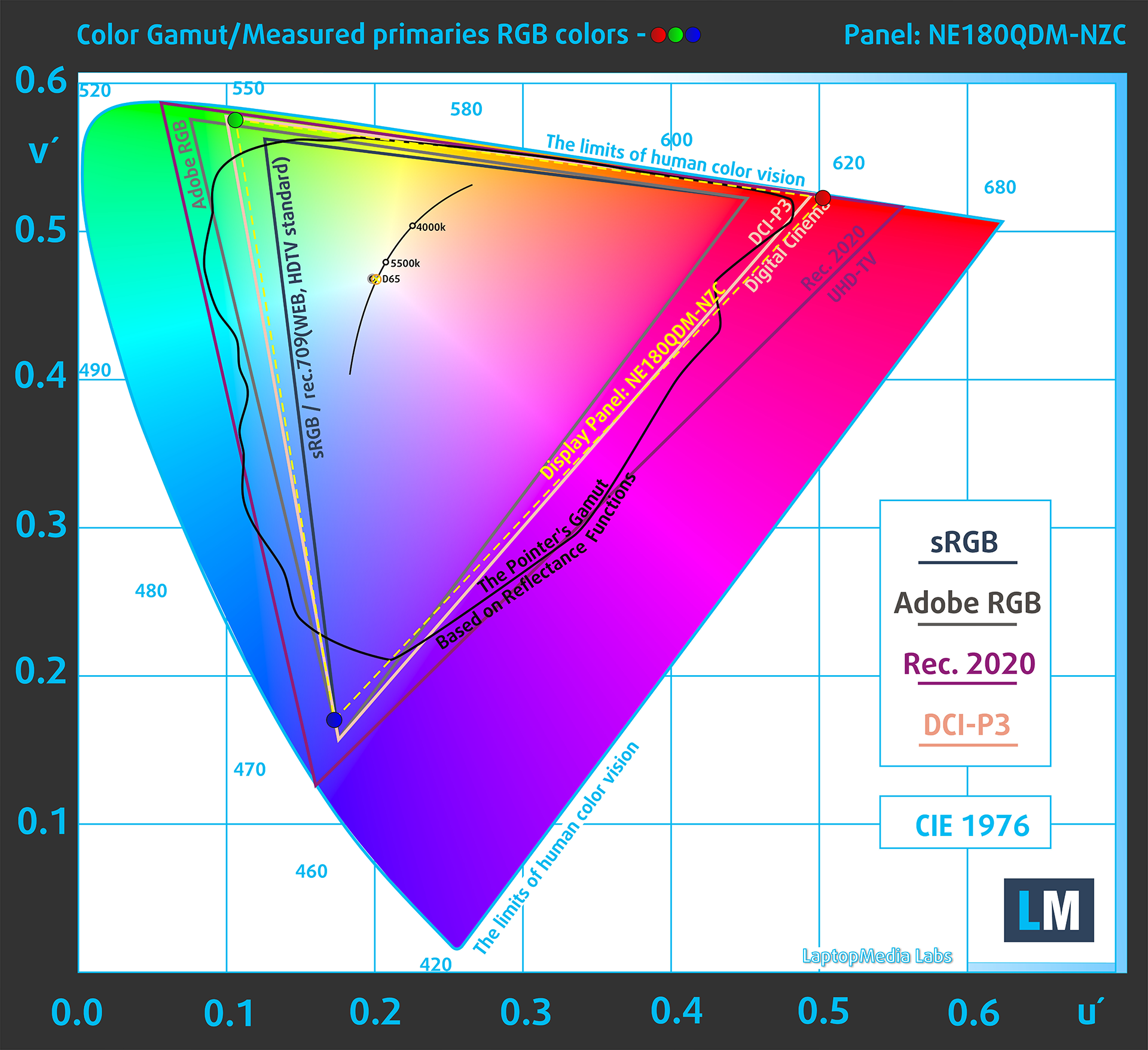
(Fig.2) Display P3
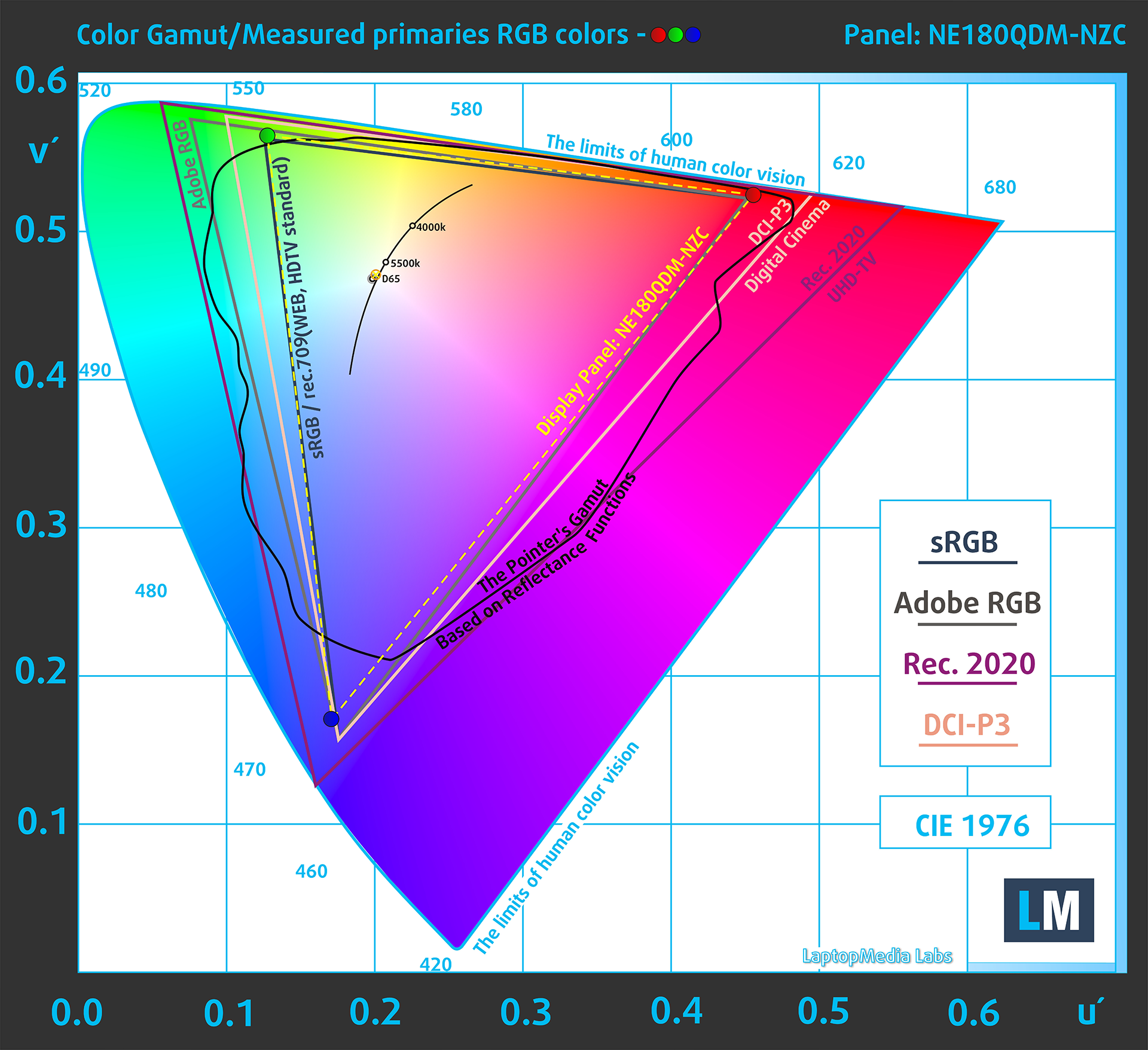
(Fig.3) sRGB
Brightness and Contrast
The maximum brightness in SDR mode is 506 cd/m² in the center of the screen and 501 cd/m² averaged across the surface with a maximum deviation of 6%.
The correlated color temperature (CCT) of a white screen at maximum brightness is 6510 K (“Native-Default” mode in “MyASUS – Armoury Crate” app).
The contrast ratio is 1450:1.
Uniformity: Luminance, Contrast, and Color Deviation
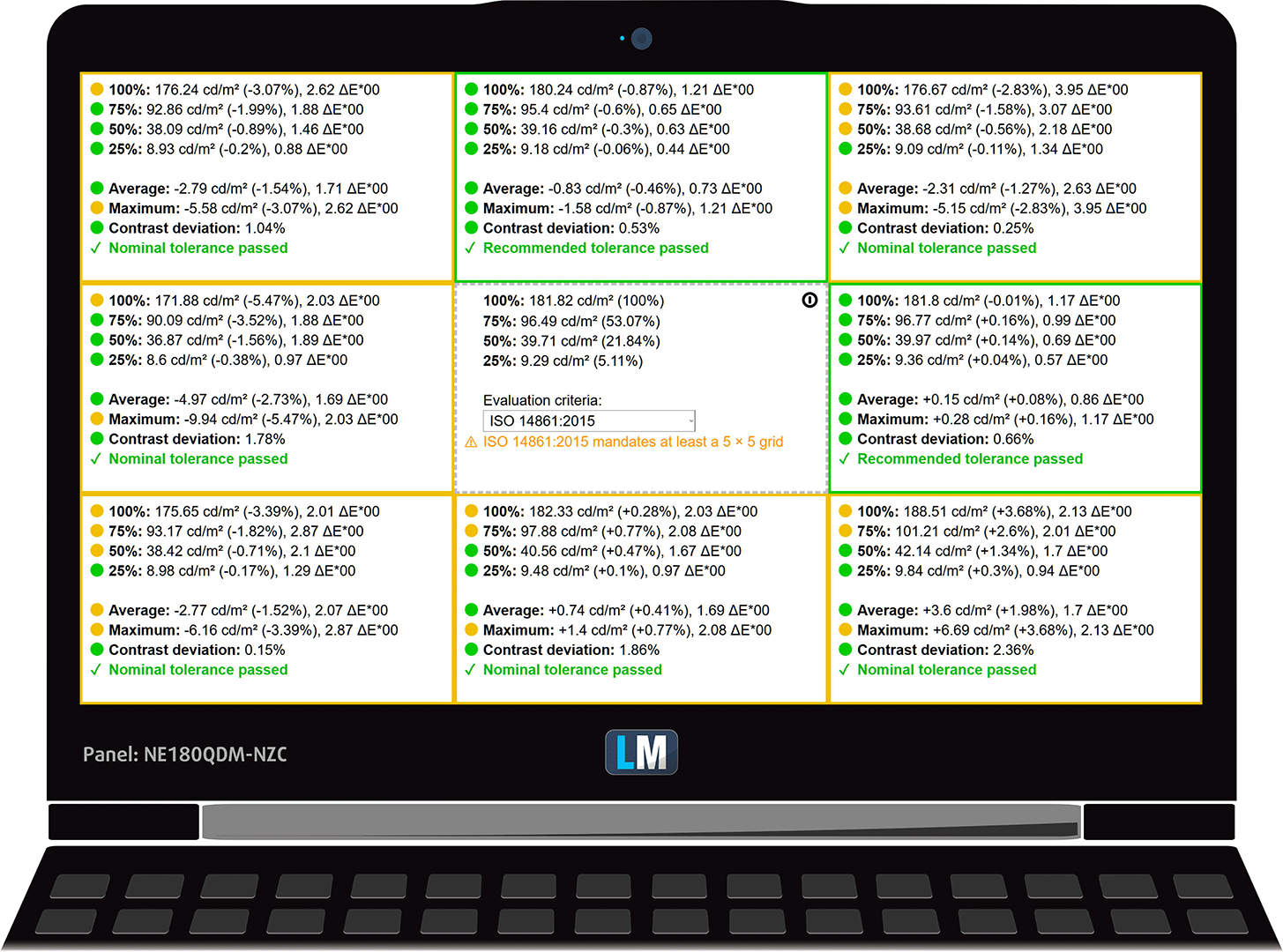
The figure below shows the results from our uniformity test across different sections of the screen. It’s measured at 182 nits (Windows slider = 56%) — a brightness level we consider typical for standard working conditions.
DeltaE values below 4.0 are acceptable for regular users. For those working with colors, screens with DeltaE values no higher than 2.0 are recommended.
Color Accuracy
Let’s check the difference between real colors and those you’ll see on the ASUS ROG Strix G18 G815 (2025). We measure that distance in DeltaE – the higher the number, the more different they look.
Values below 4.0 are acceptable for regular users, while values below 2.0 are suitable for color-sensitive work. A value below 1.0 means the difference is indistinguishable to the naked eye.
For the next graph, we’ve selected 24 common colors, including dark/light skin, blue sky, green grass, etc.
Before our calibration of the ASUS ROG Strix G18 G815 (2025), the Average color accuracy was 1.2 dE (Fig. 2) (“Display P3-Default” mode in “MyASUS – Armoury Crate” app), and with our Design and Gaming profile, it lowered to 1.1 dE (Fig. 3), making the colors ~10% more accurate.
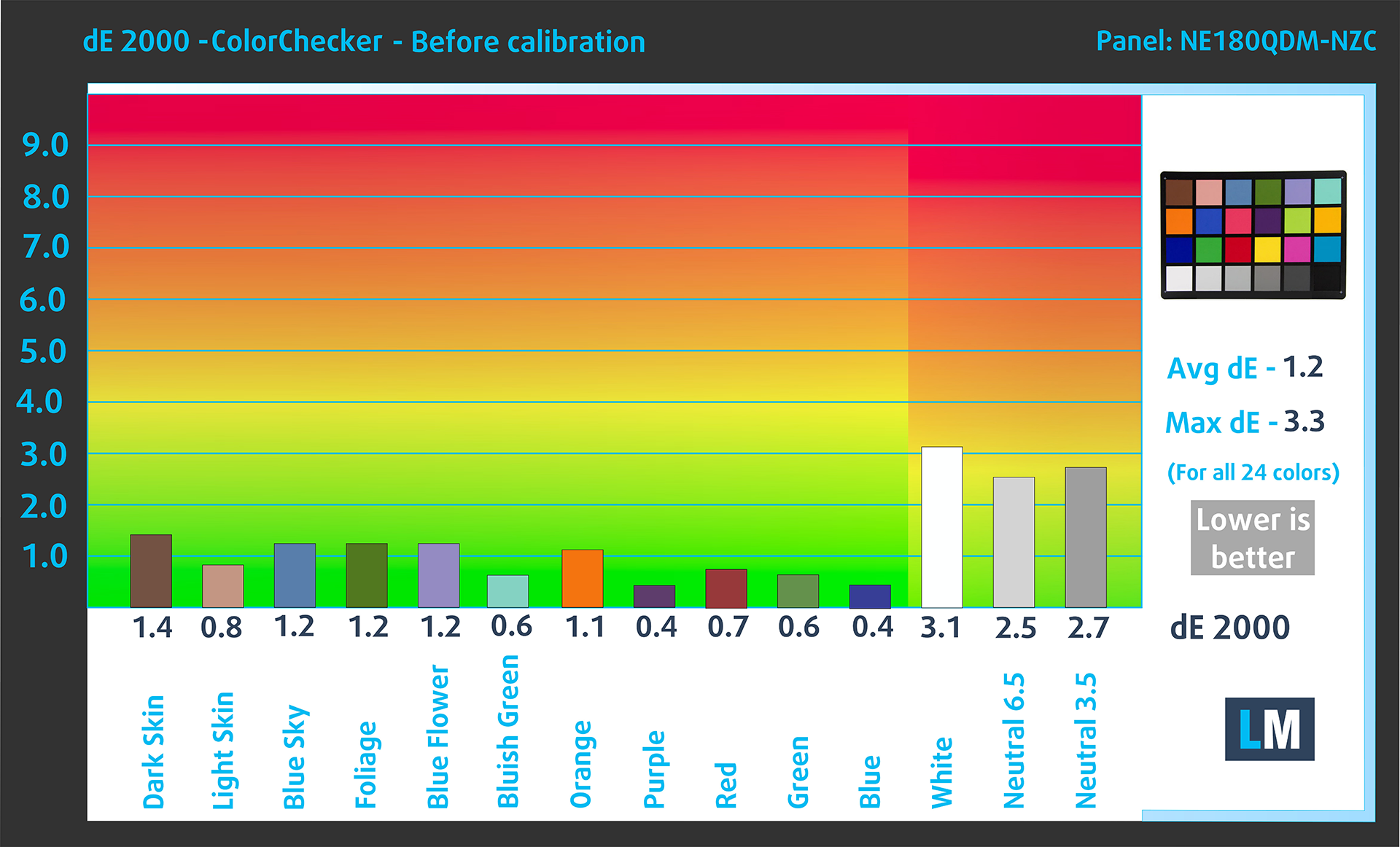
ASUS ROG Strix G18 G815 (2025) in its factory condition
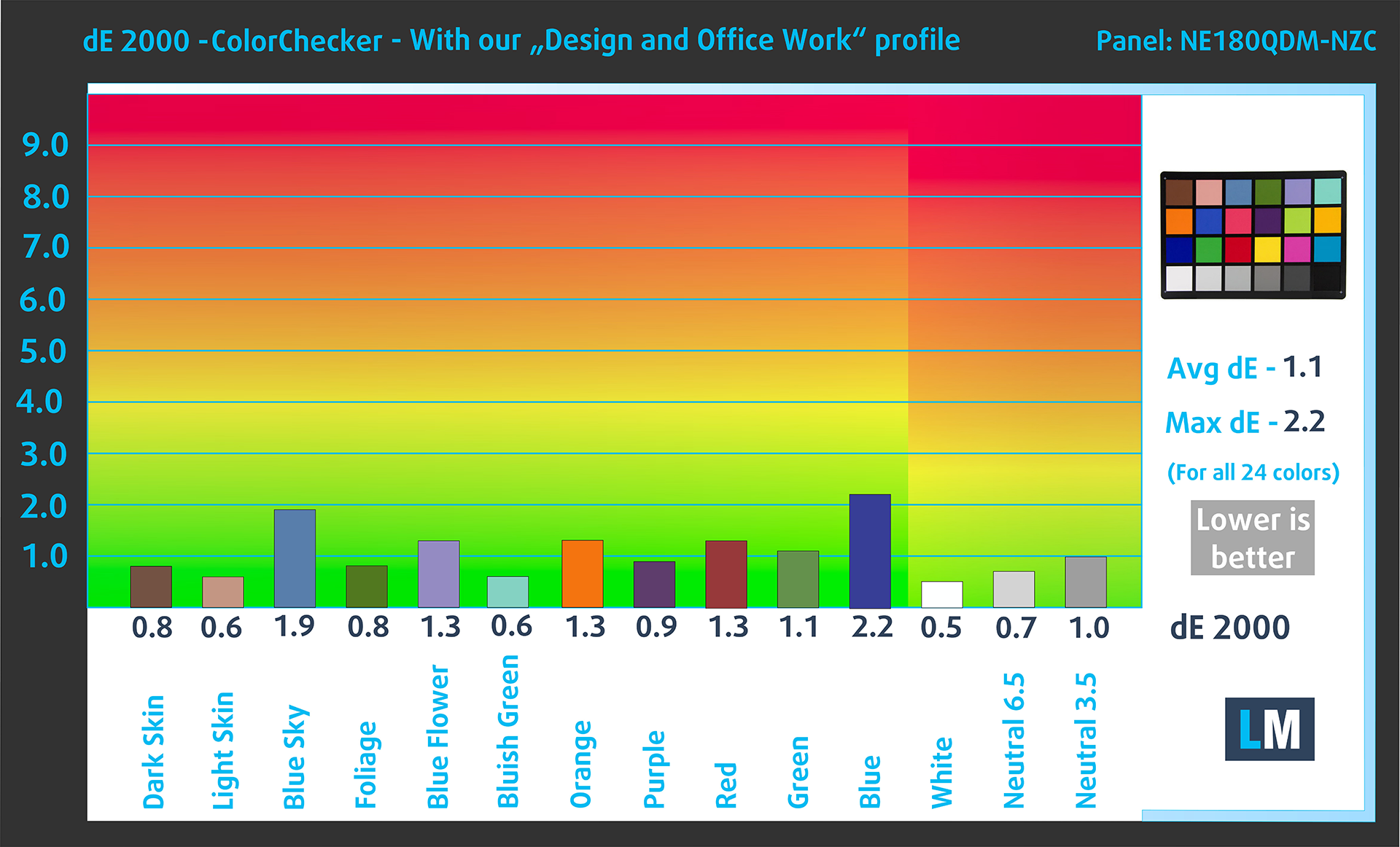
ASUS ROG Strix G18 G815 (2025) with our display profile
Comparison in the Display P3 color space.
Below are the results of the ASUS ROG Strix G18 G815 (2025) in its factory condition (“sRGB-Default” mode in “MyASUS – Armoury Crate” app) compared to sRGB color space.
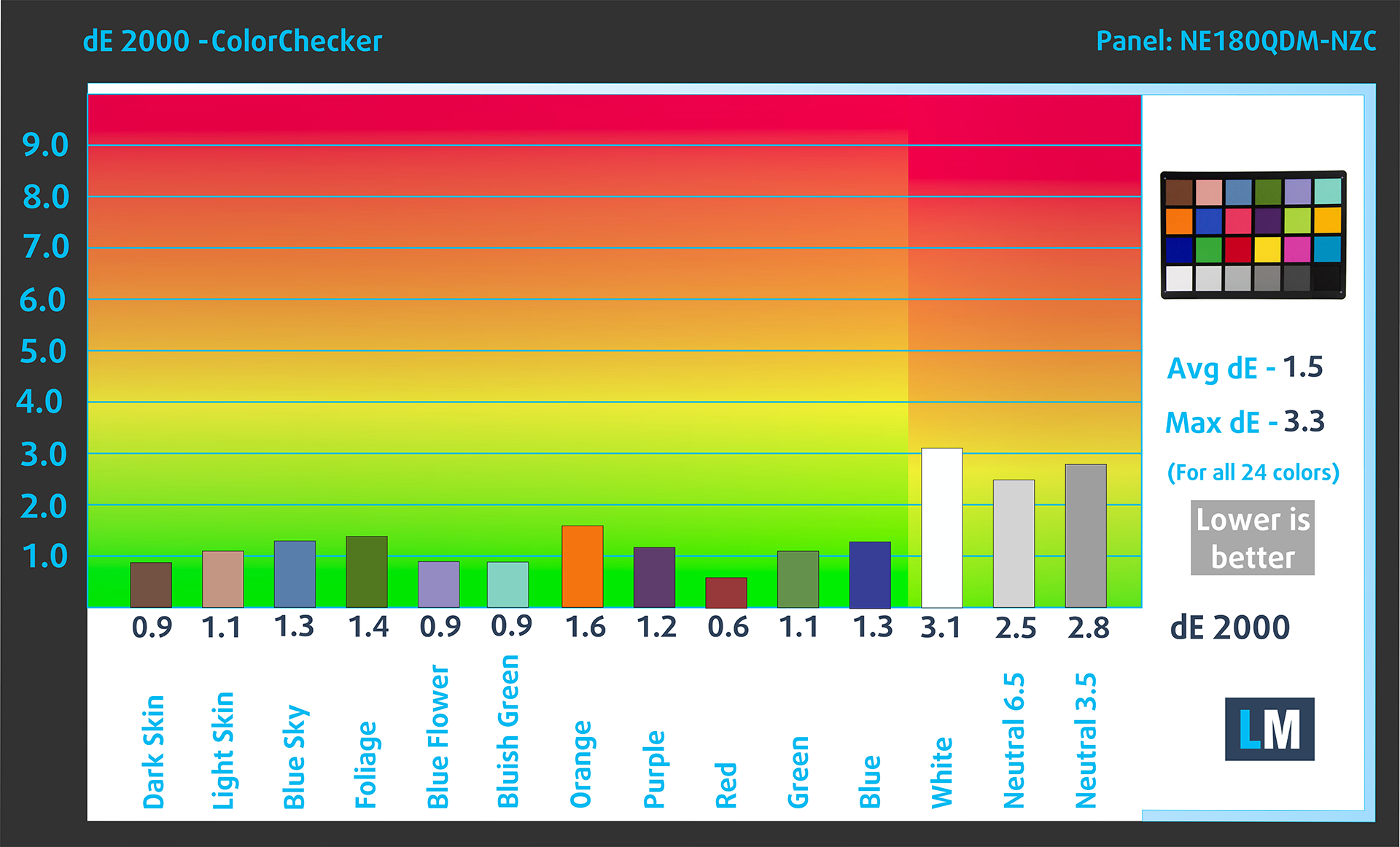
Here’s an illustration of what the Design and Office profile aims to deliver:
Left: No Profile | Drag the slider to see the difference | Right: Design & Office Profile


Visibility in dark scenes
Have you ever watched a movie with dark scenes where you could barely see anything? This often happens because many display panels struggle to differentiate the darkest nuances, making them appear the same.
The next figure illustrates how well the display reproduces these dark nuances. The left side of the image shows the display with stock settings, and the right side shows it with our Gaming and movies profile activated (Comparison is in “Native-Default” mode in “MyASUS – Armoury Crate” app).
On the horizontal axis are the grayscale levels, and on the vertical axis – the corresponding display brightness.
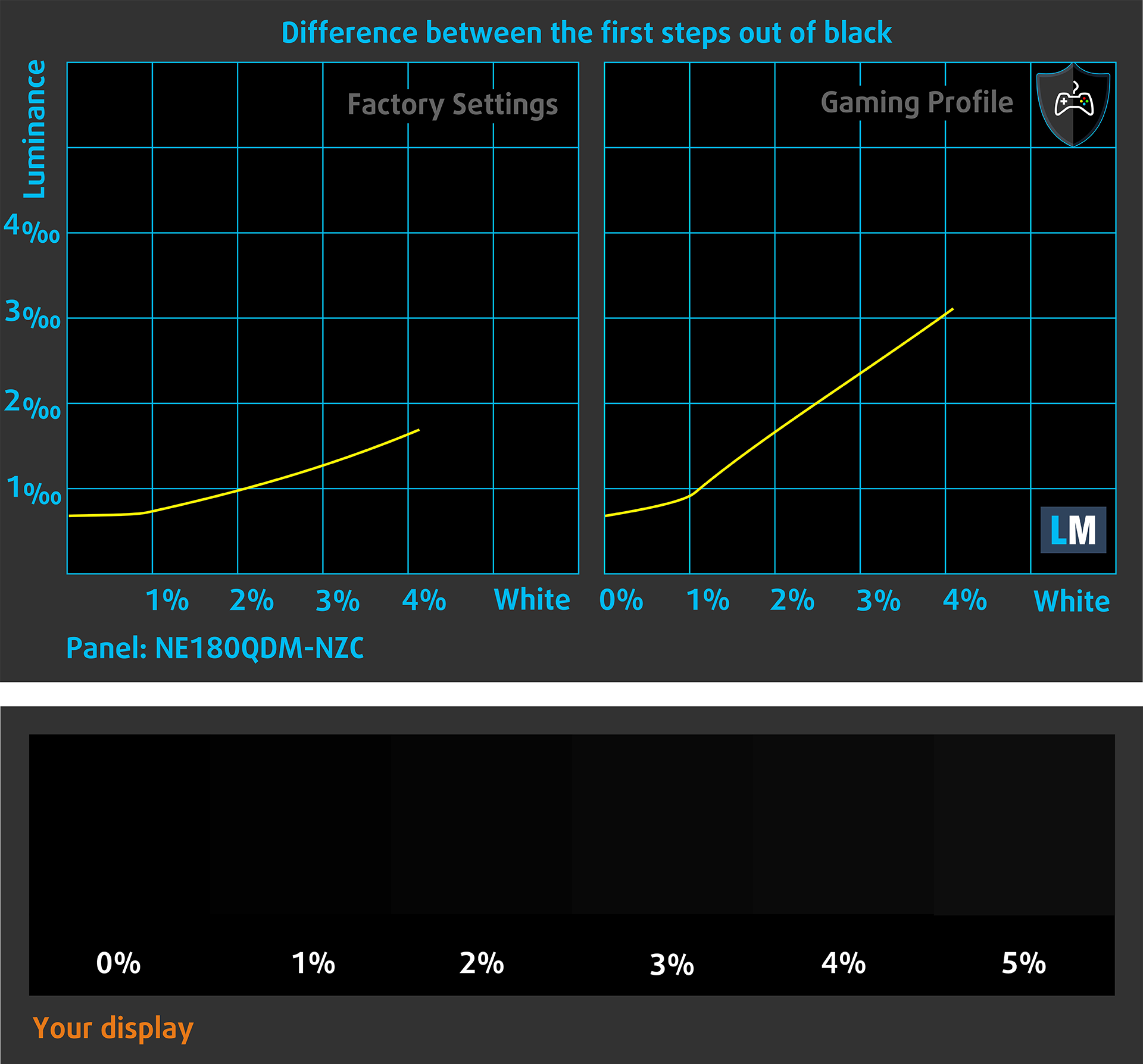
You can also check how your display handles the darkest nuances but keep in mind that this also depends on the settings of your current display and the surrounding light conditions.
Response time (Gaming capabilities)
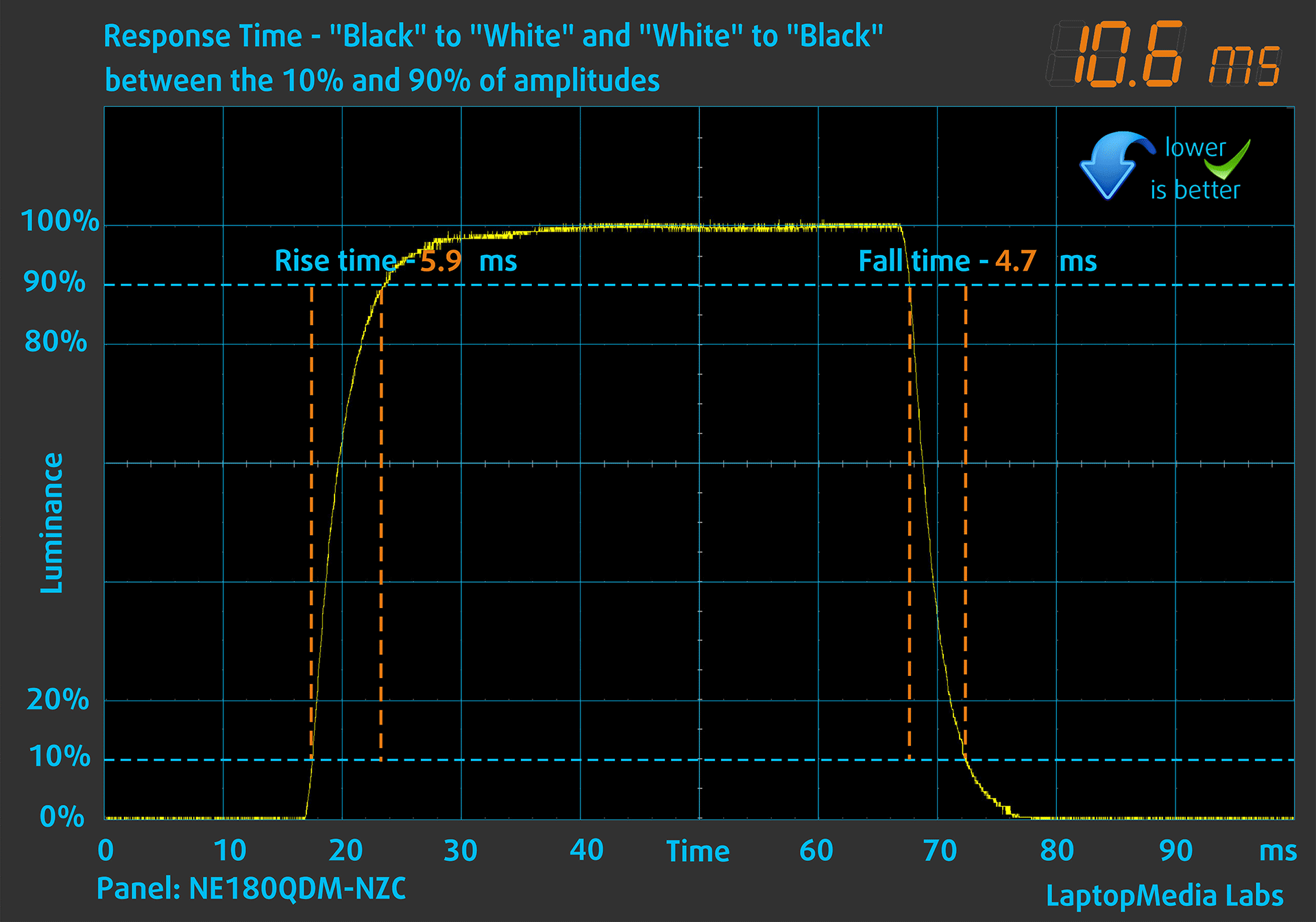
We test the reaction time of the pixels with the usual “black-to-white” and “white-to-black” method from 10% to 90% and vice versa.
We recorded Fall Time + Rise Time = 10.6 ms. Short pixel response time is a prerequisite for a smooth picture in dynamic scenes.
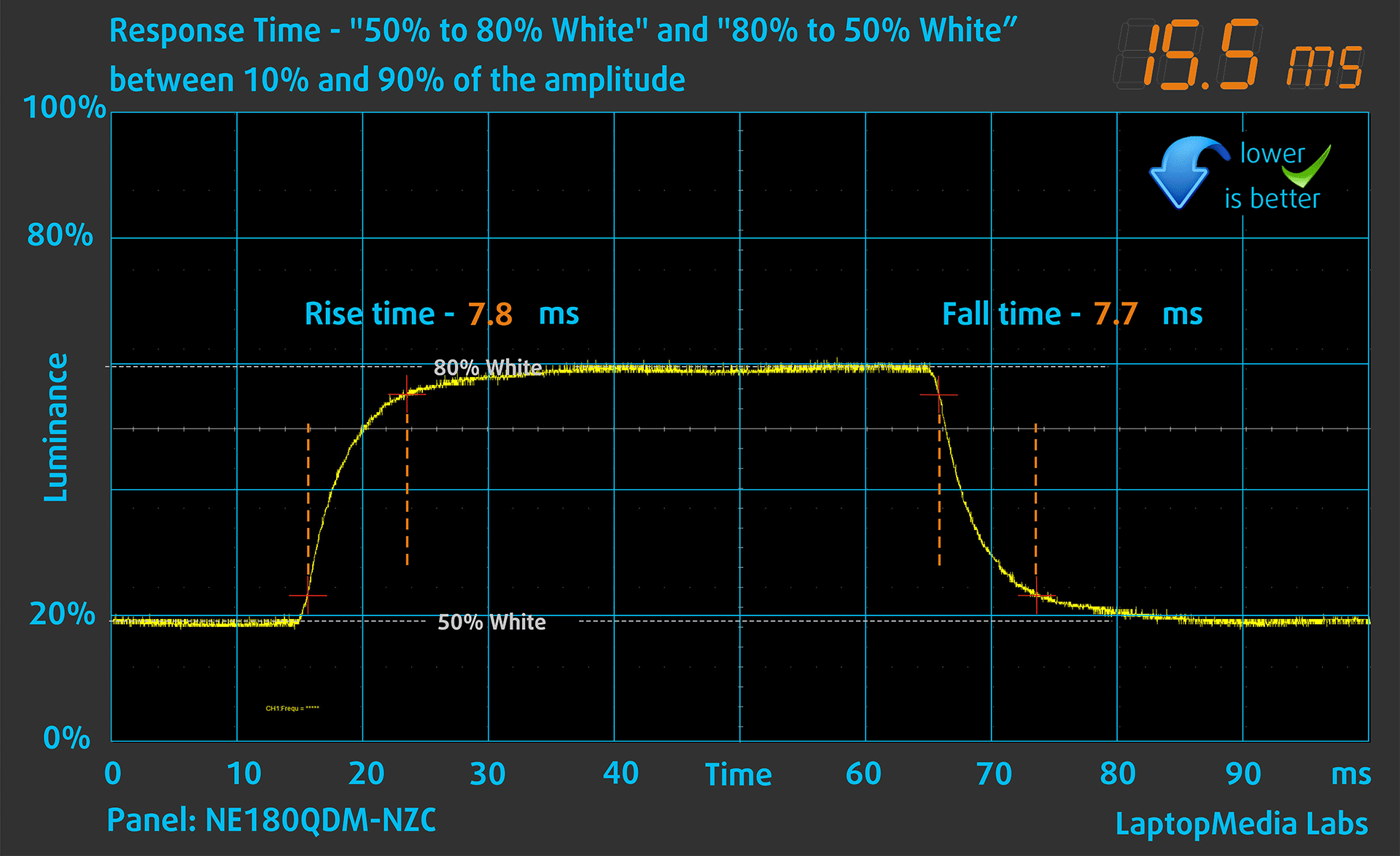
After that, we test the reaction time of the pixels with the usual “Gray-to-Gray” method from 50% White to 80% White and vice versa between 10% and 90% of the amplitude.
Health Impact: PWM (Screen flickering)
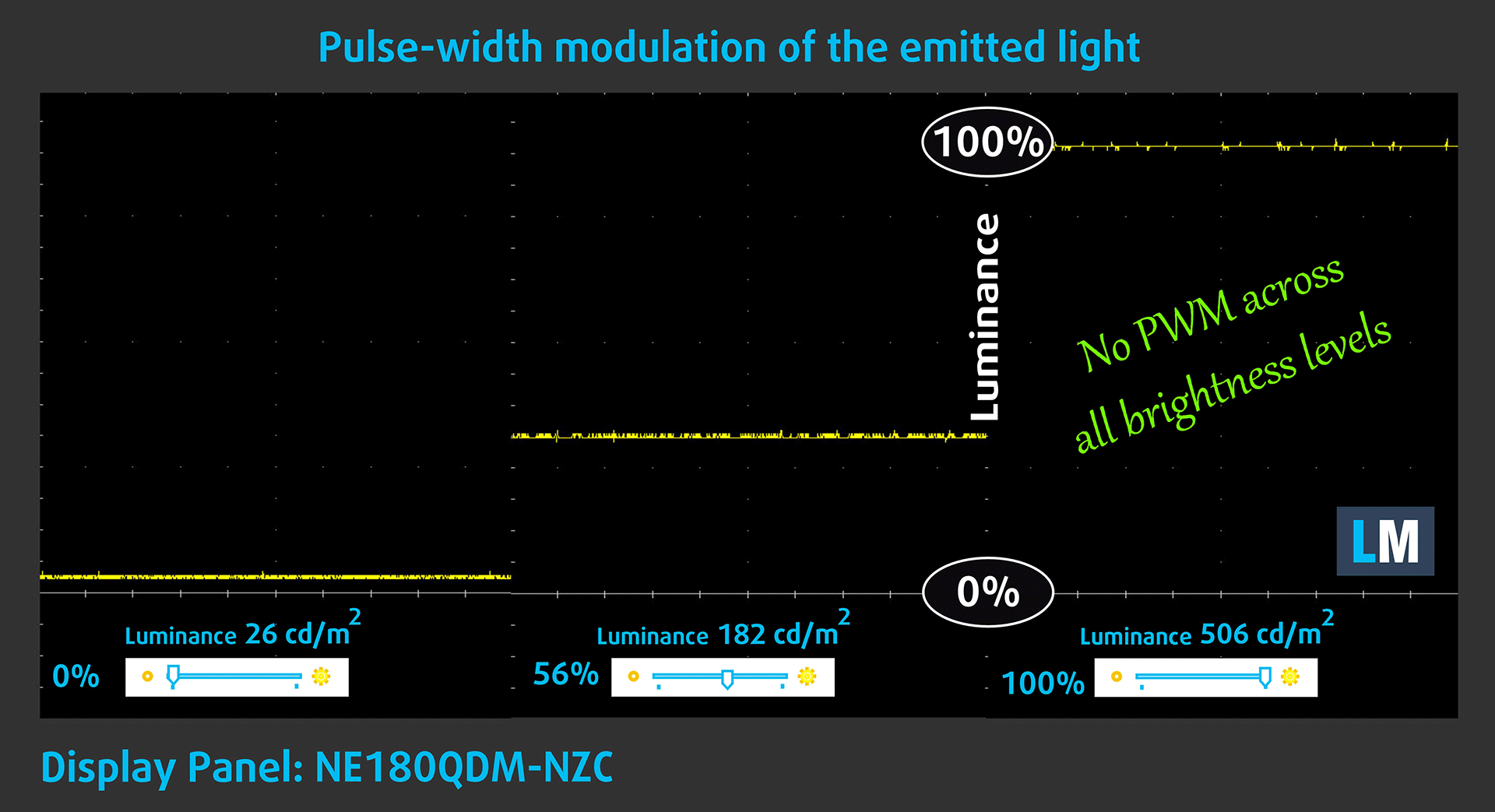
Some use PWM to regulate their brightness, which means that instead of reducing the light intensity, they pulse or flicker. Our brain merges the image, so it appears darker, but this strains both it and our vision, especially when the frequency of the pulses is low. You can read more about that in our dedicated article on PWM.
In the graph below, you see the intensity of light at different brightness levels—on the vertical axis is the brightness of the emitted light, and on the horizontal axis—time.
The light from the backlight of the ASUS ROG Strix G18 G815 (2025) display is not pulse-width modulated, providing visual comfort in the discussed aspect.
Health Impact: Blue light emissions
Installing our Health-Guard profile reduces harmful Blue Light emissions while keeping the colors of the screen perceptually accurate.
If you’re not familiar with the Blue light, the TL;DR version is – emissions that negatively affect your eyes, skin, and your whole body. You can find more information about that in our dedicated article on Blue Light.
Health Impact: Screen Reflectance
Glossy-coated displays can cause eye fatigue in high ambient light conditions due to reflections. We measure the level of screen reflection with the display turned off, at a 60° angle.
The reflectance of the ASUS ROG Strix G18 G815 (2025)’s screen is 31.2 GU. This is an exceptional result, one of the best on the market.
High Gloss: >70 GU
Medium Gloss: 30 – 70 GU
Low Gloss: <30 GU
Get our profiles
Since our profiles are tailored for each individual display model, this article and its respective profile package are meant for ASUS ROG Strix G18 G815 (2025) configurations with NE180QDM-NZC (BOE0CE4), 2560 х 1600, IPS panel.
*Should you have problems with downloading the purchased file, try using a different browser to open the link you’ll receive via e-mail. If the download target is a .php file instead of an archive, change the file extension to .zip or contact us at [email protected].
Read more about the profiles HERE.
In addition to receiving efficient and health-friendly profiles, by buying LaptopMedia's products you also support the development of our labs, where we test devices in order to produce the most objective reviews possible.

Design and Office
The Design and Office profile makes display colors as close to real as possible.Ideal not only for professionals but also for everyday users, it meets sRGB standards (D65 white point, sRGB gamma) with minimal DeltaE for precise color reproduction on your panel.

Gaming and Movies
Have you ever watched a movie where, during dark scenes, you can barely see anything? Many displays fail to distinguish dark tones properly. Our Gaming and Movies profile enhances low-light performance, like HDR tech, using a gamma curve tailored to human perception — ideal for gamers seeking faster reactions and clearer visuals.

Health-Guard
Our Health-Guard profile protects your eyes by eliminating PWM flickering, reducing strain and fatigue, and minimizing harmful Blue light exposure that can disrupt sleep and health. It uses software dimming and a gamma curve tailored to human perception for comfort and safety during screen use.
Get All The Profiles With 33% Discount!

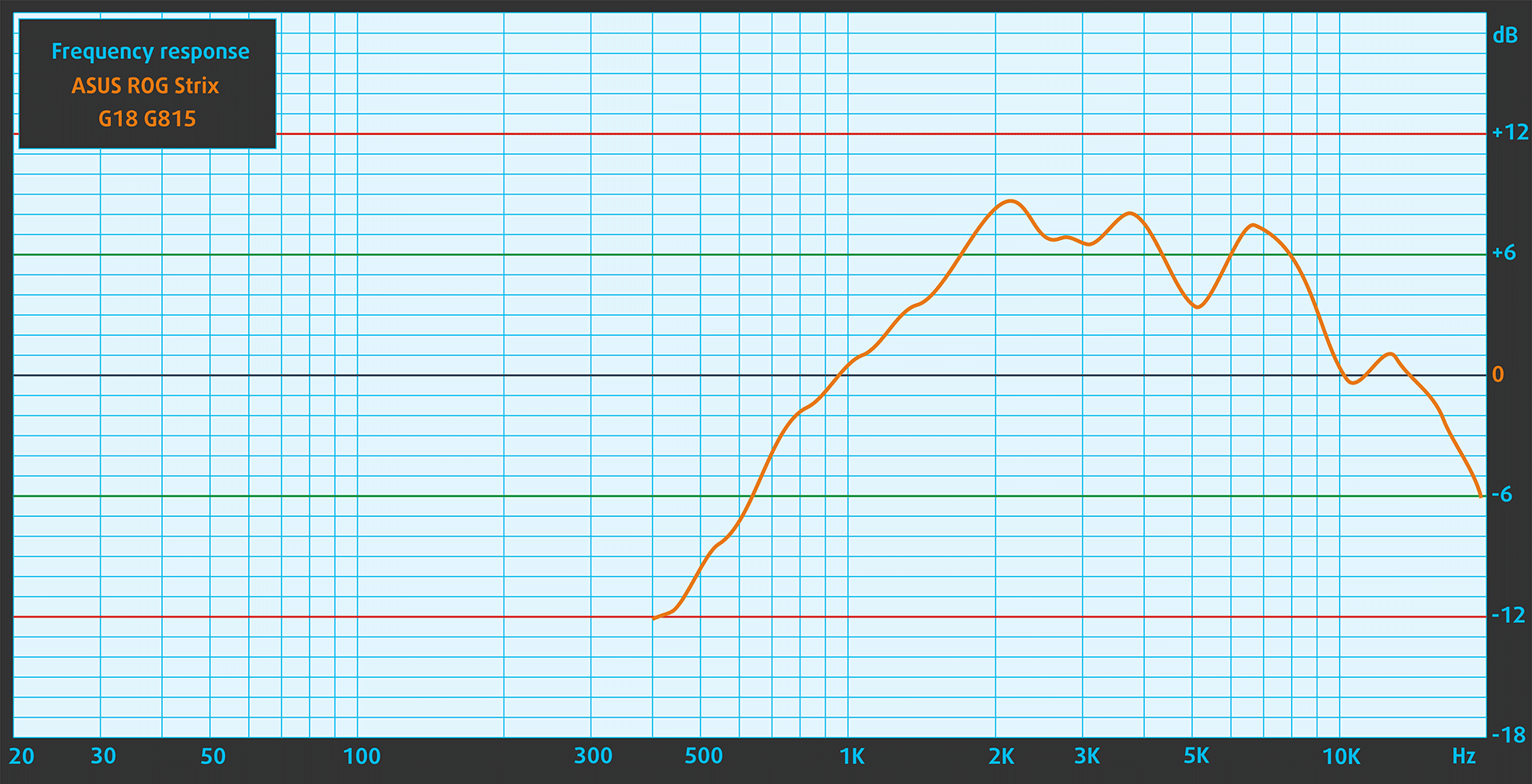
Sound
The ASUS ROG Strix G18 G815 (2025)’s sound is of very good quality. The low, mid, and high frequencies are clear.
Work Performance: CPU, Storage, AI
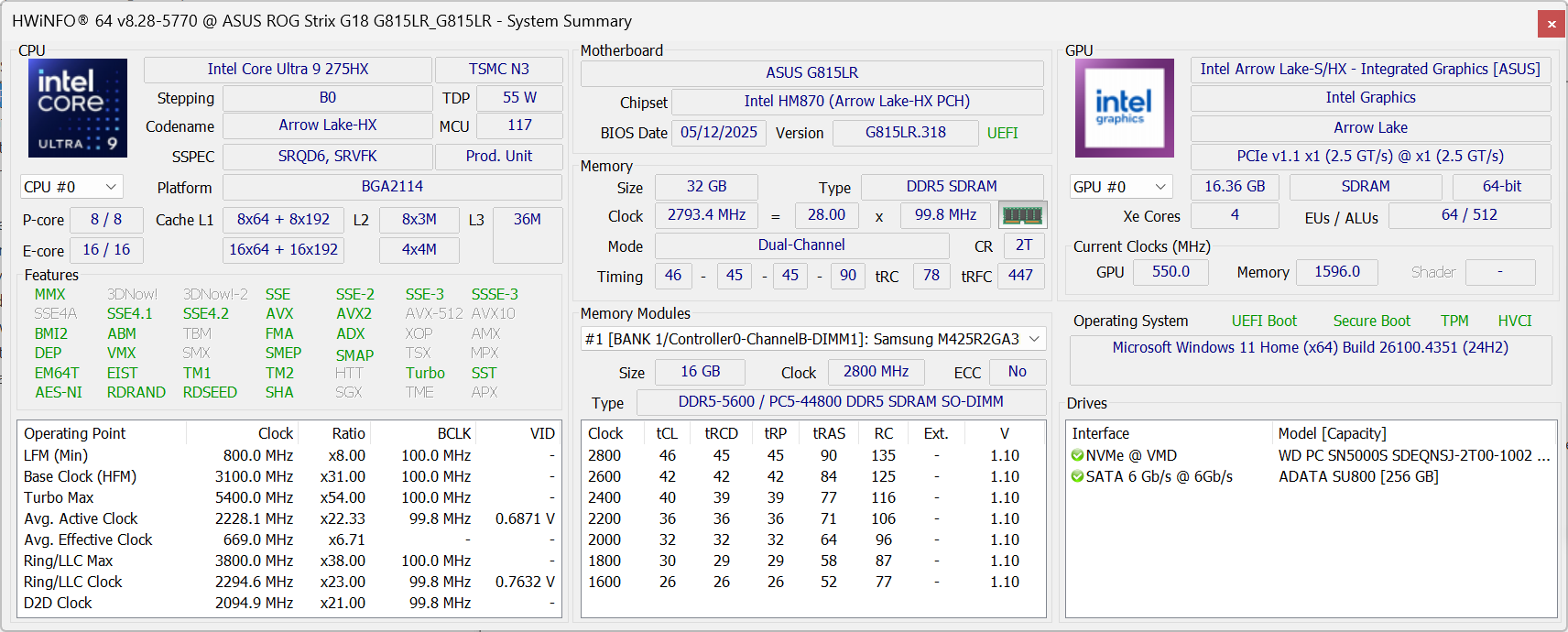
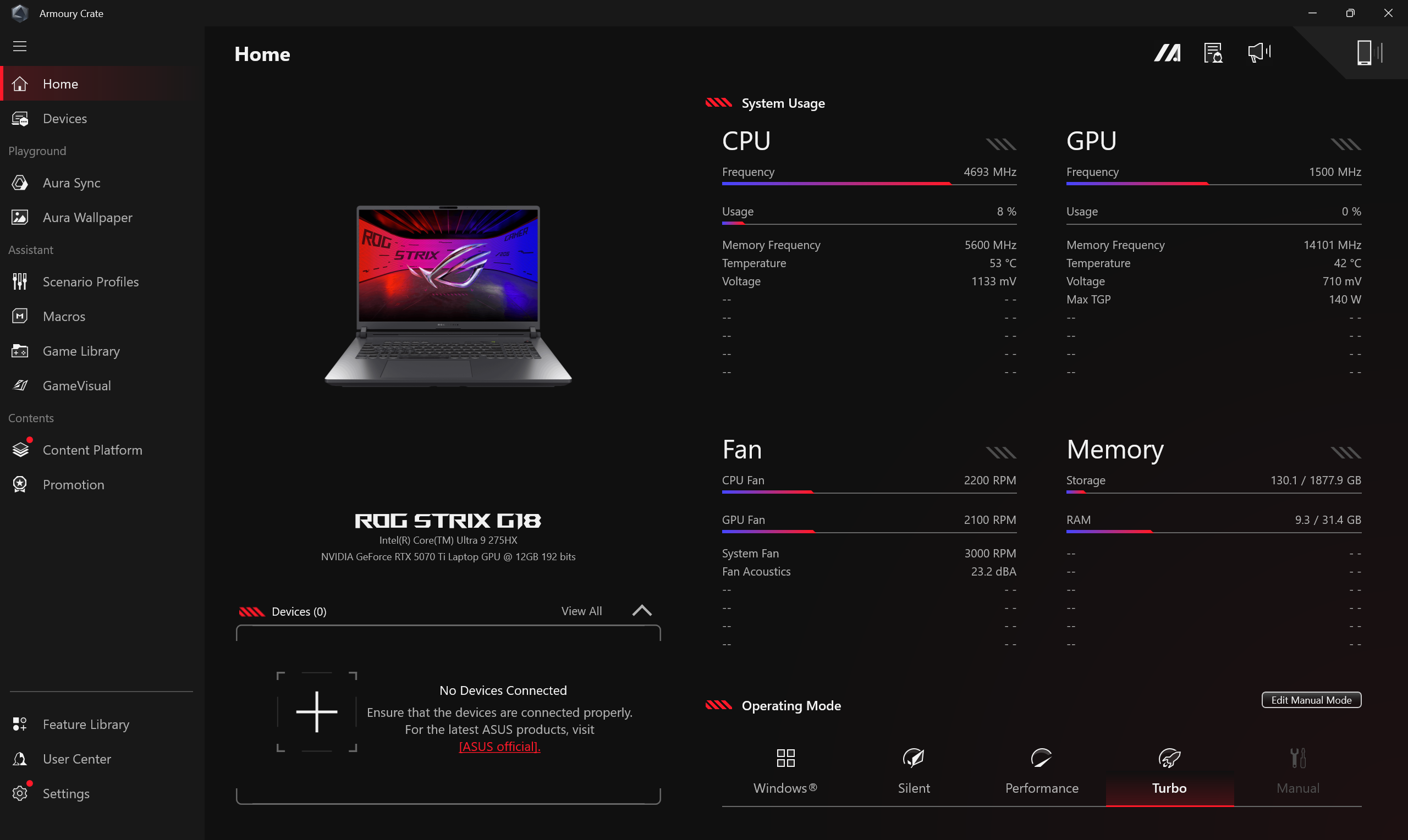
All performance and temperature tests are conducted with “Turbo Mode” activated in Armoury Crate:
CPU and Work Performance
The ASUS ROG Strix G18 G815 is available with high-end processor options, including the Intel Core i9-14900HX and the newer Core Ultra 9 275HX. While the 14900HX is a powerful 24-core chip from Intel’s Raptor Lake series, the 2025 iteration comes with Ultra 9 275HX which brings architectural improvements and ranks higher in our Top Laptop CPU Ranking, reaching the #5 spot. These CPUs make the laptop well-suited for gaming, streaming, and demanding productivity tasks.
As you can see, the ASUS ROG Strix G18 G815 best performer overall, although in Single-core test their results are pretty similar. In Multi-core, the two ASUS models and the MSI Vector are getting advantage, and in the longest 3D Rendering benchmark by Cinebench, the Strix G18 G815 is the clear winner.
Single-core performance ensures smooth operation and responsiveness in operating systems, providing a better user experience.
Results are from the Geekbench 6 Single-Core test (higher is better)

Multi-core performance is essential for handling complex and demanding tasks, such as Video editing, CAD, and Scientific simulations.
Results are from the Geekbench 6 Multi-Core test (higher is better)
Here, we evaluate the CPU's performance using a real-world 3D rendering task, assessing its ability to handle complex computations and rendering workloads efficiently.
Results are from the Cinebench 2024 Multi-Core test (higher is better)
Storage Performance
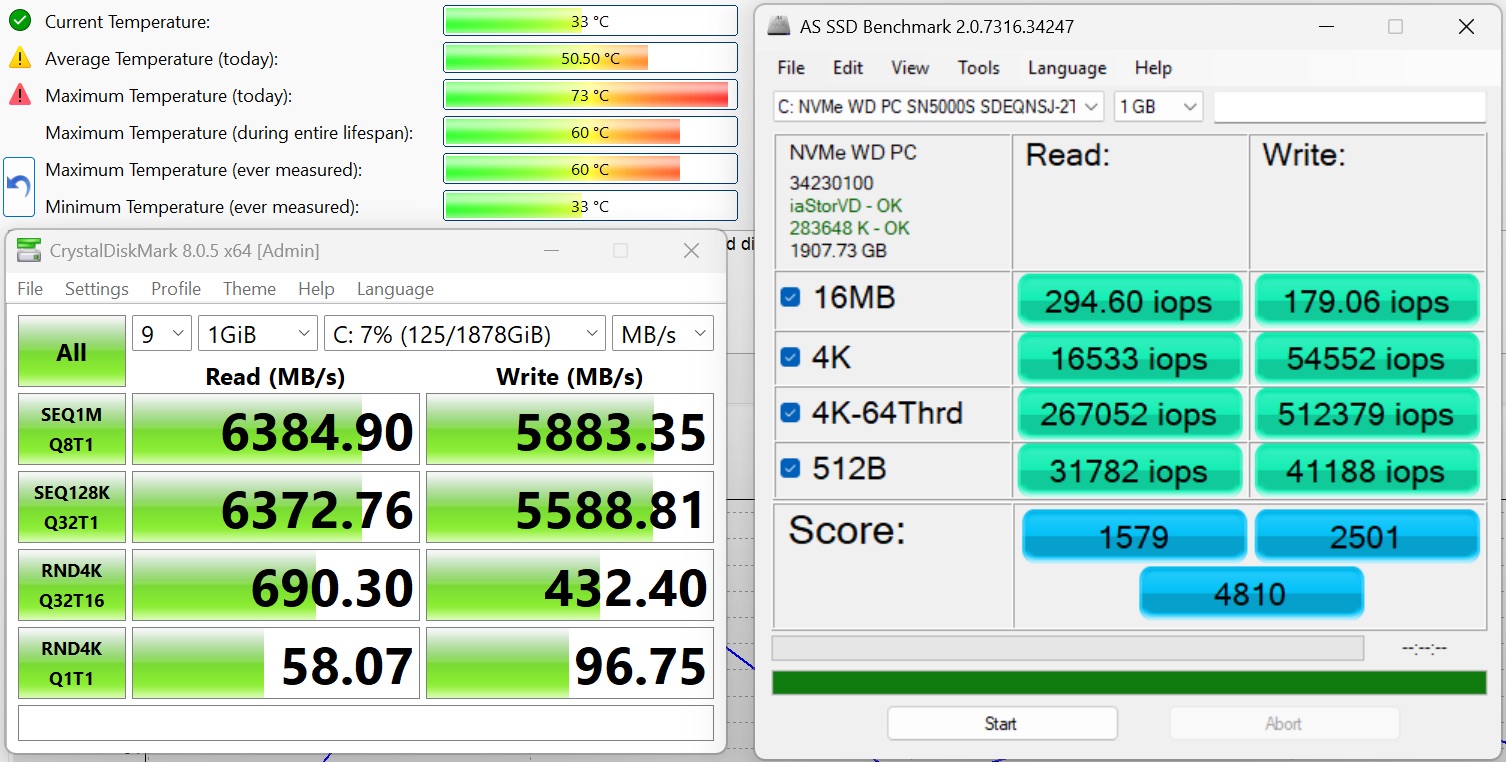
We ordered the 2TB variant of ASUS ROG Strix G18 G815 (2025) and it came with a 2TB WD PC SN5000S PCIe 4.0 NVMe M.2 SSD, delivering solid real-world performance with sequential read speeds reaching up to 6385 MB/s and write speeds of around 5883 MB/s. The temperatures under high load are acceptable.
The laptop includes two M.2 PCIe slots, both of which are easily accessible and upgradeable thanks to ASUS’s convenient tool-free Q-latch mechanism. This design allows you to expand your storage capacity without using a screwdriver, making upgrades fast and hassle-free – even for users with no technical experience.
AI Performance
Here you can see the position of the GPUs and CPUs (NPUs) found within the ASUS ROG Strix G18 G815 in our AI Hardware Performance Rankings based on their AI processing power, measured in TOPS (Tera Operations Per Second) - a critical metric indicating the computational throughput, particularly for AI tasks.
The first column shows peak performance for INT8/FP8 precision, which is the most widespread metric for evaluating AI inference capabilities. We exclude Sparsity to provide a more accurate reflection of AI performance in dense computation scenarios where sparsity optimizations may not be applicable. The second and third columns show the performance with Sparsity, and FP4 TFLOPS, when supported.
For SoCs, the results reflect the peak performance of the integrated NPU. Additionally, it’s important to note that, according to Microsoft, a NPU must have at least 40 TOPS of AI computing power for the PC to be considered “AI-capable.”
| # | GPU / CPU (NPU) | TOPS INT8/FP8 No Sparsity | TOPS INT8/FP8 Sparsity | TFLOPS FP4 Sparsity |
|---|---|---|---|---|
| 416. | NVIDIA GeForce RTX 5080 (Laptop) | 281 | 562 | 1124 |
| 669. | NVIDIA GeForce RTX 5070 Ti (Laptop) | 209 | 418 | 836 |
| 849. | NVIDIA GeForce RTX 5070 (Laptop, 8GB GDDR7) | 173 | 346 | 692 |
| 1012. | NVIDIA GeForce RTX 5060 (Laptop) | 133 | 266 | 532 |
| 1736. | Intel Core Ultra 9 275HX | 13 | — | — |
| 1744. | Intel Core Ultra 9 290HX Plus | 13 | — | — |
GPU and Gaming Performance
Graphics performance is a strong point of the Strix G18 G815. Users can choose between the NVIDIA GeForce RTX 5070 Ti (Laptop), which is a solid high-end GPU, or the even more capable RTX 5080 (Laptop), currently ranked #2 in our Top Laptop Graphics Ranking. Both options offer support for ray tracing and DLSS, making them suitable for modern AAA games and GPU-intensive creative workloads.
As you see, the G18 G815 is the best performer from all tested RTX 5070 Ti laptops. How? The answer is in the next section – the Temperatures. Spoiler: Big chassis, great optimization
The results are from 3DMark Time Spy (Graphics). Higher is better.
The results are from 3DMark Wild Life Extreme Unlimited. Higher is better.
ASUS ROG Strix G18 G815 GPU variants
Here you can see an approximate comparison between the GPUs that can be found in the ASUS ROG Strix G18 G815 models on the market. This way you can decide for yourself which ASUS ROG Strix G18 G815 model is the best bang for your buck.
Note: The chart shows the cheapest different GPU configurations so you should check what the other specifications of these laptops are by clicking on the laptop’s name / GPU.
The results are from 3DMark Time Spy (Graphics). Higher is better.
Results are from the 3DMark: Wild Life (Graphics) benchmark (higher the score, the better)
Gaming tests

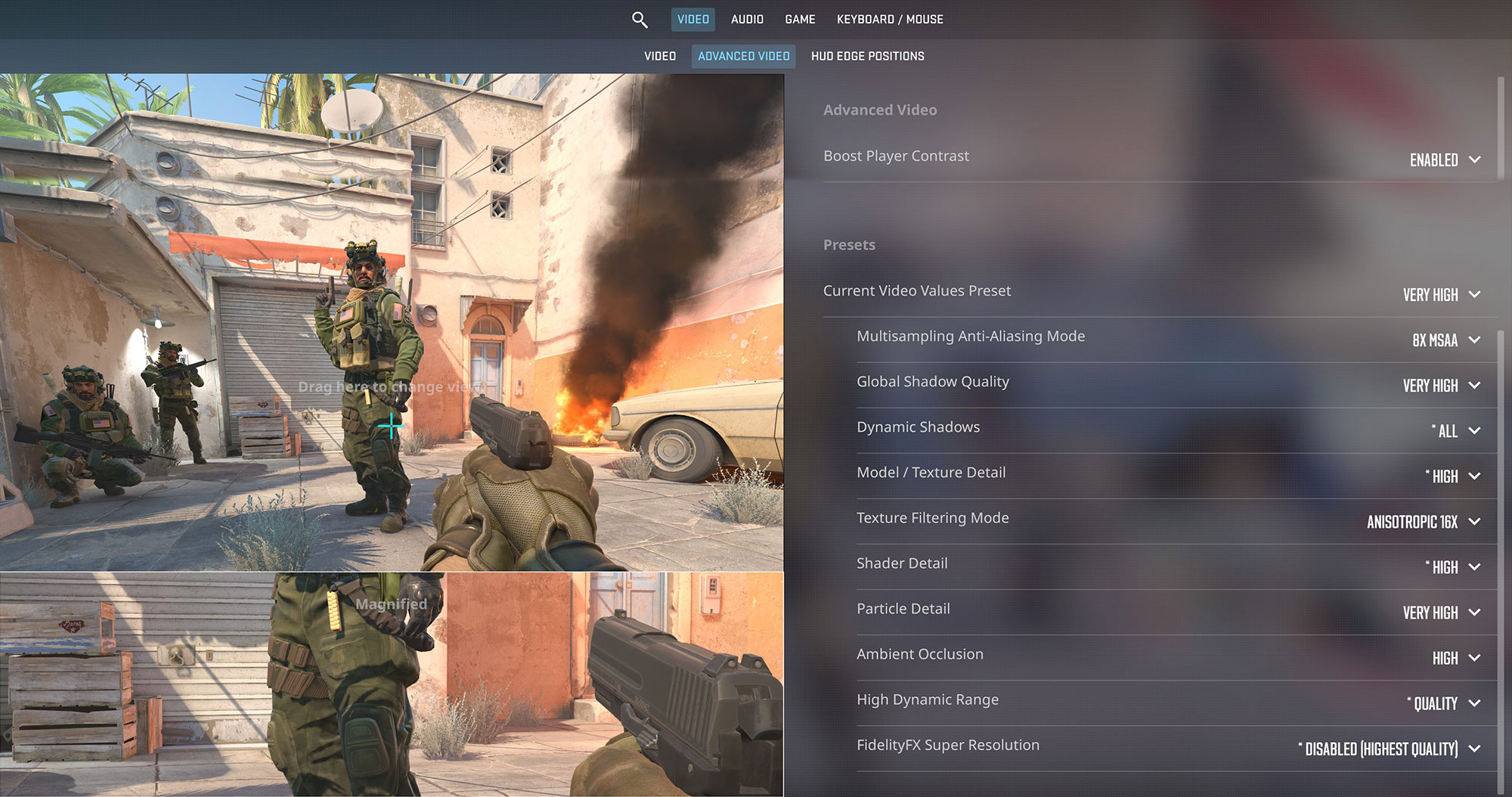
In the competitive arena of Counter-Strike 2, the ASUS ROG Strix G18 delivers exceptional frame rates. It achieves a staggering 289 FPS at 1200p and a very high 203 FPS at 1600p, both on Very High settings, making it an ideal choice for esports enthusiasts.
| Counter Strike 2 | 1200p, Very High (Check settings) | 1600p, Very High (Check settings) |
| Average FPS | 289 FPS | 203 FPS |

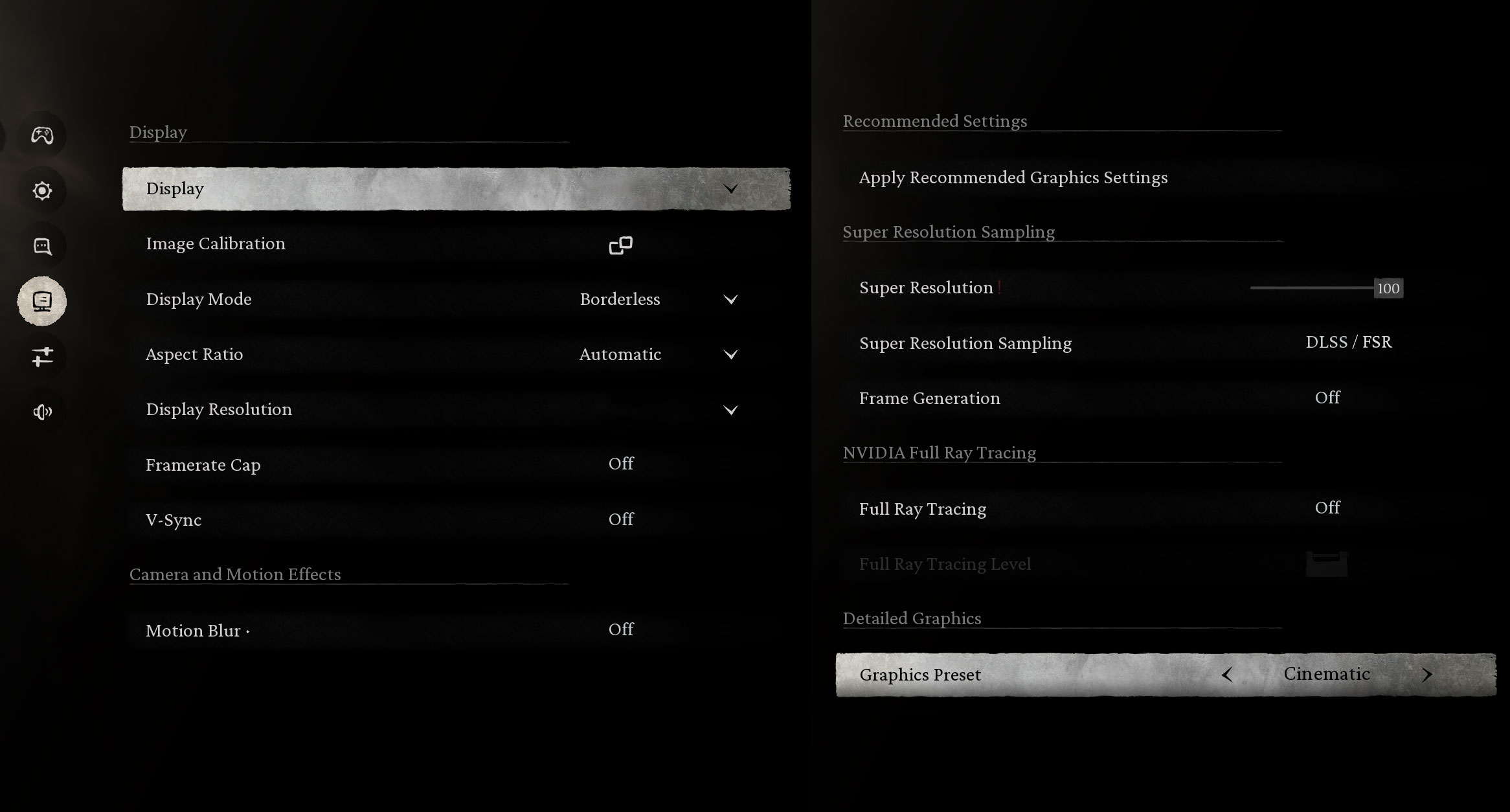
Black Myth: Wukong is a demanding title, and the RTX 5070 Ti provides a playable experience at 1600p on the beautiful Cinematic preset, netting 39 FPS. Deactivating DLSS would easily push this into the 60 FPS range for smoother gameplay.
| Black Myth: Wukong | 1600p, Cinematic (Check settings) |
| Average FPS | 39 FPS |

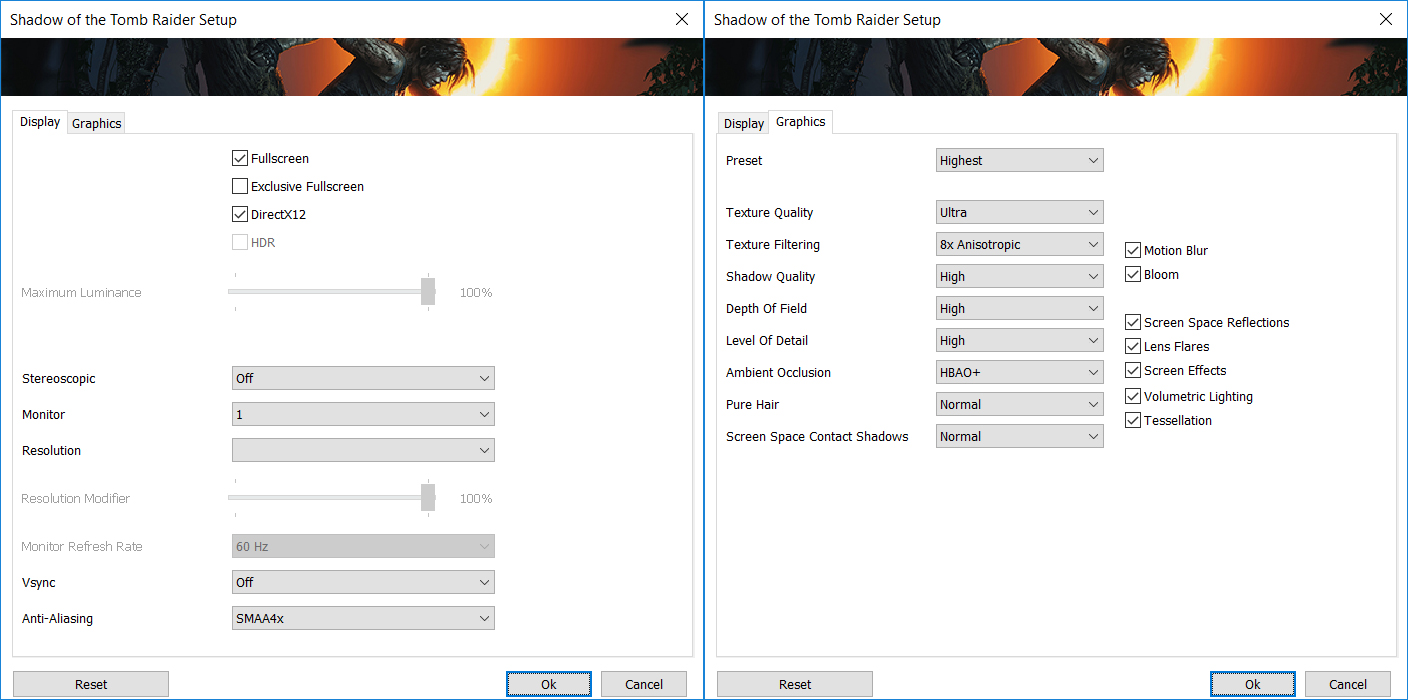
The laptop shows strong performance in Shadow of the Tomb Raider, easily clearing 157 FPS at 1200p and a very smooth 102 FPS at 1600p on the Highest graphical preset. This is excellent performance for a visually rich single-player game.
| Shadow of the Tomb Raider | 1200p, Highest (Check settings) | 1600p, Highest (Check settings) |
| Average FPS | 157 FPS | 102 FPS |

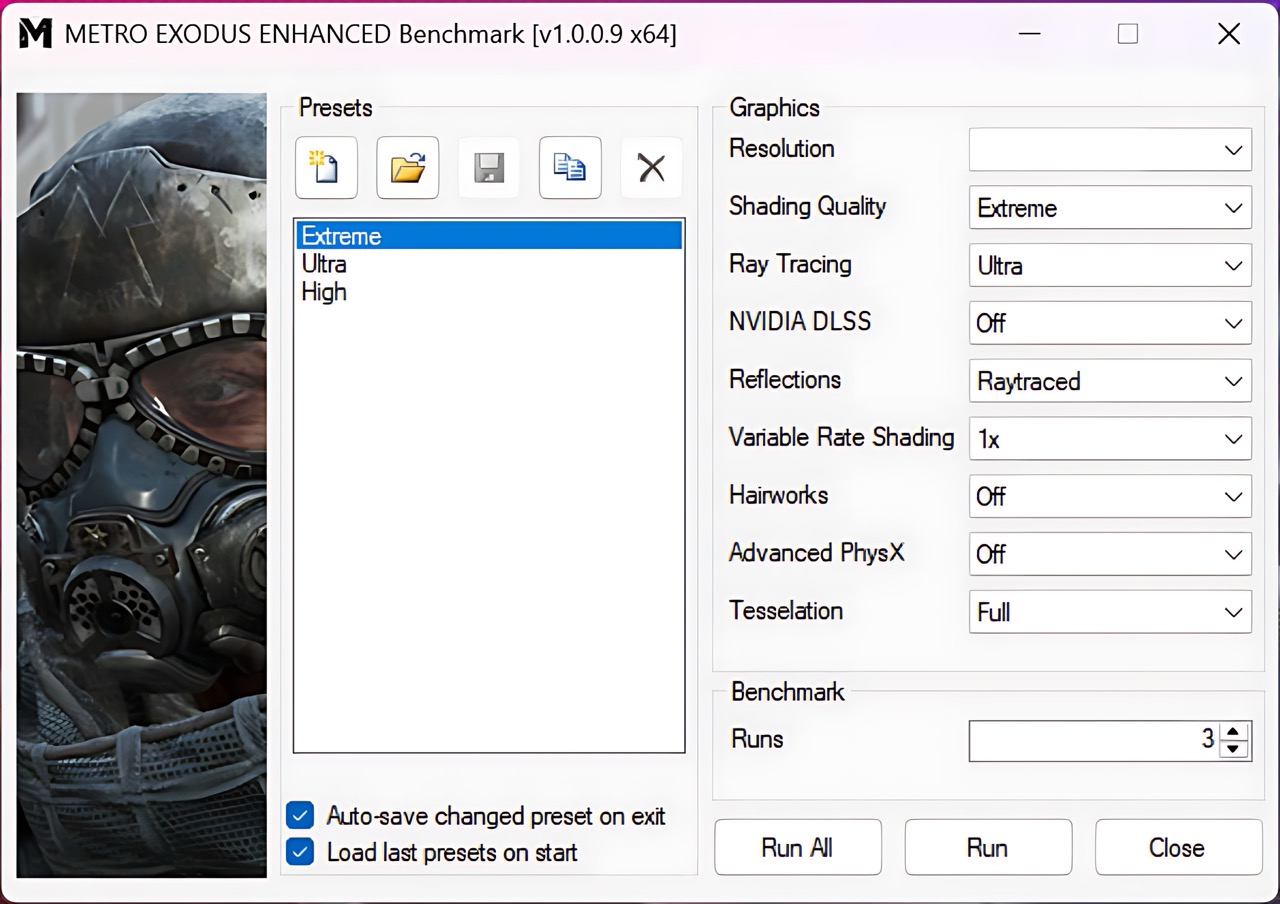
Even in the ray-tracing-intensive Metro Exodus Enhanced Edition, the Strix G18 holds its own. It provides a solid 69 FPS at 1200p and a playable 50 FPS at 1600p on the grueling Extreme preset, showcasing the capability of the new RTX 5070 Ti.
| Metro Exodus Enhanced Edition | 1200p, Extreme (Check settings) | 1600p, Extreme (Check settings) |
| Average FPS | 69 FPS | 50 FPS |
[eBook Guide + Tools] How to MAX OUT Your Laptop
You can make your laptop Faster. LaptopMedia has tested thousands of models in the last 15 years, and we have yet to see a notebook that couldn't be made more powerful through modifications.
That's why we decided to bundle everything we know about how to achieve this in an Easy-to-Follow, Step-by-Step, and Laboratory-Tested, all in one project.
Read more about it here:
[eBook Guide + Tools] How to MAX OUT Your Laptop

🛠️ GPU Modifications: vBIOS, Overclocking, Undervolting
⚙️ Building Fast/Reliable RAID configuration
💻 Hardware upgrade tips for best results
🖼 Display enhancing
💾 OS Optimization for best performance
Temperatures and Comfort, Noise, Stability
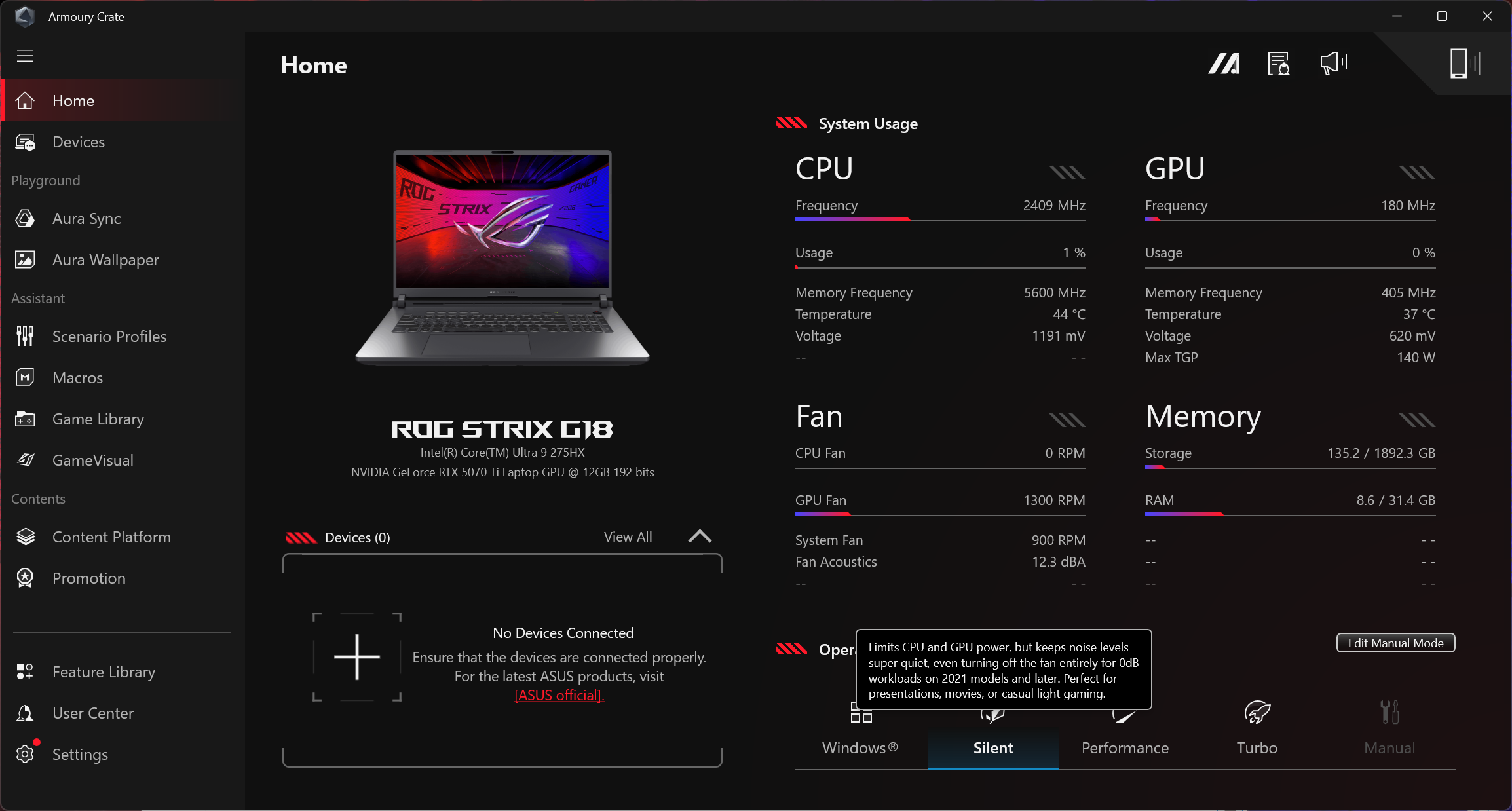
At idle, the CPU package of the ASUS ROG Strix G18 G815 maintains a temperature of 49ºC, but it is not completely silent – when in Turbo mode, you can still hear the fans.
Office Work, Web Development, Design
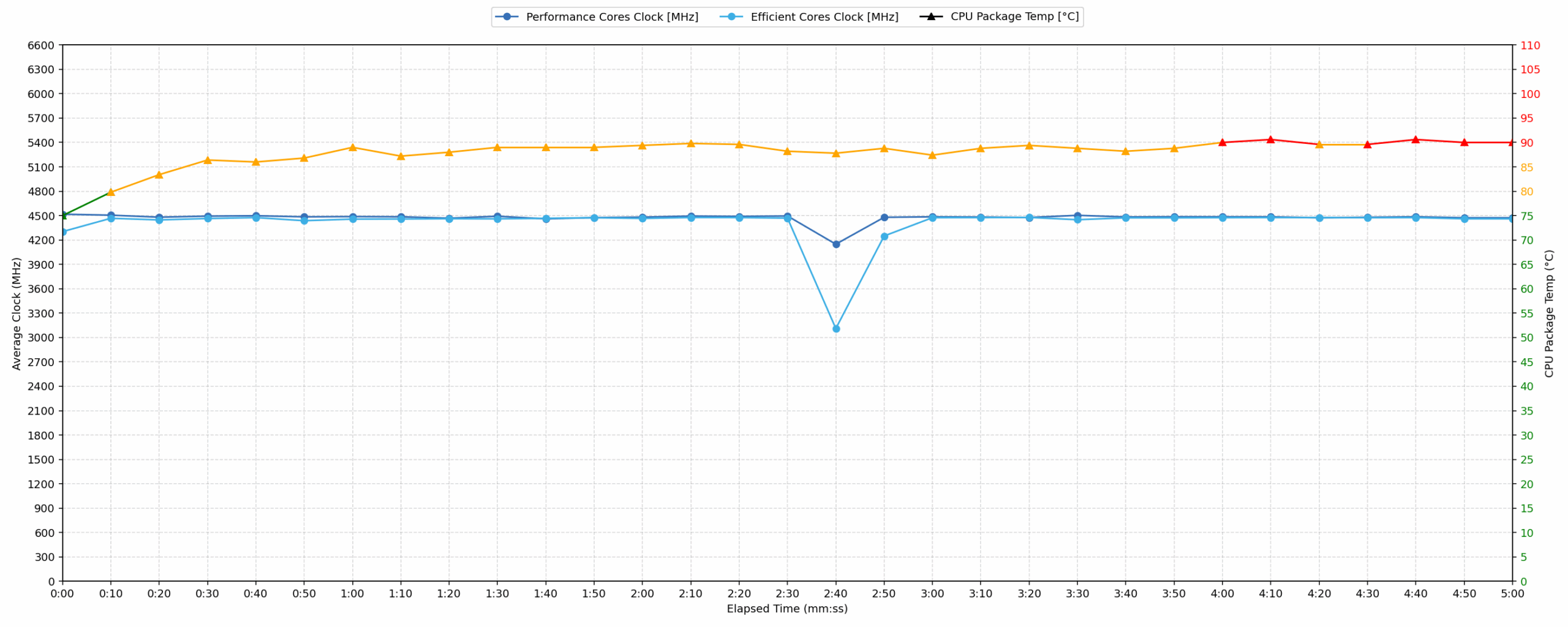
Short periods (0:00 – 0:10 s) of 100 % CPU load
This test shows the CPU behavior during short periods of serious load. It’s important for users who are looking for laptops suitable for tasks like Web Design and Programming.
| Intel Core Ultra 9 275HX | Avg. P-Core Clock | Avg. CPU Temp. | Avg. CPU Power |
| ASUS ROG Strix G18 G815 (2025) | 4517 MHz | 75 °C | 140 W |
| ASUS ROG Strix G16 G615 | 4471 MHz | 94 °C | 150 W |
| ASUS ROG Strix SCAR 18 G835 (2025) | 4399 MHz | 90 °C | 117 W |
| Acer Predator Helios 16 AI (PH16-73) | 4374 MHz | 87 °C | 154 W |
| Lenovo Legion Pro 7i Gen 10 (16″ Intel) | 4268 MHz | 90 °C | 167 W |
| Acer Predator Helios Neo 16 AI (PHN16-73) | 4194 MHz | 91 °C | 151 W |
| MSI Vector 16 HX AI A2XW | 4185 MHz | 90 °C | 155 W |
| Acer Predator Helios Neo 16S AI (PHN16S-71) | 3829 MHz | 88 °C | 130 W |
The ASUS ROG Strix G18 G815 demonstrates excellent performance during short CPU bursts, maintaining an average clock speed of 4517 MHz over 0-10 seconds. Its average CPU temperature of 75 °C during this period is well within optimal limits, indicating efficient thermal management for brief, intense tasks. At 140 W average power, it effectively utilizes its Intel Core Ultra 9 275HX. Compared to other laptops featuring the same CPU, the Strix G18 (2025) delivers the highest average clock speed in this short-duration test while also achieving a significantly lower average temperature, positioning it as a top performer for web design and programming. Excellent optimization by ASUS!
Video editing, Scientific computing, Software compilation, 3D rendering
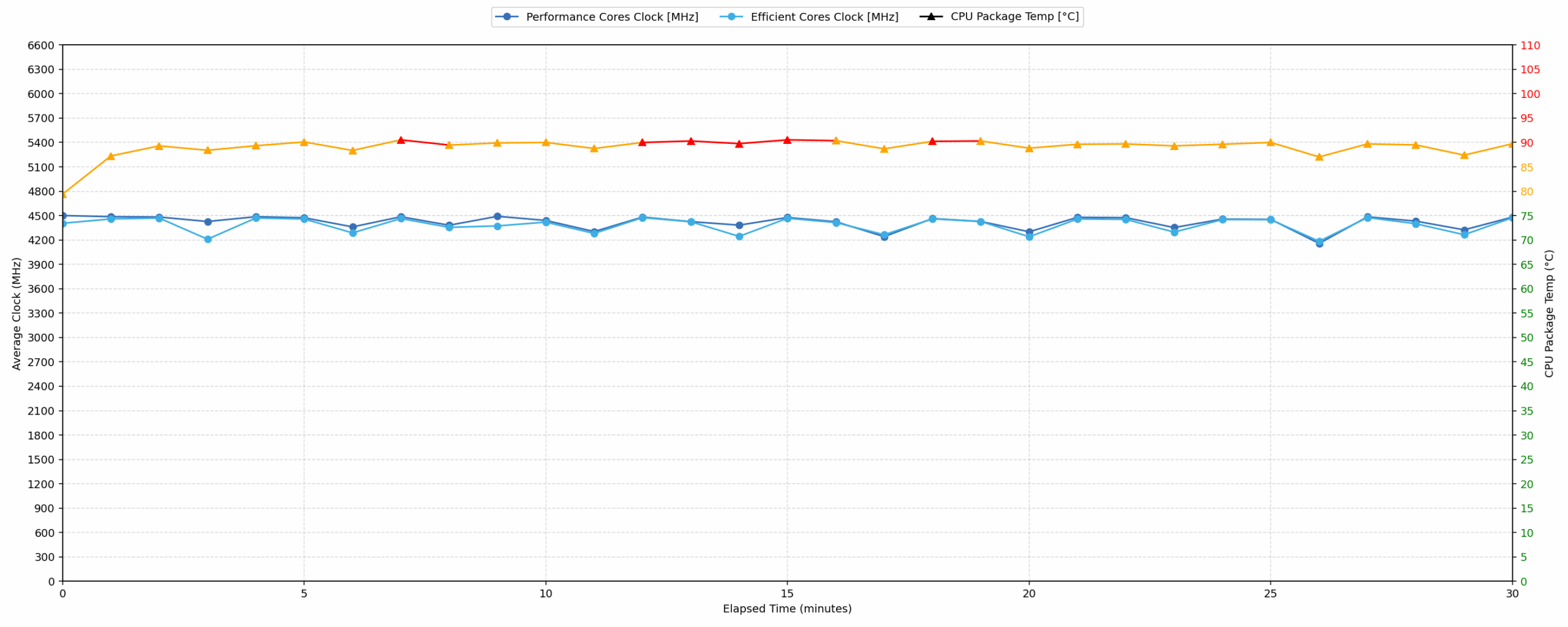
Long periods (0:00 – 30:00 min) of 100 % CPU load
This test shows the CPU behavior during long periods of serious load. It’s important for users who are looking for laptops suitable for tasks like Video Editing and 3D Rendering.
| Intel Core Ultra 9 275HX | Avg. P-Core Clock | Avg. CPU Temp. | Avg. CPU Power |
| ASUS ROG Strix G18 G815 (2025) | 4418 MHz | 89 °C | 146 W |
| ASUS ROG Strix G16 G615 | 4178 MHz | 97 °C | 134 W |
| Acer Predator Helios 16 AI (PH16-73) | 4106 MHz | 92 °C | 140 W |
| ASUS ROG Strix SCAR 18 G835 (2025) | 4058 MHz | 95 °C | 130 W |
| Lenovo Legion Pro 7i Gen 10 (16″ Intel) | 3981 MHz | 91 °C | 151 W |
| Acer Predator Helios Neo 16 AI (PHN16-73) | 3945 MHz | 91 °C | 130 W |
| MSI Vector 16 HX AI A2XW | 3903 MHz | 84 °C | 111 W |
| Acer Predator Helios Neo 16S AI (PHN16S-71) | 3362 MHz | 85 °C | 86 W |
For extended CPU workloads like video editing or 3D rendering, the ASUS ROG Strix G18 G815 sustains an impressive average clock speed of 4418 MHz over 30 minutes, drawing 146 W. The average CPU temperature settles at 89 °C, which is acceptable for prolonged high load, although a peak temperature of 96 °C was observed. This sustained performance positions it as the leading laptop among its peers with the Intel Core Ultra 9 275HX, significantly outperforming others that range from 3362 MHz to 4178 MHz average clock. Its thermal management effectively balances sustained performance with temperature.
Gaming Stability
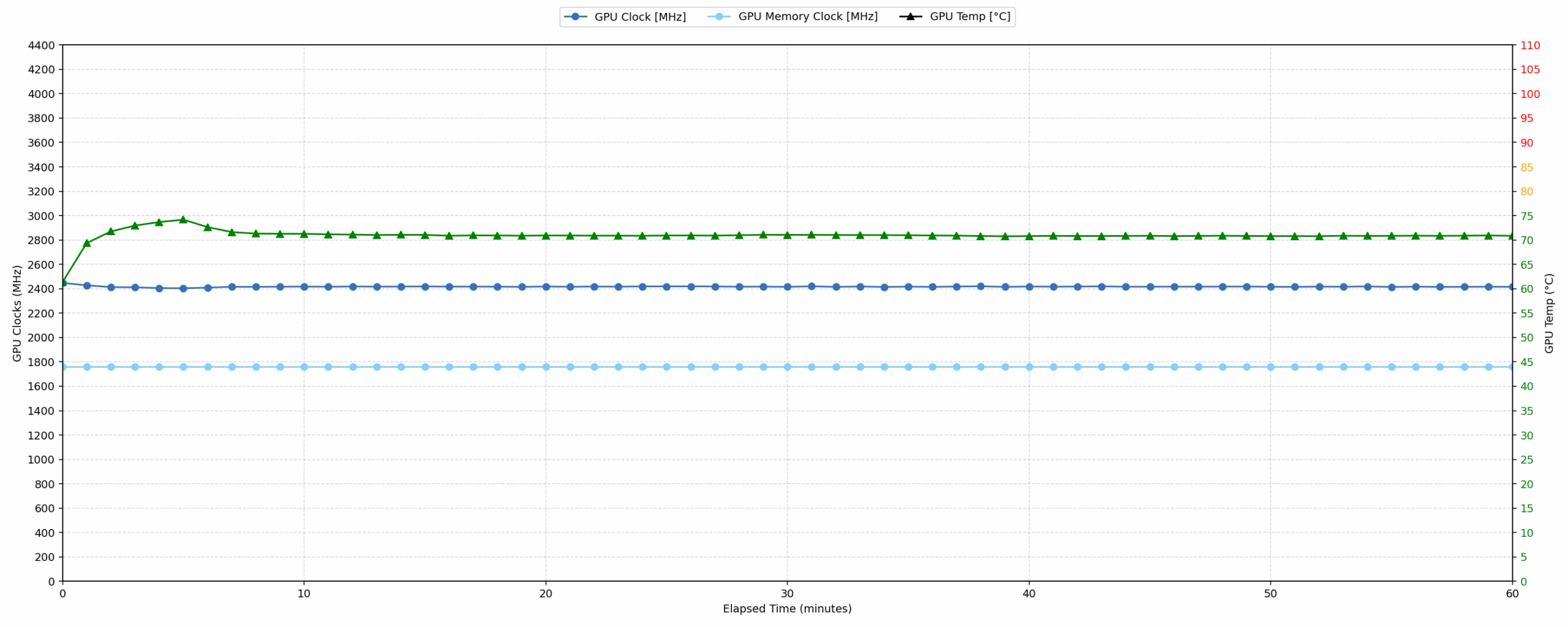
Continuous gaming (1-hour test)
This test evaluates the laptop’s performance under sustained GPU load and high CPU usage.
| NVIDIA GeForce RTX 5070 Ti | Avg. GPU Clock | Avg. GPU Temp. | Avg. Memory Clock | Avg. GPU Mem Temp. | Avg. GPU Power |
| ASUS ROG Strix G18 G815 (2025) | 2416 MHz | 71 °C | 1762 MHz | 72 °C | 138 W |
| ASUS ROG Strix G16 G615 | 2376 MHz | 79 °C | 1685 MHz | 77 °C | 138 W |
| MSI Vector 16 HX AI A2XW | 2362 MHz | 74 °C | 1750 MHz | 77 °C | 139 W |
| Acer Predator Helios Neo 16 AI (PHN16-73) | 2315 MHz | 81 °C | 1561 MHz | 81 °C | — |
| Acer Predator Helios Neo 16S AI (PHN16S-71) | 1935 MHz | 79 °C | 1125 MHz | 83 °C | 89 W |
The ASUS ROG Strix G18 G815 demonstrates exceptional gaming stability over a 60-minute period. Its NVIDIA GeForce RTX 5070 Ti maintains a high average GPU clock of 2416 MHz, with core temperatures averaging a remarkably cool 71 °C and memory temperatures at 72 °C. Both core and memory peak temperatures (74 °C and 76 °C respectively) remain well within optimal limits. Drawing 138 W, this laptop consistently outperforms all tested competitors using the same RTX 5070 Ti, delivering superior sustained clock speeds while maintaining excellent thermal control for prolonged gaming sessions.
Battery Life
ASUS ROG Strix G18 G815 (2025) has a 90Wh battery unit.
We conducted the battery life test with the Silent mode activated in Armoury Crate.
The big screen of ASUS ROG Strix G18 impacts the battery life. The 90Wh battery has enough juice for 4 hours and 19 minutes of web browsing which is the lowest result in the list below. However, this is the only 18-incher here so it’s somehow expected.
Brightness: 180 nits; Display Mode: SDR
Time to Full Discharge: Higher is Better
Disassembly, Upgrade options, and Maintenance
The process of opening the G815 is easy thanks to ASUS’ Q‑latch bottom shell: slide the two tabs until the red markers appear and the lid slides clear, revealing a second, full‑size shield stamped “ROG Intelligent Cooling” that doubles as a flow director for the tri‑fan system.
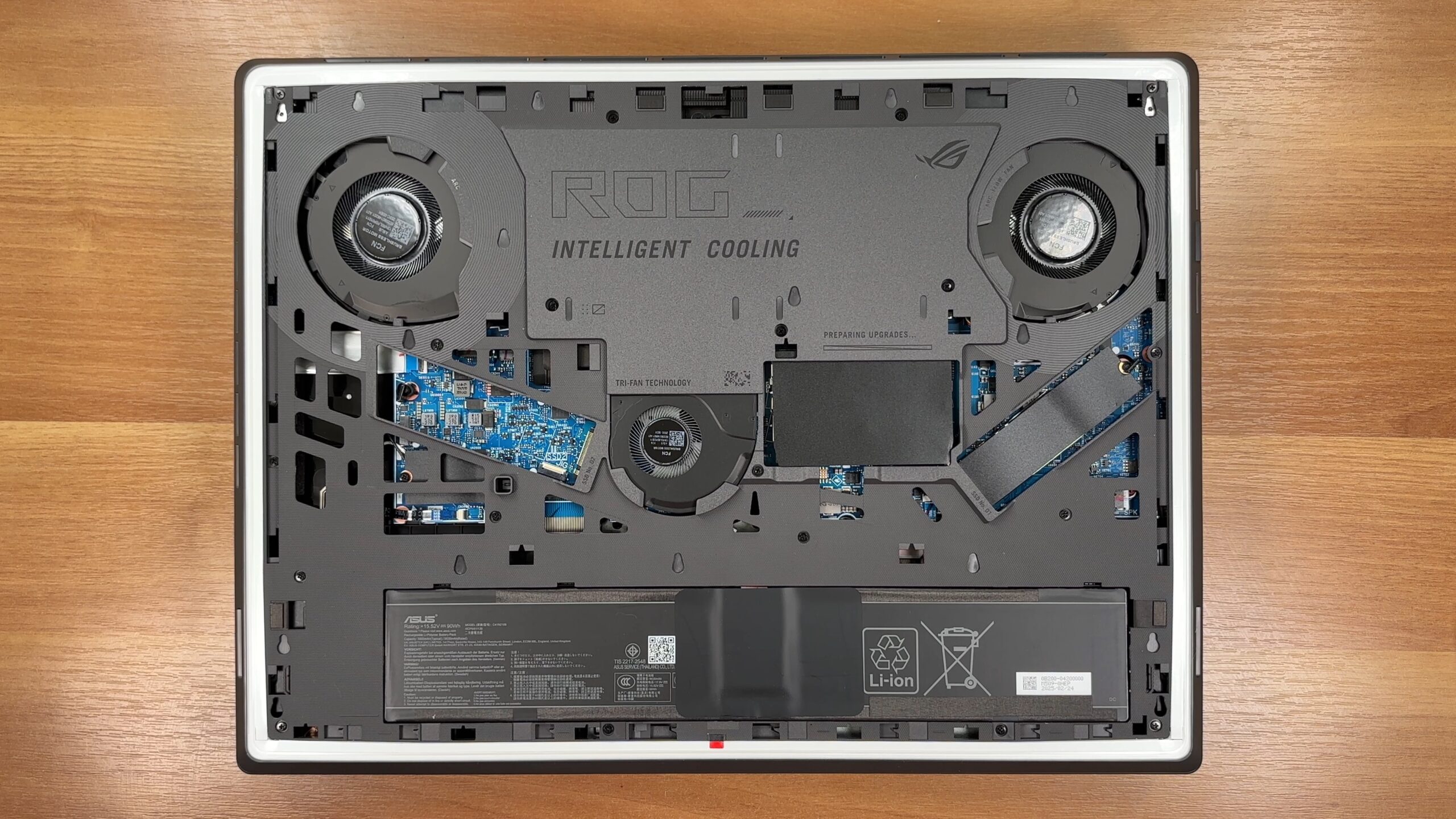
Nineteen JIS screws hold that shield – two short M2 × 5.5 mm pieces in the rear corners and seventeen longer M2 × 10 mm elsewhere, and once it is lifted (don’t forget the ribbon), the vapor‑chamber plate, three fans and rear‑hinge exhausts dominate the view while a 90 Wh battery spans the front edge.
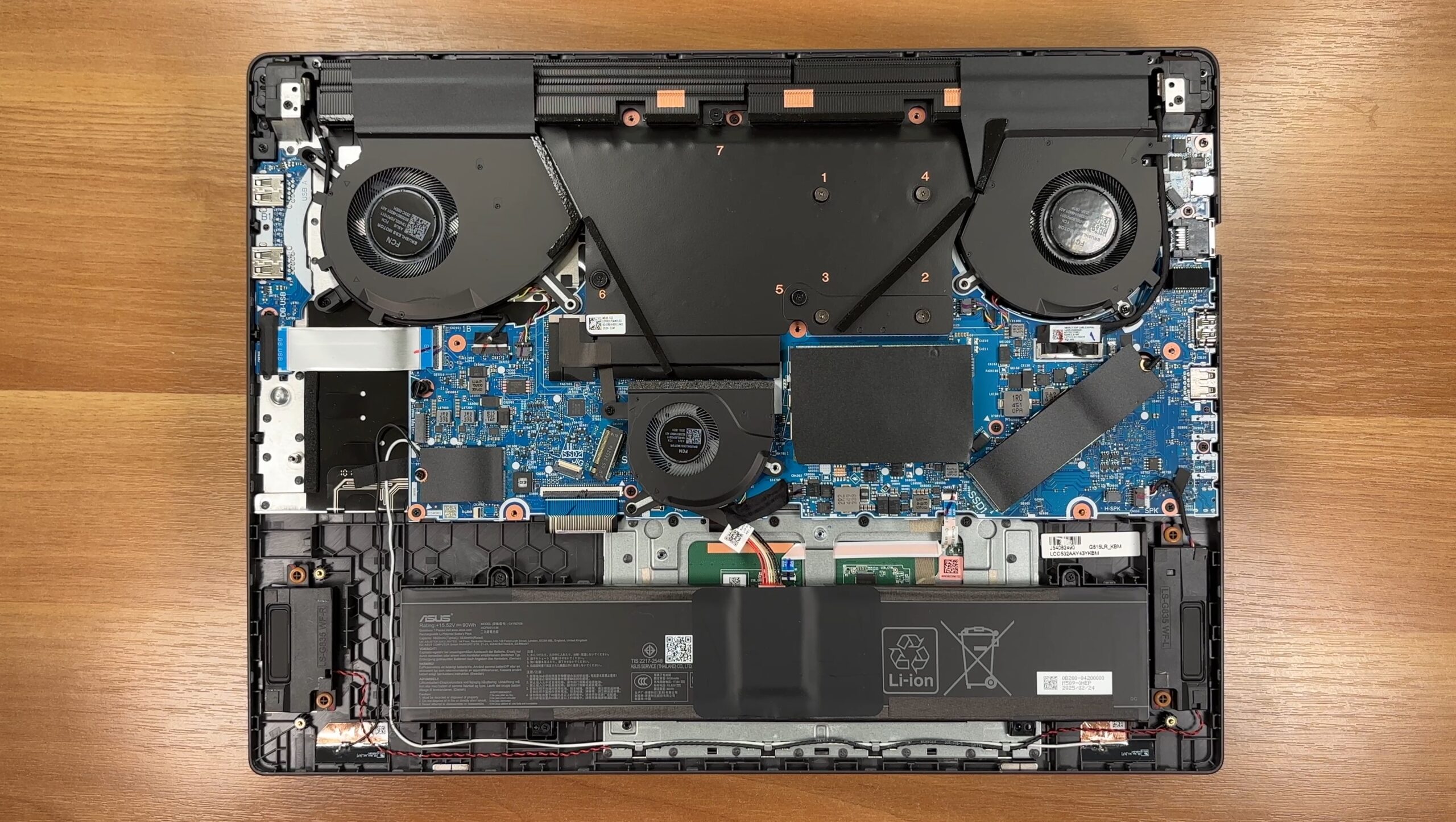
With the plate gone the keyboard cut‑out is obvious, helping fresh air feed the cooler; the battery is anchored by four screws and an upward‑pull connector that is tucked under the centre fan, so you can safely isolate power before touching anything else.
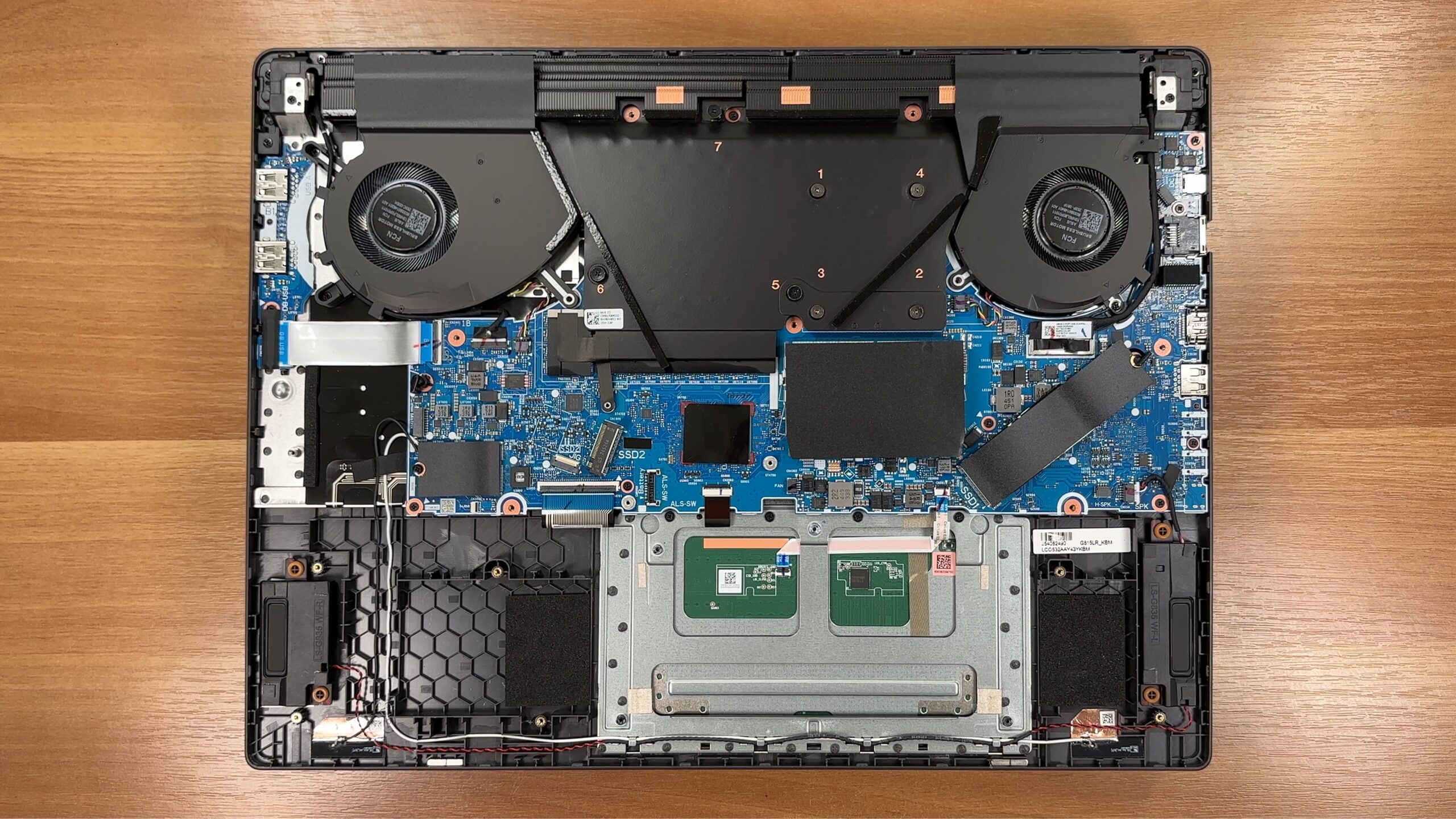
Both M.2 bays use ASUS’ tool‑less locking levers, thermal pads are pre‑installed, and the Wi‑Fi 7 card sits on the right edge under a single screw, rounding off a layout that keeps every high‑wear component within easy reach of a hobbyist’s toolkit.
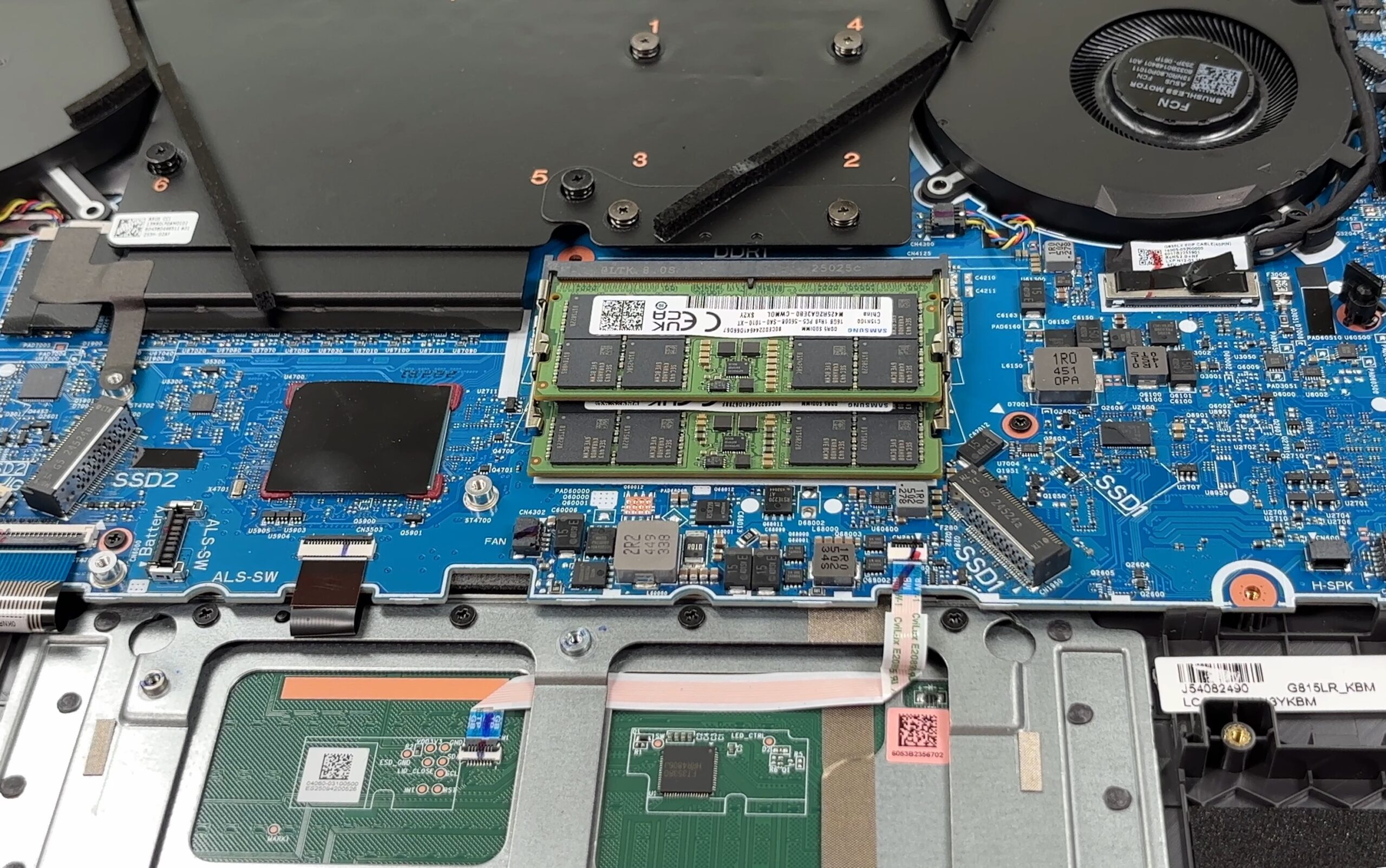
Between the slide‑off cover, color‑coded screws and fully serviceable storage, memory, cooling and battery, the Strix G18 is one of the more user‑friendly 18‑inch gaming rigs to maintain or upgrade.
Verdict
 The ASUS ROG Strix G18 G815 (2025) is a masterclass in leveraging size for performance. This is not just a laptop with a bigger screen; it’s a thoughtfully engineered desktop replacement where every extra millimeter of its massive chassis is used to deliver a cooling solution that unlocks the full potential of its high-end components. It stands as a prime example of what a large-format gaming laptop should be: unapologetically powerful, incredibly cool-running, and built like a fortress.
For the user who prioritizes raw, unthrottled power and thermal stability over portability, the Strix G18 makes a compelling case as one of the best-balanced enthusiast machines on the market.
✅ The Good
The performance of this machine is simply exceptional, primarily due to its outstanding thermal management. Its large chassis and tri-fan cooling system allow both the CPU and GPU to run not only faster but also significantly cooler than the competition. Our RTX 5070 Ti model consistently topped the performance charts, delivering best-in-class sustained clock speeds while maintaining impressively low temperatures.
This power is perfectly matched with a brilliant 18-inch QHD+ 240Hz display. It boasts excellent color coverage (98% DCI-P3), great accuracy, and a very effective anti-glare finish. Most importantly, the screen is completely PWM-free, ensuring a comfortable, flicker-free experience during long gaming or work sessions.
The build quality is rock-solid, the keyboard is a joy to use with its full NumPad, and the upgrade process is refreshingly simple thanks to ASUS’s user-friendly Q-latch system for both the chassis and the M.2 slots.
❌ The Bad
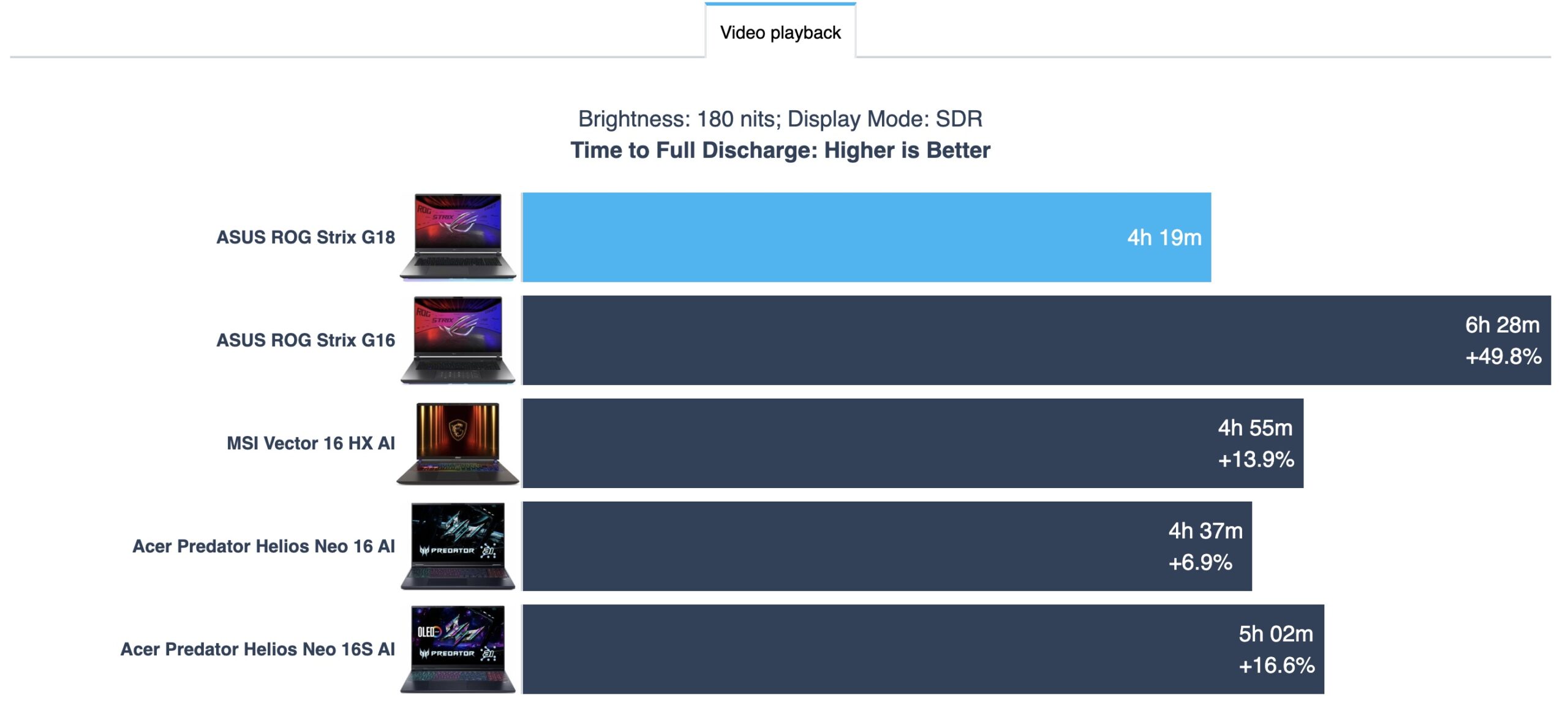 The most significant trade-off for all this power and size is poor battery life. With just over 4 hours of web browsing, this is a machine that is firmly intended to be used while plugged in. It is a true desktop replacement, not a portable companion for a day on the go.
On a more minor note, the continued omission of a physical privacy shutter for the webcam is a frustrating oversight on an otherwise premium and well-thought-out device. Naturally, its large size and substantial weight are also factors to consider, though they are the very reason for its excellent performance.
🆚 The Competitors
The Strix G18’s biggest competitor is arguably its smaller sibling, the ASUS ROG Strix G16 G615 (detailed review). The comparison clearly demonstrates the G18’s advantage: it uses its larger footprint to achieve higher performance while running significantly cooler. This makes it the superior choice for users who don’t need to move their machine often.
Against other rivals like the MSI Vector 16 HX AI A2XW (detailed review), the Strix G18 again pulls ahead in both sustained performance and thermal control. It proves that when it comes to high-end gaming laptops, a well-engineered large chassis can provide a tangible performance advantage that smaller machines struggle to match.
You can check the prices and configurations in our Specs System: https://laptopmedia.com/series/asus-rog-strix-g18-g815/
Pros
- Chart-topping CPU and GPU performance for its class
- Exceptional thermal management keeps the system cool and fast
- Excellent 18-inch 240Hz display with great colors and low glare
- Completely PWM-free screen for superior eye comfort
- Rock-solid build quality and comfortable keyboard with NumPad
- User-friendly upgradeability for RAM and storage
Cons
- Poor battery life
- Very large and heavy, limiting portability
- No physical privacy shutter for the webcam
 Author: Simeon NikolovEditor-in-Chief at LaptopMedia.com with 20+ years of experience in testing and analyzing laptops and mobile devices.
 Author: eng. Kroum NikolovHead of Engineering at LaptopMedia.com, inventor and innovator with 40+ years of experience in electronics and high technology.
TOP 100 GAMING LAPTOPS


TOP LAPTOP RATINGS
HIGHLIGHTS view more
![[June 2026] Best-Selling Laptop Brands on Amazon Global – Apple’s Unrivaled Dominance in Units and Revenue](https://laptopmedia.com/wp-content/uploads/2026/07/GLOBAL-Best-Brands-400x225.jpg)
[June 2026] Best-Selling Laptop Brands on Amazon Global – Apple’s Unrivaled Dominance in Units and Revenue
Jul 06, 2026![[June 2026] Amazon Global: Top 10 Best-Selling Laptops – Apple’s New MacBook Neo Storms to #1, Reshaping the Market with Affordability](https://laptopmedia.com/wp-content/uploads/2026/07/Best-Selling-Laptops-GLOBAL-Top-10-400x225.jpg)
[June 2026] Amazon Global: Top 10 Best-Selling Laptops – Apple’s New MacBook Neo Storms to #1, Reshaping the Market with Affordability
Jul 06, 2026![[June 2026] Amazon Global: Top 10 Best-Selling Gaming Laptops – Acer’s Nitro V 16S AI Dominates Sales, While ASUS Leads Overall Revenue](https://laptopmedia.com/wp-content/uploads/2026/07/Best-Selling-Gaming-Laptops-GLOBAL-Top-10-400x225.jpg)
[June 2026] Amazon Global: Top 10 Best-Selling Gaming Laptops – Acer’s Nitro V 16S AI Dominates Sales, While ASUS Leads Overall Revenue
Jul 06, 2026![[June 2026] Global Ranking of Best-Selling Laptop GPUs on Amazon – NVIDIA RTX 5060 is the Top-Selling Dedicated GPU](https://laptopmedia.com/wp-content/uploads/2026/07/Best-Selling-GPUs-GLOBAL-Top-10-400x225.jpg)
[June 2026] Global Ranking of Best-Selling Laptop GPUs on Amazon – NVIDIA RTX 5060 is the Top-Selling Dedicated GPU
Jul 05, 2026![[June 2026] Global Ranking of Best-Selling Laptop CPUs on Amazon – Apple M5 Dominates, AMD Ryzen 7 260 Gets Solid Premium Share](https://laptopmedia.com/wp-content/uploads/2026/07/Best-Selling-CPUs-GLOBAL-Top-10-400x225.jpg)
[June 2026] Global Ranking of Best-Selling Laptop CPUs on Amazon – Apple M5 Dominates, AMD Ryzen 7 260 Gets Solid Premium Share
Jul 05, 2026
REVIEWS view more

Lenovo ThinkTab X11 Gen 1 review – The Tablet That Runs Without a Battery!
Jul 11, 2026Lenovo Yoga 9i 2-in-1 Aura Edition (14″, Gen 11) review – 2.8K OLED, Great Speakers, and 15+ Hours of Battery
Jul 08, 2026Dell Pro Max 14 (MC14250) review – Powerful, Repairable, and Very Configuration-Dependent
Jul 04, 2026Lenovo Legion 5i (15″, Gen 11) review – Full-Power RTX 5060, OLED Display, and Real Upgradeability
Jun 30, 2026Lenovo LOQ 15 (15IPH11) review – The Coolest Budget Gaming Laptop of 2026?
Jun 27, 2026
Too bad this market will never produce the machine with top cooling and midrange and power efficient hardware.
What do you think about this one: https://www.acer.com/us-en/laptops/nitro/nitro-18-ai-amd
I’m gonna wait for your review then. Btw they said Ryzen 365 has 16 threads for some reason.
Was the 4 hour battery life on full brightness? ive read reports of it lasting up to 7 hours.
This was one of the only detailed reviews I could find on the G18 2025. Thank you for posting it. I featured it in a summary I made: https://comparelaptopprices.com/reviews/asus-rog-g18-2025/
Good day! I am trying to find information about the bottom cover height clearance for the second M.2 slot, however wasn’t able to obtain any definitive specification. Do you happen to measure such characteristics of the laptop? 🙂 My goal is to install the biggest possible heat sink.
Excellent review