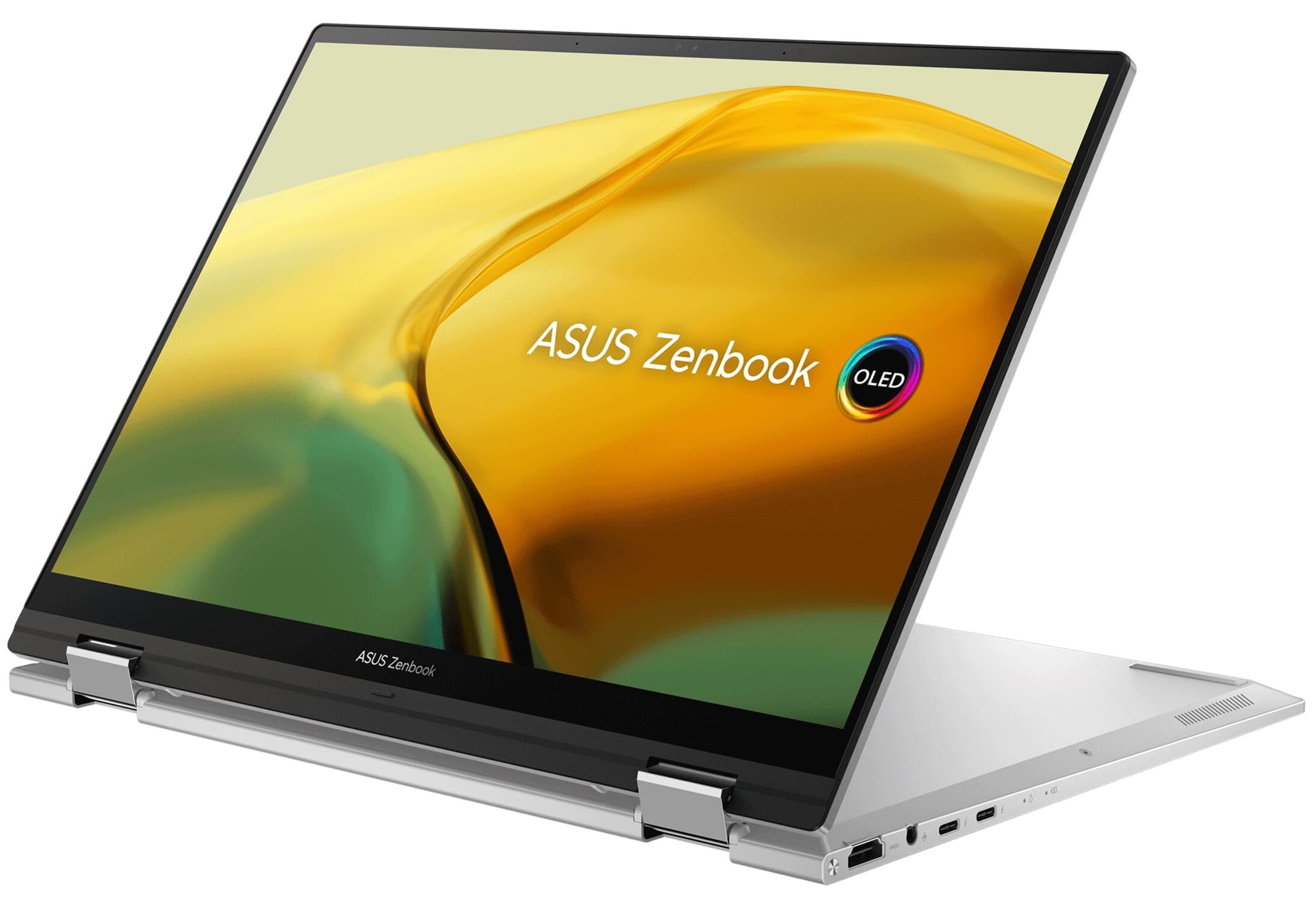
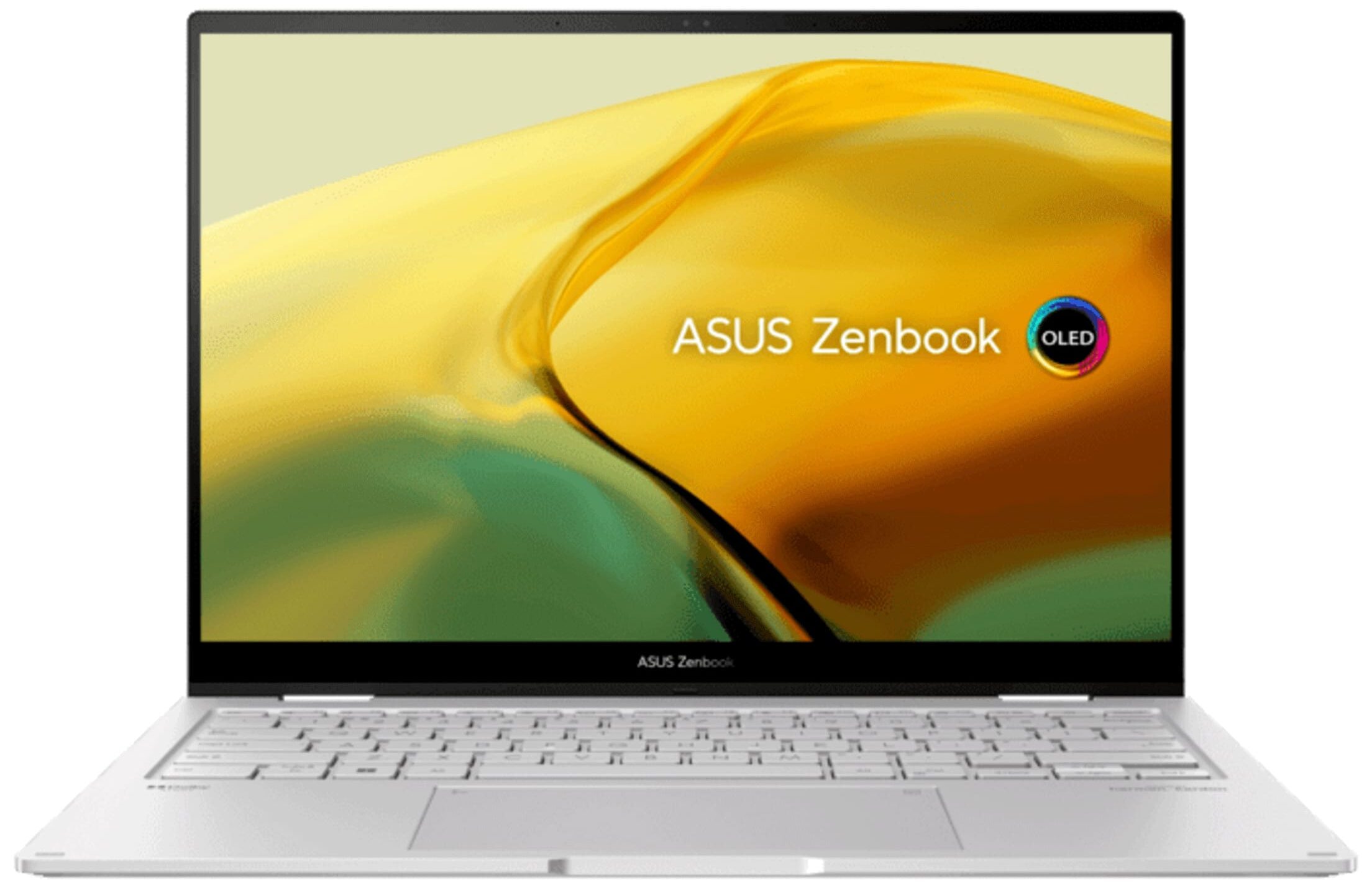
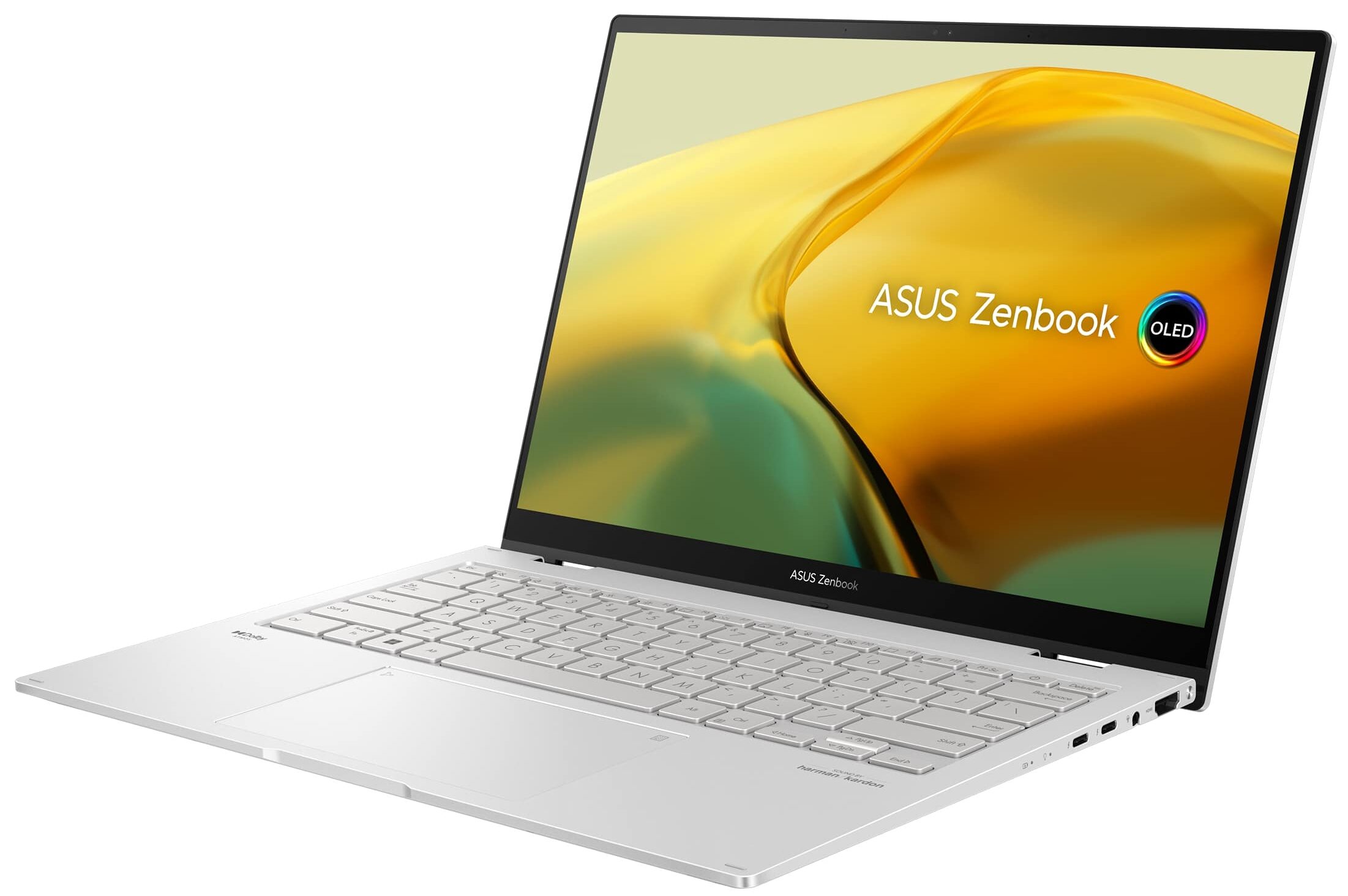
ASUS Zenbook 14 Flip OLED
_000042.jpg)

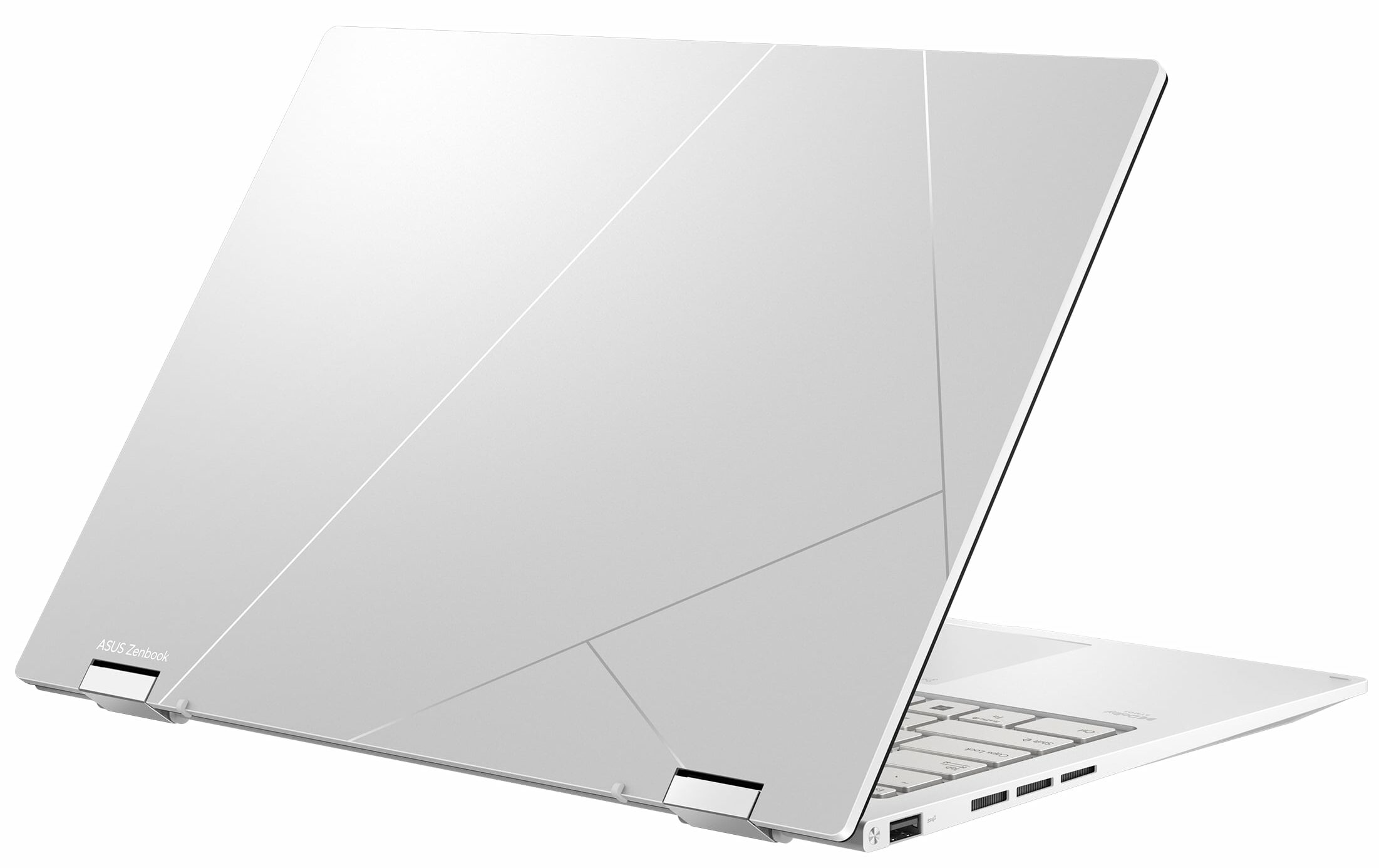

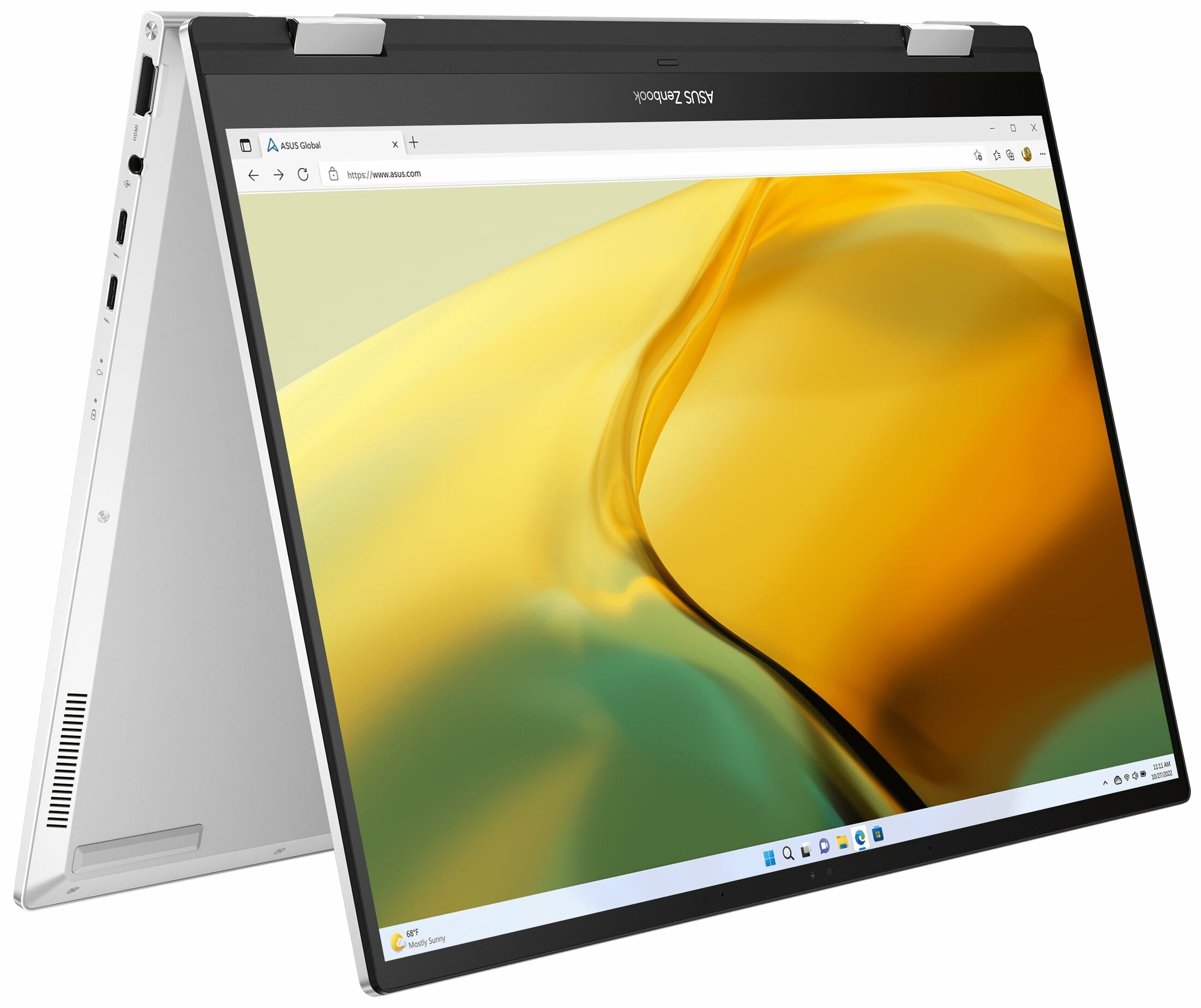
- Date Published: 11 Nov 2024
- Intel Core i7-1360P
- Intel Iris Xe Graphics G7 (96EU)
- 14.0″, 2.8K (2880 x 1800), 90 Hz, OLED
- 1000GB SSD
- 16GB RAM
- 1.50 kg (3.3 lbs)
Specs

- HDD/SSD
- 1TB SSD
- M.2 Slot
- 1x 2280 M.2 NVMe PCIe 4.0 x4 See photo
- RAM
- 16GB RAM
- OS
- Windows 11 Pro
- Body Material
- Aluminum
- Dimensions
- 311.5 x 223.4 x 15.9 mm (12.26" x 8.80" x 0.63")
- Weight
- 1.50 kg (3.3 lbs)
- Ports and connectivity
- 1x USB Type-A
- 3.2 Gen 2 (10 Gbps)
- 2x USB Type-C
- Thunderbolt 4, Power Delivery (PD), DisplayPort
- HDMI
- 2.1
- Card Reader
- Ethernet LAN
- Wi-Fi
- 802.11ax
- Bluetooth
- 5.0
- Audio jack
- 3.5mm Combo Jack
- Features
- Fingerprint reader
- Web camera
- FHD IR with support for Windows Hello
- Backlit keyboard
- Microphone
- Array Microphone with Cortana and Alexa voice rec.
- Speakers
- Speakers, Smart Amp, Harman Kardon
- Security Lock slot
Portability
Review
ASUS Zenbook 14 Flip OLED in-depth review
It looks like the smaller top-tier Lenovo Yoga devices and the MSI Summit machines are in trouble. The ASUS Zenbook 14 Flip OLED (UP3404) that sits in front of us is a 14-inch 2-in-1 device that has a lot of tricks up in its sleeve. Like the Raptor Lake P CPU options and a stunning OLED display.Wait, a 28W CPU inside a super thin chassis? Actually, the processor can boost over this limit but more on that later. The main event here is the transforming abilities of the laptop and the display. The latter is a bright touchscreen panel with a 2.8K resolution and ASUS mentions a 100% DCI-P3 coverage.The notebook can also offer modern I/O, Wi-Fi 6E connectivity, and Harman Kardon speakers. All that is fitted into a body that is light and sturdy. All seems good for now, except for the high[...]
Read the full review
Pros
- Good performance for a 2-in-1 laptop
- Infinite contrast ratio (Samsung ATNA40YK07-1 (SDC4171))
- 2.8K resolution, 16:10 aspect ratio, and a 90Hz refresh rate(Samsung ATNA40YK07-1 (SDC4171))
- Covers 100% of DCI-P3 (Samsung ATNA40YK07-1 (SDC4171))
- Great build quality
- Touchscreen display (Samsung ATNA40YK07-1 (SDC4171))
- 2x Thunderbolt 4ports + Type-C charging
- Comfortable and quiet backlit keyboard
- Large and smooth touchpad that doubles as a NumPad
Cons
- PWM usage with slow pulsations up until 80 nits (Samsung ATNA40YK07-1 (SDC4171))
- Pricey
- QLC NVMe
- Lacks a privacy shutter for the Web camera and a fingerprint reader
Disassembly, maintenance and upgrade options
1. Removing the Bottom PanelBefore you start, ensure the laptop is powered off and disconnected from any external power sources.Place the laptop upside-down to access the bottom panel.Remove the two rubber back feet to reveal two hidden Phillips-head screws. Use a plastic tool to gently pry them off.Undo the two Phillips-head screws.Use a plastic pry tool to gently separate the bottom panel from the chassis.Carefully lift the bottom panel to access the internal components.Caution: Be gentle to avoid damaging the internal components.2. Battery Removal [...]
Read more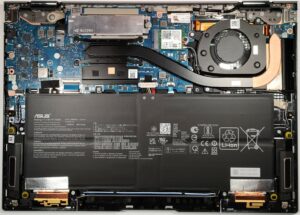


![[June 2026] Best-Selling Laptop Brands on Amazon Global – Apple’s Unrivaled Dominance in Units and Revenue](https://laptopmedia.com/wp-content/uploads/2026/07/GLOBAL-Best-Brands-400x225.jpg)
![[June 2026] Amazon Global: Top 10 Best-Selling Laptops – Apple’s New MacBook Neo Storms to #1, Reshaping the Market with Affordability](https://laptopmedia.com/wp-content/uploads/2026/07/Best-Selling-Laptops-GLOBAL-Top-10-400x225.jpg)
![[June 2026] Amazon Global: Top 10 Best-Selling Gaming Laptops – Acer’s Nitro V 16S AI Dominates Sales, While ASUS Leads Overall Revenue](https://laptopmedia.com/wp-content/uploads/2026/07/Best-Selling-Gaming-Laptops-GLOBAL-Top-10-400x225.jpg)
![[June 2026] Global Ranking of Best-Selling Laptop GPUs on Amazon – NVIDIA RTX 5060 is the Top-Selling Dedicated GPU](https://laptopmedia.com/wp-content/uploads/2026/07/Best-Selling-GPUs-GLOBAL-Top-10-400x225.jpg)
![[June 2026] Global Ranking of Best-Selling Laptop CPUs on Amazon – Apple M5 Dominates, AMD Ryzen 7 260 Gets Solid Premium Share](https://laptopmedia.com/wp-content/uploads/2026/07/Best-Selling-CPUs-GLOBAL-Top-10-400x225.jpg)