Dell Precision 14 3490 review – Quiet Power for Professionals on the Go
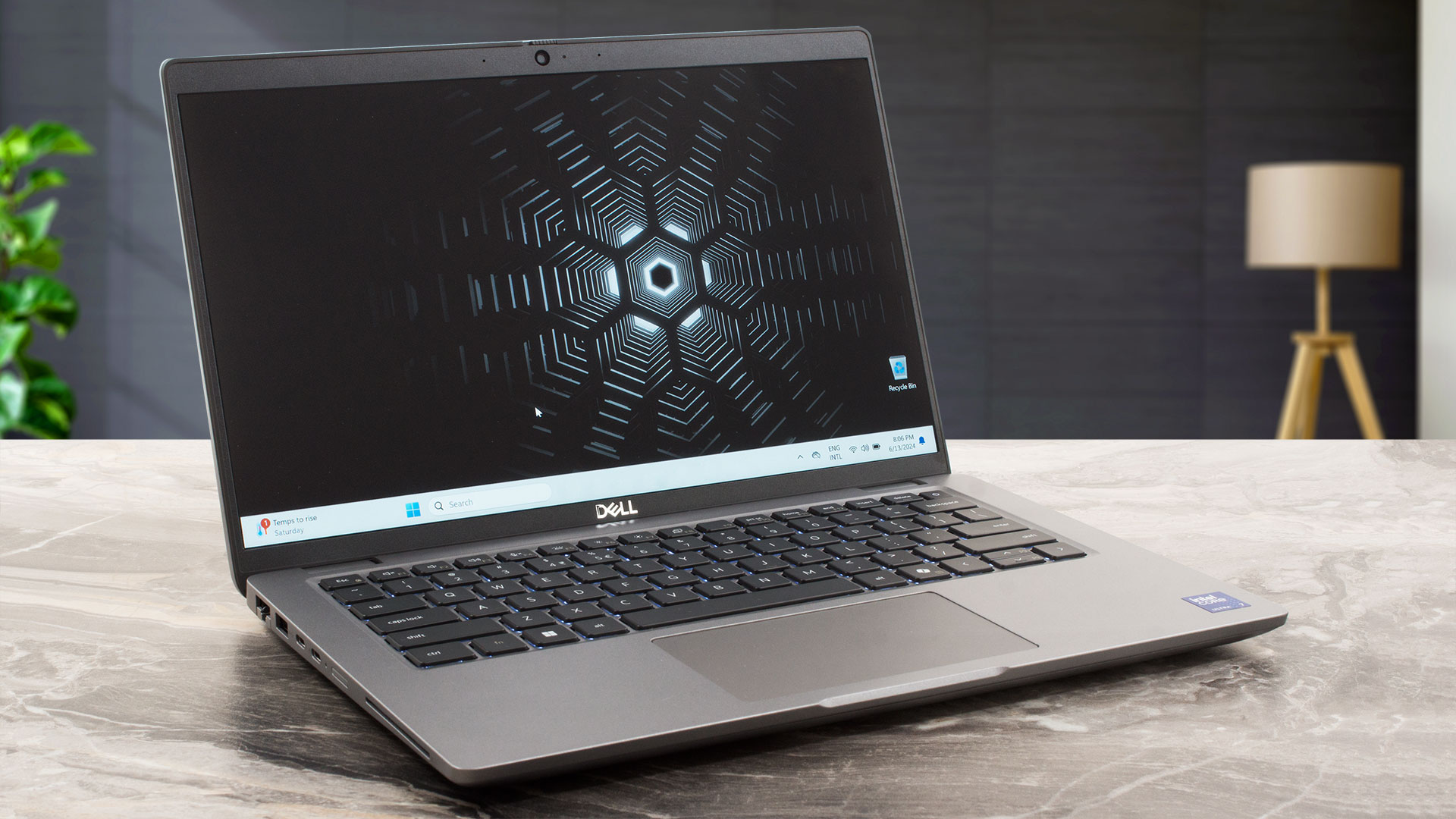 The Dell Precision 14 3490 is the smaller version of the Precision 3590 that we already reviewed. The latter is a good office machine with pleasant comfort under load. The 3490 model is offered with the same hardware as its bigger sibling. This means Intel Meteor Lake processors with 15W or 28W base power and an optional NVIDIA RTX 500 Ada Generation dGPU. We picked a laptop with the latter plus a Core Ultra 7 155H – that sounds like a pretty potent combination for such a small notebook. We are curious to see how good the cooling will be when it has to tame such internals fitted into a compact chassis.
When it comes to displays, you have a choice of three 60Hz 1080p 16:9 panels with an anti-glare coating. There is also a touchscreen in the mix. The port selection looks great for this kind of machine with a total of four USB connectors. The upgradability is fine since you can expand the RAM via the two SODIMMs. This device can be ordered with a plethora of optional goodies including NFC, a fingerprint reader, a nano-SIM slot, and an IR Web camera. On the bright side, the dTPM 2.0 chip and the privacy shutter are available for all machines.
You can check the prices and configurations in our Specs System: https://laptopmedia.com/series/dell-precision-14-3490/
Contents
Specs, Drivers, What’s in the box
Dell Precision 14 3490 - Specs

- HDD/SSD
- up to 4000GB SSD
- M.2 Slot
- 1x 2230 M.2 NVMe PCIe 4.0 x4 See photo
- RAM
- up to 64GB
- OS
- Windows 11 Home, Windows 10 Pro, Windows 11 Pro
- Battery
- 54Wh
- Body material
- Plastic / Polycarbonate, Carbon
- Dimensions
- 321.35 x 212 x 19.06 - 21.04 mm (12.65" x 8.35" x 0.75")
- Weight
- 1.40 kg (3.1 lbs)
- Ports and connectivity
- 1x USB Type-A
- 3.2 Gen 1 (5 Gbps)
- 1x USB Type-A
- 3.2 Gen 1 (5 Gbps), Sleep and Charge
- 2x USB Type-C
- 4.0, Thunderbolt 4, Power Delivery (PD), DisplayPort
- HDMI
- 2.1
- Card reader
- microSD (microSD, microSDHC, microSDXC)
- Ethernet LAN
- 10, 100, 1000 Mbit/s
- Wi-Fi
- Wi-Fi 6E
- Bluetooth
- 5.3
- Audio jack
- 3.5mm Combo Jack
- Features
- Fingerprint reader
- optional
- Web camera
- FHD IR with Ambient Light Sensor, Express Sign-In with Presence Detection and Intelligent Privacy
- Backlit keyboard
- optional
- Microphone
- Digital Array Microphones
- Speakers
- 2x 2.5W Stereo Speakers, Waves MaxxAudio
- Optical drive
- Security Lock slot
- Wedge Lock
All Dell Precision 14 3490 configurations
Drivers
All drivers and utilities for this notebook can be found here: https://www.dell.com/support/home/en-us/product-support/product/precision-14-3490-laptop/drivers
What’s in the box?
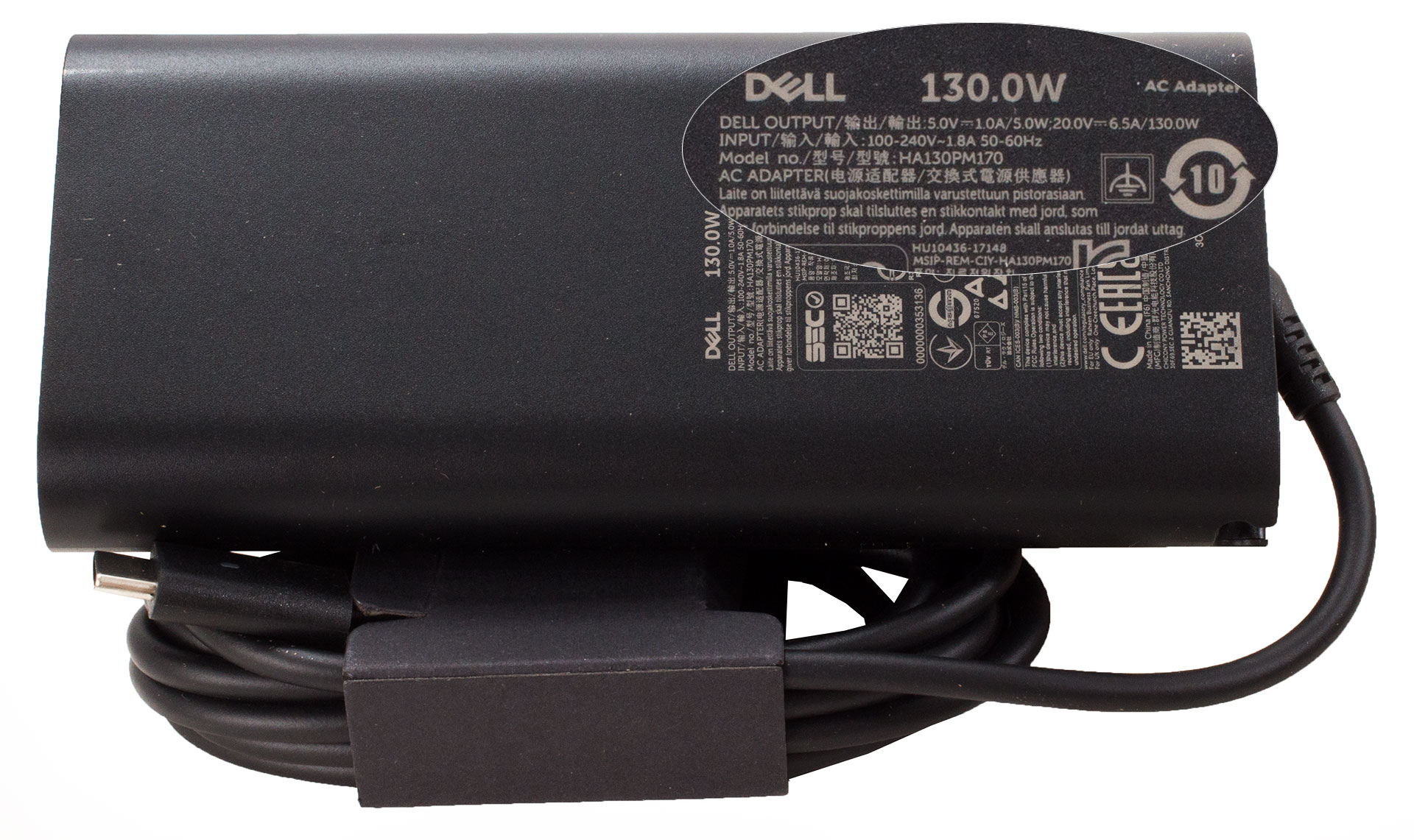
Depending on the CPU and GPU model, you get a 65W, 100W, or 130W Type-C charger in the box alongside the mandatory paperwork.
Design and construction
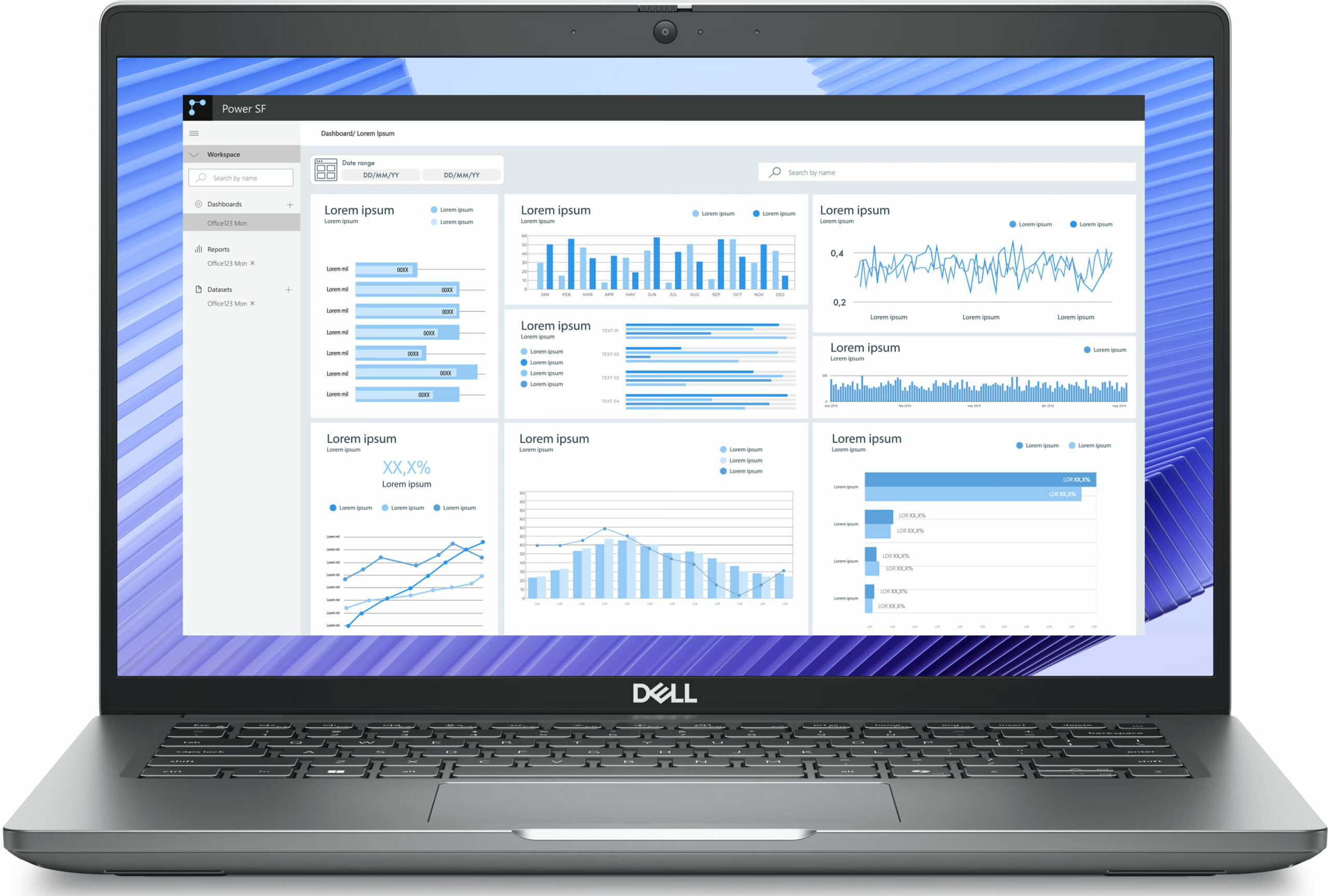
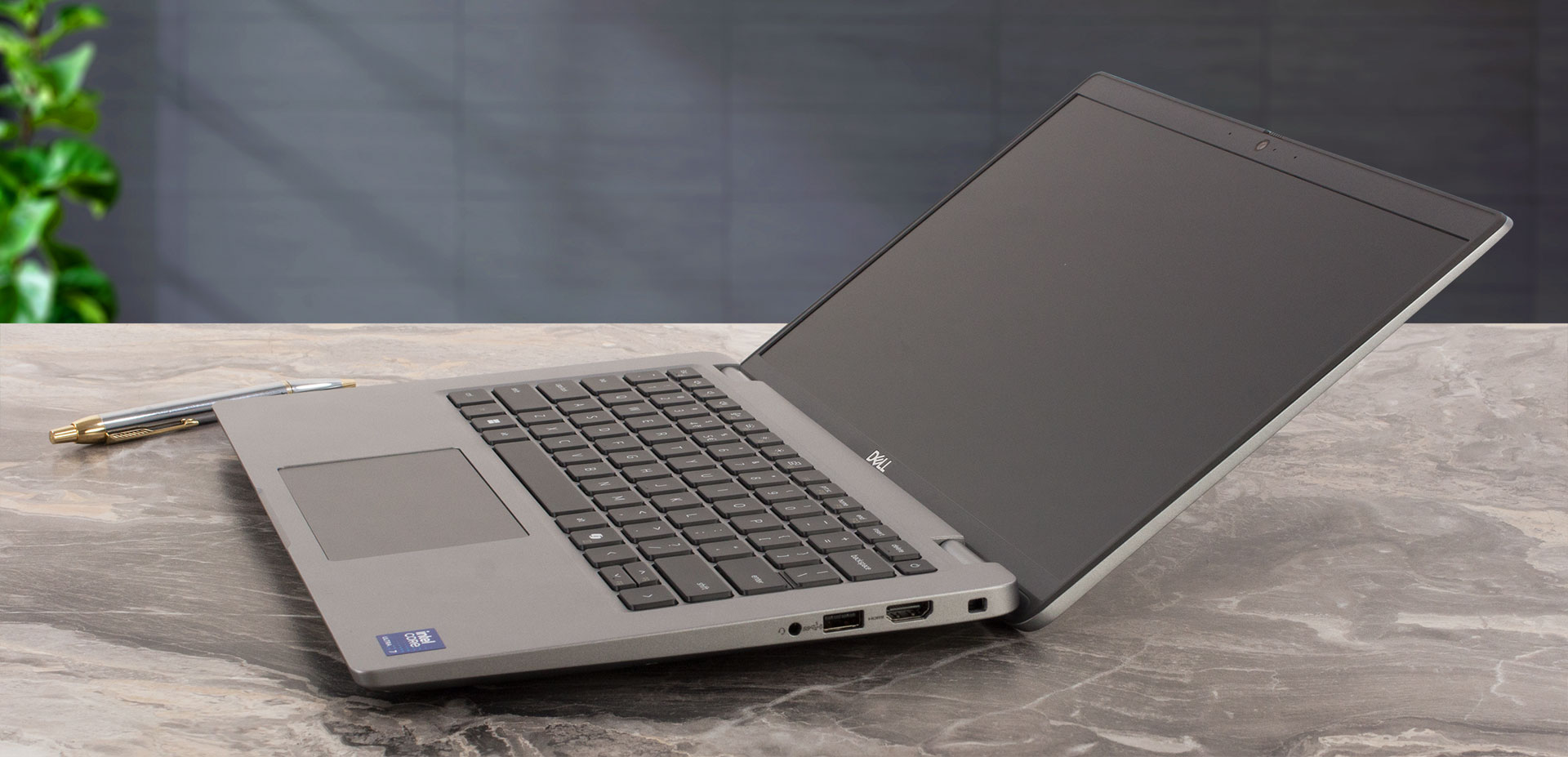
The Dell Precision 14 3490 shares a similar design language with the 3590 version. The device looks clean, with no visual bangs and whistles that can attract unneeded attention in the office. The build is made of plastic and carbon fiber. The starting weight is just 1.40 kilos and the profile height is 19.06 – 21.04 mm.
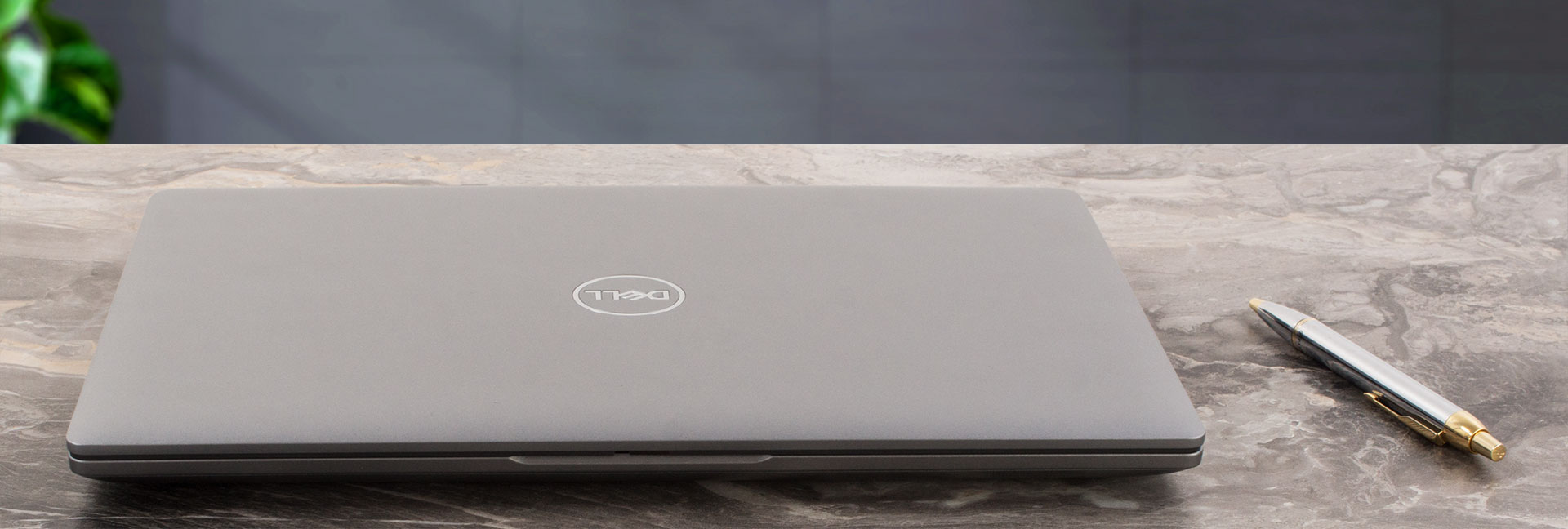
The hinges are super stiff and that’s why you need two hands to open the lid. The latter can be flexed a bit while the base is very solid.
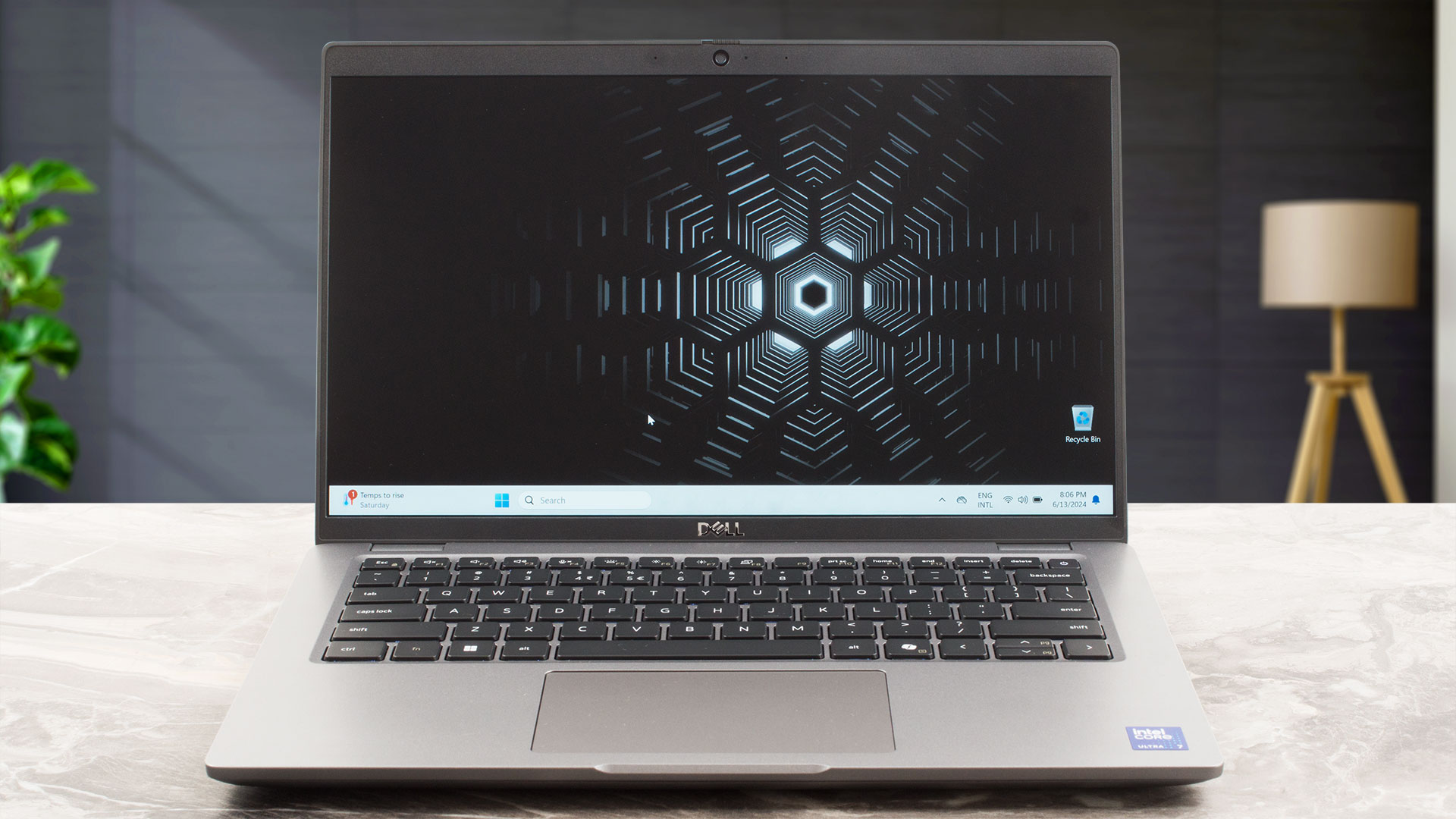
The top bezel is notably thicker than the other three which are thin.
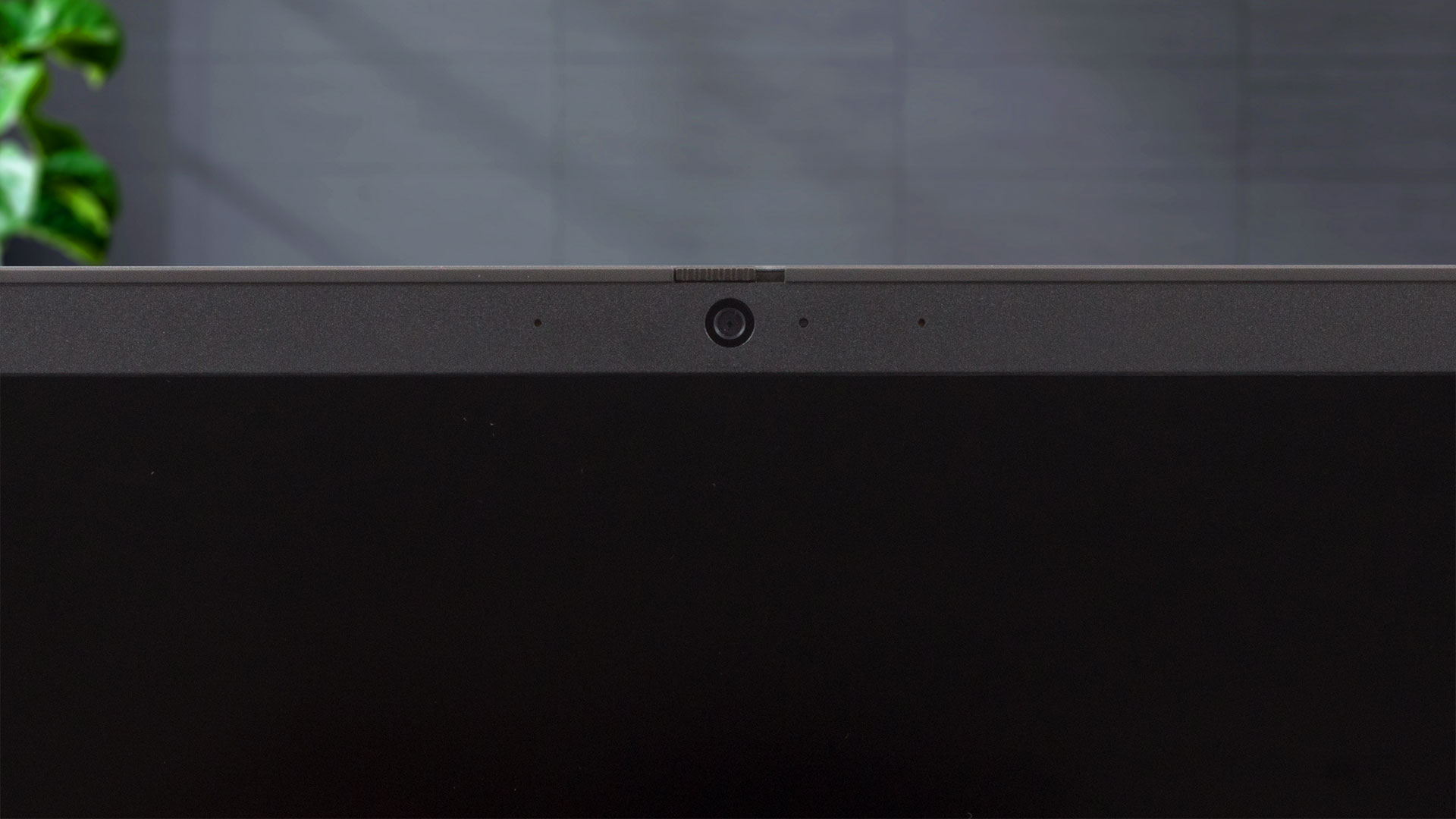
The 1080p Web camera has a privacy shutter and you can opt for an optional IR version with Presence Detection tech.
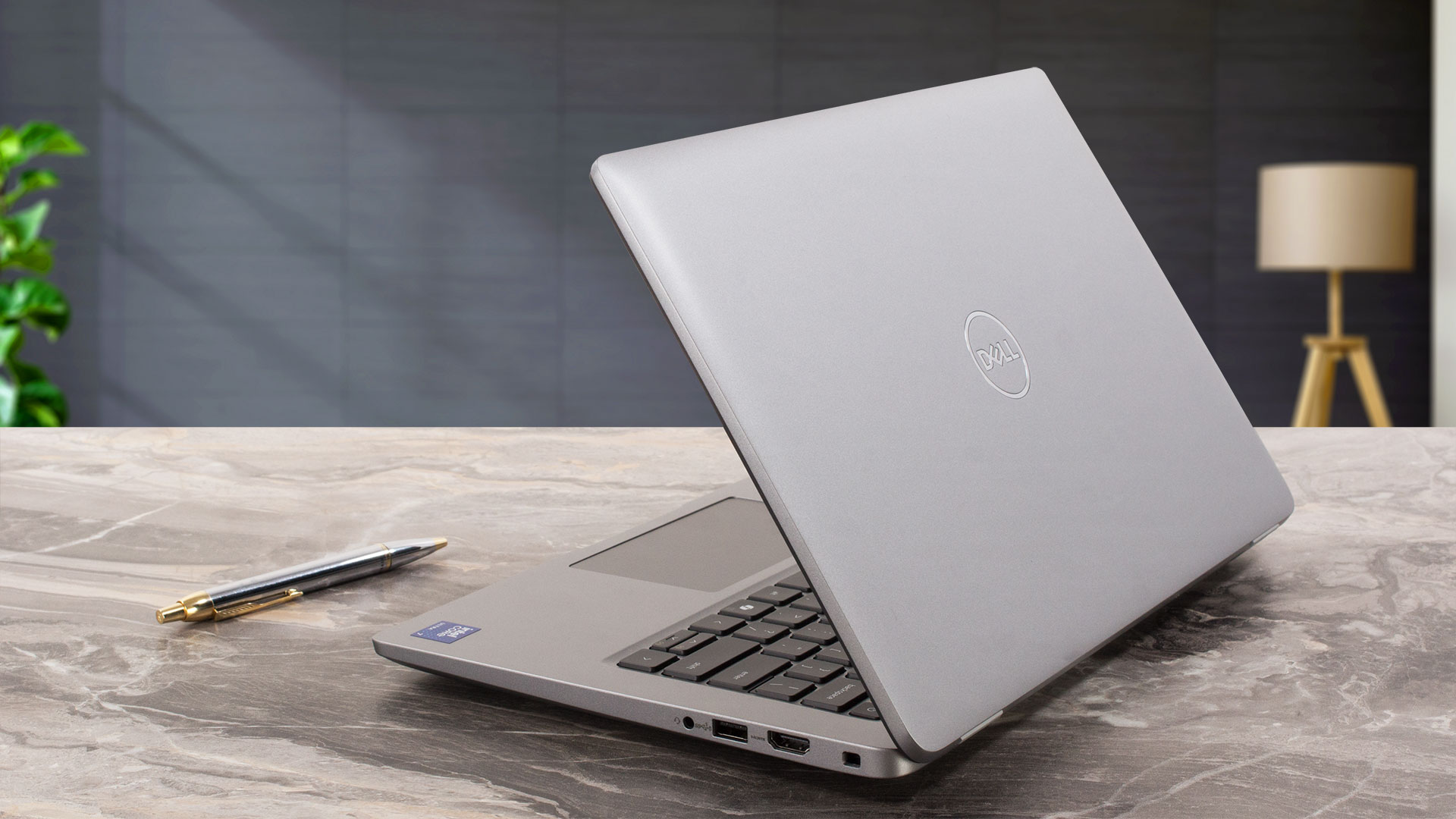
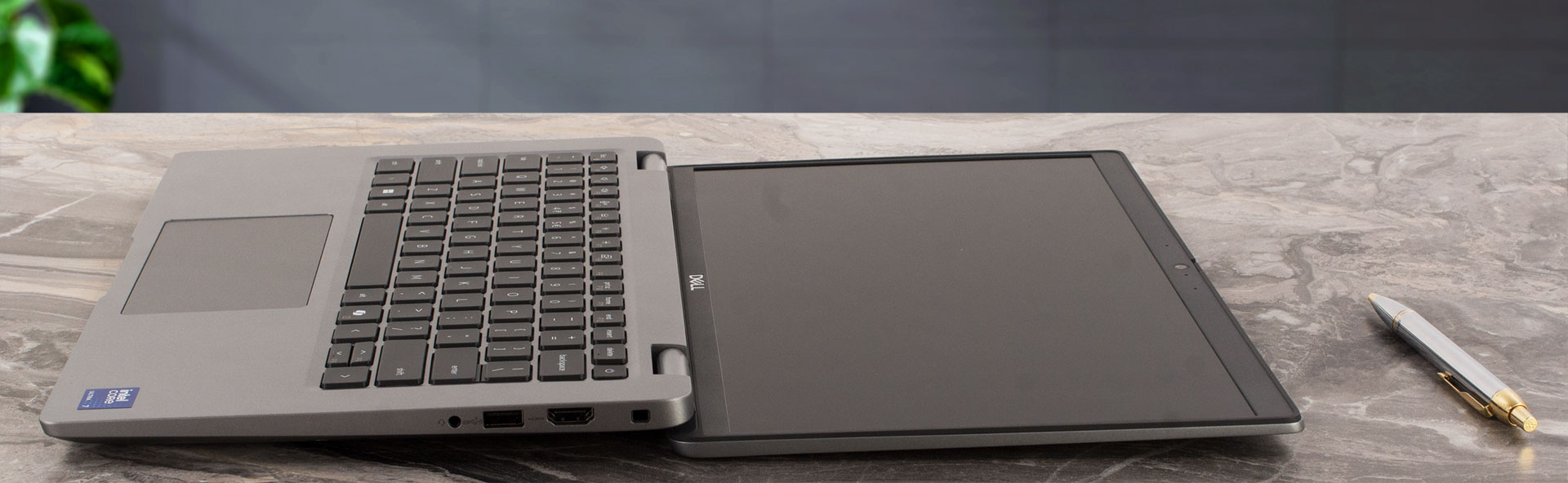
The lid has a lever design which means that its lower side with two rubber feet lifts the back of the laptop but that happens when the angle of the opening is pretty big which isn’t optimal for normal work. As you can see, the laptop can lay fully flat on an even surface.
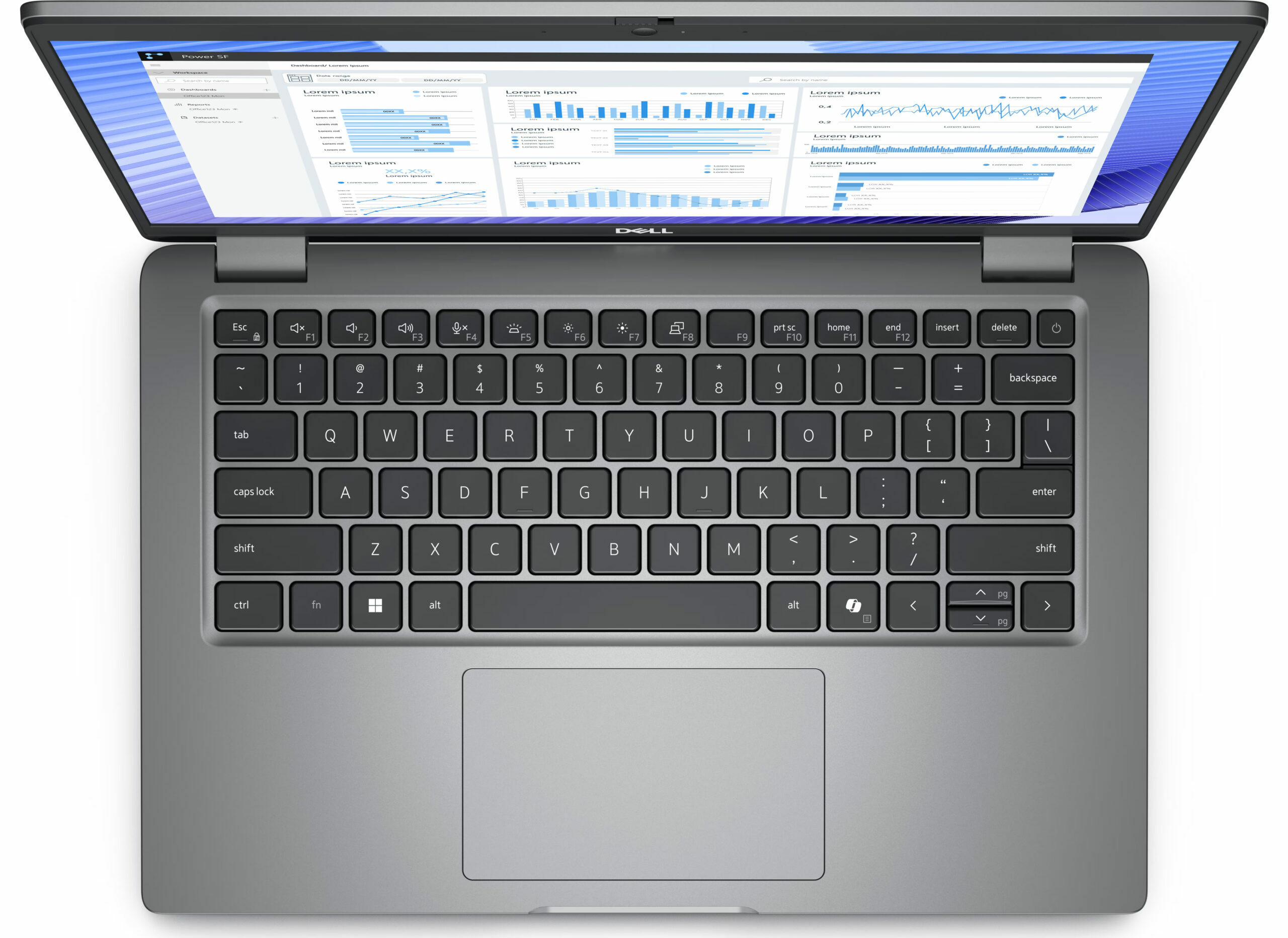
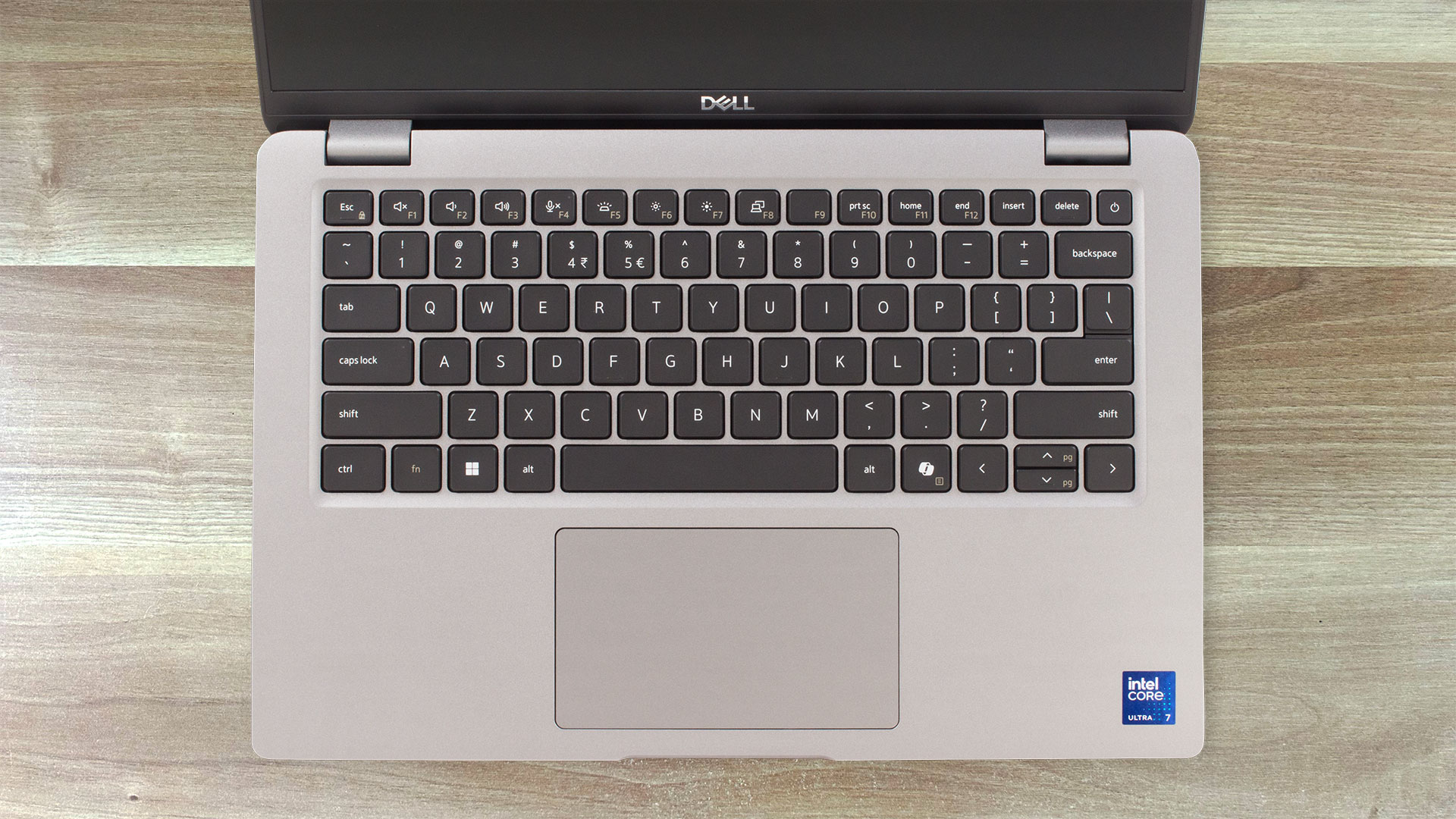
The keyboard is great for long hours of typing. The keycaps are large and well-spaced. They also sit pretty high off the board deck and that’s why their travel is long and it’s combined with clicky feedback. The Power button in the top right corner has an optional built-in fingerprint reader. The “Up” and “Down” Arrow keys seem too small for normal work. Keep in mind that the backlight is an optional feature.
The touchpad size is okay for a small notebook – 115 x 67 mm. The pad is smooth, with near-silent clicks. The accuracy is average.
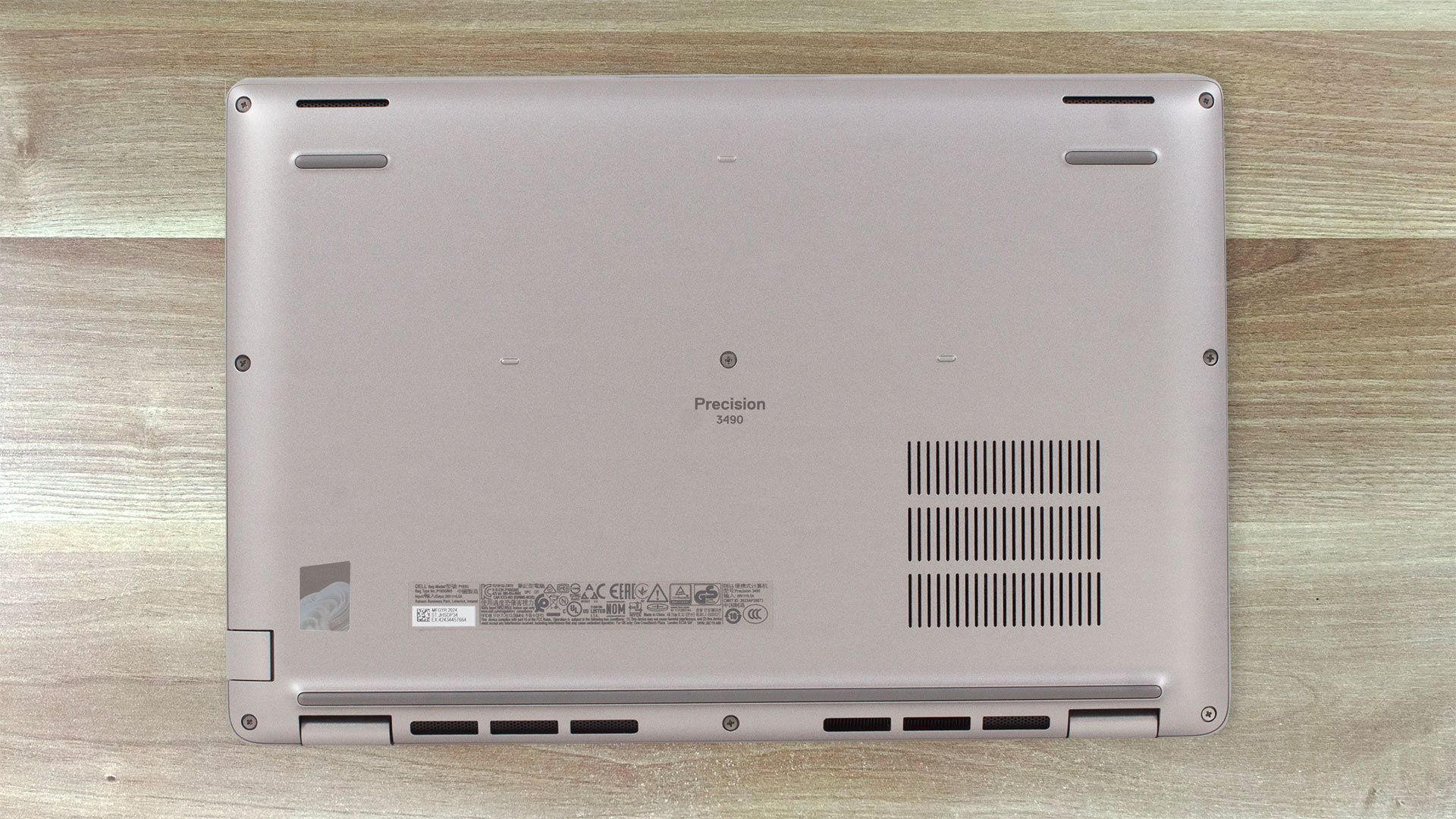
On the bottom of the laptop, we can spot a small ventilation grill positioned right above the cooling fan, three rubber feet (which aren’t grippy at all), and two speaker cutouts. The hot air is pushed through a two-row vent on the rear.

Ports
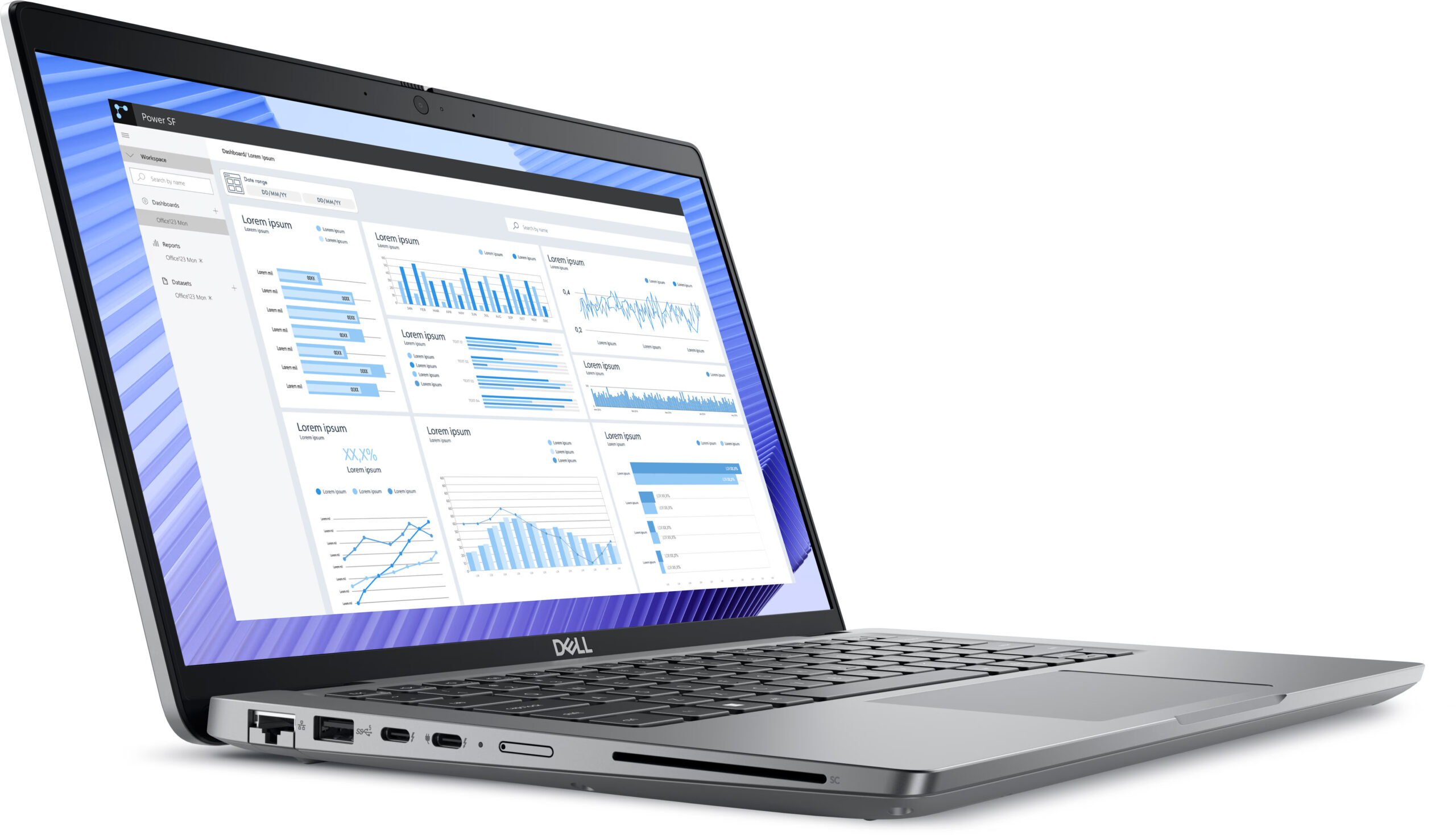
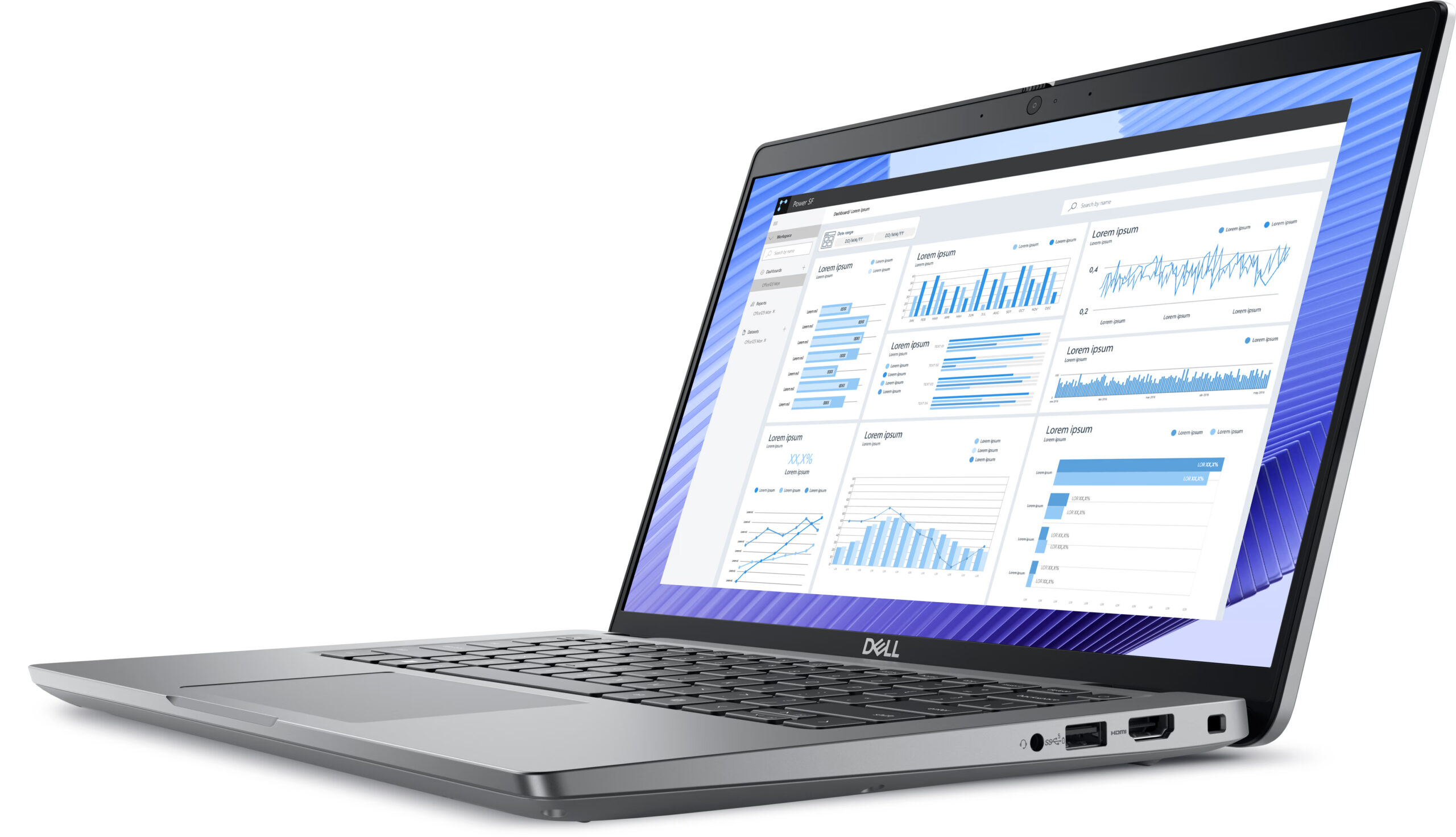
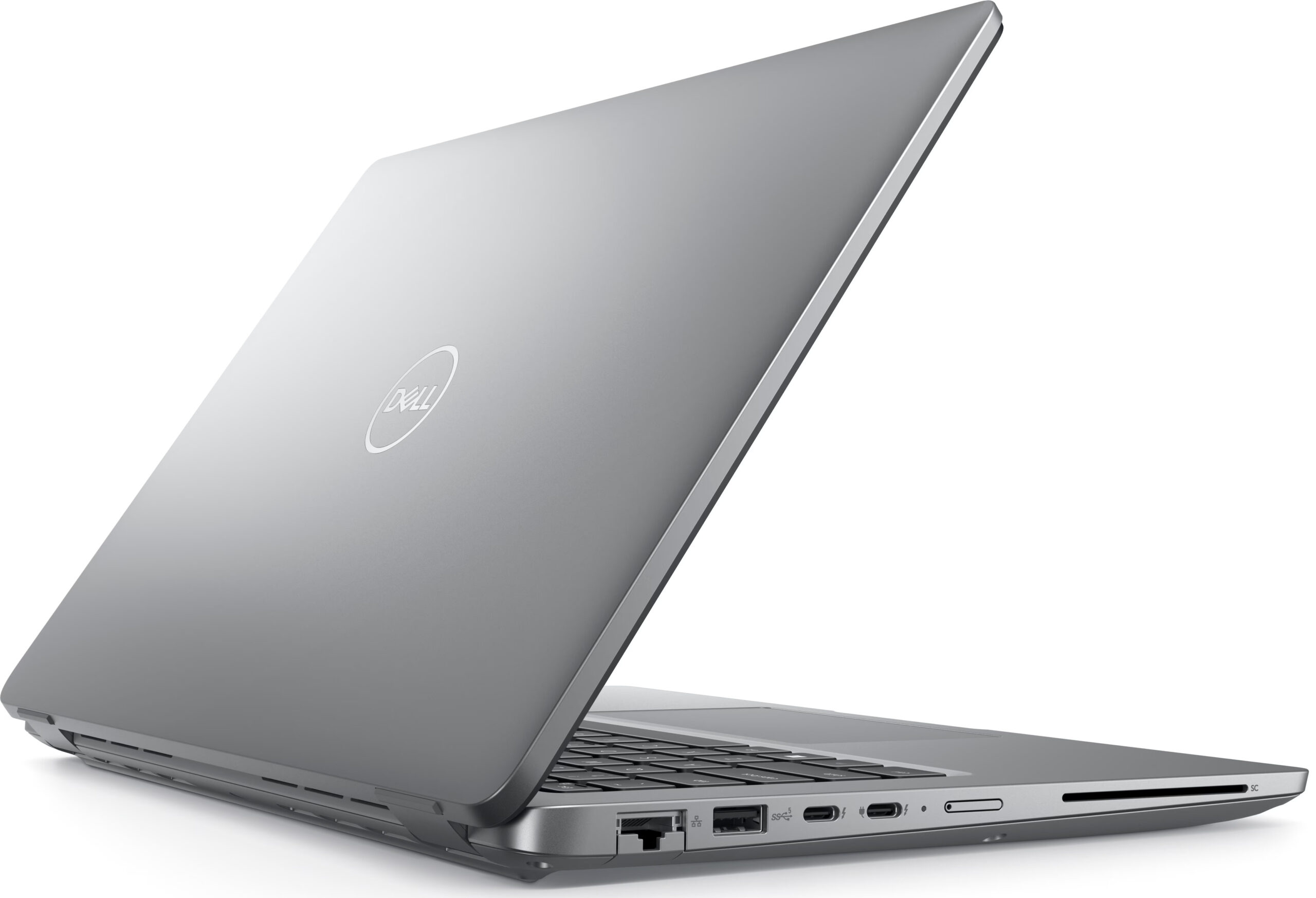
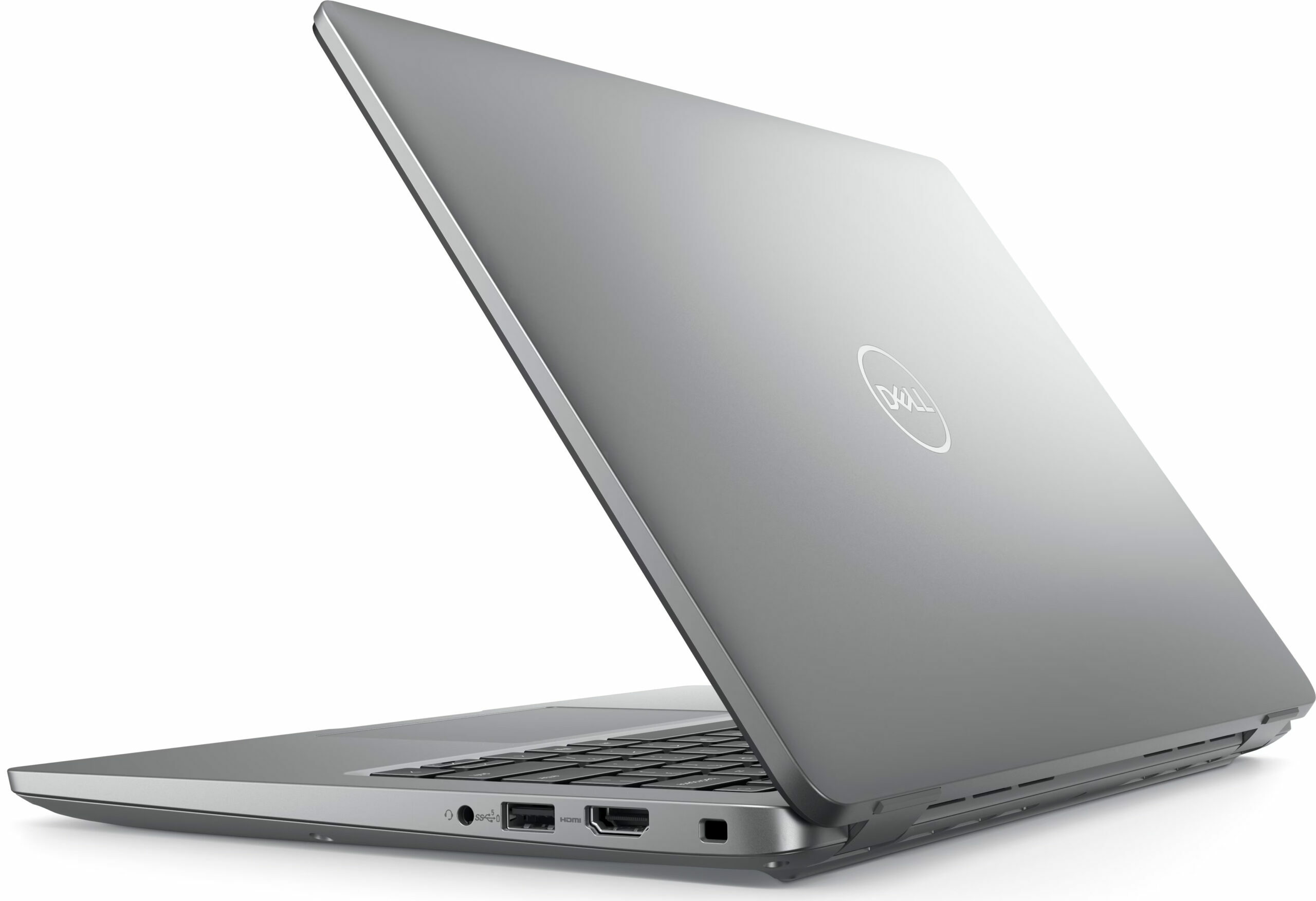
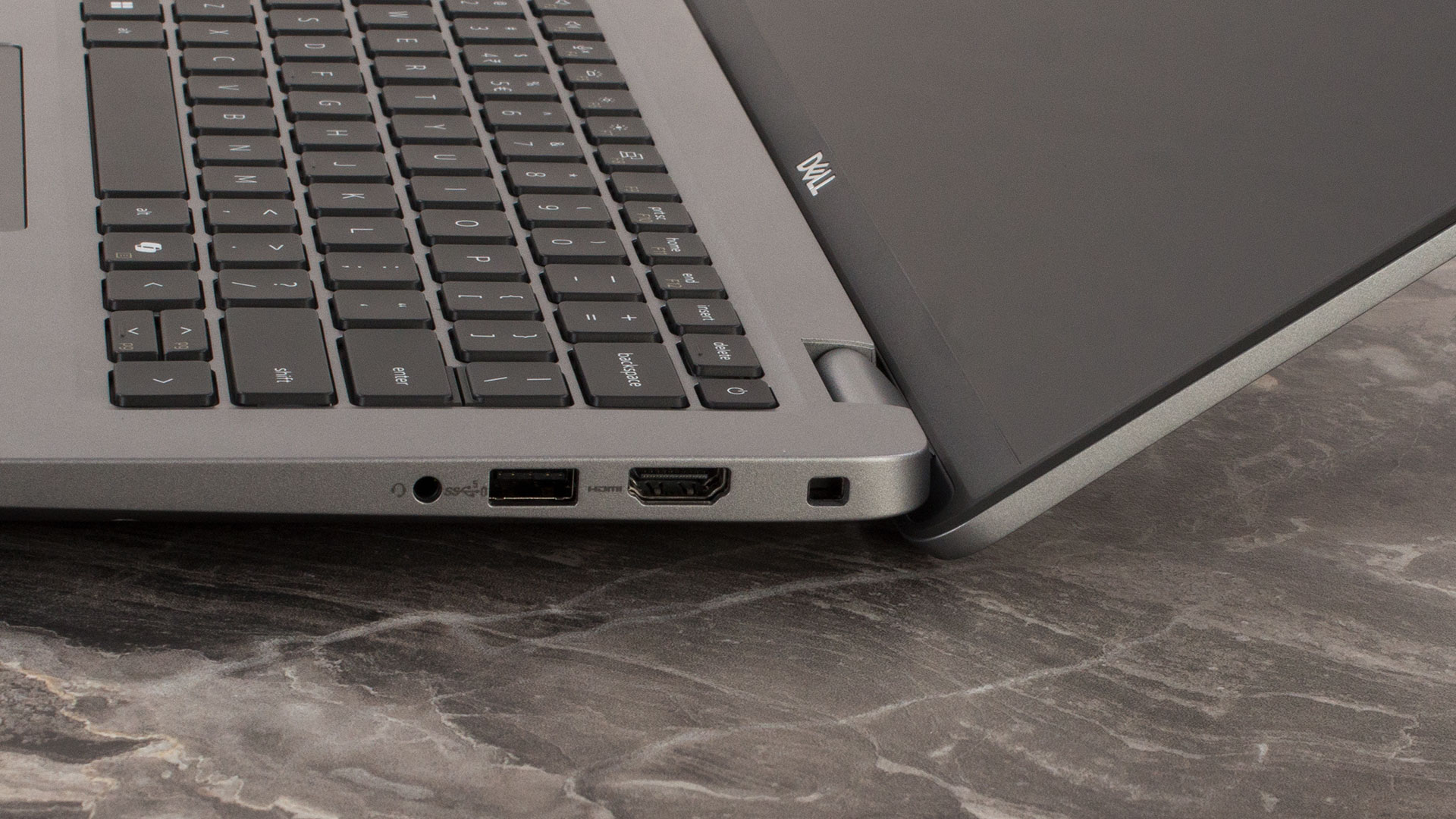
On the left, you get a LAN, a USB Type-A 3.2 (Gen. 1) port, followed by two 40 Gbps Thunderbolt 4 / USB4 ports with DisplayPort 2.1 and Power Delivery capabilities, an optional nano-SIM slot, and a SmartCard reader (option). The right side houses a security lock slot, an HDMI 2.1 TMDS, a USB Type-A 3.2 (Gen. 1) port with PowerShare function, and an Audio combo jack.


Display and Sound Quality, Get our Profiles
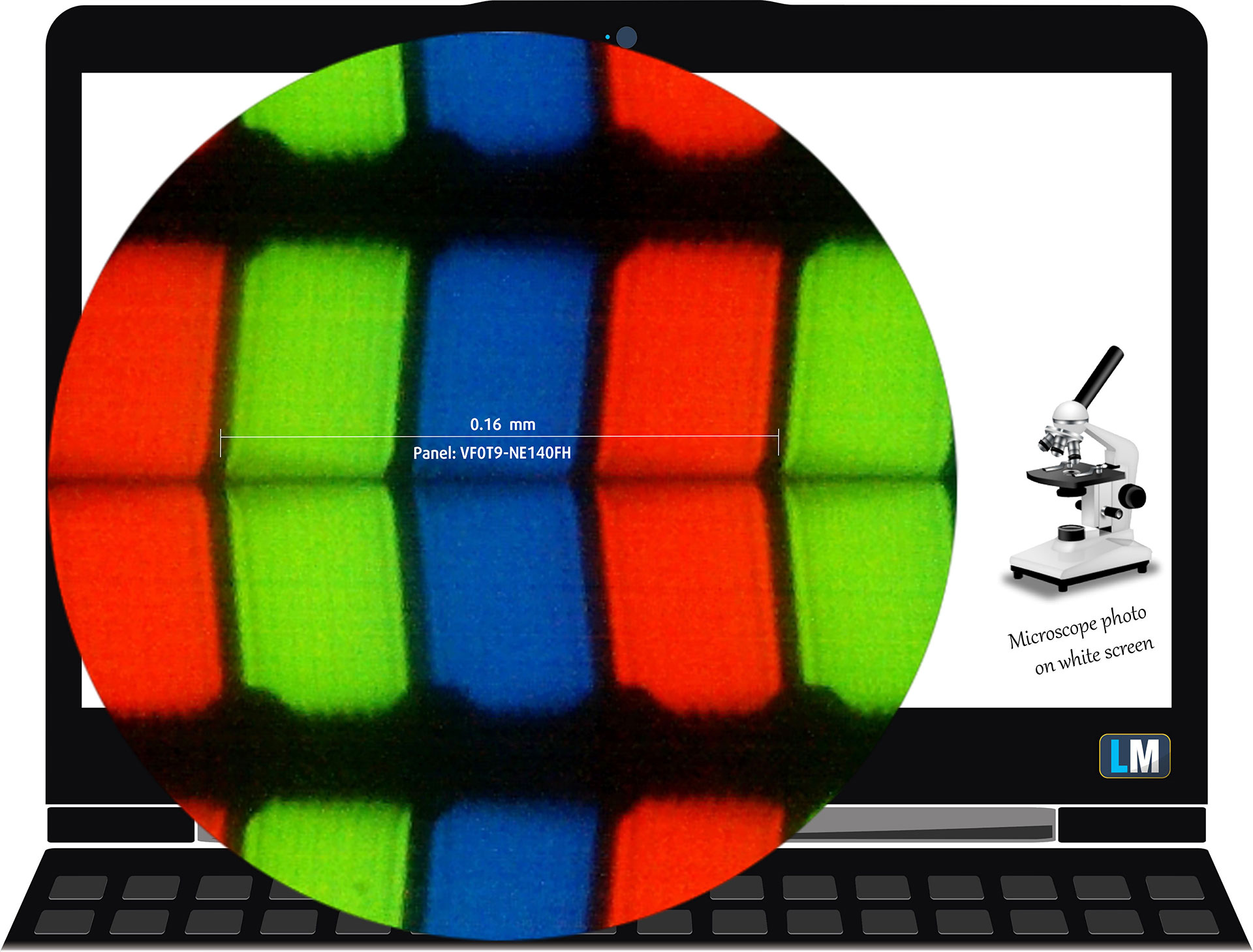
Dell Precision 14 3490 is equipped with a Full HD IPS panel, model number BOE VF0T9-NE140FH (BOE0A95). It comes with a 60Hz refresh rate. Its diagonal is 14.0″ (35.5 cm), and the resolution – 1920 x 1080p. Additionally, the screen ratio is 16:9, the pixel density – 157 ppi, and their pitch – 0.16 x 0.16 mm. The screen can be considered Retina when viewed from at least 56 cm (this is based on the pixel density and the typical viewing distance at which individual pixels cannot be distinguished by the human eye).
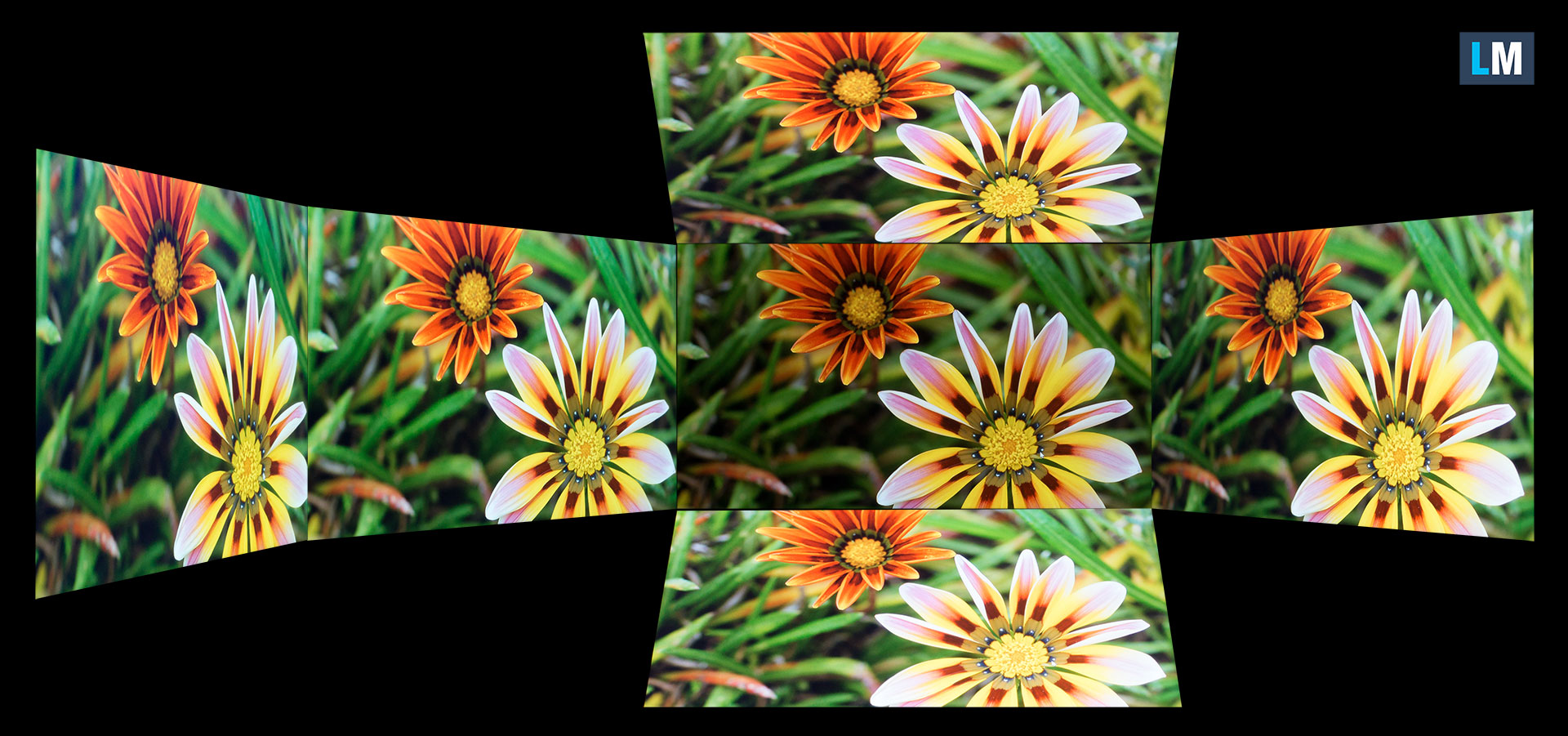
Viewing angles are good. We offer images at different angles to evaluate the quality.
Also, a video with locked focus and exposure.
The maximum measured brightness is 297 nits (cd/m2) in the middle of the screen and 266 nits (cd/m2) average across the surface with a maximum deviation of just 12%. The Correlated Color Temperature on a white screen and at maximum brightness is 7270К.
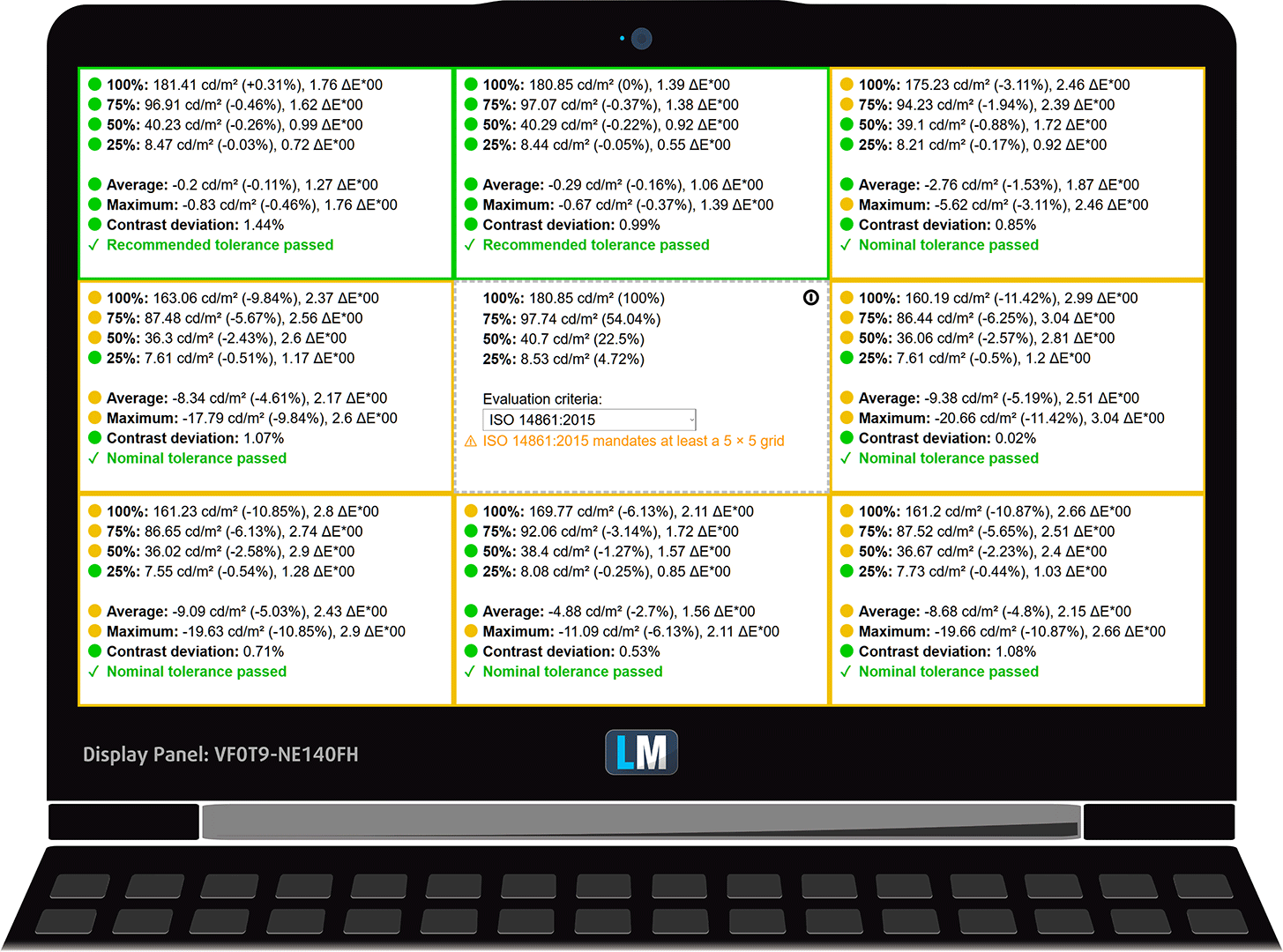
In the illustration below you can see how the display performs from a uniformity perspective. The illustration below shows how matters are for operational brightness levels (approximately 180 nits) – in this particular case at 60% Brightness (White level = 181 cd/m2, Black level = 0.13 cd/m2).
Values of dE2000 over 4.0 should not occur, and this parameter is one of the first you should check if you intend to use the laptop for color-sensitive work (a maximum tolerance of 2.0). We measured a good contrast ratio – 1400:1.
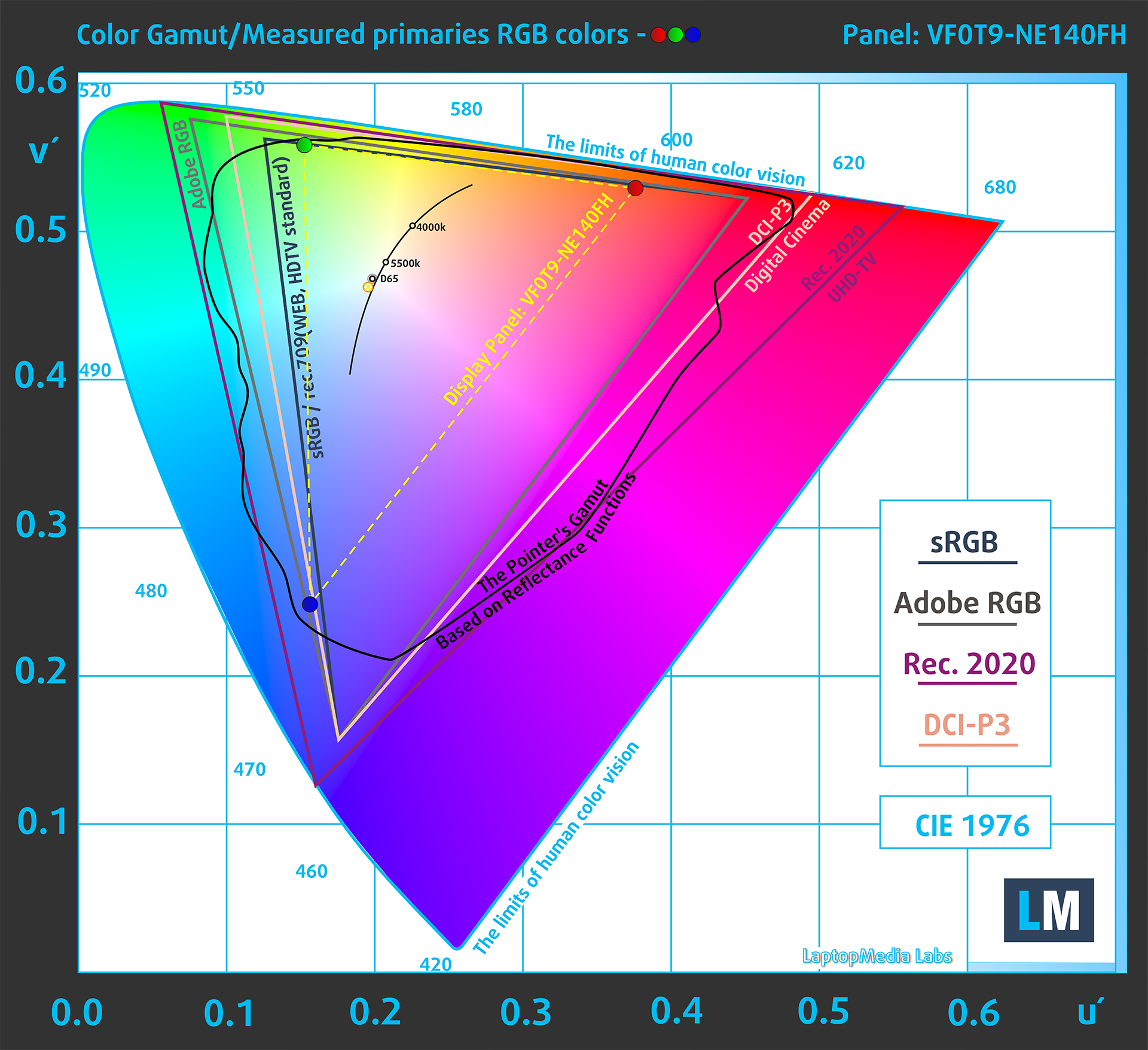
To make sure we are on the same page, we would like to give you a little introduction to the sRGB color gamut and the Adobe RGB. To start, there’s the CIE 1976 Uniform Chromaticity Diagram that represents the visible specter of colors by the human eye, giving you a better perception of the color gamut coverage and the color accuracy.
Inside the black triangle, you will see the standard color gamut (sRGB) that is being used by millions of people on HDTV and on the web. As for the Adobe RGB, this is used in professional cameras, monitors, etc for printing. Basically, colors inside the black triangle are used by everyone and this is the essential part of the color quality and color accuracy of a mainstream notebook.
Still, we’ve included other color spaces like the famous DCI-P3 standard used by movie studios, as well as the digital UHD Rec.2020 standard. Rec.2020, however, is still a thing of the future and it’s difficult for today’s displays to cover that well. We’ve also included the so-called Michael Pointer gamut, or Pointer’s gamut, which represents the colors that naturally occur around us every day.
The yellow dotted line shows Dell Precision 14 3490’s color gamut coverage.
Its display covers 53% of the sRGB/ITU-R BT.709 (web/HDTV standard) in CIE1976, and 42% of DCI-P3.
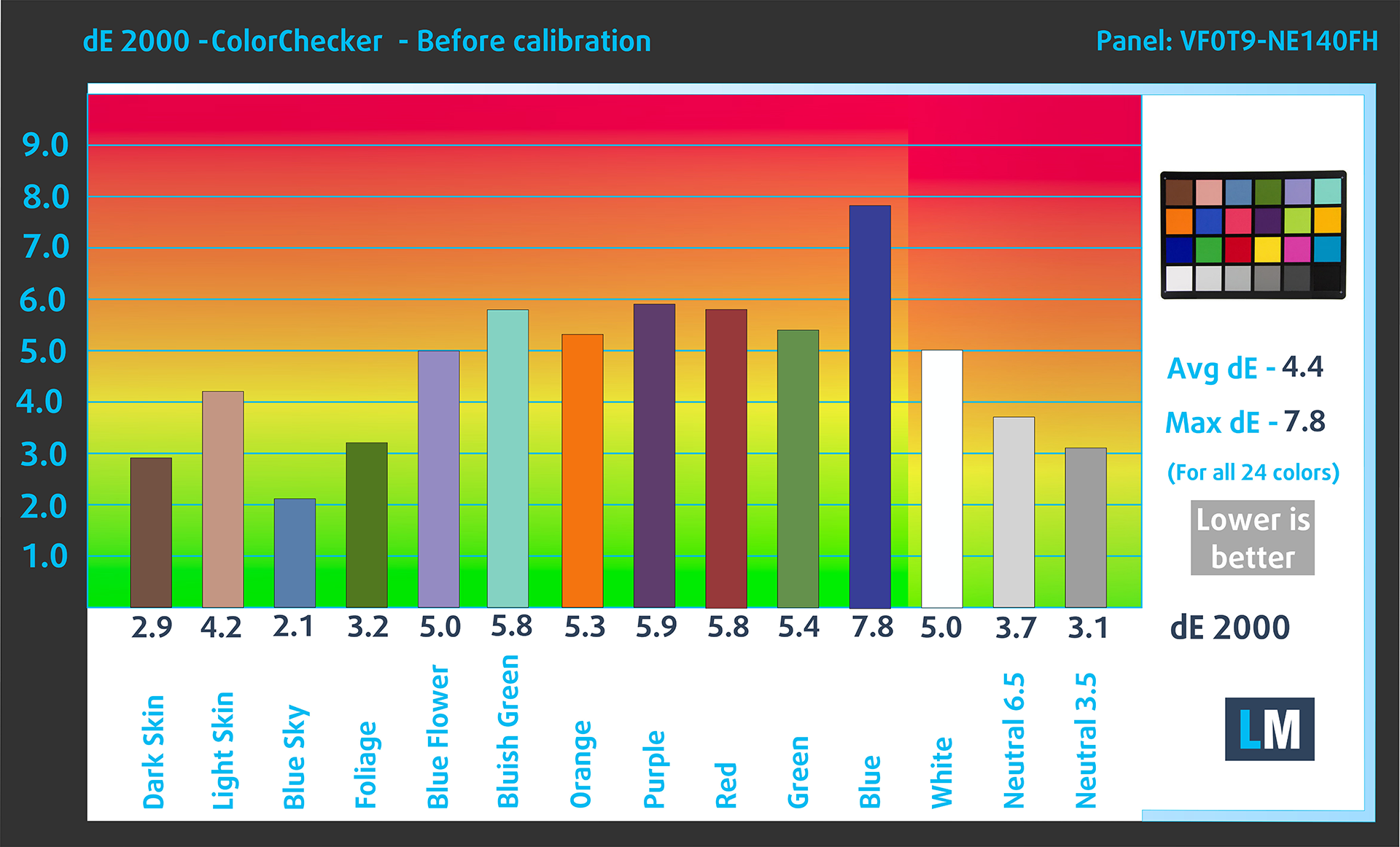
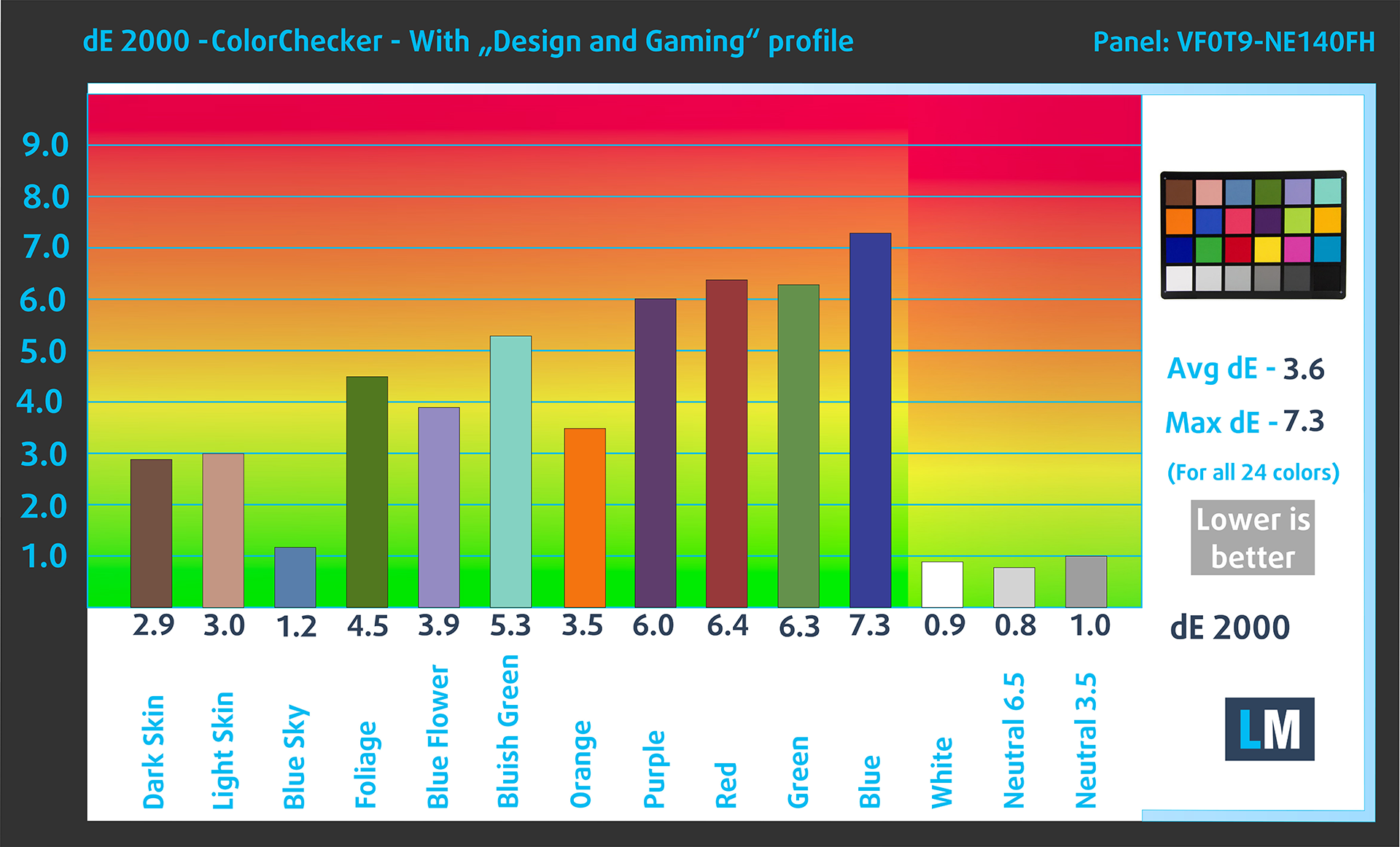
We tested the accuracy of the display with 24 commonly used colors like light and dark human skin, blue sky, green grass, orange, etc.
Below you can compare the scores of the Dell Precision 14 3490 with the default settings (left), and with the “Gaming and Web design” profile (right).
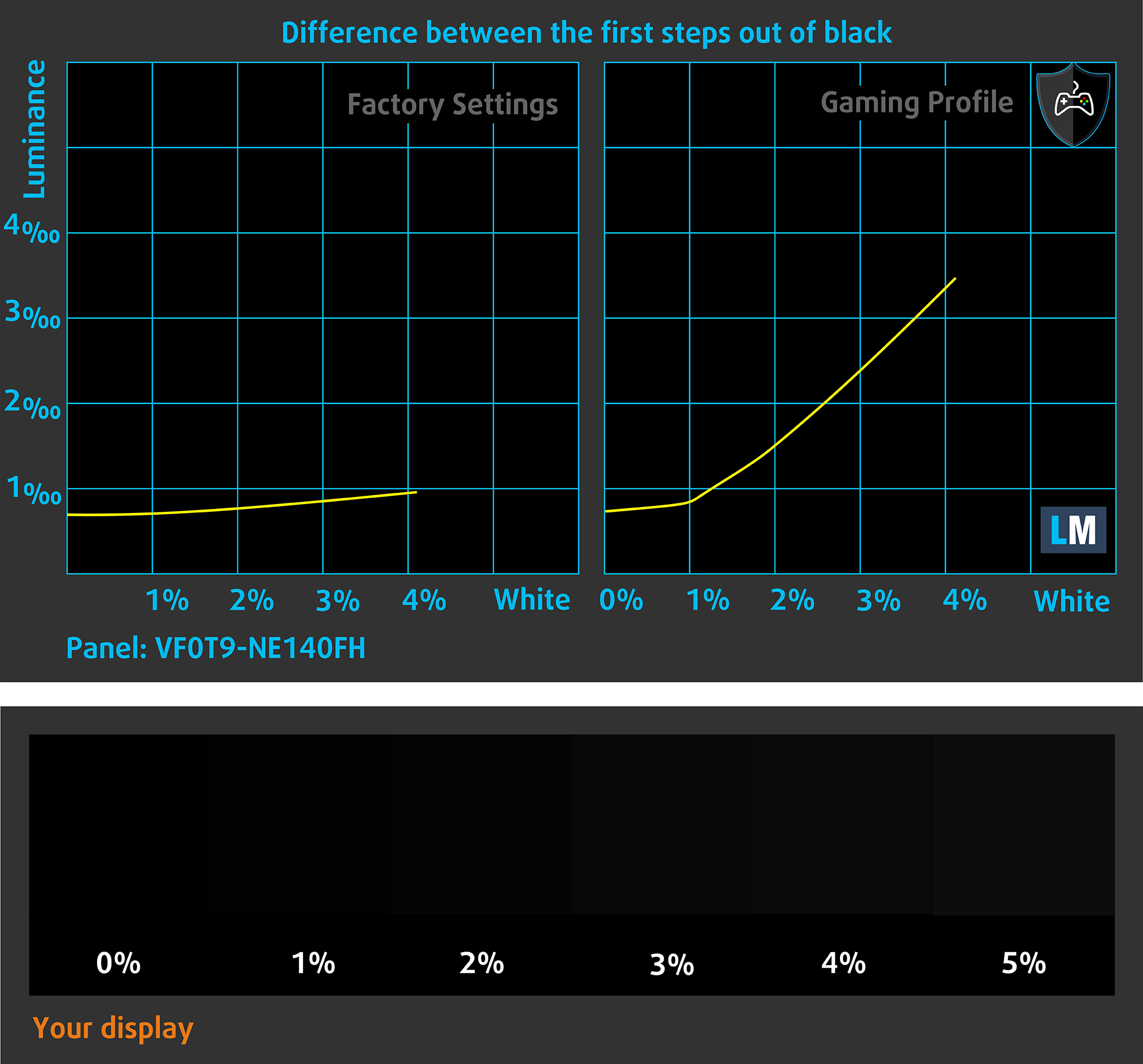
The next figure shows how well the display is able to reproduce really dark parts of an image, which is essential when watching movies or playing games in low ambient light.
The left side of the image represents the display with stock settings, while the right one is enhanced with the “Gaming and Web Design” profile activated. On the horizontal axis, you will find the grayscale, and on the vertical axis – the luminance of the display. On the two graphs below you can easily check for yourself how your display handles the darkest nuances but keep in mind that this also depends on the settings of your current display, the calibration, the viewing angle, and the surrounding light conditions.
Response time (Gaming capabilities)
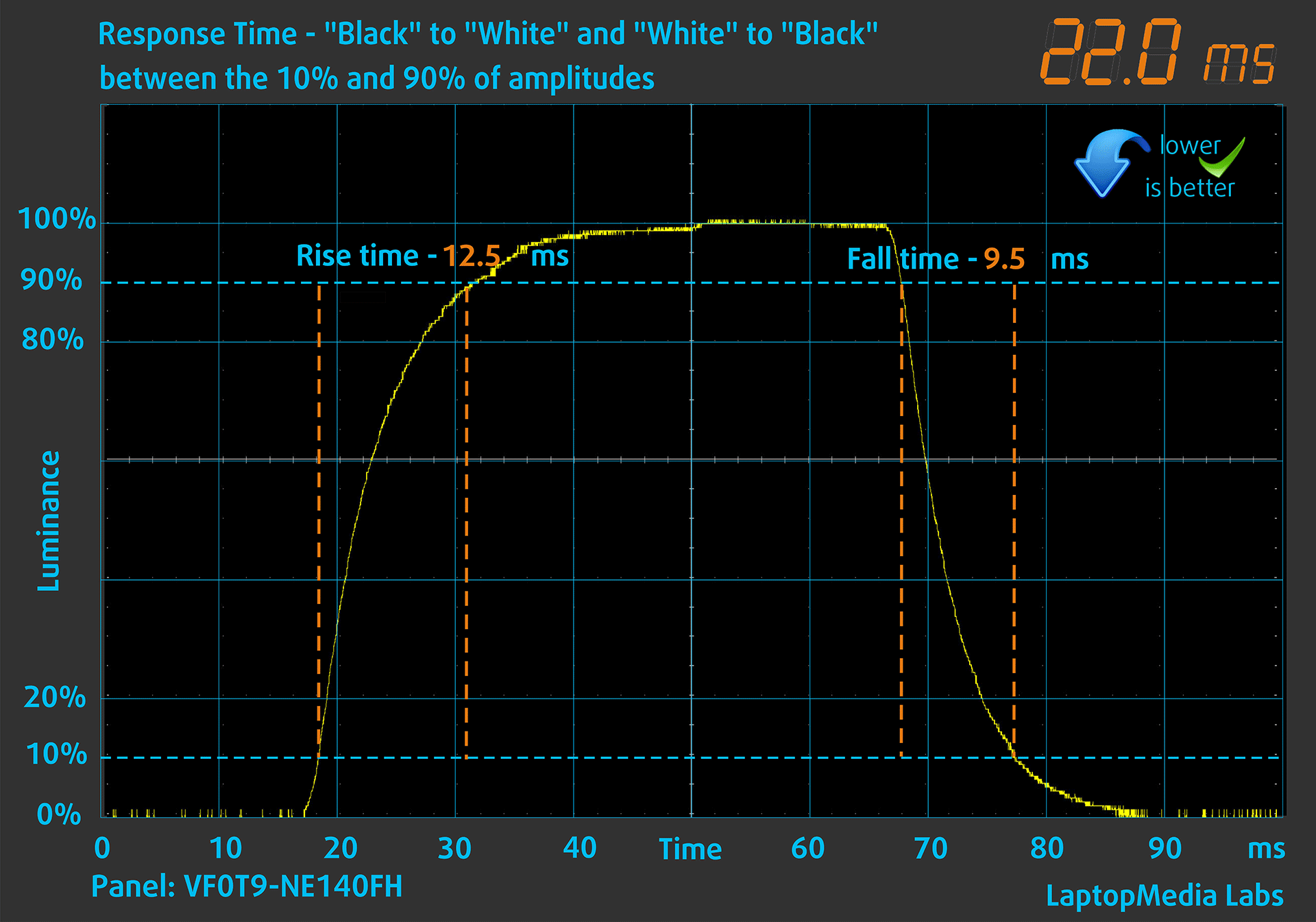
We test the reaction time of the pixels with the usual “black-to-white” and “white-to-black” method from 10% to 90% and vice versa.
We recorded Fall Time + Rise Time = 22 ms.
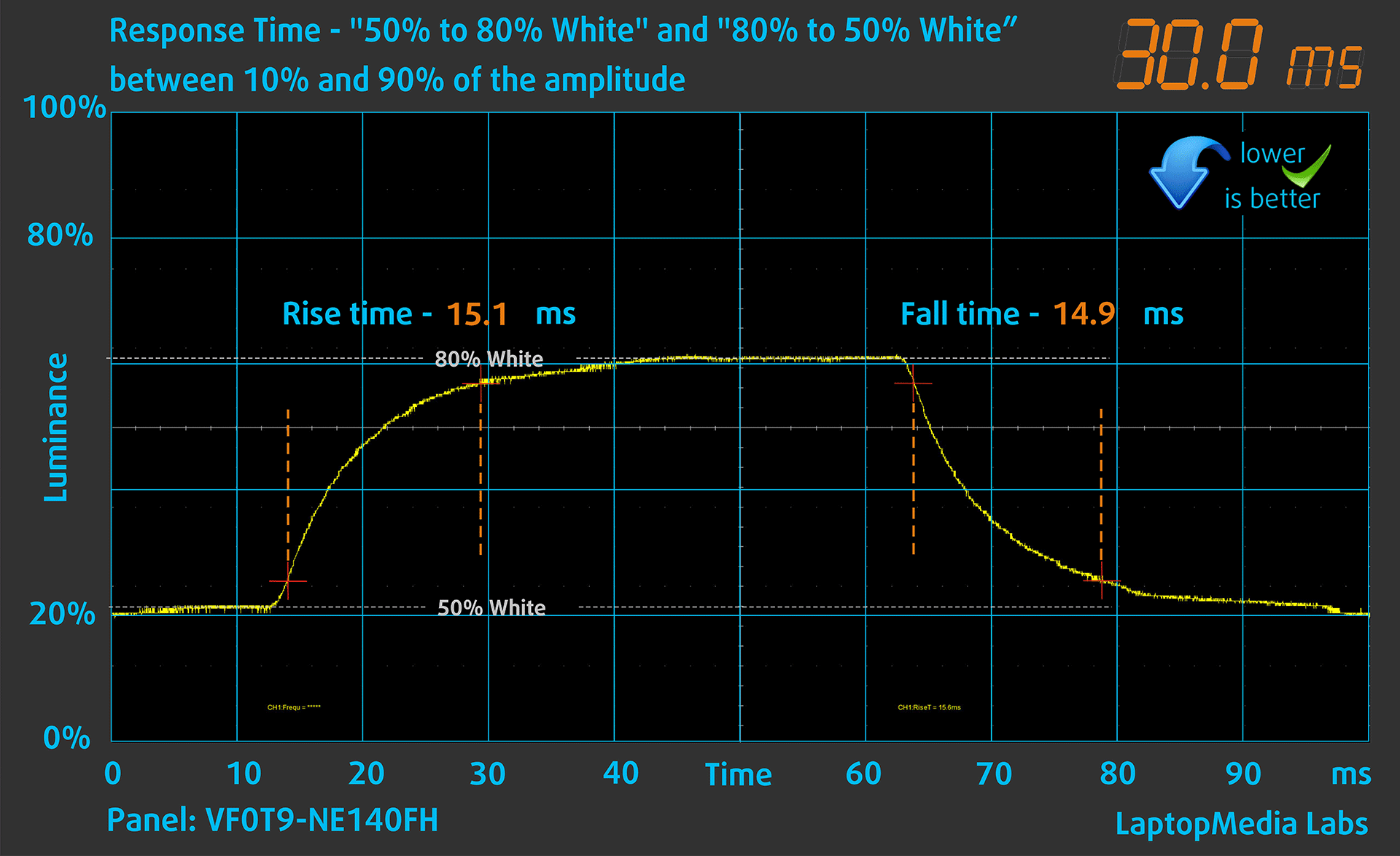
After that, we test the reaction time of the pixels with the usual “Gray-to-Gray” method from 50% White to 80% White and vice versa between 10% and 90% of the amplitude.
Health Impact: PWM (Screen flickering)
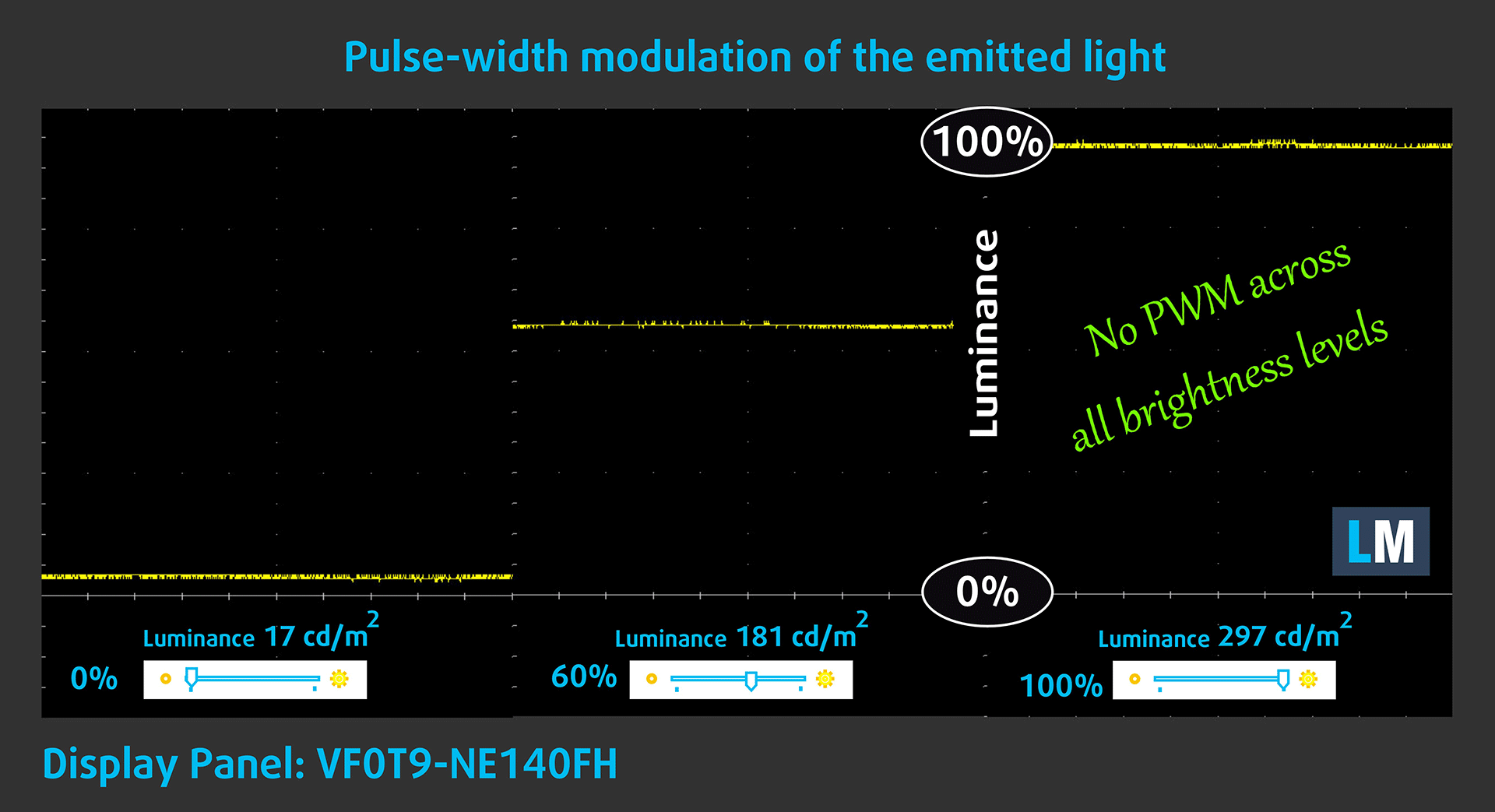
Pulse-width modulation (PWM) is an easy way to control monitor brightness. When you lower the brightness, the light intensity of the display is not lowered, but instead turned off and on by the electronics with a frequency indistinguishable to the human eye. In these light impulses, the light/no-light time ratio varies, while brightness remains unchanged, which is harmful to your eyes. You can read more about that in our dedicated article on PWM.
Dell Precision 14 3490’s display doesn’t use PWM for brightness adjustment. This makes the screen pretty comfortable for long periods of use.
Health Impact: Blue light emissions
Installing our Health-Guard profile not only eliminates PWM but also reduces the harmful Blue Light emissions while keeping the colors of the screen perceptually accurate. If you’re not familiar with the Blue light, the TL;DR version is – emissions that negatively affect your eyes, skin, and your whole body. You can find more information about that in our dedicated article on Blue Light.
Health Impact: Gloss-level measurement
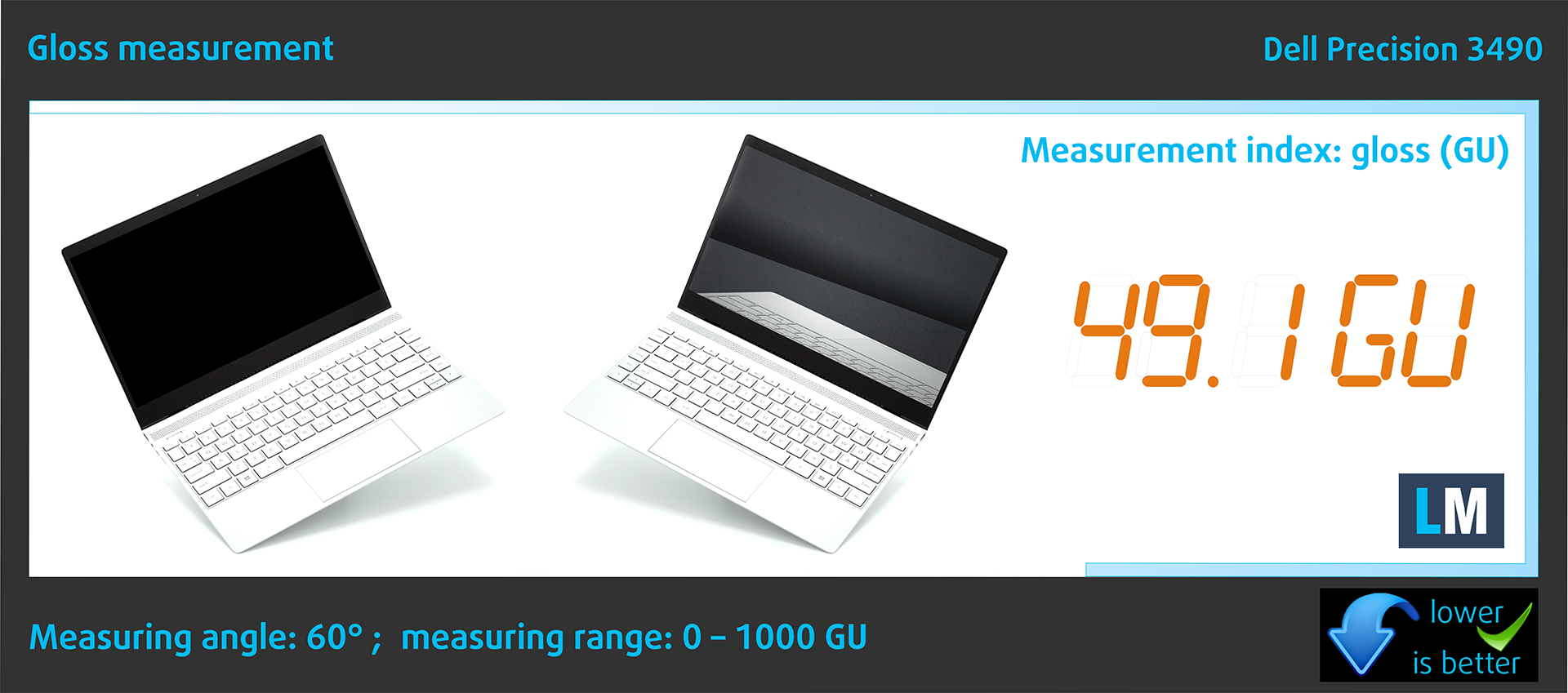
Glossy-coated displays are sometimes inconvenient in high ambient light conditions. We show the level of reflection on the screen for the respective laptop when the display is turned off and the measurement angle is 60° (in this case, the result is 49.1 GU).
High Gloss: >70 GU
Medium Gloss: 30 – 70 GU
Low Gloss: <30 GU
Sound
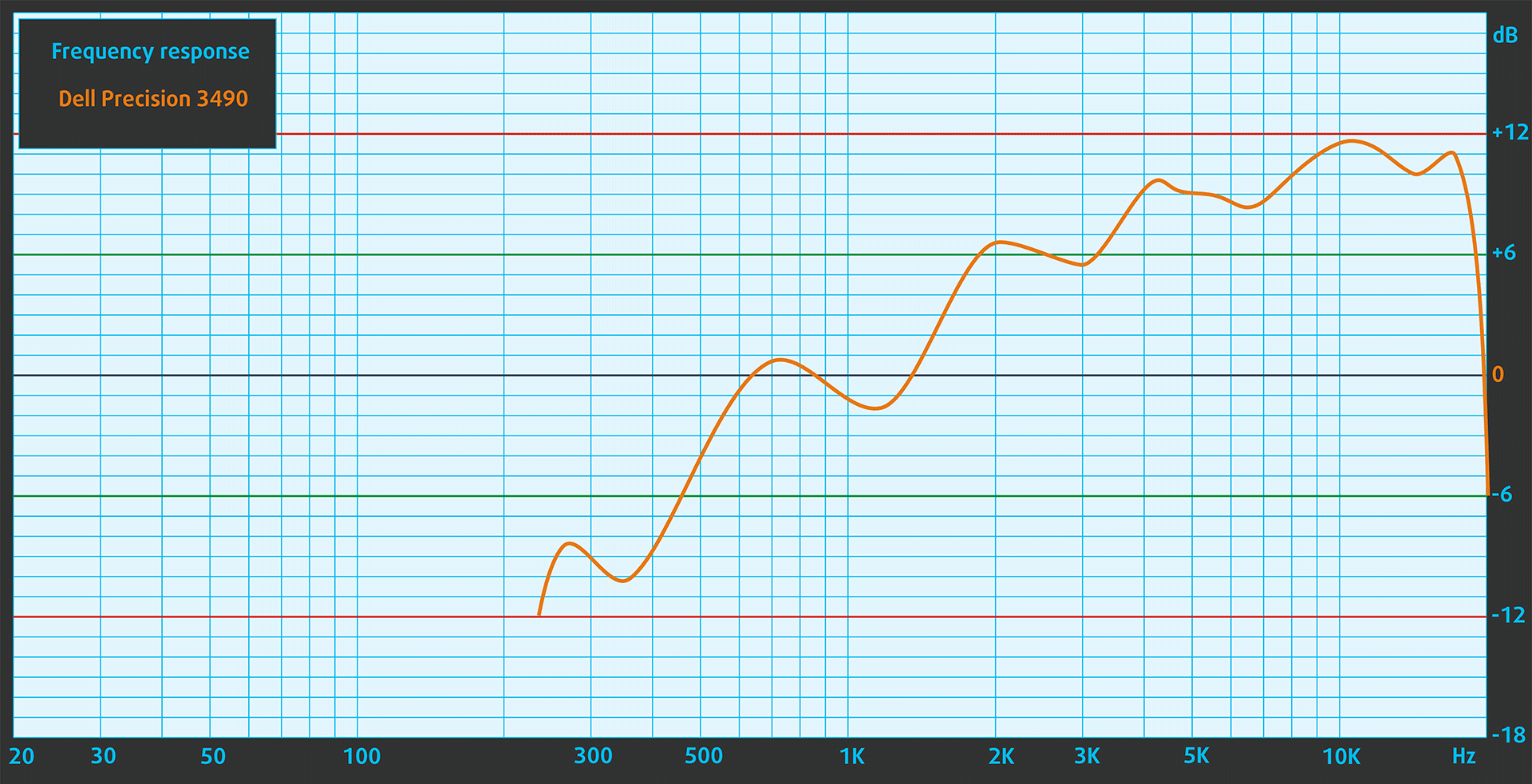
Dell Precision 14 3490’s speakers produce a sound of very good quality. Its low, mid, and high tones are clear of deviations.
Buy our profiles
Since our profiles are tailored for each individual display model, this article and its respective profile package are meant for Dell Precision 14 3490 configuration with 14.0″ BOE VF0T9-NE140FH (BOE0A95) (1920×1080).
*Should you have problems with downloading the purchased file, try using a different browser to open the link you’ll receive via e-mail. If the download target is a .php file instead of an archive, change the file extension to .zip or contact us at [email protected].
Read more about the profiles HERE.
In addition to receiving efficient and health-friendly profiles, by buying LaptopMedia's products you also support the development of our labs, where we test devices in order to produce the most objective reviews possible.

Office Work
Office Work should be used mostly by users who spend most of the time looking at pieces of text, tables or just surfing. This profile aims to deliver better distinctness and clarity by keeping a flat gamma curve (2.20), native color temperature and perceptually accurate colors.

Design and Gaming
This profile is aimed at designers who work with colors professionally, and for games and movies as well. Design and Gaming takes display panels to their limits, making them as accurate as possible in the sRGB IEC61966-2-1 standard for Web and HDTV, at white point D65.

Health-Guard
Health-Guard eliminates the harmful Pulse-Width Modulation (PWM) and reduces the negative Blue Light which affects our eyes and body. Since it’s custom tailored for every panel, it manages to keep the colors perceptually accurate. Health-Guard simulates paper so the pressure on the eyes is greatly reduced.
Get all 3 profiles with 33% discount

Performance: CPU, GPU, Storage
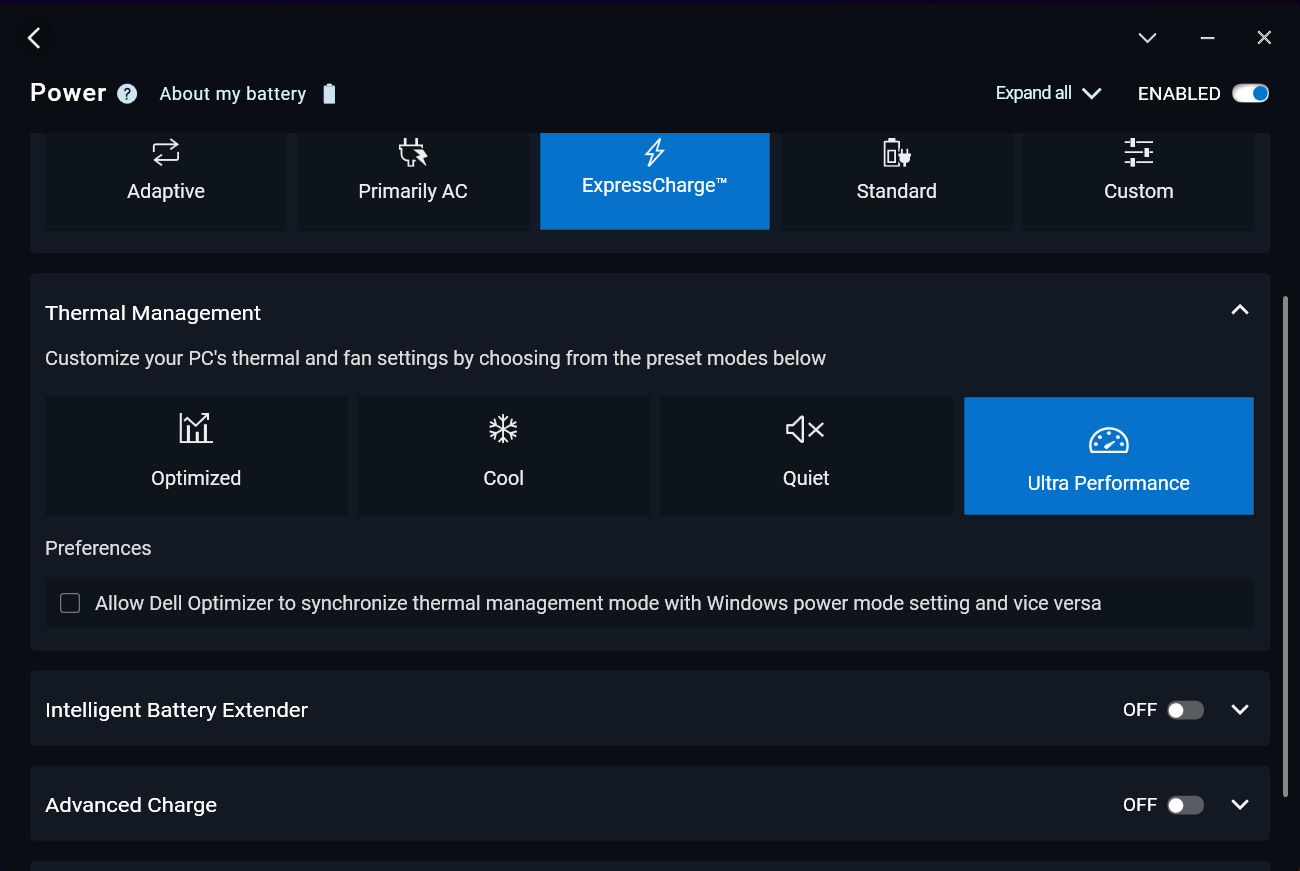
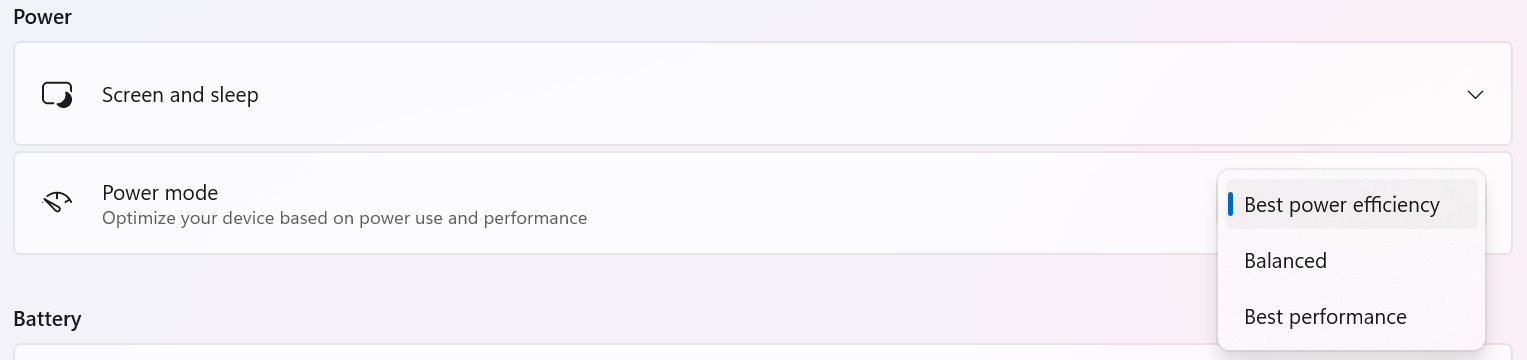
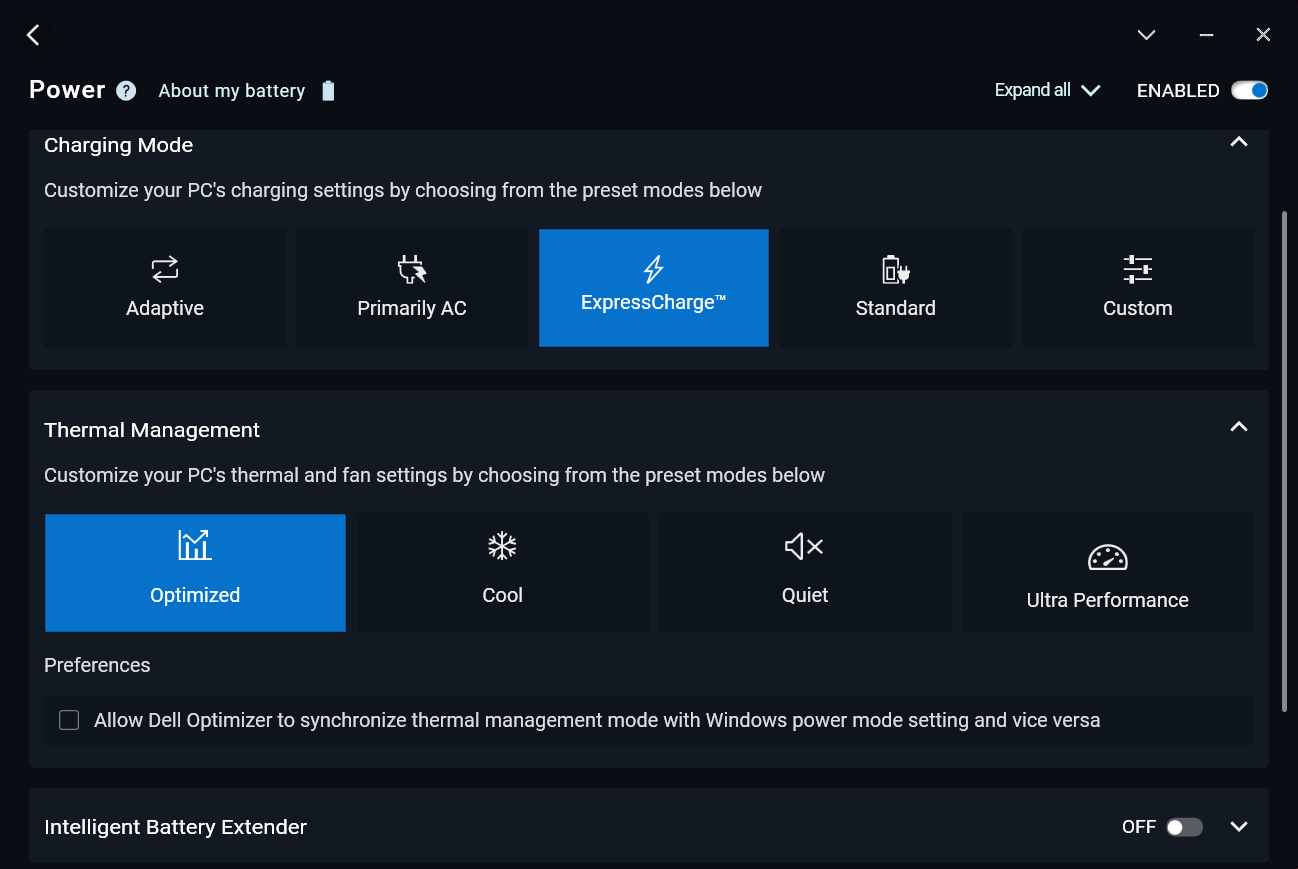
All benchmarks and tests were conducted with the “Best performance” preset activated in the Windows “Power & Battery” menu. Also, the “Ultra Performance” mode is enabled in the Dell Optimizer app.

CPU options
This laptop can be found with Core Ultra 5 125U, Core Ultra 7 155U, Core Ultra 5 125H, Core Ultra 5 135H, Core Ultra 7 155H, or Core Ultra 7 165H.
Our notebook has a Core Ultra 7 155H.
Single-core performance ensures smooth operation and responsiveness in operating systems, providing a better user experience.
Results are from the Geekbench 6 Single-Core test (higher is better)
Multi-core performance is essential for handling complex and demanding tasks, such as Video editing, CAD, and Scientific simulations.
Results are from the Geekbench 6 Multi-Core test (higher is better)
Here, we evaluate the CPU's performance using a real-world 3D rendering task, assessing its ability to handle complex computations and rendering workloads efficiently.
Results are from the Cinebench 2024 Multi-Core test (higher is better)
GPU options
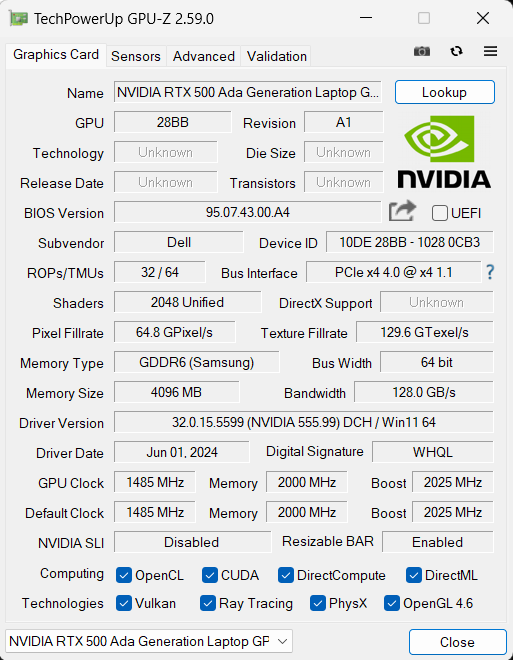
For graphics-heavy tasks, you can rely on the 35W NVIDIA RTX 500 Ada Generation, the only dGPU model for this Dell series.
The device that we bought is equipped with the mentioned RTX dedicated graphics.
The results are from 3DMark Time Spy (Graphics). Higher is better.
Gaming tests


| Metro Exodus | Full HD, Low (Check settings) | Full HD, High (Check settings) | Full HD, Extreme (Check settings) |
|---|---|---|---|
| Average FPS | 85 fps | 41 fps | 13 fps |

| Borderlands 3 | Full HD, V.Low (Check settings) | Full HD, Medium (Check settings) | Full HD, High (Check settings) | Full HD, Badass (Check settings) |
|---|---|---|---|---|
| Average FPS | 76 fps | 60 fps | 46 fps | 38 fps |

| Far Cry 6 | Full HD, Low (Check settings) | Full HD, High (Check settings) | Full HD, Ultra (Check settings) |
|---|---|---|---|
| Average FPS | 80 fps | 58 fps | 52 fps |

| Gears 5 | Full HD, Low (Check settings) | Full HD, Medium (Check settings) | Full HD, High (Check settings) | Full HD, Ultra (Check settings) |
|---|---|---|---|---|
| Average FPS | 91 fps | 63 fps | 50 fps | 44 fps |
Here. the core clock of the NVIDIA RTX 500 Ada Generation is hindered compared to the same chip in the 15-inch 3590 sibling, and that’s why some of the FPS results are lower. Still, playing games on 1080p with decent FPS is mission-possible for this modest GPU, if you don’t mind Medium or High details.
Storage performance
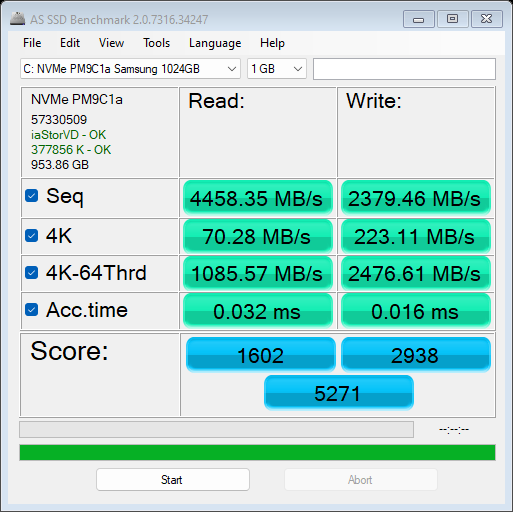
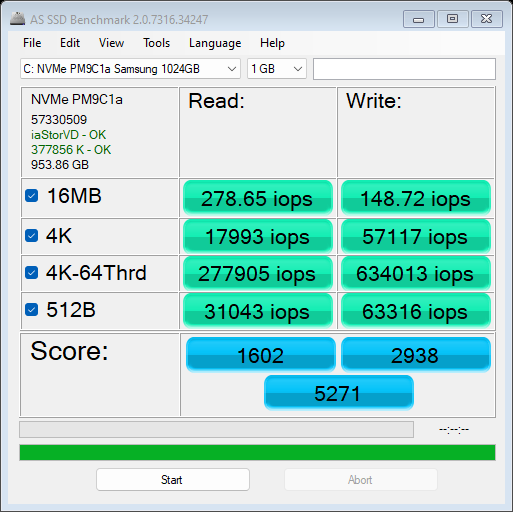
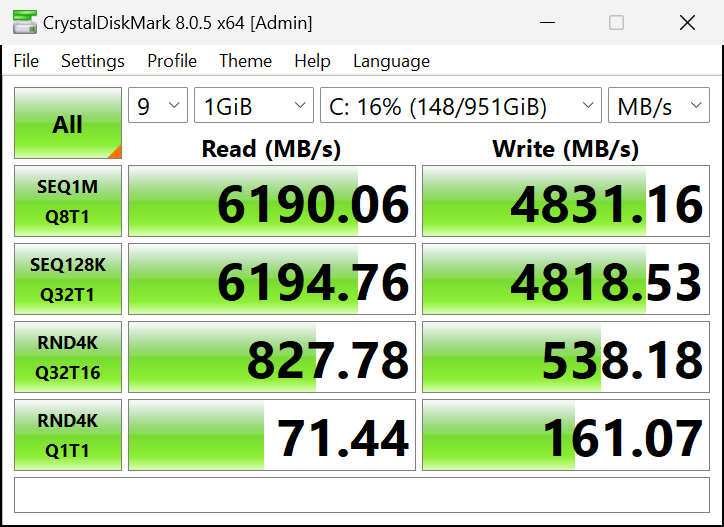
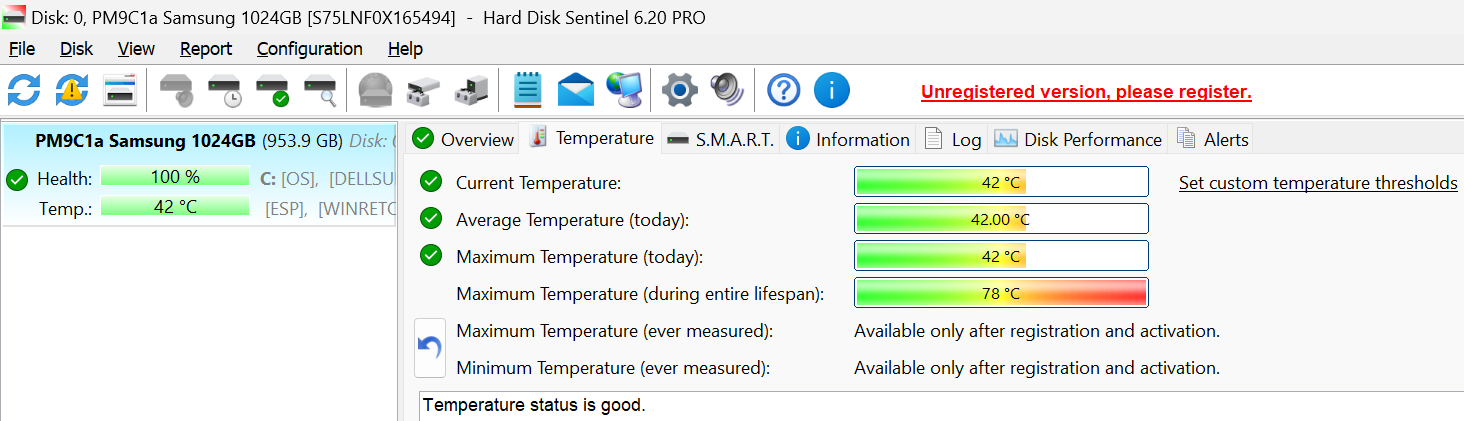
Our notebook has a 1TB Samsung PM9C1a. This fast 2230 Gen 4 SSD gets hot during benchmarking – 79°C.
[eBook Guide + Tools] How to MAX OUT Your Laptop
You can make your laptop Faster. LaptopMedia has tested thousands of models in the last 15 years, and we have yet to see a notebook that couldn't be made more powerful through modifications.
That's why we decided to bundle everything we know about how to achieve this in an Easy-to-Follow, Step-by-Step, and Laboratory-Tested, all in one project.
Read more about it here:
[eBook Guide + Tools] How to MAX OUT Your Laptop
🛠️ GPU Modifications: vBIOS, Overclocking, Undervolting
⚙️ Building Fast/Reliable RAID configuration
💻 Hardware upgrade tips for best results
🖼 Display enhancing
💾 OS Optimization for best performance
Temperatures and comfort, Battery Life
Max CPU load
In this test we use 100% on the CPU cores, monitoring their frequencies and chip temperature. The first column shows a computer’s reaction to a short load (2-10 seconds), the second column simulates a serious task (between 15 and 30 seconds), and the third column is a good indicator of how good the laptop is for long loads such as video rendering.
Average P-core frequency; Average E-core frequency; Average LP E-core frequency; CPU temp.; Package Power
| Intel Core Ultra 7 155H (28W Base Power) | 0:02 – 0:10 sec | 0:15 – 0:30 sec | 10:00 – 15:00 min |
|---|---|---|---|
| Dell Precision 14 3490 | 3.07 GHz @ 2.45 GHz @ 1.68 GHz @ 71°C @ 64W | 3.04 GHz @ 2.46 GHz @ 1.70 GHz @ 83°C @ 64W | 1.89 GHz @ 1.56 GHz @ 1.14 GHz @ 75°C @ 33W |
| MSI Prestige 14 AI Studio C1U | 2.74 GHz @ 2.16 GHz @ 1.58 GHz @ 67°C @ 60W | 2.74 GHz @ 2.16 GHz @ 1.57 GHz @ 73°C @ 60W | 1.78 GHz @ 1.11 GHz @ 1.02 GHz @ 66°C @ 30W |
| Dell Precision 15 3590 | 2.84 GHz @ 2.33 GHz @ 1.63 GHz @ 66°C @ 63W | 2.82 GHz @ 2.32 GHz @ 1.60 GHz @ 79°C @ 64W | 2.15 GHz @ 1.66 GHz @ 1.27 GHz @ 75°C @ 42W |
| Lenovo Yoga 7i 2-in-1 (14″, Gen 9) | 2.85 GHz @ 2.31 GHz @ 1.68 GHz @ 70°C @ 53W | 2.73 GHz @ 2.25 GHz @ 1.62 GHz @ 90°C @ 53W | 1.14 GHz @ 0.99 GHz @ 0.93 GHz @ 63°C @ 22W |
| MSI Summit E13 AI Evo A1M | 2.24 GHz @ 1.80 GHz @ 1.32 GHz @ 73°C @ 40W | 2.15 GHz @ 1.79 GHz @ 1.29 GHz @ 83°C @ 40W | 1.74 GHz @ 1.00 GHz @ 1.00 GHz @ 77°C @ 28W |
| Lenovo Yoga Slim 7i (14″, Gen 9) | 2.41 GHz @ 2.07 GHz @ 1.40 GHz @ 70°C @ 47W | 2.34 GHz @ 2.02 GHz @ 1.40 GHz @ 83°C @ 47W | 2.00 GHz @ 1.59 GHz @ 1.10 GHz @ 78°C @ 35W |
| Dell Inspiron 16 Plus 7640 | 3.50 GHz @ 2.70 GHz @ 1.90 GHz @ 80°C @ 80W | 2.82 GHz @ 2.65 GHz @ 2.42 GHz @ 99°C @ 77W | 2.74 GHz @ 2.28 GHz @ 1.69 GHz @ 90°C @ 55W |
| Dell Inspiron 14 Plus 7440 | 3.22 GHz @ 2.62 GHz @ 1.74 GHz @ 89°C @ 80W | 2.64 GHz @ 2.61 GHz @ 2.49 GHz @ 100°C @ 73W | 2.50 GHz @ 1.99 GHz @ 1.40 GHz @ 83°C @ 45W |
| HP OMEN Transcend 14 (14-fb0000) | 3.38 GHz @ 2.65 GHz @ 2.29 GHz @ 65°C @ 85W | 3.22 GHz @ 2.67 GHz @ 2.43 GHz @ 73°C @ 80W | 2.87 GHz @ 2.45 GHz @ 1.68 GHz @ 76°C @ 61W |
| Dell XPS 16 9640 | 3.58 GHz @ 2.72 GHz @ 2.27 GHz @ 86°C @ 97W | 3.39 GHz @ 2.73 GHz @ 1.92 GHz @ 90°C @ 80W | 3.02 GHz @ 2.37 GHz @ 1.70 GHz @ 84°C @ 60W |
| Dell XPS 14 9440 | 3.01 GHz @ 2.55 GHz @ 1.81 GHz @ 88°C @ 64W | 1.96 GHz @ 2.53 GHz @ 2.22 GHz @ 96°C @ 58W | 2.17 GHz @ 1.88 GHz @ 1.33 GHz @ 83°C @ 38W |
| Dell XPS 13 9340 | 2.26 GHz @ 2.43 GHz @ 2.19 GHz @ 100°C @ 59W | 1.21 GHz @ 1.34 GHz @ 2.48 GHz @ 96°C @ 38W | 1.52 GHz @ 1.25 GHz @ 1.67 GHz @ 96°C @ 32W |
| HP Spectre x360 16 (16-aa0000) | 3.02 GHz @ 2.41 GHz @ 1.70 GHz @ 72°C @ 64W | 2.93 GHz @ 2.41 GHz @ 1.93 GHz @ 85°C @ 64W | 2.39 GHz @ 1.98 GHz @ 1.40 GHz @ 80°C @ 45W |
| Lenovo Yoga 9i (14, Gen 9) | 2.95 GHz @ 2.46 GHz @ 1.63 GHz @ 61°C @ 68W | 2.59 GHz @ 2.23 GHz @ 1.47 GHz @ 83°C @ 52W | 2.31 GHz @ 1.98 GHz @ 1.32 GHz @ 75°C @ 37W |
| ASUS Zenbook 14 OLED (UX3405) | 2.91 GHz @ 2.40 GHz @ 1.60 GHz @ 86°C @ 64W | 2.20 GHz @ 2.00 GHz @ 1.69 GHz @ 102°C @ 60W | 1.12 GHz @ 1.52 GHz @ 0.84 GHz @ 78°C @ 28W |
The optional Core Ultra 7 155H can show impressively high clocks in short and medium loads, for a 14-incher. In prolonged periods of 100% CPU stress, the frequencies are lower than the ones of the bigger Dell Precision 15 3590 but that’s normal. Still, the Precision 14 3490 can give the MSI Prestige 14 AI Studio C1U a run for its money when it comes to frequencies.
Real-life gaming
| NVIDIA RTX 500 Ada Generation | GPU frequency/ Core temp (after 2 min) | GPU frequency/ Core temp (after 30 min) |
|---|---|---|
| Dell Precision 14 3490 | 1830 MHz @ 70°C @ 30W | 1528 MHz @ 73°C @ 30W |
| Dell Precision 15 3590 | 1495 MHz @ 65°C @ 26W | 1705 MHz @ 65°C @ 33W |
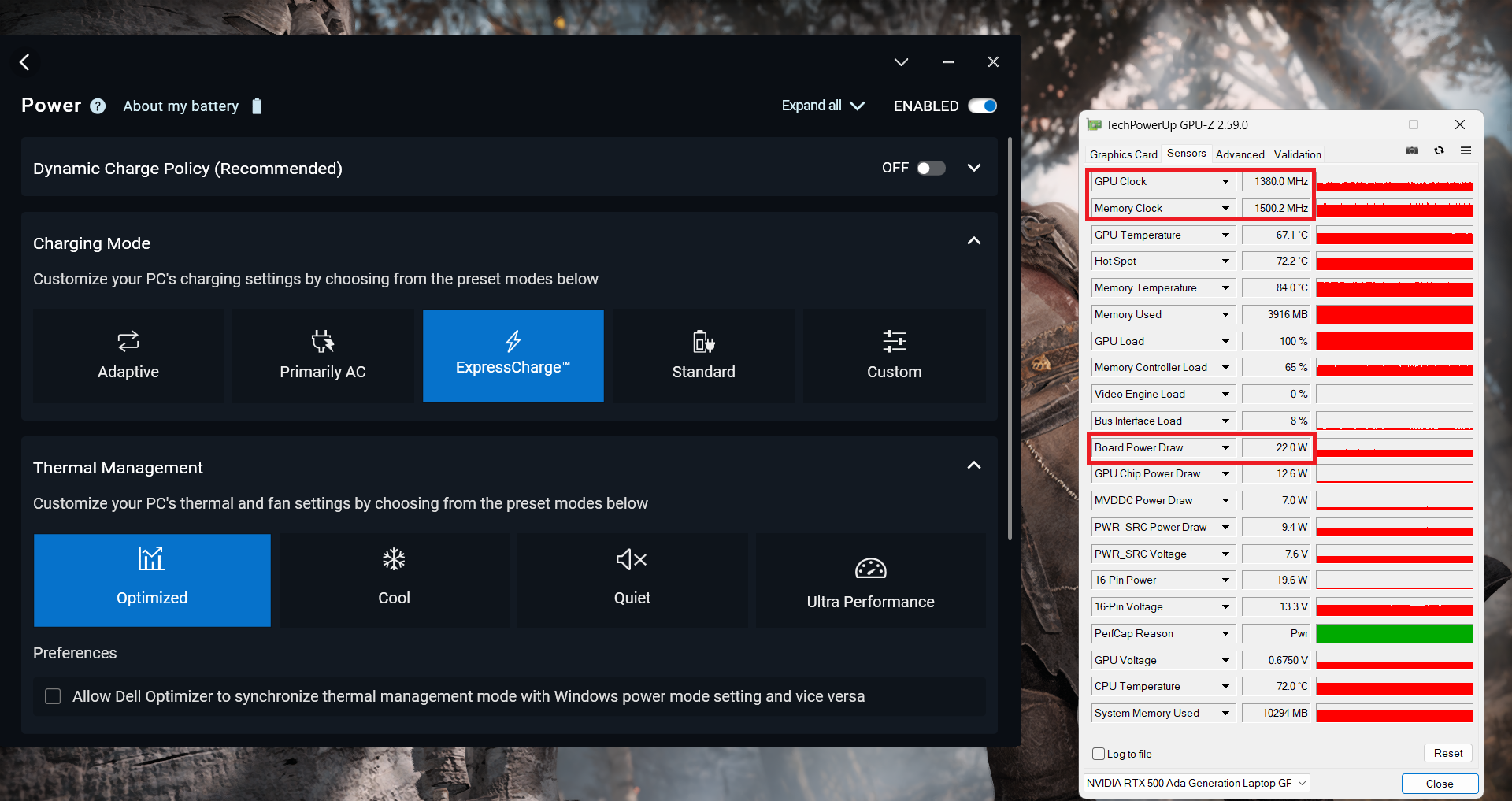
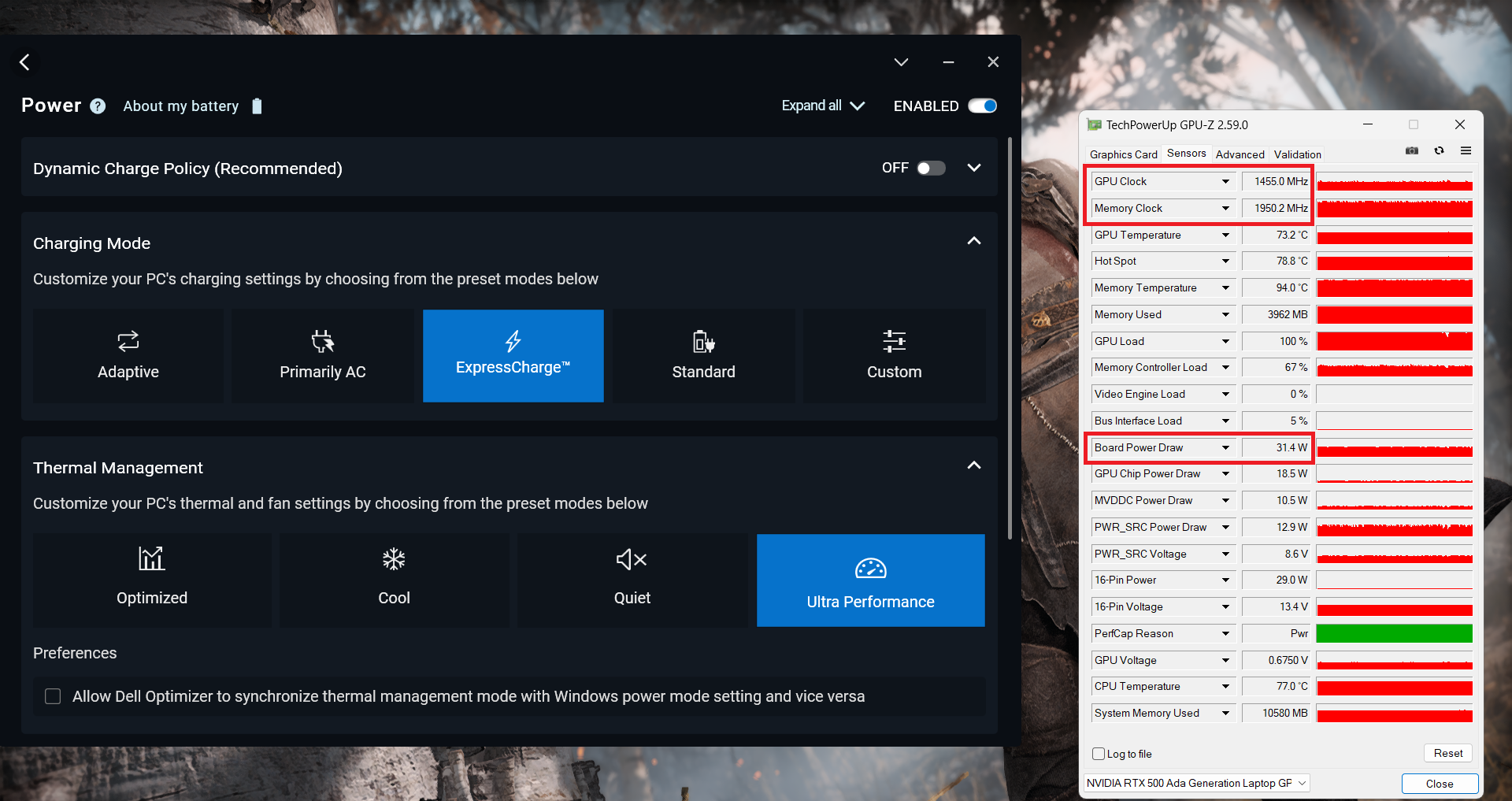
The RTX 500 Ada Generation can offer a 30W power limit and a 1528 MHz clock after half an hour of gaming. Yes, the result is 177 MHz lower than the Precision 3590 that we have tested with the same GPU. On the bright side, that’s completely fine because the Precision 14 3490 is notably more compact than its sizable “cousin”.
Comfort during full load
Interestingly, the cooling fan is almost quiet even when the processor is pounded with heavy stress in “Ultra Performance” mode. At the same time, the keyboard isn’t scorching hot to the touch. This means the comfort under full system load is on point.
We think that it’s pointless to use the “Optimized” mode for graphics tasks since this preset offers almost the same noise levels as the “Ultra Performance” mode that allows a higher 30W TGP.
 Gaming “Optimized”
 Gaming “Ultra Performance”
Battery
Now, we conduct the battery tests with the Windows Best Power Efficiency setting turned on, screen brightness adjusted to 180 nits and all other programs turned off except for the one we are testing the notebook with. The 54Wh battery pack lasts for around 9 hours of video playback. To achieve that, you have to apply the “Best Power Efficiency” preset in the Windows “Power & Battery” menu and select the “Optimized” power plan in the Dell Optimizer app.
Brightness: 180 nits; Display Mode: SDR
Time to Full Discharge: Higher is Better
Disassembly, Upgrade options, and Maintenance
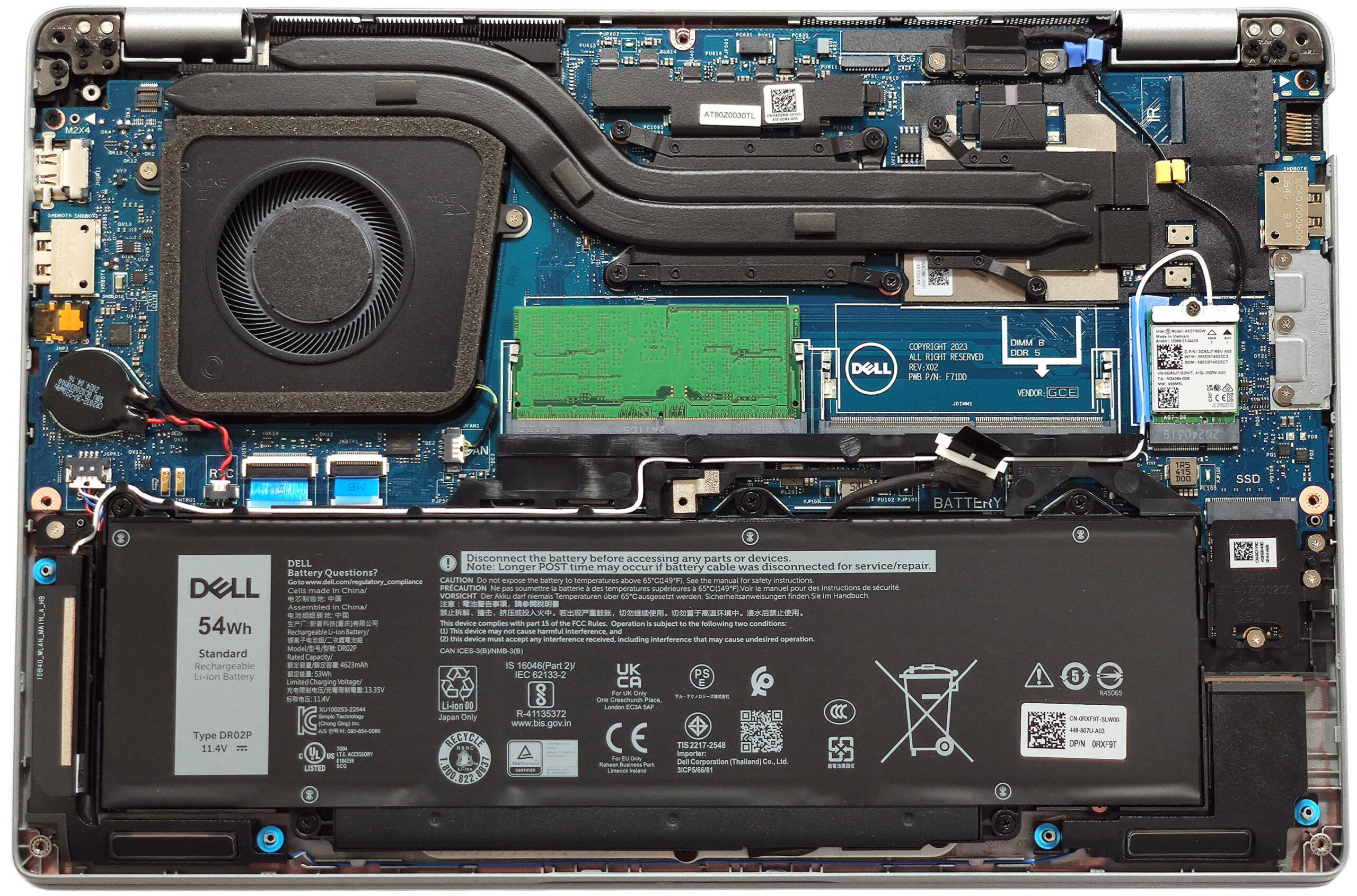
To open this small laptop, you have to undo 8 captive Phillips-head screws. Pop the areas behind the hinges with a lever tool. Then, use a thin plastic tool to pry the sides and the front, the back should be last.
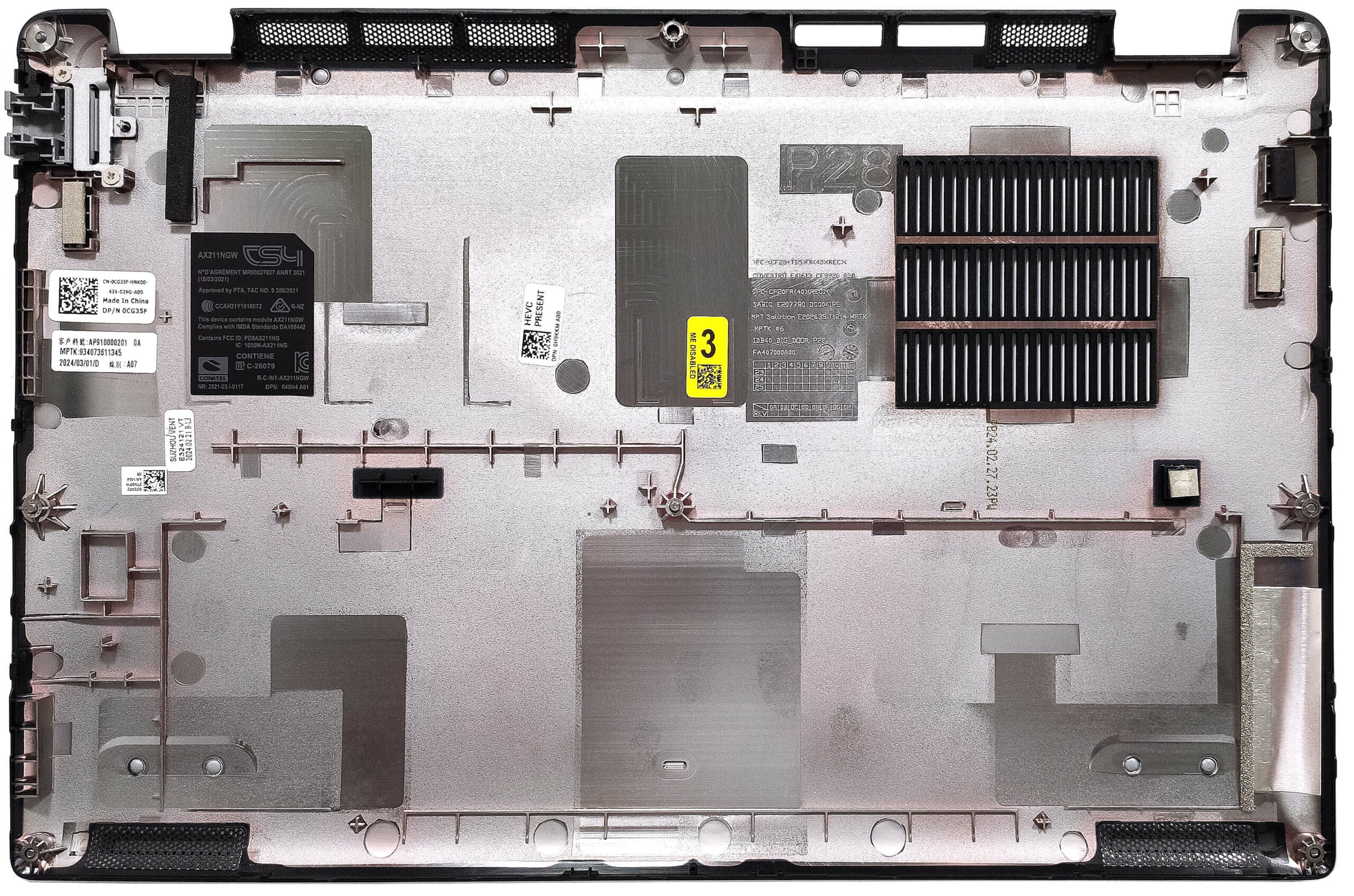
Here’s how the bottom plate looks on the inside.
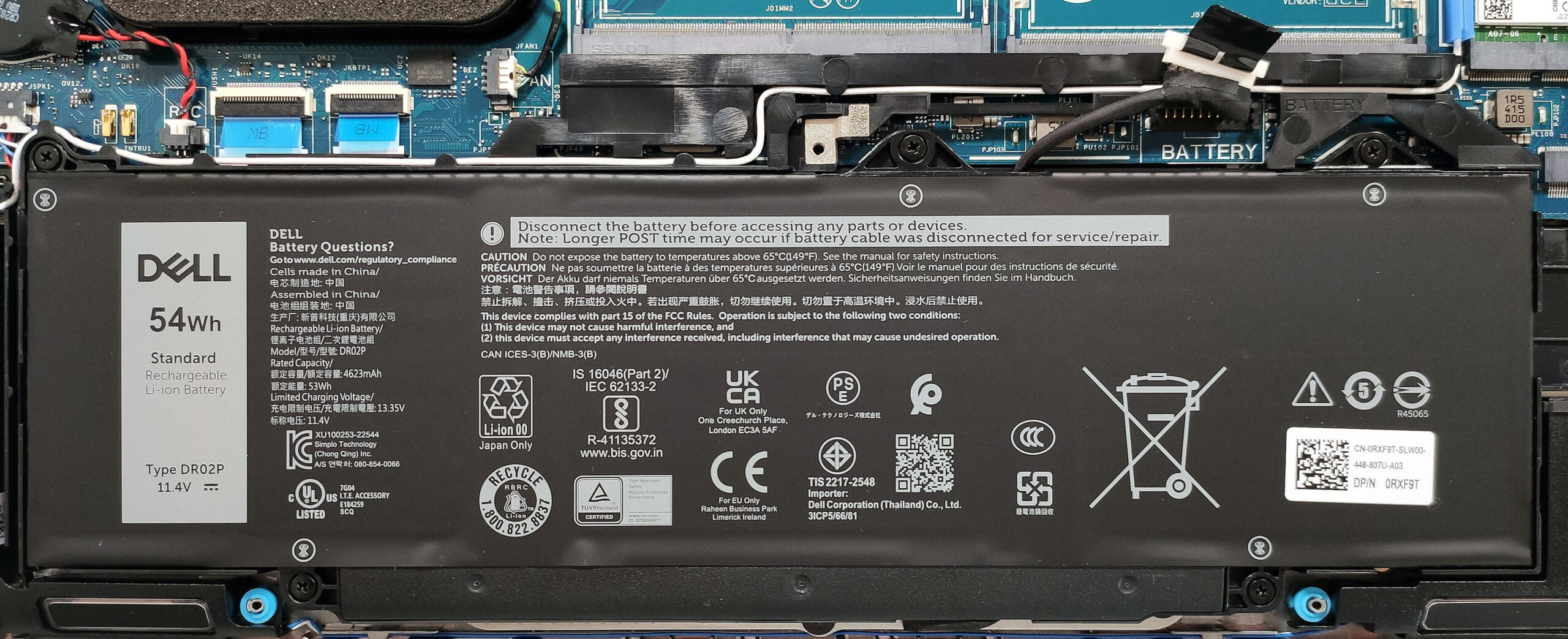
This notebook is equipped with the optional 54Wh battery. The default variant is a 42Wh unit. To remove it, pull out the connector from the mainboard and undo the 5 Phillips-head screws that keep the unit secured to the base. The optional capacity is enough for around 9 hours of video playback.
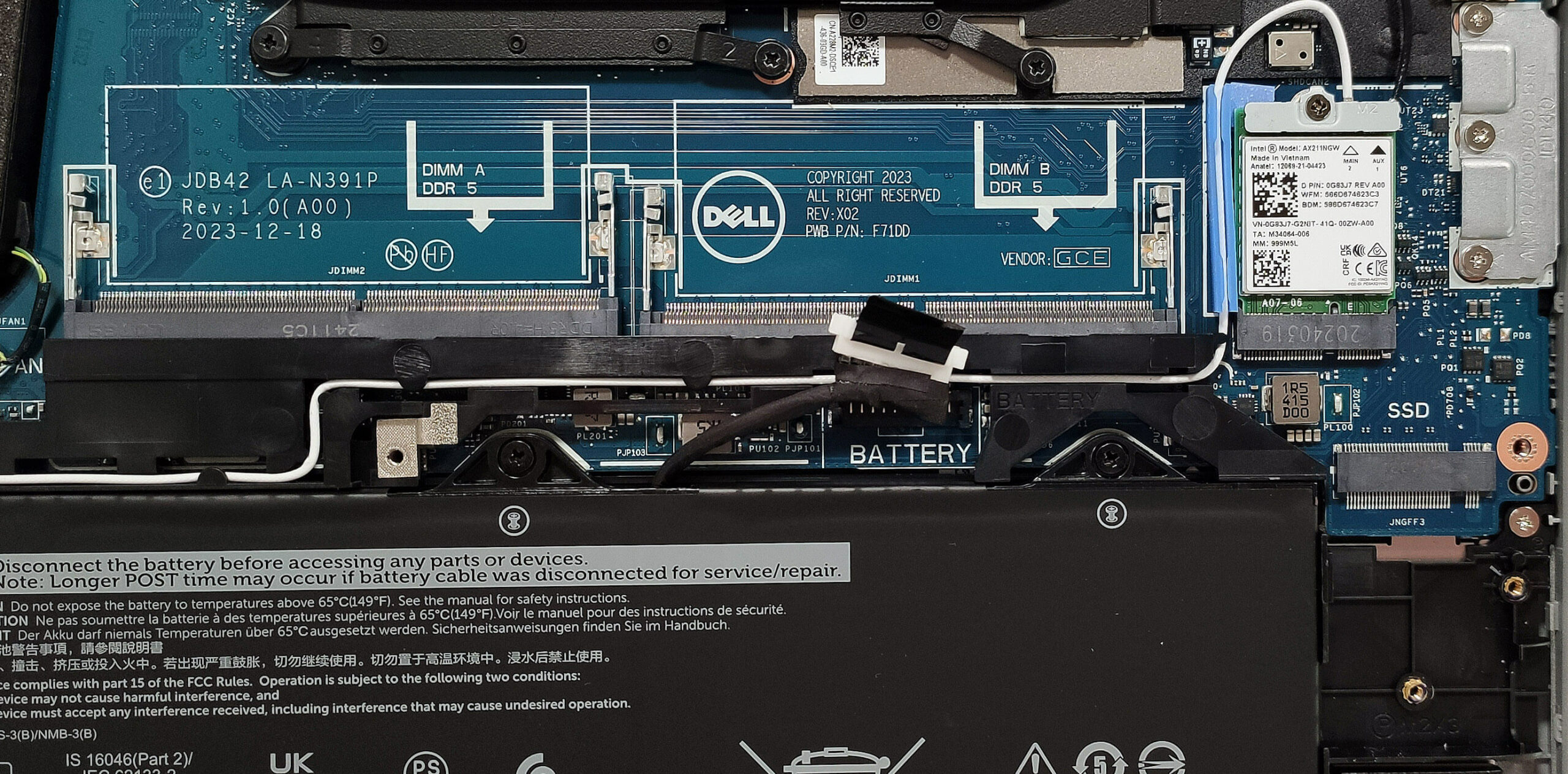
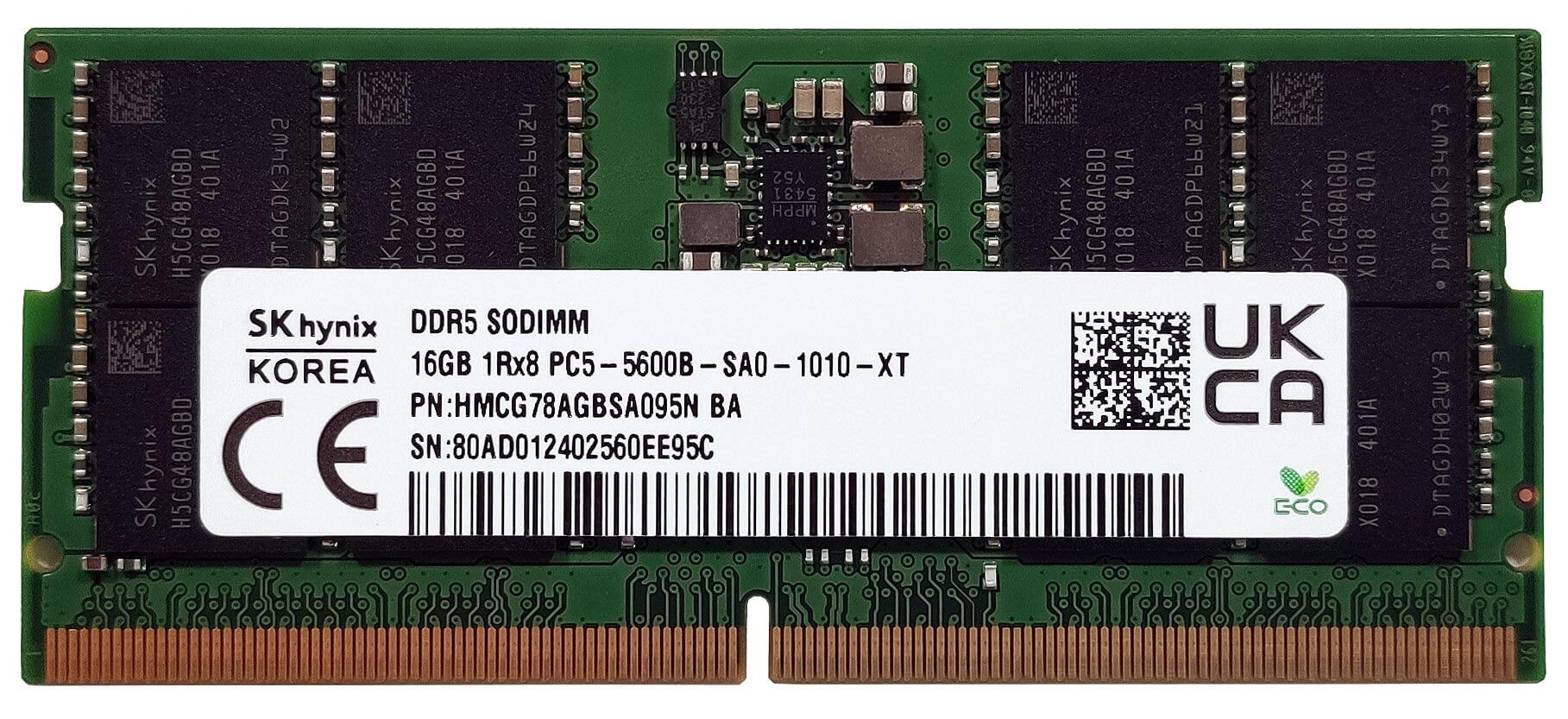
According to Dell, the two SODIMMs fit up to 64GB of DDR5-5600MHz RAM in dual-channel mode. However, since the CPU can support up to 96GB, this laptop likely wouldn’t have issues running a larger amount of memory than the official manufacturer’s specified limit.
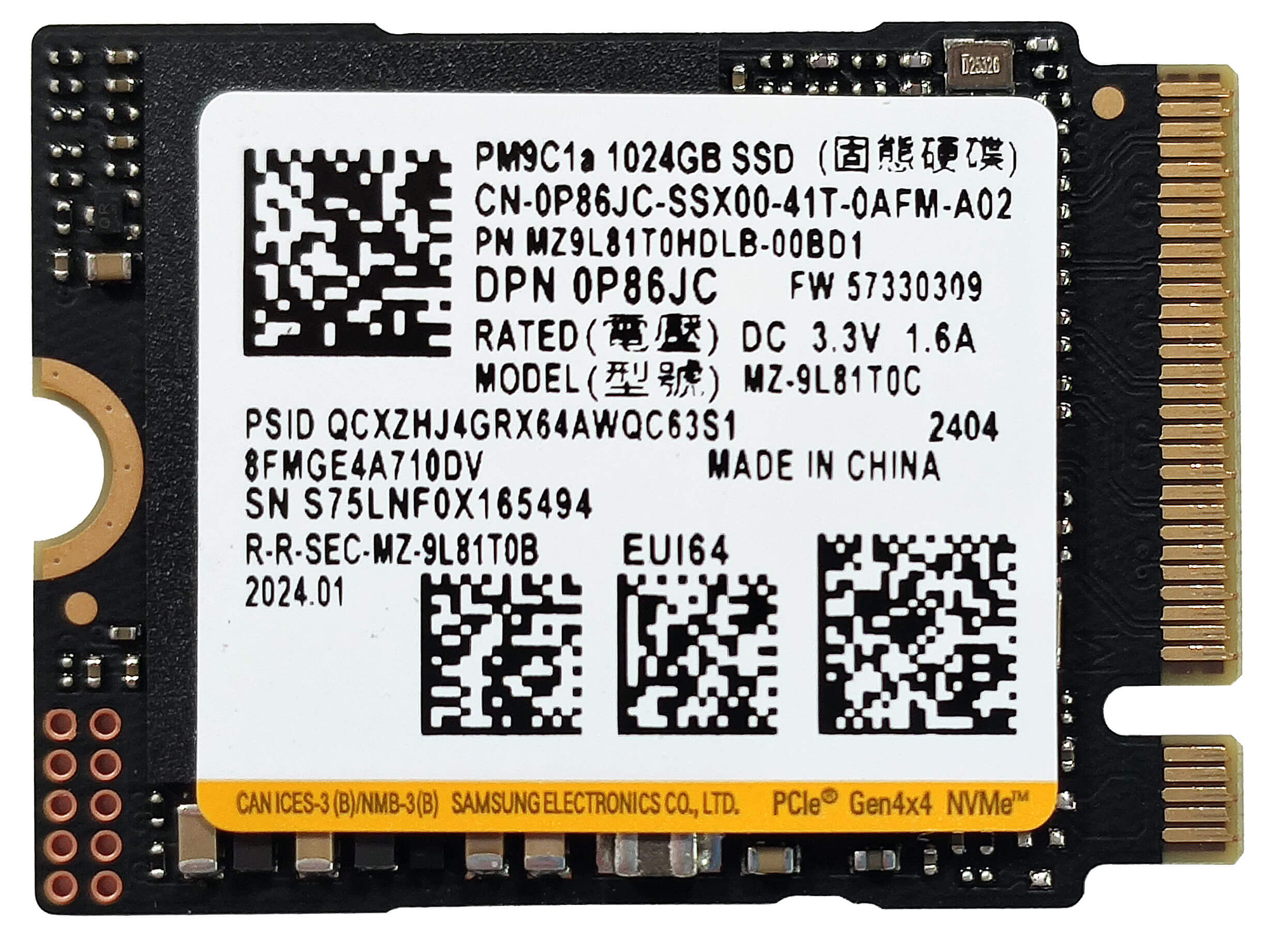
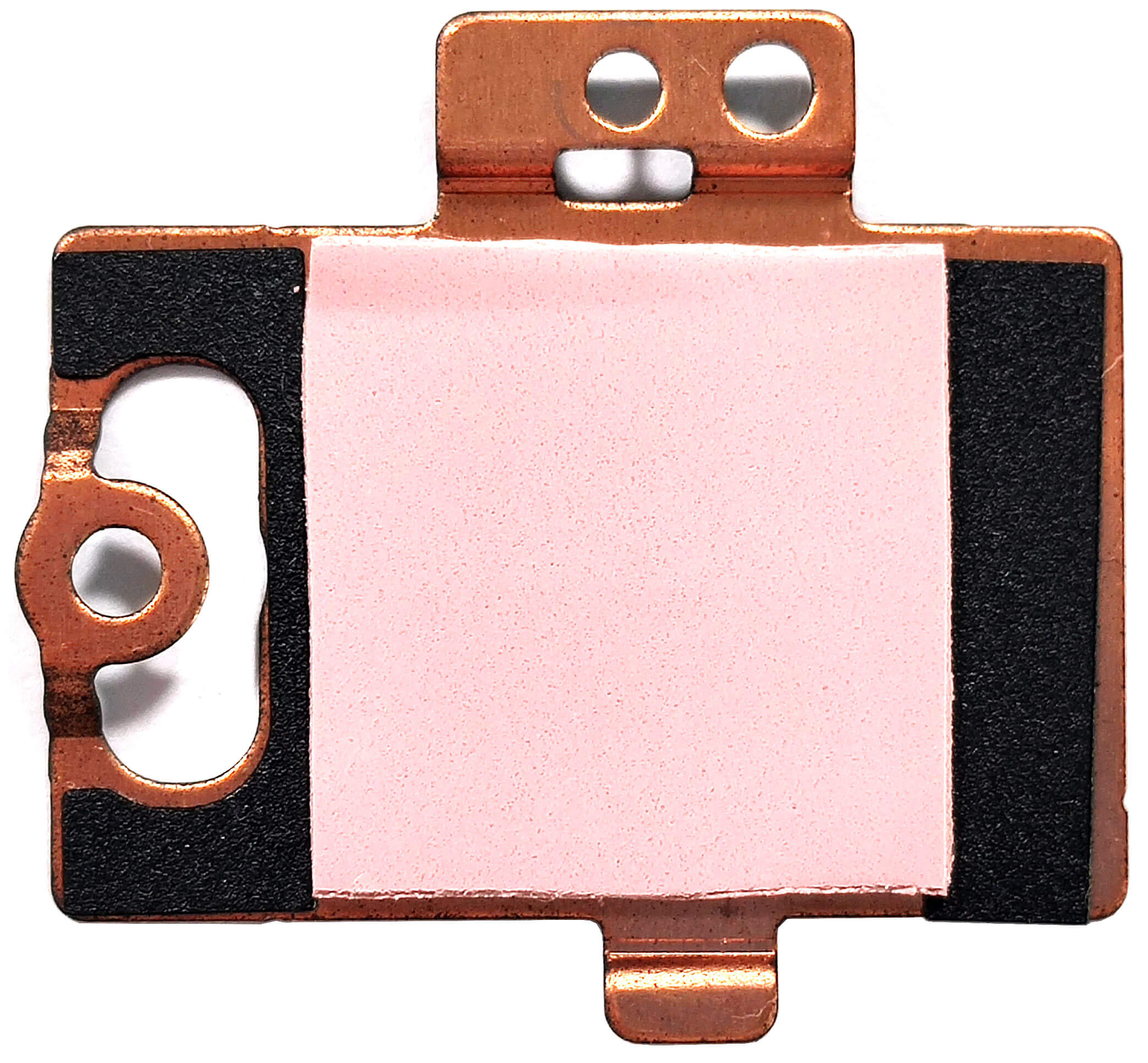
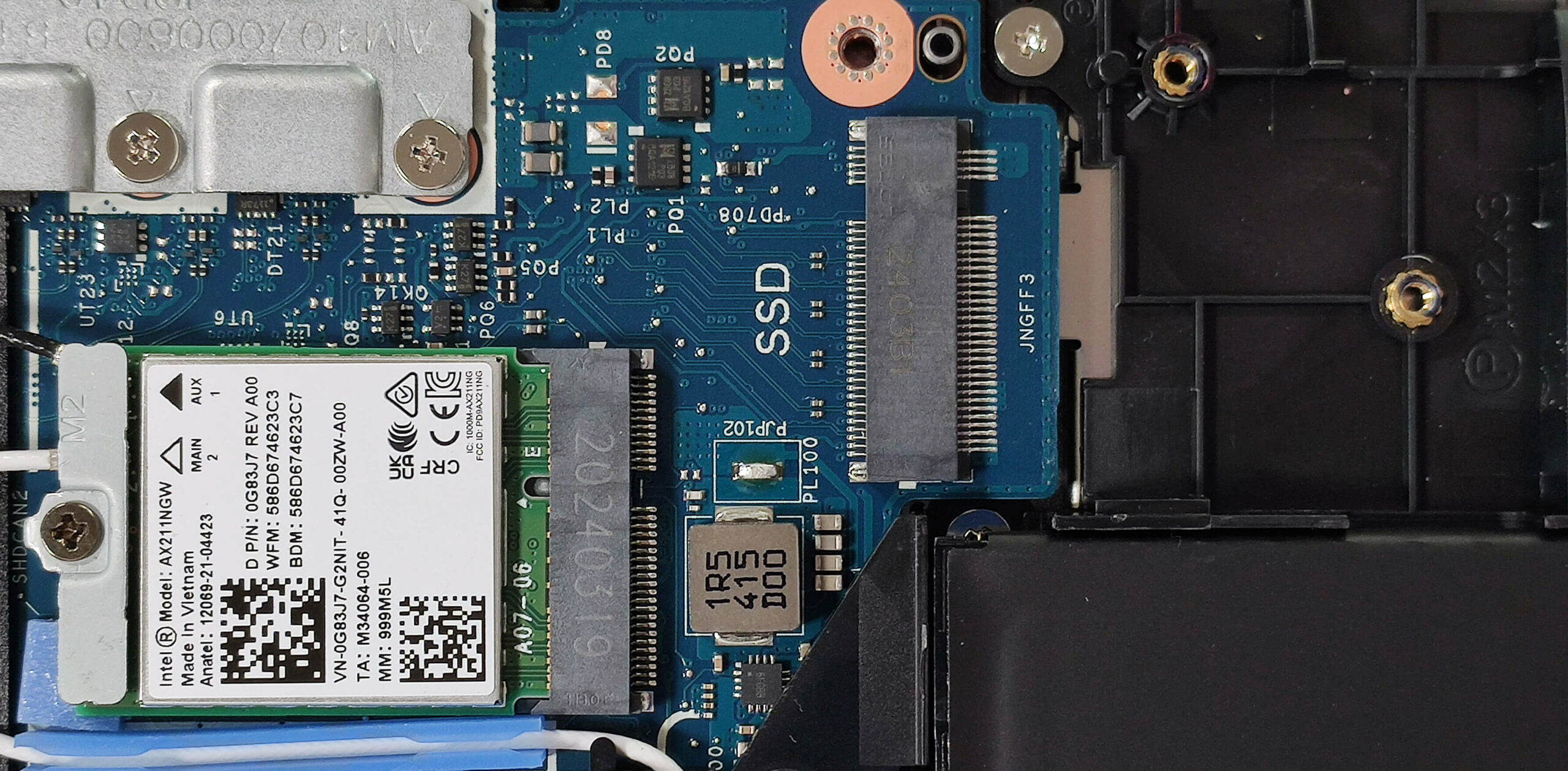
There is just one M.2 slot compatible with the shorter 2230 Gen 4 SSDs. The NVMe is covered with a metal plate that is held in place by two Phillips-head screws. There is a small thermal pad below the metal cap.
The Wi-Fi card is positioned above the M.2 slot.
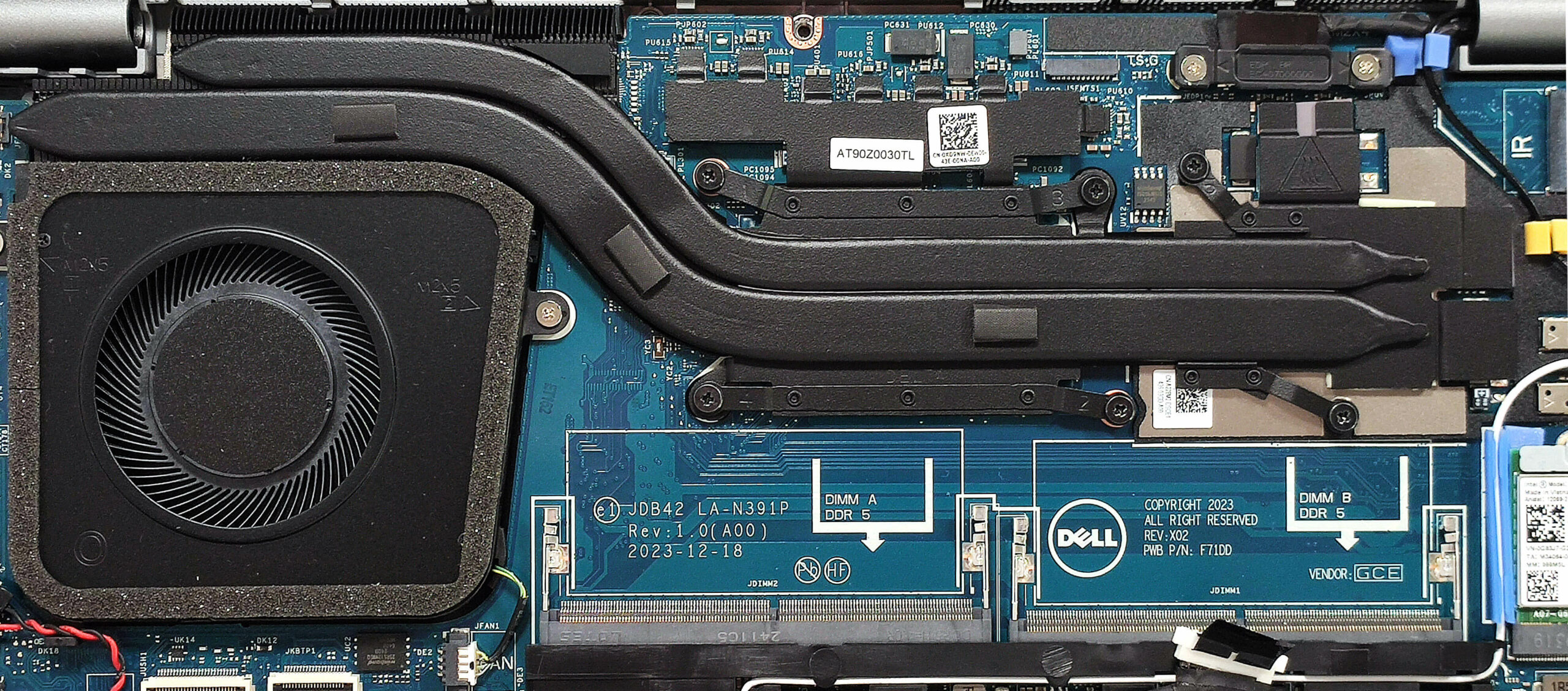
The cooling looks decent for this kind of compact machine. It has one large fan, two long heat pipes, one top-mounted heatsink, and two heat spreaders.
Verdict
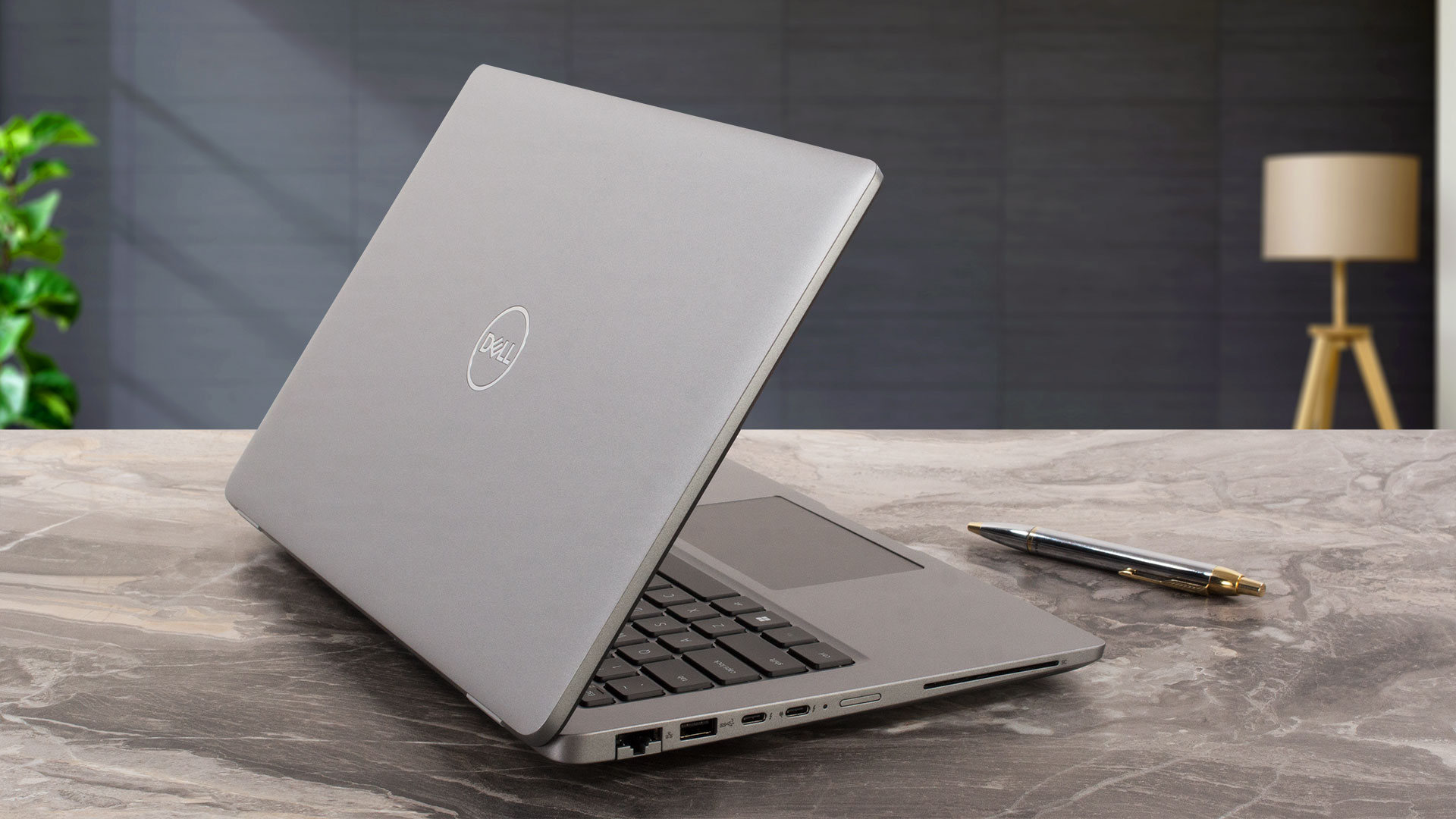 If you are looking for a snappy business device that is light and fast at the same time, the Dell Precision 14 3490 is one of the good options on the market. The machine boasts a comfortable keyboard and a decently-sized cooling system with a single fan that is almost quiet when the CPU is loaded at max. Its clocks in short and medium loads are high and remain decent in longer stress which is a good result for a 14-incher especially considering the low noise.
The 1080p display (BOE VF0T9-NE140FH (BOE0A95)) is suitable for office tasks because the IPS unit is PWM-free and has good viewing angles. Expectedly, the color coverage is nothing to write home about but that’s fine since this isn’t a workstation meant for professional color-sensitive work.
For future upgrades, you get two DDR5 SODIMMs and just one M.2 slot that is for the tiny 2230 NVMe drives. Speaking of which, the 1TB Samsung PM9C1a is fast for such a small SSD but it also gets toasty if you stress it with long sequential write and read loads.
The port selection is just great for a 14-inch machine – two Thunderbolt 4 / USB 4 ports, two Type-As, an HDMI 2.1, and more! You can turn this laptop into a modern well-secured fortress loaded with features if you order it with all optional goodies. The list is long – IR Web camera, SIM slot, a SmartCard reader, NFC, Wi-Fi 6E, etc. Of course, this will bump the end price to the moon.
The Precision 3490 is a potent and light office machine with modern hardware, good comfort under load, a nice keyboard, and long battery life.
You can check the prices and configurations in our Specs System: https://laptopmedia.com/series/dell-precision-14-3490/
Pros
- The fan is almost quiet under long CPU loads ()
- Pretty solid chassis
- Comfortable keyboard
- PWM-free (BOE0A95)
- Wide viewing angles (BOE0A95)
- 2x SODIMMs
- Up-to-date port selection with 2x Thunderbolt 4 ports + HDMI 2.1 + LAN
- Long battery life (around 9 hours of videos on a single charge)
- Web camera with a privacy shutter
- Optional Fingerprint reader, IR camera, keyboard backlight, NFC, Nano SIM slot, and SmartCard reader
- Good comfort under max CPU loads
- The CPU can sustain high clocks in short and medium loads (~3.00 GHz / 2.45 GHz for the P and E cores)
- The bottom plate can be easily pried
- The 1TB Samsung PM9C1a is fast for a 2230 NVMe drive
Cons
- Pricey
- The NVMe gets hot during benchmarking – 79°C
- Too many optional goodies
 Author: Nikolay Palaozov
 Author: eng. Kroum NikolovHead of Engineering at LaptopMedia.com, inventor and innovator with 40+ years of experience in electronics and high technology.
TOP 100 GAMING LAPTOPS


TOP LAPTOP RATINGS
HIGHLIGHTS view more
![[August 2026] Best-Selling Laptop Brands on Amazon Japan – Apple Dominates Market Share and Revenue Led by Strong Unit Sales](https://laptopmedia.com/wp-content/uploads/2026/09/CO.JP-Best-Brands-1-400x225.jpg)
[August 2026] Best-Selling Laptop Brands on Amazon Japan – Apple Dominates Market Share and Revenue Led by Strong Unit Sales
Sep 10, 2026![[August 2026] Best-Selling Laptop Brands on Amazon USA – Apple Dominates Market Revenue and Volume Despite Lower Model Diversity](https://laptopmedia.com/wp-content/uploads/2026/09/COM-Best-Brands-1-400x225.jpg)
[August 2026] Best-Selling Laptop Brands on Amazon USA – Apple Dominates Market Revenue and Volume Despite Lower Model Diversity
Sep 10, 2026![[August 2026] Amazon Germany: Top 8 Best-Selling Gaming Laptops – Acer Dominates the Market as the Premium Nitro V 17 AI Takes the #1 Spot](https://laptopmedia.com/wp-content/uploads/2026/09/Best-Selling-Gaming-Laptops-DE-Top-10-1-400x225.jpg)
[August 2026] Amazon Germany: Top 8 Best-Selling Gaming Laptops – Acer Dominates the Market as the Premium Nitro V 17 AI Takes the #1 Spot
Sep 10, 2026![[August 2026] Best-Selling Laptop Brands on Amazon France – Apple Dominates Revenue Despite Lenovo and HP Leading in Catalog Breadth and Volume](https://laptopmedia.com/wp-content/uploads/2026/09/FR-Best-Brands-1-400x225.jpg)
[August 2026] Best-Selling Laptop Brands on Amazon France – Apple Dominates Revenue Despite Lenovo and HP Leading in Catalog Breadth and Volume
Sep 10, 2026![[August 2026] Amazon Italy: Top 10 Best-Selling Laptops – Apple MacBook Neo Claims the Crown as Budget and Mid-Range Windows Machines Dominate Volume](https://laptopmedia.com/wp-content/uploads/2026/09/Best-Selling-Laptops-IT-Top-10-400x225.jpg)
[August 2026] Amazon Italy: Top 10 Best-Selling Laptops – Apple MacBook Neo Claims the Crown as Budget and Mid-Range Windows Machines Dominate Volume
Sep 09, 2026
REVIEWS view more
Acer Nitro V 15 (ANV15-A31) review – A Practical Budget Gamer with One Major Catch
Aug 13, 2026Lenovo IdeaPad Slim 5a (16″, Gen 11) review – 2.8K OLED, Ryzen AI 7 450, and Rare Upgradeability
Aug 09, 2026HP OmniBook 5 16 (16-bc1000) review – Big Screen, Solid CPU, Limited Upgrades
Aug 06, 2026Lenovo ThinkPad X1 Carbon Gen 14 Aura Edition review – The Ultimate Business Laptop Gets Modular
Aug 03, 2026ASUS ExpertBook Ultra (B9406) review – Core Ultra X7 & Tandem OLED Tested
Jul 28, 2026