Lenovo Yoga Slim 7a (14″, Gen 11) review – Premium OLED Ultraportable with a Few Sharp Compromises
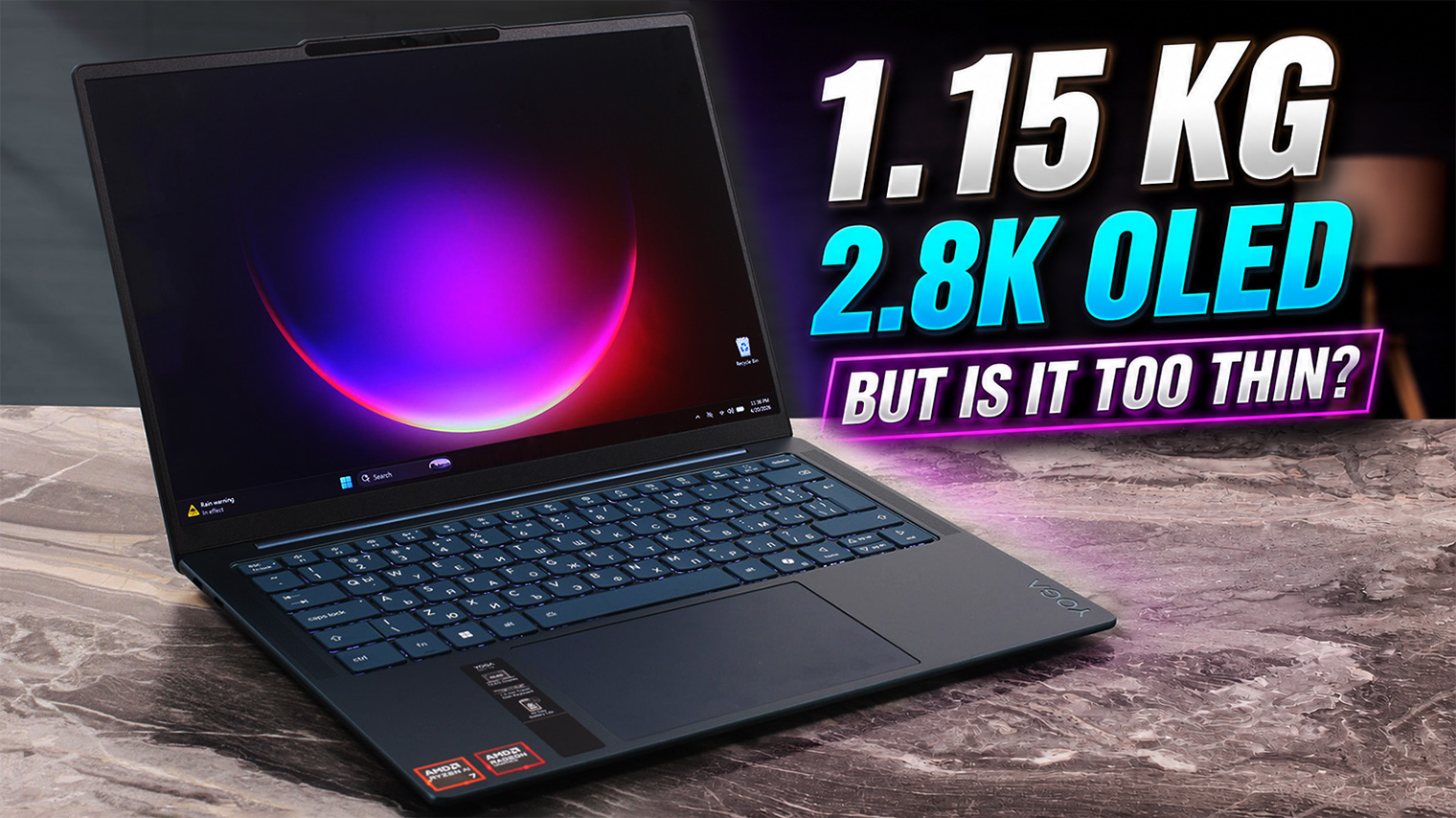 The Lenovo Yoga Slim 7a (14″, Gen 11) is built for users who want a premium ultraportable for work, travel, media consumption, and light creative tasks — not for serious gaming or workstation-class workloads. The first thing that grabs your attention is how thin and light it feels, especially in the elegant Tidal Teal aluminum chassis, but the 2.8K 120Hz OLED display quickly becomes the real star of the show. We were pleasantly surprised by the laptop’s snappy short-load performance, quiet behavior, and excellent color accuracy, making it feel much faster and more refined than its tiny footprint suggests.
At the same time, Lenovo’s pursuit of extreme portability comes with clear compromises: soldered memory, only one compact M.2 2242 SSD slot, limited port selection, and lower sustained performance than thicker machines. The Yoga Slim 7a is impressive because it feels like a polished high-end everyday laptop, but it also reminds us that ultra-slim design still has a price.
TESTED CONFIGURATION:
– AMD Ryzen AI 7 445
– AMD Radeon 840M
– 32GB RAM
– 1TB SSD NVMe
– 14”, 2880×1800 (2.8K), 120Hz, OLED
You can check the prices and configurations in our Specs System: https://laptopmedia.com/series/lenovo-yoga-slim-7a-14-gen-11/
Contents
Specs, Drivers, What’s in the box
Lenovo Yoga Slim 7a (14", Gen 11) - Specs

- HDD/SSD
- up to 2000GB SSD
- M.2 Slot
- 1x 2242 M.2 NVMe PCIe 4.0 x4 See photo
- RAM
- up to 32GB
- OS
- Windows 11 Home, Windows 11 Pro
- Battery
- 70Wh
- Body material
- Aluminum
- Dimensions
- 312 x 221 x 13.9 mm (12.28" x 8.70" x 0.55")
- Weight
- 1.15 kg (2.5 lbs)
- Ports and connectivity
- 1x USB Type-C
- 3.2 Gen 2 (10 Gbps), Power Delivery (PD), DisplayPort
- 2x USB Type-C
- 4.0, Power Delivery (PD), DisplayPort
- Card reader
- Ethernet LAN
- Wi-Fi
- Wi-Fi 7
- Bluetooth
- 5.4
- Audio jack
- Features
- Fingerprint reader
- Web camera
- 5.0MP + IR, with E-shutter, fixed focus
- Backlit keyboard
- Microphone
- Quad-microphone array, 3D array
- Speakers
- 4 stereo speakers, 2W x2 (woofers), 2W x2 (tweeters), optimized with Dolby Atmos®, Amplifier (AMP)
- Security Lock slot
All Lenovo Yoga Slim 7a (14″, Gen 11) configurations
Drivers
All drivers and utilities for this notebook can be found here: https://pcsupport.lenovo.com/us/en/products/laptops-and-netbooks/yoga-series/yoga-slim-7-14agp11/downloads
What’s in the box?
Unboxing the Yoga Slim 7a is as minimalist as it gets, with absolutely no extra accessories bundled inside.
You’ll find the laptop itself accompanied by a small, travel-friendly 65W USB-C power adapter.
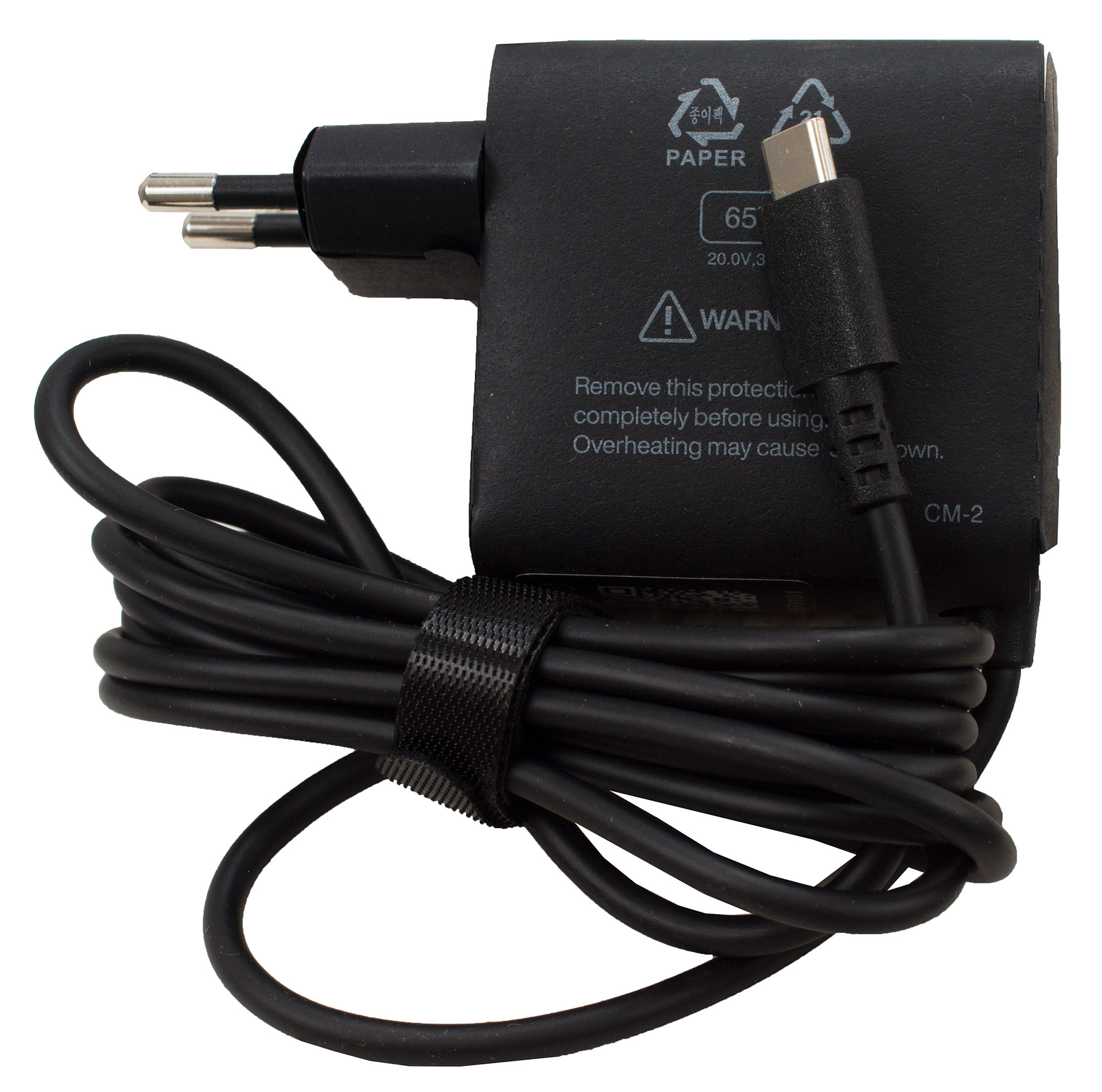
Be sure to check your local listings, though, as Lenovo actually ships this machine without a charger in certain regions, meaning even the power brick isn’t a guarantee!
Design and construction
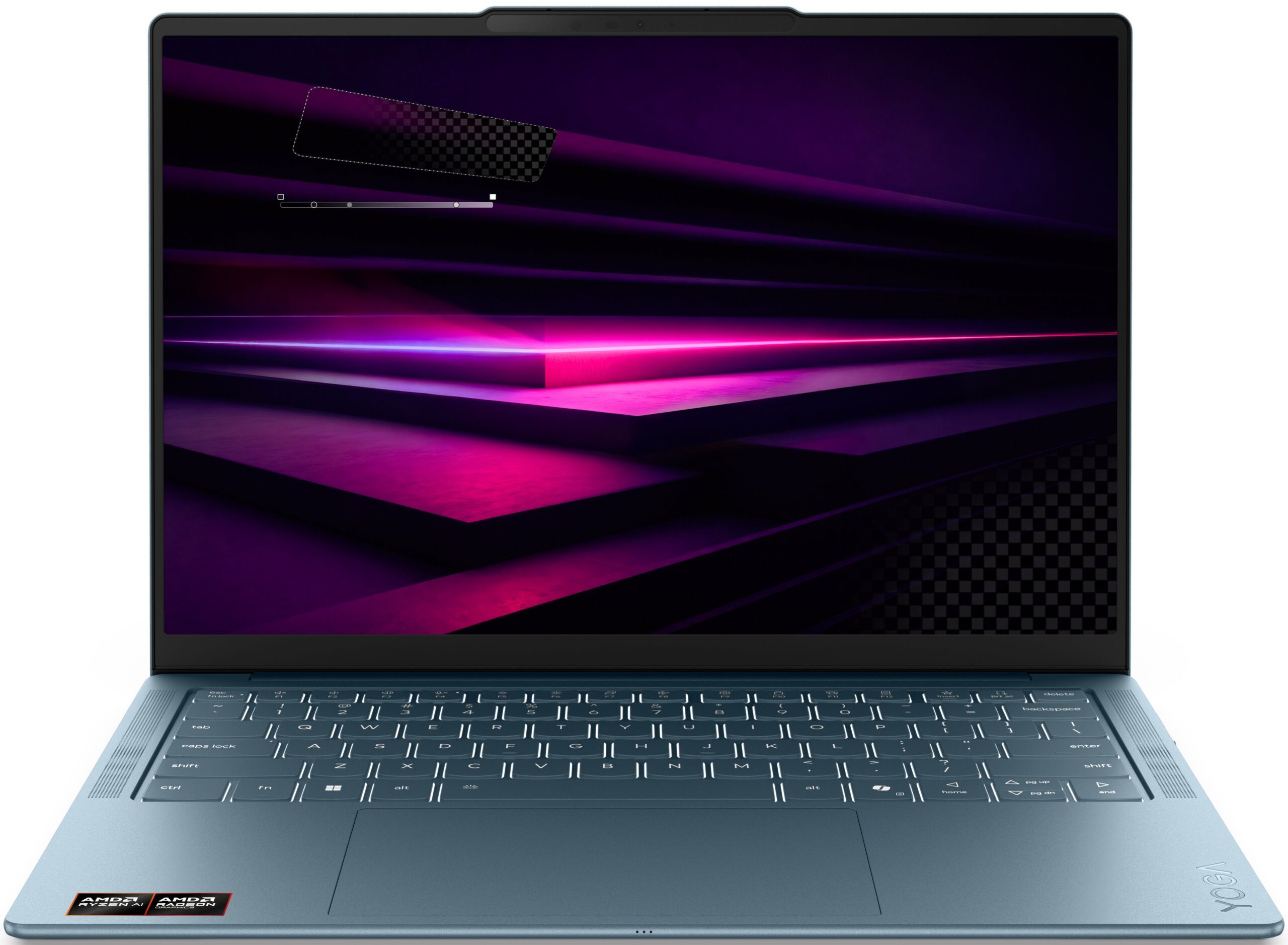
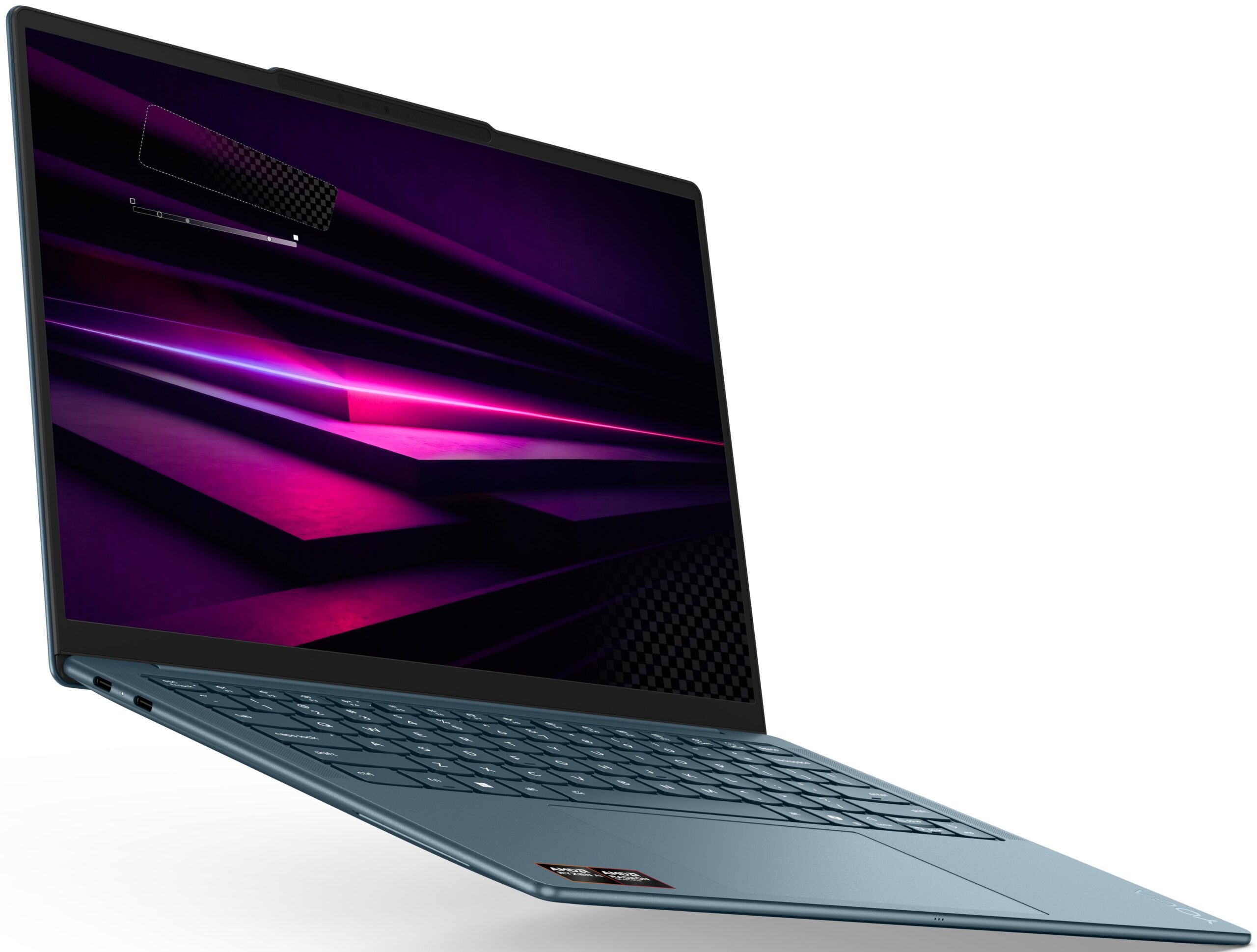
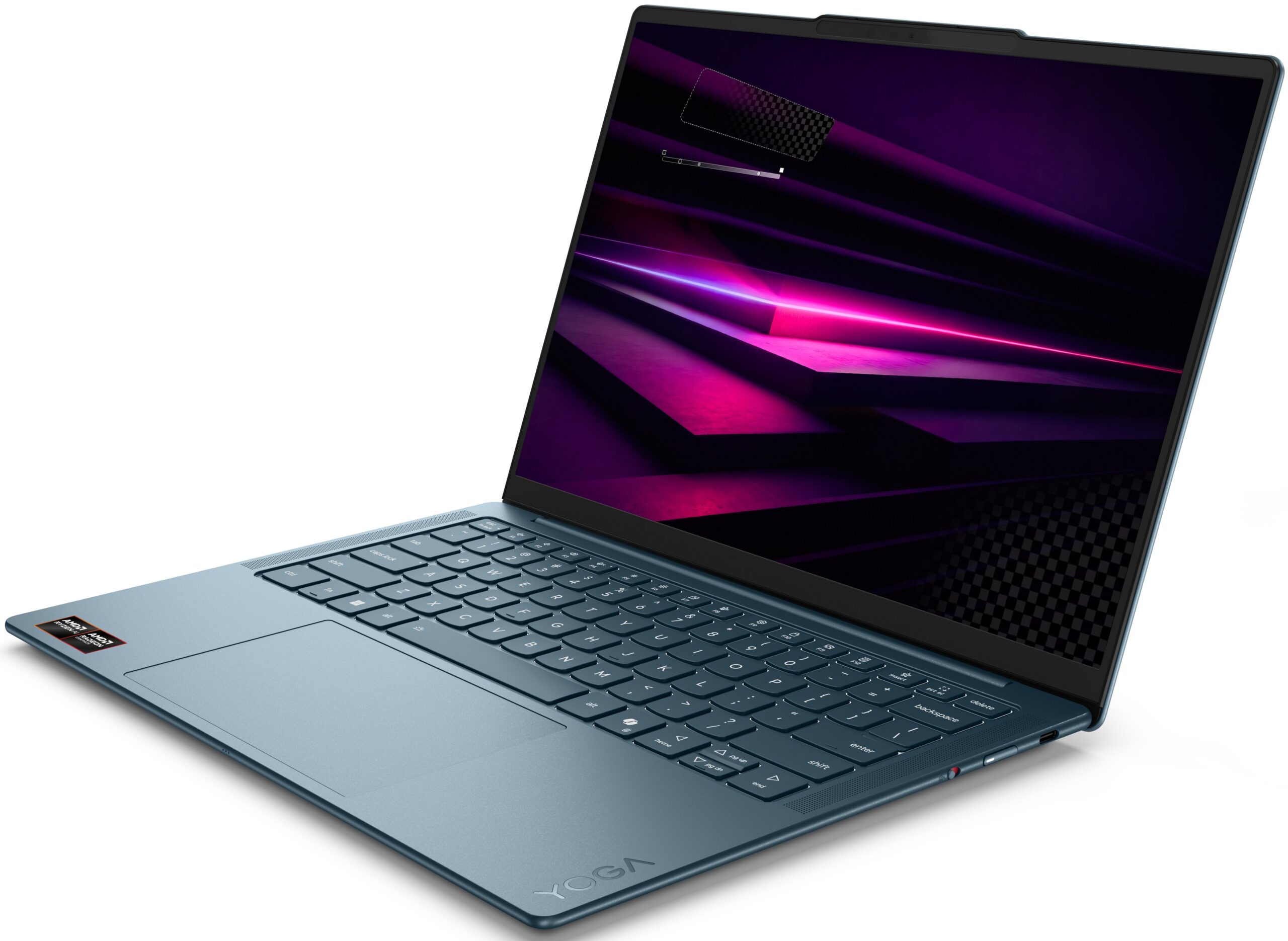
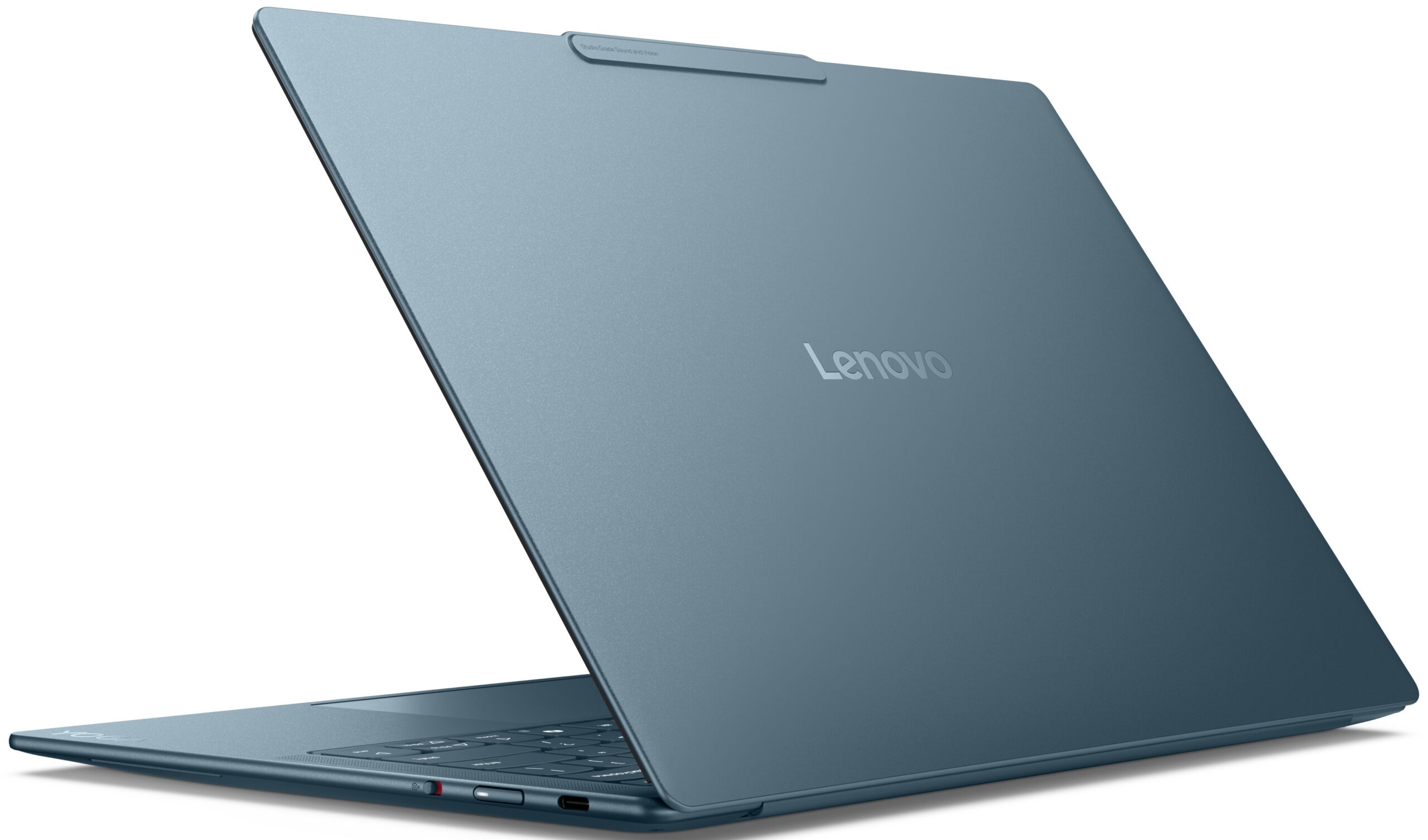
The Lenovo Yoga Slim 7a (14″, Gen 11) embodies grace and elegance in a wonderfully compact form. Sporting softly rounded edges and a clean, minimalist visual profile, it is available in a single, striking colour option known as “Tidal Teal.”
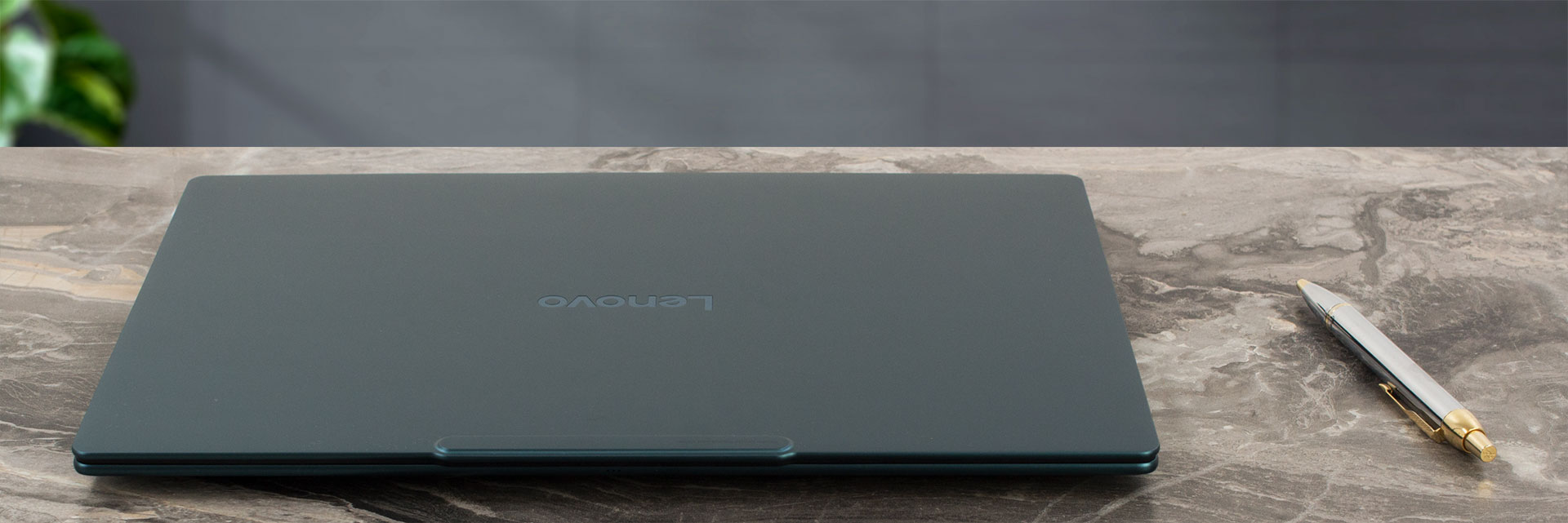
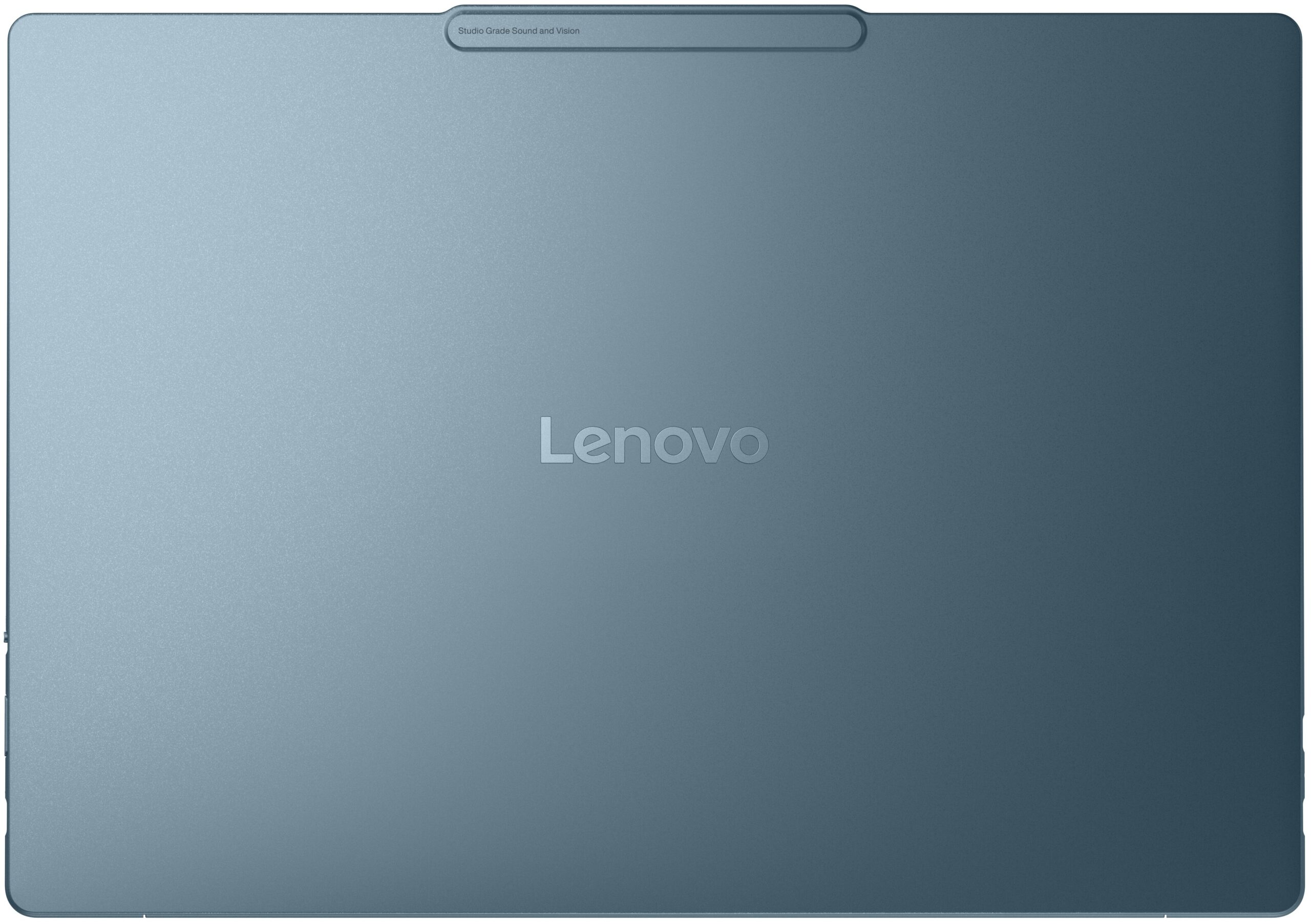
In simpler terms, it’s a beautiful, gentle shade of blue that stands out in a sea of silver and black laptops. Lenovo uses aluminium for both the top and bottom cover, with an anodized sandblasted finish that gives the machine a cool, premium feel in the hands. What is more impressive is that the low weight does not come with a hollow or fragile sensation — the chassis feels very solid, with almost no flex under normal pressure. Lenovo also lists MIL-STD-810H testing with 21 test items, which suits the overall impression of a well-built ultraportable. The only minor caveat to this beautiful finish is that it does pick up some fingerprints. They are not obnoxiously prominent, but you will notice them over time.
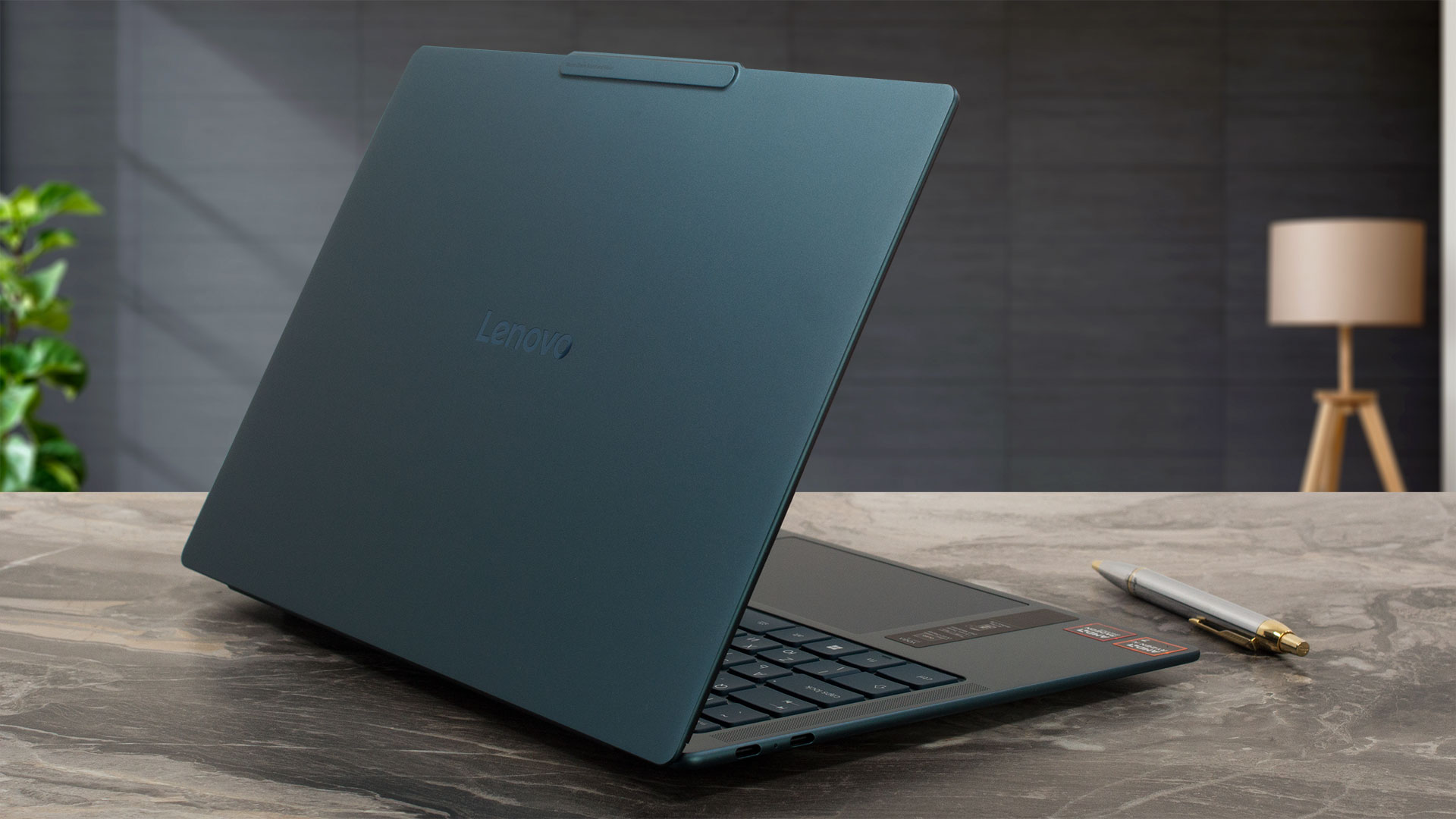
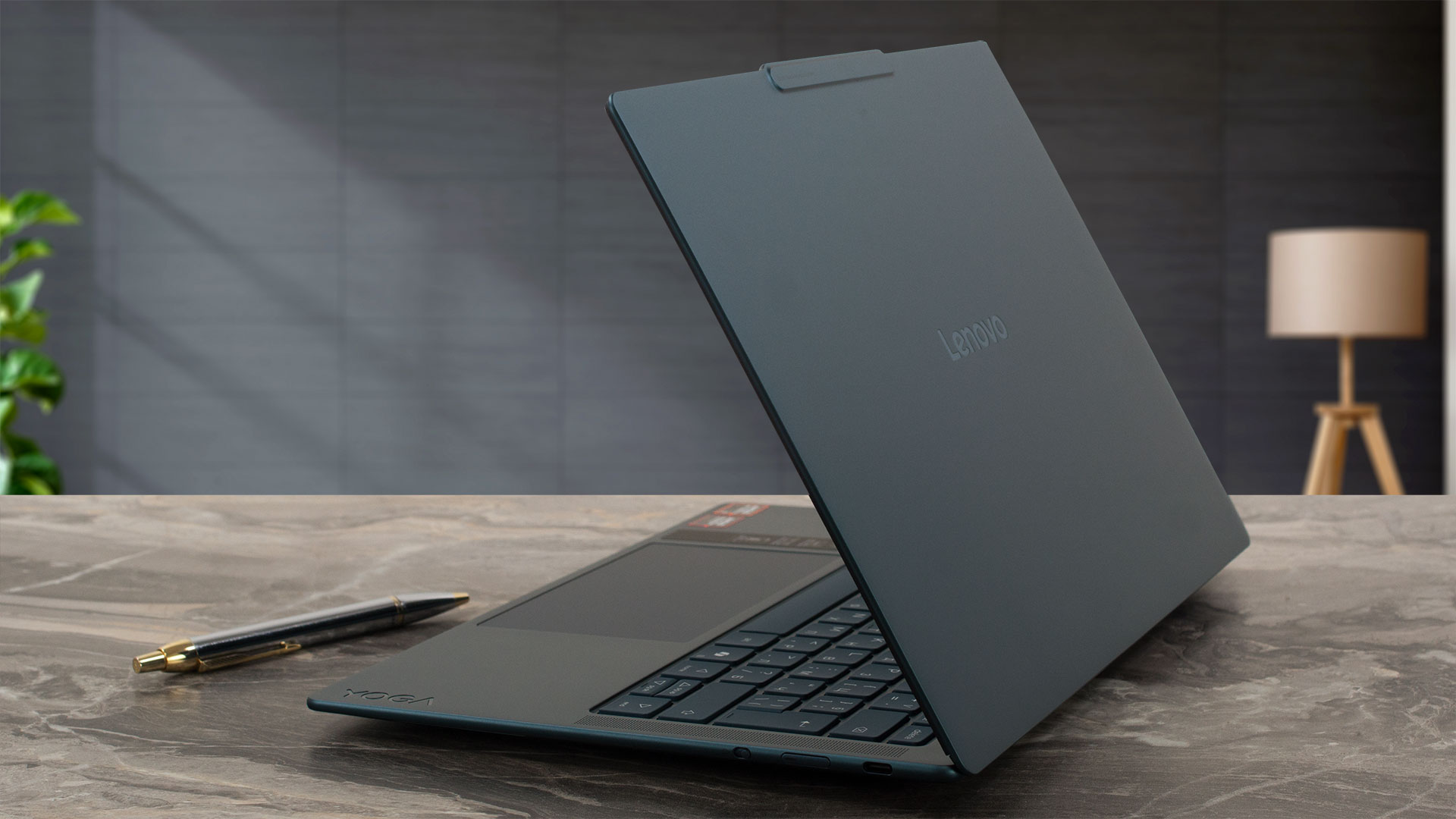
When it comes to portability, this laptop provides a genuine “wow” moment. When we first lifted the shipping box, we had a brief moment of panic, thinking it was completely empty! While this sensation was certainly amplified by the fact that we had just finished testing the monstrously heavy MSI Vector 18 (detailed review), the Yoga Slim 7a is undeniably a featherweight champion. It is an exceptionally thin and light daily driver.
| Lenovo Yoga Slim 7a (14″, Gen 11) | Dimensions | Weight |
| Metric units | 312 x 221 x 13.9 mm | Starting at 1.15 kg / 1.22 kg for touch models |
| U.S. customary | 12.28 x 8.7 x 0.55 in | Starting at 2.54 lbs / 2.69 lbs for touch models |
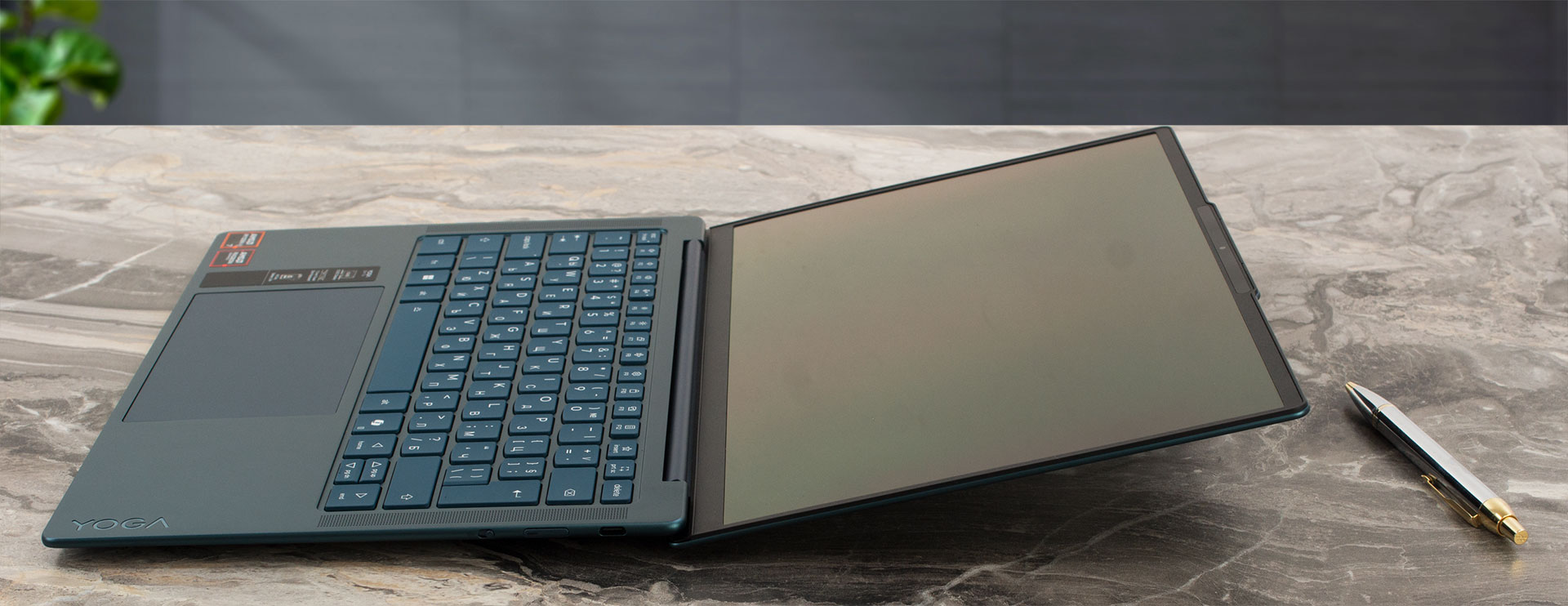
Opening the device reveals a hinge mechanism that requires a bit of nuance. You can lift the lid smoothly with one hand up to about 70 degrees, after which the base will start to lift alongside it, requiring your other hand to push it the rest of the way to its maximum 160-degree resting angle.
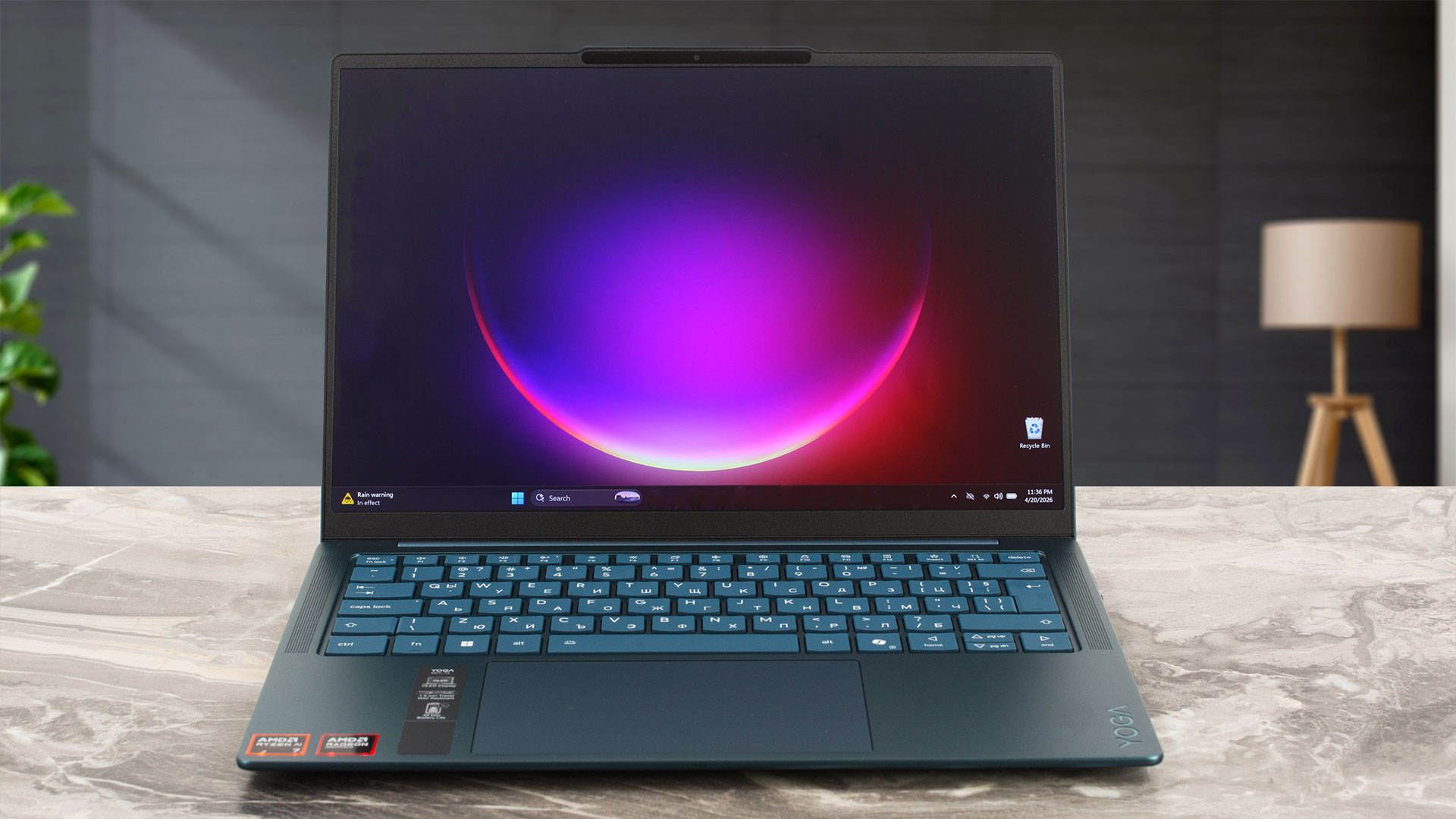
Once open, you are greeted by an immersive display boasting an impressive 90.5% active area ratio (AAR). The side bezels are incredibly thin, while the top bezel is slightly thicker, incorporating the familiar Lenovo camera bump. It is not just a design accent, though — it also gives your fingers a convenient grip point when opening the lid. This housing packs a high-resolution 5.0MP fixed-focus camera paired with an IR sensor for Windows Hello, a 3D quad-microphone array for calls, and an electronic E-shutter for an added layer of privacy.
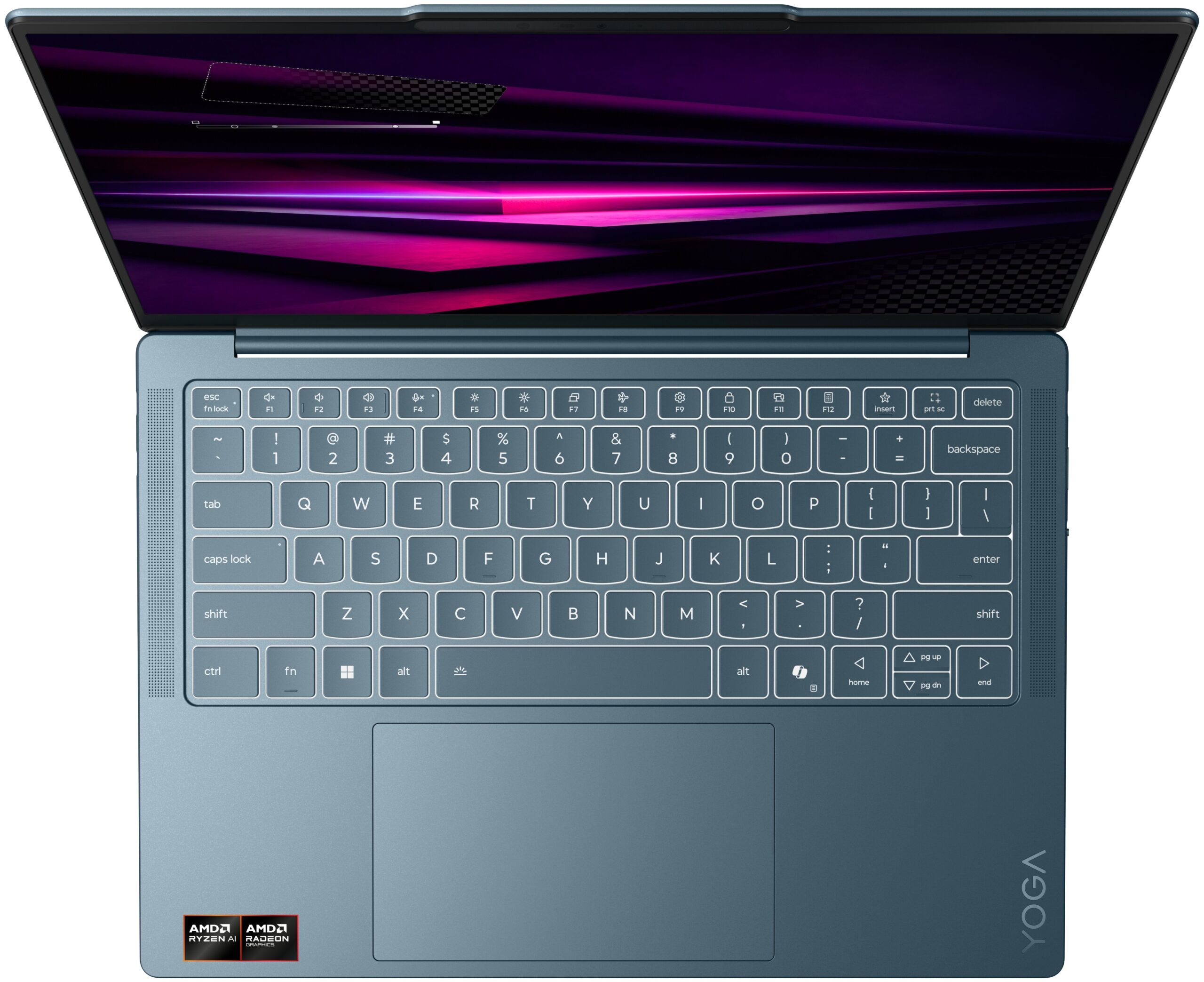
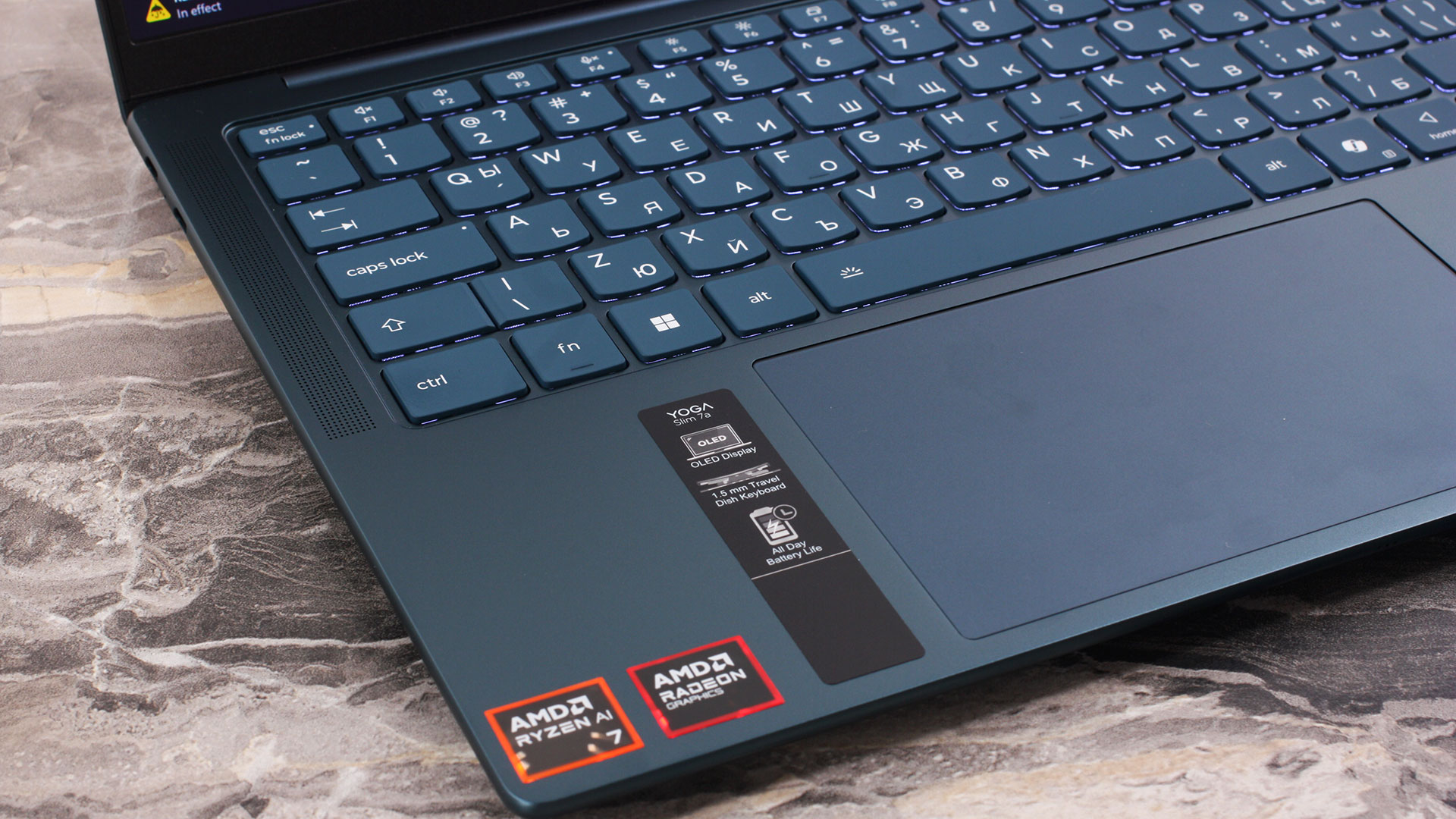
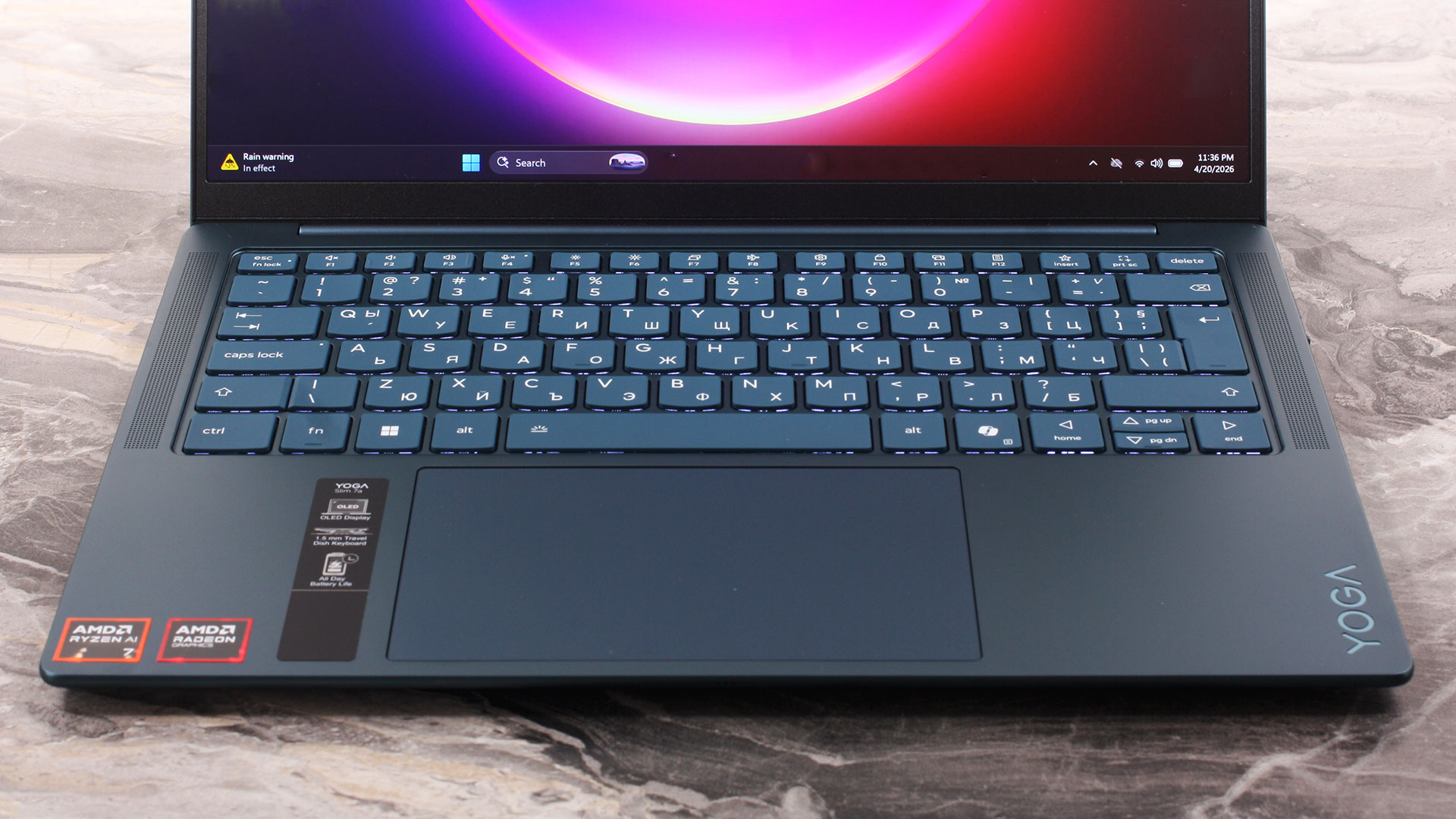
Given the compact 14-inch footprint, it’s no surprise that a dedicated NumPad didn’t make the cut. However, the rest of the keyboard deck is very well utilized. The keys are generously sized and offer a highly comfortable typing experience with a satisfying 1.5mm of key travel. Our only real gripe with the layout is the use of half-height Up and Down arrow keys, a cramped trend we are never entirely thrilled to see on any machine. Because there is no fingerprint reader on this model, biometric authentication relies entirely on the snappy IR camera. Below the keyboard sits one of the highlights of the input setup.
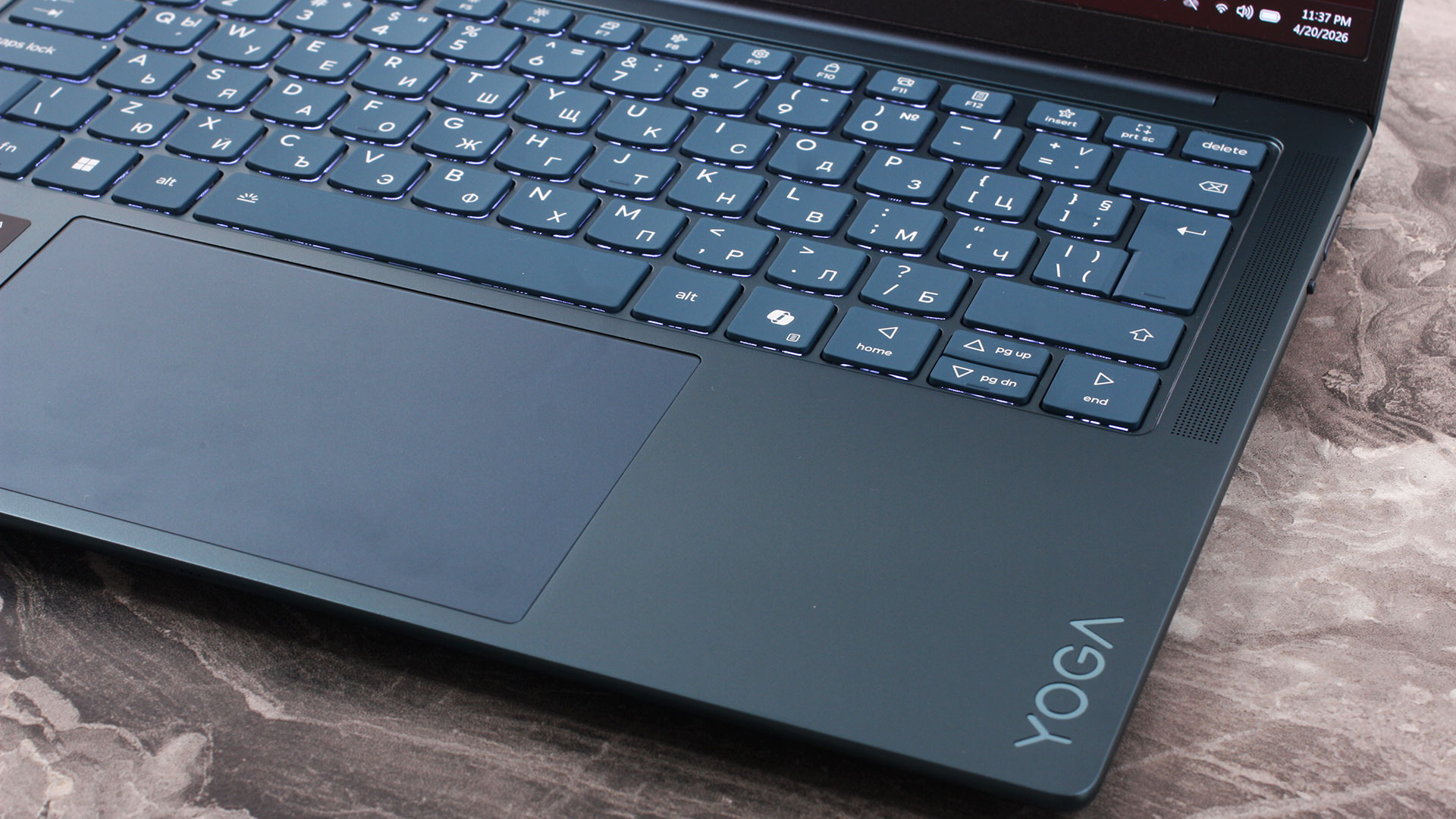
Measuring a massive 80 x 135 mm (3.15 x 5.31 inches), this buttonless, glass-surfaced Precision TouchPad provides an incredibly smooth and accurate navigation experience. It is huge relative to the laptop’s overall dimensions, but it does not feel awkwardly oversized in daily use.
Ports and Connectivity
The Lenovo Yoga Slim 7a (14″, Gen 11) fully embraces an ultra-minimalist design philosophy, and its physical port selection consists entirely of USB Type-C connections. On the left side, the laptop is equipped with two USB-C ports based on the USB4 standard. They support up to 40Gbps transfer speeds, making them useful for fast external storage, docking stations, and modern peripherals. Both ports also support DisplayPort 2.1 for external displays, along with USB Power Delivery in the 45-65W range for charging the device.

Moving to the right side, you will find the laptop’s third and final USB-C port. This one operates at 10Gbps (USB 3.2 Gen 2) and supports DisplayPort 1.4 for video output, while still offering 45-65W Power Delivery. This is a major convenience, as it allows you to plug the charger into whichever side of the laptop best suits your current seating arrangement or desk setup. Alongside this port, the right flank houses the power button and a dedicated switch for the camera’s electronic privacy shutter. The rear of the device is completely clean.

The downside is obvious: there is no standard 3.5mm audio jack, HDMI output, USB-A port, card reader, or onboard Ethernet. For users who already live in a USB-C ecosystem, this may feel clean and modern. For everyone else, a USB-C hub or docking station will quickly become part of the daily setup, especially for external monitors, wired accessories, memory cards, or legacy peripherals.
To compensate for the streamlined physical I/O, the Yoga Slim 7a offers modern wireless connectivity. It is equipped with Wi-Fi 7 (802.11be) using a 2×2 antenna configuration, which can provide higher speeds, better capacity, and lower latency when paired with a compatible router. Bluetooth 5.4 is also included for wireless mice, keyboards, headphones, and other accessories.
Display and Sound Quality, Display Profiles
The Lenovo Yoga Slim 7a (14″, Gen 11) earns a strong overall display score of 7.8 in our lab tests. Its biggest strengths are the excellent color accuracy, exceptional color coverage, perfect OLED contrast, and very sharp 2.8K image. The weaker points are the merely average brightness score for this class, the visible OLED brightness pulsations, and especially the very glossy surface, which makes reflections a real concern in bright environments.
We ordered the Lenovo Yoga Slim 7a (14″, Gen 11) with the 14-inch 2.8K WQXGA+ (2880 × 1800) 120 Hz OLED screen option (LEN140WQ+ / LEN8AD6), which is one of the premium variants. If you want a more affordable configuration, Lenovo also offers 1200p OLED panels at 60 Hz, available with or without touch. The 2.8K OLED option is also available in both non-touch and OGS touch versions, bringing higher brightness, sharper image quality, and 99% Adobe RGB coverage.
| Lenovo Yoga Slim 7a (14″, Gen 11) | 14″, WUXGA (1920 x 1200), 60 Hz, OLED | 14″, WUXGA (1920 x 1200), 60 Hz, OLED | 14″, 2.8K WQXGA+ (2880 x 1800), 120 Hz, OLED (LEN140WQ+ / LEN8AD6) | 14″, 2.8K WQXGA+ (2880 x 1800), 120 Hz, OLED |
| Touchscreen | No | Yes, OGS touch | No | Yes, OGS touch |
| Diagonal | 14.0 inches (35.6 cm) | 14.0 inches (35.6 cm) | 14.0 inches (35.6 cm) | 14.0 inches (35.6 cm) |
| Panel Type | OLED | OLED | OLED | OLED |
| Resolution | 1920 x 1200 pixels | 1920 x 1200 pixels | 2880 x 1800 pixels | 2880 x 1800 pixels |
| Max Refresh Rate | 60 Hz | 60 Hz | 120 Hz | 120 Hz |
| Aspect Ratio | 16:10 | 16:10 | 16:10 | 16:10 |
| Pixel Density | 162 PPI | 162 PPI | 242 PPI | 242 PPI |
| ‘Retina’ Distance | Greater than or equal to 53 cm | Greater than or equal to 53 cm | Greater than or equal to 36 cm | Greater than or equal to 36 cm |
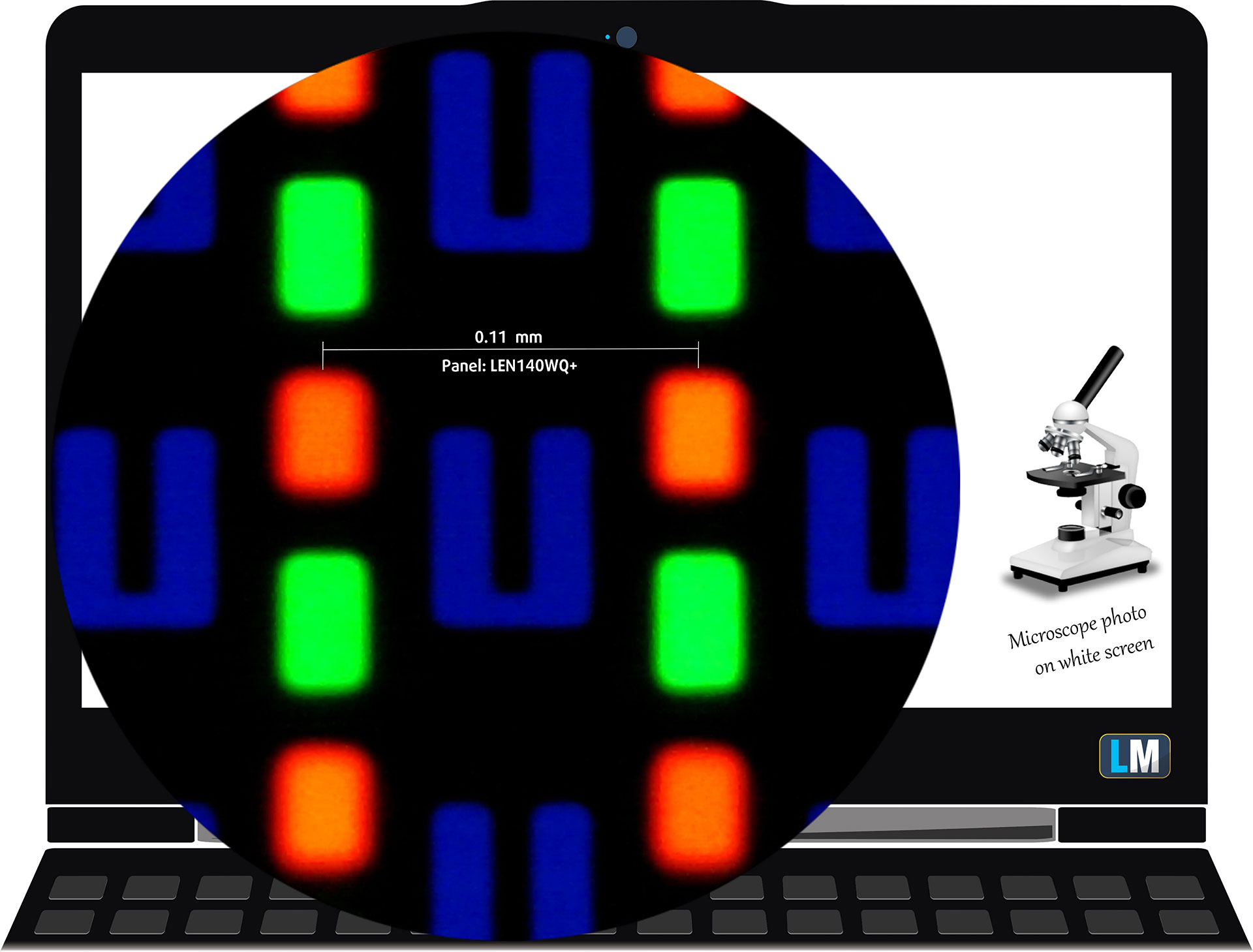
The WQXGA+ (2880 × 1800), 120 Hz, OLED display variant under our microscope
Viewing Angles
Viewing angles are good. We take photos from different angles to evaluate the quality.
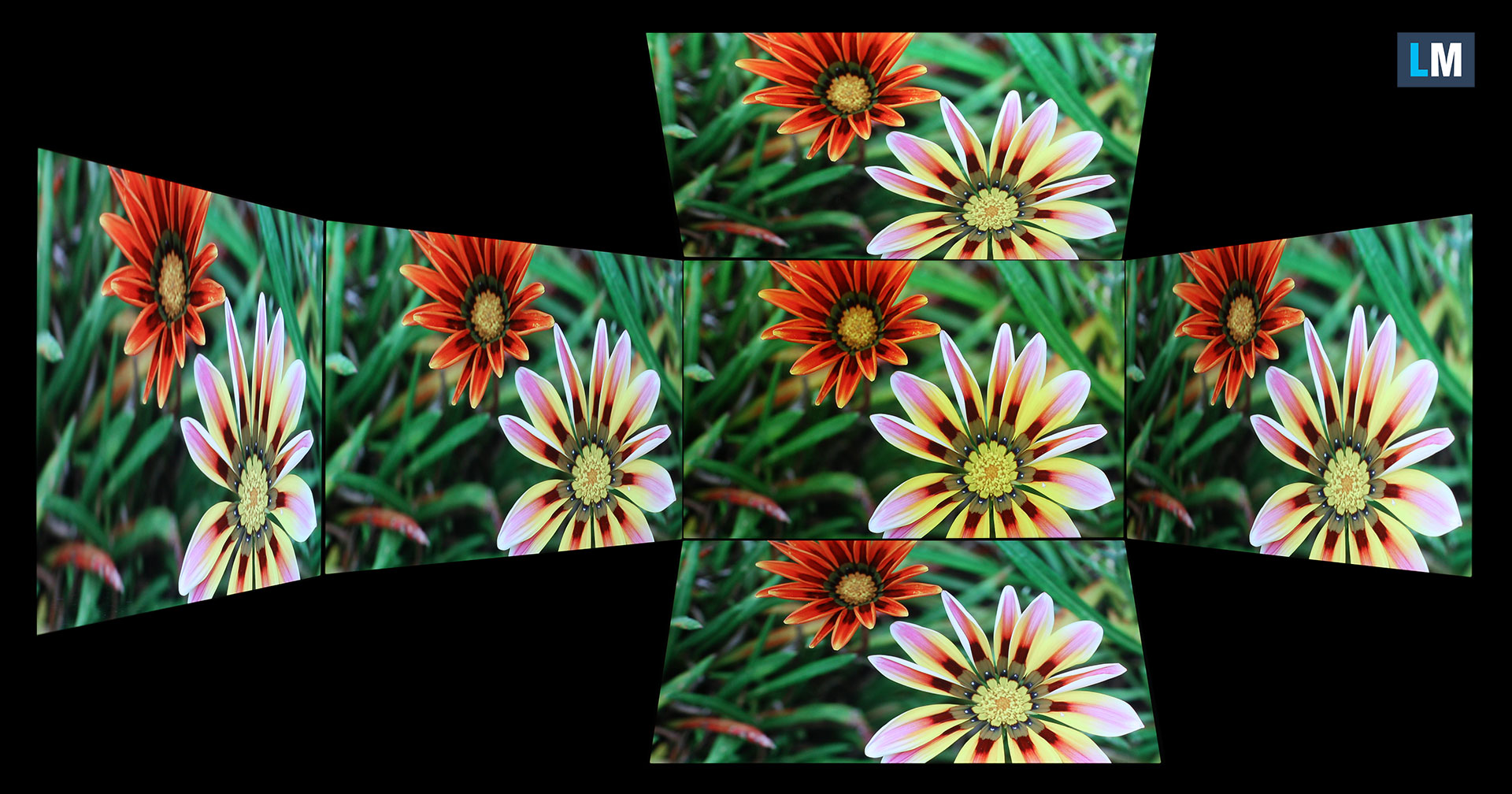
We also include a video recorded with locked focus and exposure.
Color Coverage
The whole “sail-shaped” map below (Fig. 1) represents all the colors visible to the human eye, while the black curved line shows the colors found in real-world scenes and nature.
Then, we’ve drawn some of the most important and interesting color spaces, compared to the colors the panel of Lenovo Yoga Slim 7a (14″, Gen 11) can show:
Standard/For Web: sRGB – widely used color space for most consumer devices, ideal for Web design and development
For Print: AdobeRGB – used in professional photo editing, graphic design, and print
For Photographers/Video Editors: DCI-P3 – used in high-end film production, post-production, and digital cinema
Premium HDR: Rec.2020 – the widest consumer ITU color standard, covering a massive 75.8% of the visible spectrum, a benchmark for premium HDR content.
Lenovo Yoga Slim 7a (14″, Gen 11): the yellow dashed triangle (– – – – – –) represents the range of colors this display can show.
In our tests, we calculated the total color coverage of the display at 100% of the sRGB color gamut and 100% of the DCI-P3 color gamut.
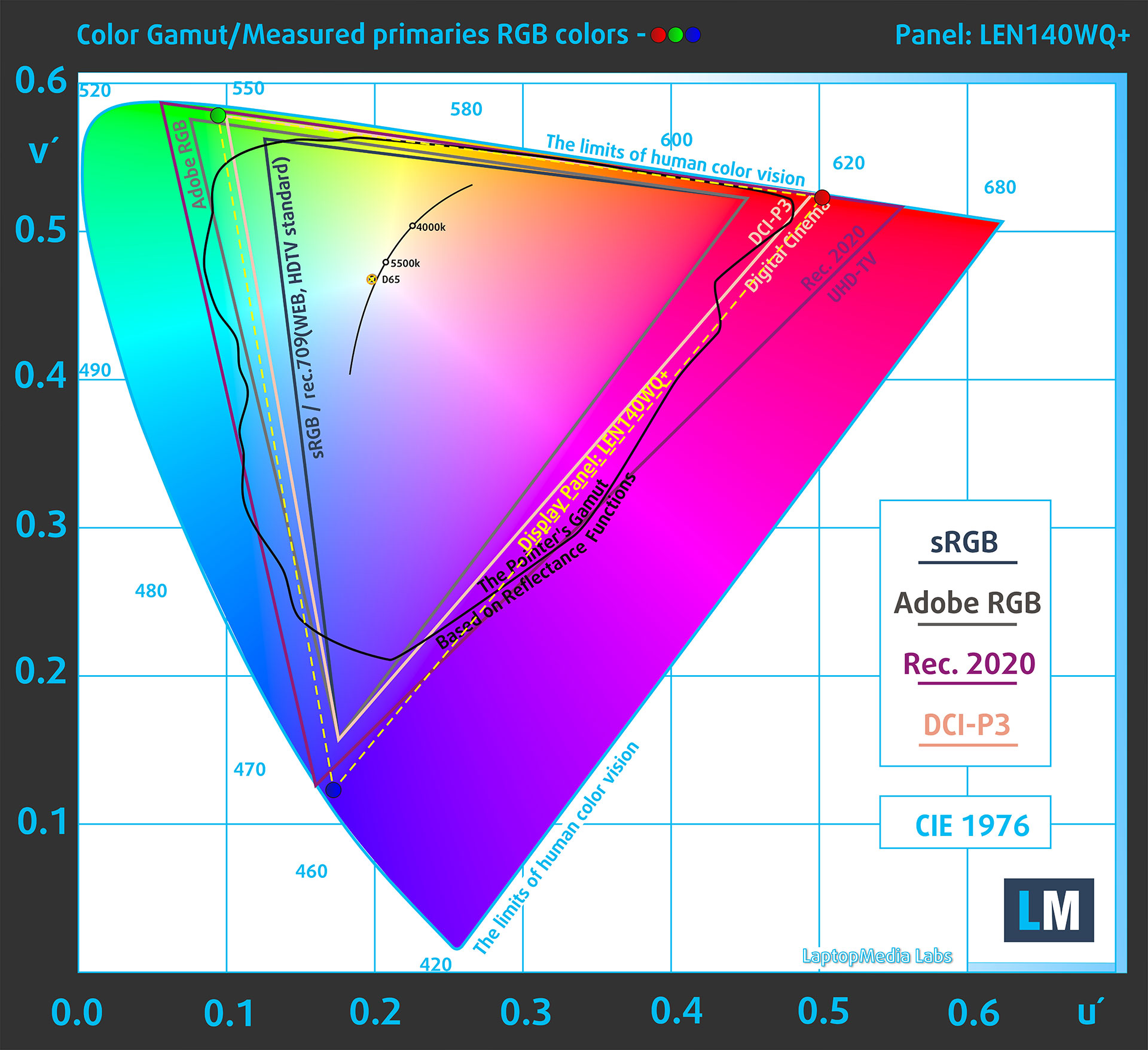
(Fig.1) Lenovo Yoga Slim 7a (14″, Gen 11) covers 100% of the DCI-P3 gamut
The Lenovo Yoga Slim 7a (14″, Gen 11) can emulate the Display P3 and sRGB color spaces.
Brightness and Contrast
The maximum brightness in SDR mode is 500 cd/m².
The Correlated Color Temperature (CCT) on a white screen at maximum brightness is 6480K (Native mode color profile).
Windows also reports HDR support for video streaming, games, apps, and other HDR content. Combined with the OLED panel’s pixel-level black control, this gives the Yoga Slim 7a a clear advantage over standard IPS panels when watching HDR movies or viewing high-contrast content.
The contrast ratio of OLED panels is excellent because the pixels turn off completely when displaying black.
Uniformity: Luminance, Contrast, and Color Deviation
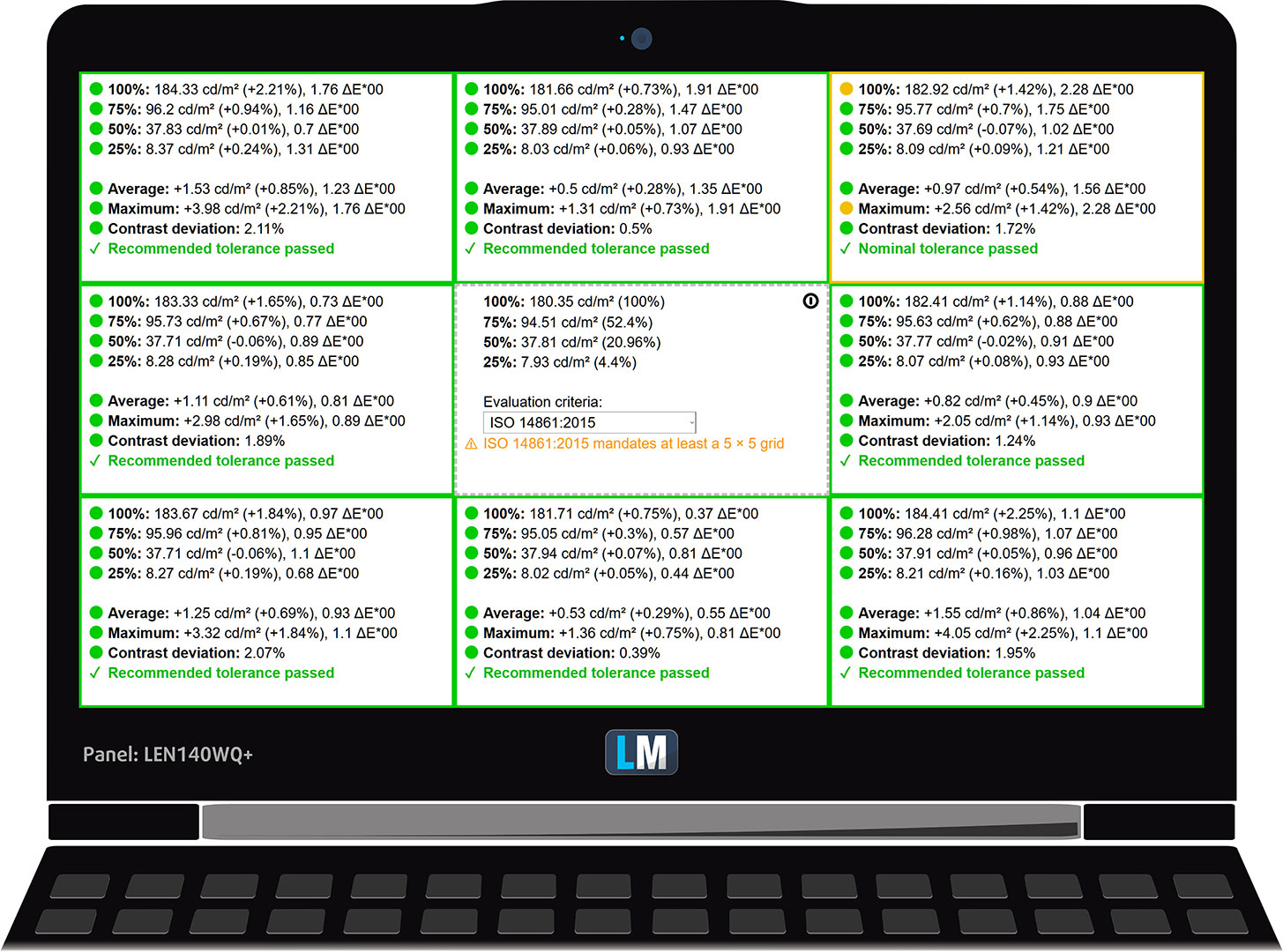
The figure below shows the results from our uniformity test across different sections of the screen. The measurements are taken at 180 nits (Windows slider = 64%) – a brightness level we consider typical for standard working conditions.
DeltaE values below 4.0 are acceptable for regular users. For those working with colors, screens with DeltaE values no higher than 2.0 are recommended.
Color Accuracy
Let’s check the difference between real colors and those you’ll see on the Lenovo Yoga Slim 7a (14″, Gen 11). We measure that distance in DeltaE – the higher the number, the more different they look.
Values below 4.0 are acceptable for regular users, while values below 2.0 are suitable for color-sensitive work. A value below 1.0 means the difference is indistinguishable to the naked eye.
For the next graph, we’ve selected 24 common colors, including dark/light skin, blue sky, green grass, etc.
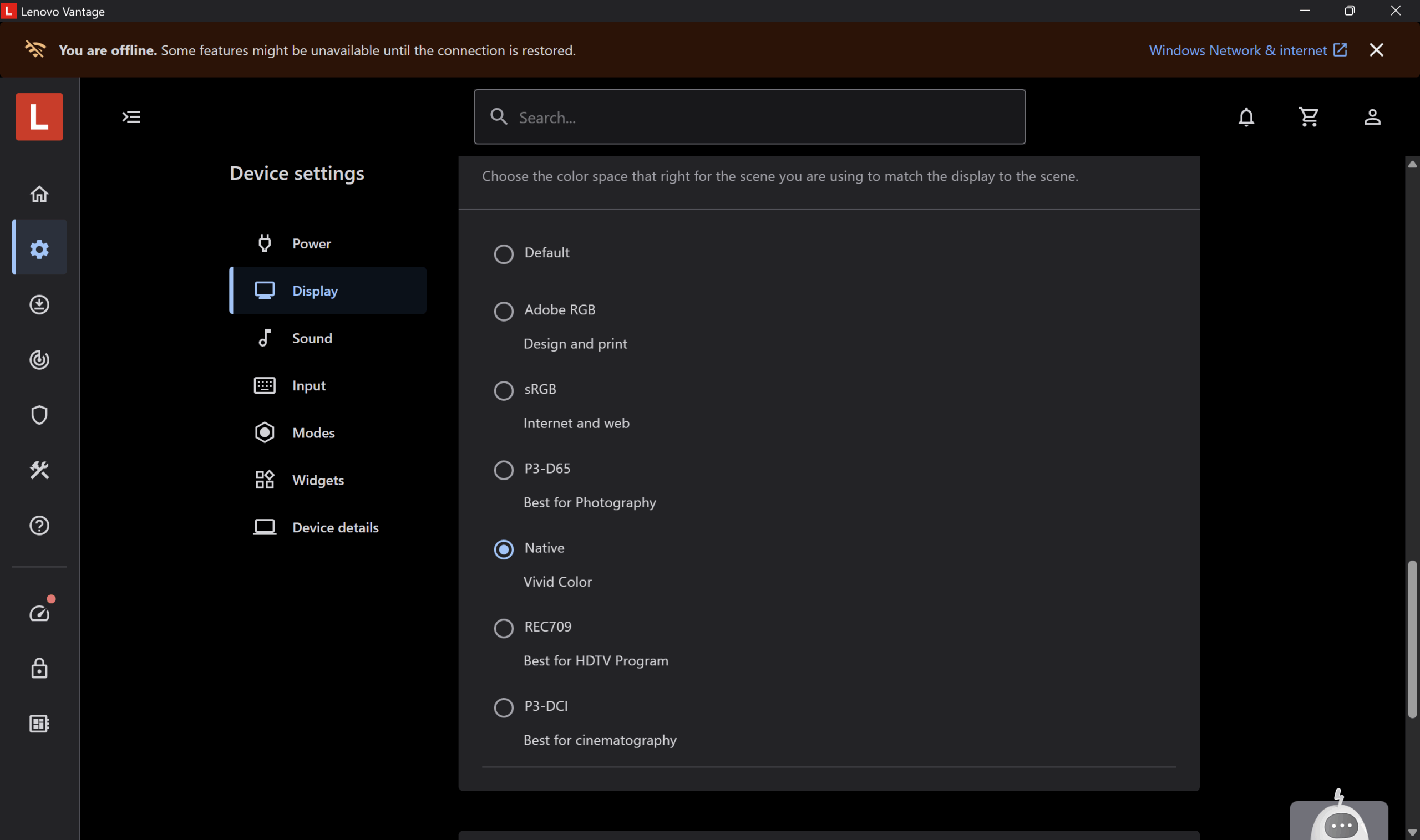
Below are the results of the Lenovo Yoga Slim 7a (14″, Gen 11) using the sRGB mode in Lenovo Vantage app, without additional calibration, compared to the sRGB color space.
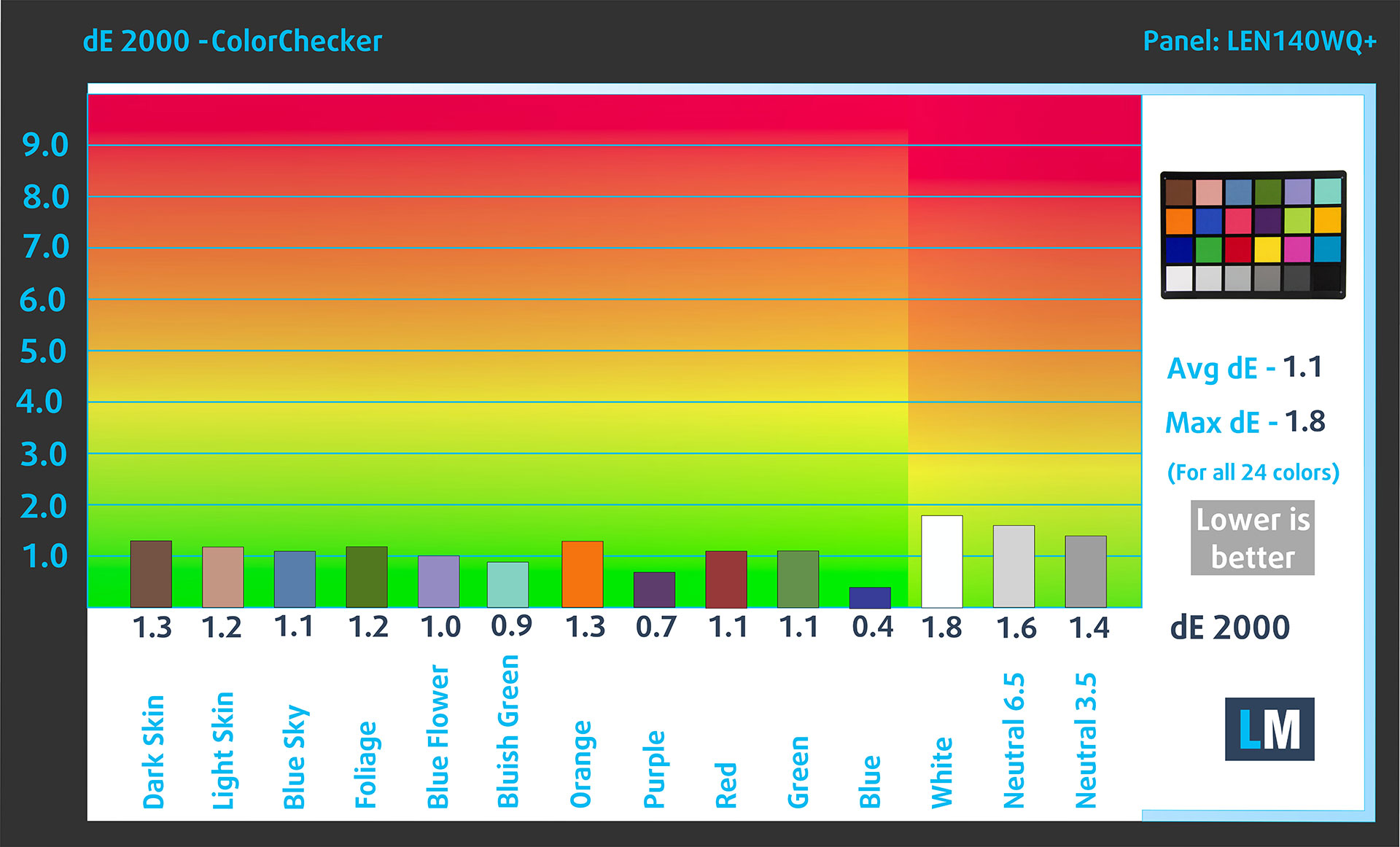
Comparison in the sRGB color space.
Below are the results of the Lenovo Yoga Slim 7a (14″, Gen 11) using the P3-D65 / Display P3 mode in Lenovo Vantage app, without additional calibration, compared to the Display P3 color space.
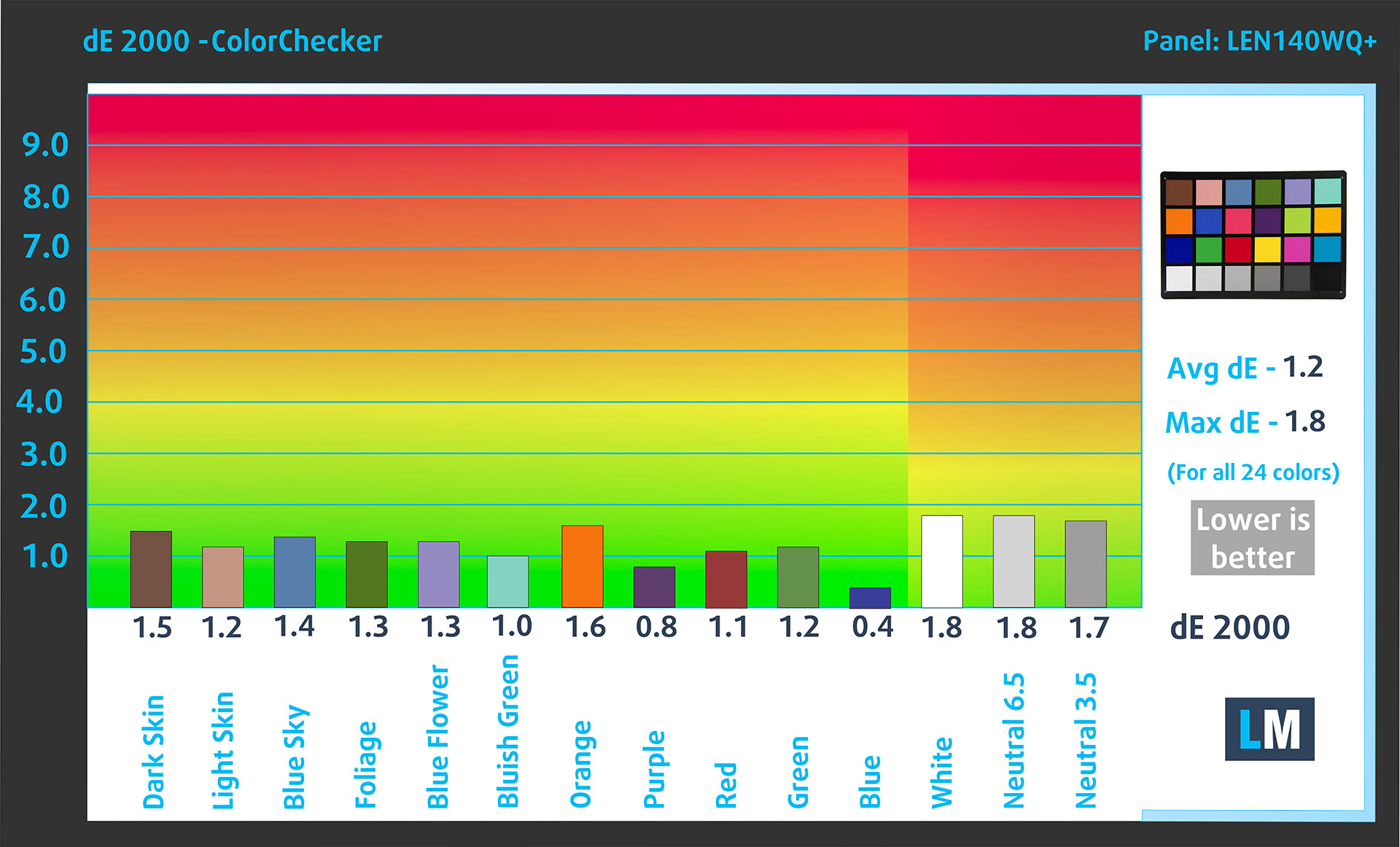
Comparison in the Display P3 color space.
The factory settings offer very accurate color matching, with an average dE of 1.1 in sRGB mode and 1.2 in Display P3 mode. This means the panel is not only visually impressive, but also accurate enough for color-sensitive work straight out of the box, especially if you choose the correct color mode in Lenovo Vantage for your workflow.
Comparison in the sRGB color space (primaries and D65 white point specified in ITU-R BT.709, sRGB encoding curve).
Here’s an illustration of what the Design and Office profile aims to deliver:
Left: No Profile | Drag the slider to see the difference | Right: Design & Office Profile


Health Impact: PWM (Screen flickering)
Some displays use PWM to regulate brightness, which means that instead of reducing the light intensity, they pulse or flicker. Our brain merges the image, so it appears darker, but this can increase eye strain, especially when the pulse frequency is low. You can read more about that in our dedicated article on PWM.
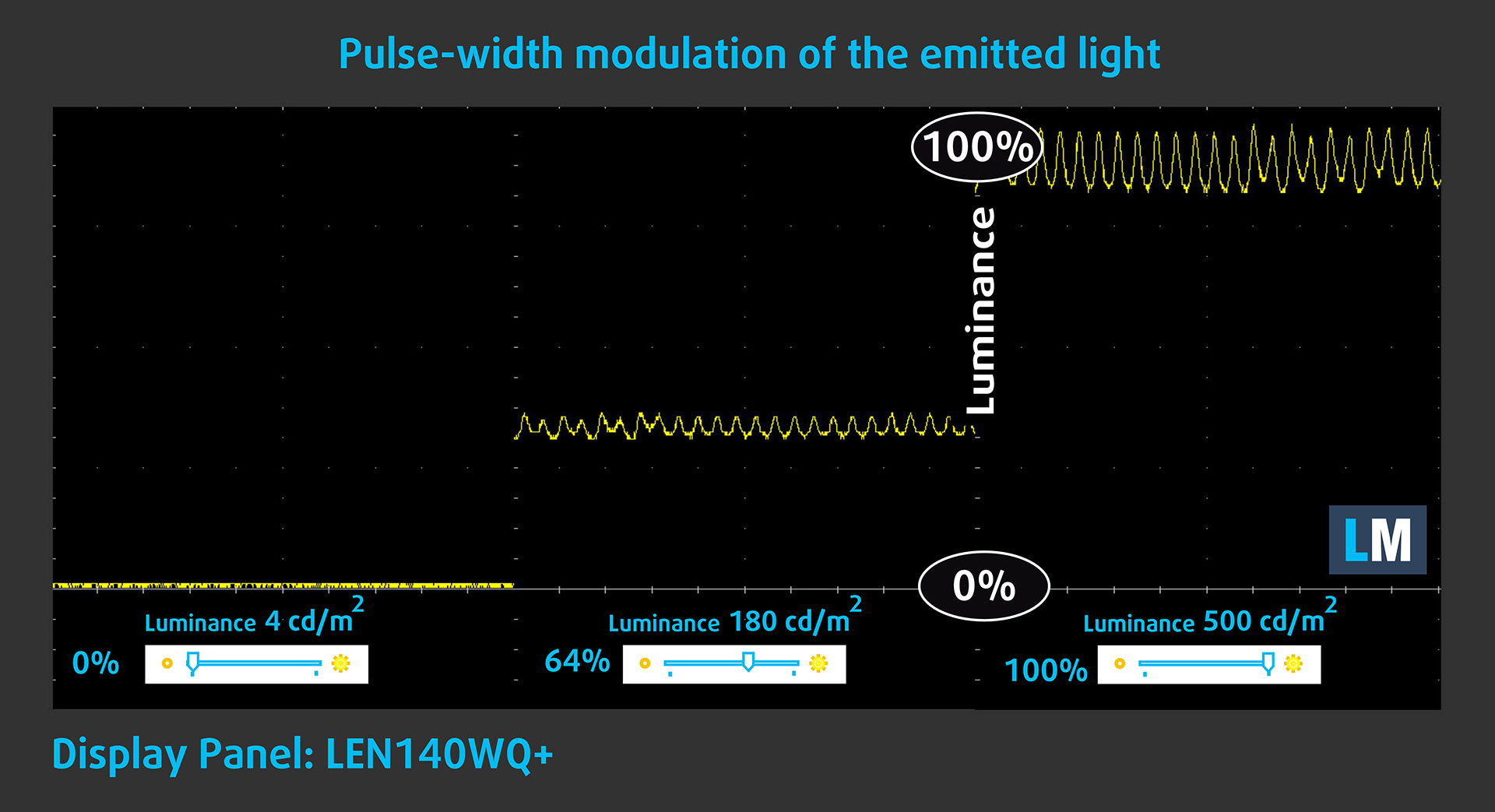
In the graph below, you see the intensity of light at different brightness levels—on the vertical axis is the brightness of the emitted light, and on the horizontal axis—time.
The display light of the Lenovo Yoga Slim 7a (14″, Gen 11) pulsates across the brightness range, which is expected behavior for many OLED panels. The good news is that the amplitude is limited, so we find the panel relatively comfortable compared to more aggressive PWM implementations. Still, users who are very sensitive to flicker should keep this in mind.
Health Impact: Blue light emissions
Installing our Health-Guard profile not only eliminates harmful PWM when the laptop uses it to control brightness but also reduces harmful Blue Light emissions while keeping the colors of the screen perceptually accurate.
If you’re not familiar with the Blue light, the TL;DR version is – emissions that negatively affect your eyes, skin, and your whole body. You can find more information about that in our dedicated article on Blue Light.
Health Impact: Screen Reflectance
Glossy-coated displays can cause eye fatigue in high ambient light conditions due to reflections. We measure the level of screen reflection with the display turned off, at a 60° angle.
The reflectance of the Lenovo Yoga Slim 7a’s screen is 129 GU, which places it firmly in the high-gloss category. This is the biggest practical drawback of the otherwise excellent OLED panel.
High Gloss: >70 GU
Medium Gloss: 30 – 70 GU
Low Gloss: <30 GU
Sound
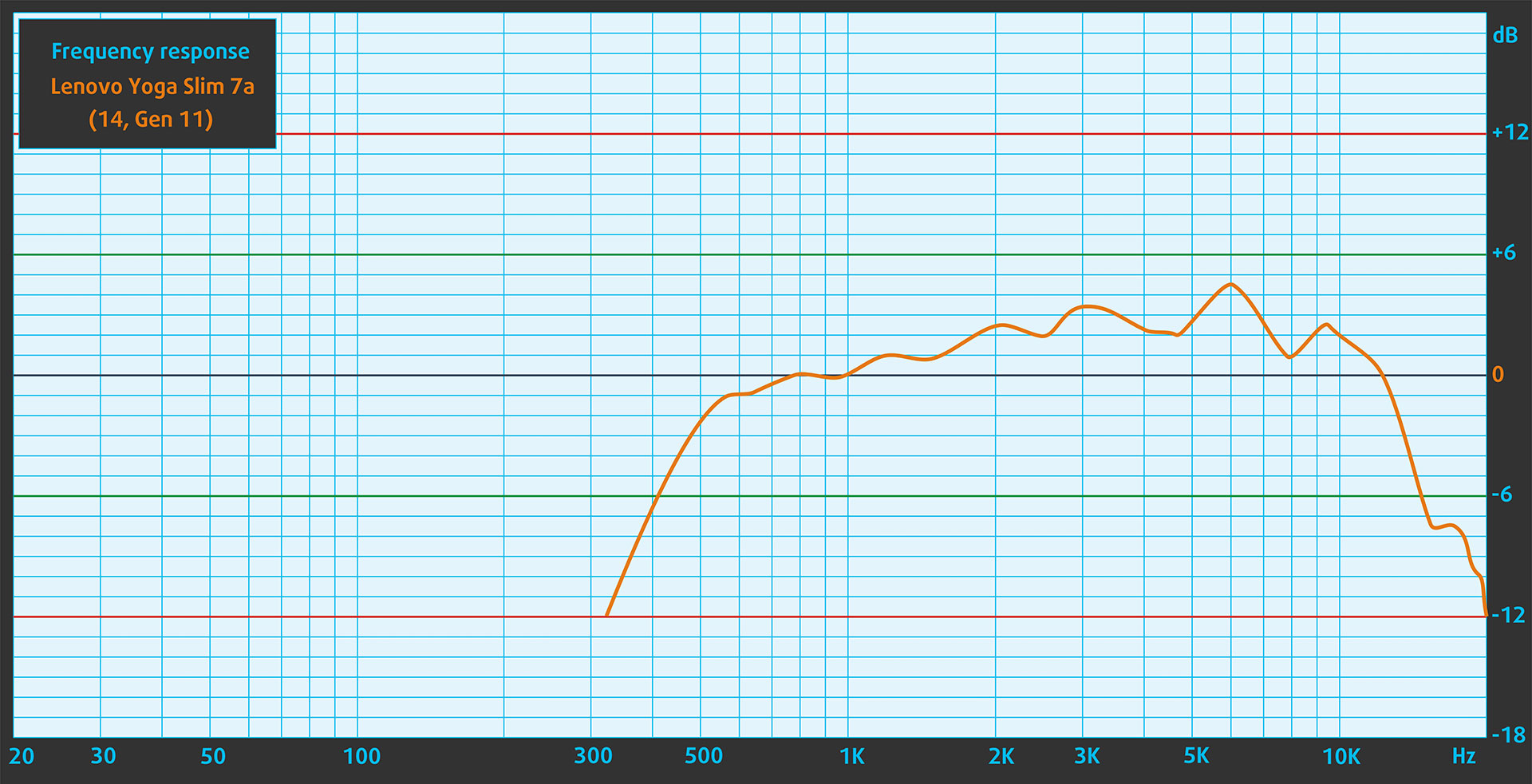
The sound from the Lenovo Yoga Slim 7a’s speakers is good for such a thin and light 14-inch laptop. Voices are clear, which makes the machine suitable for video calls, podcasts, and casual media playback. As expected, the low frequencies are limited, so music and movies lack real bass depth. The mids are reasonably balanced, while the highs show some unevenness, but the overall result is perfectly usable for everyday entertainment.
Work Performance: CPU, AI
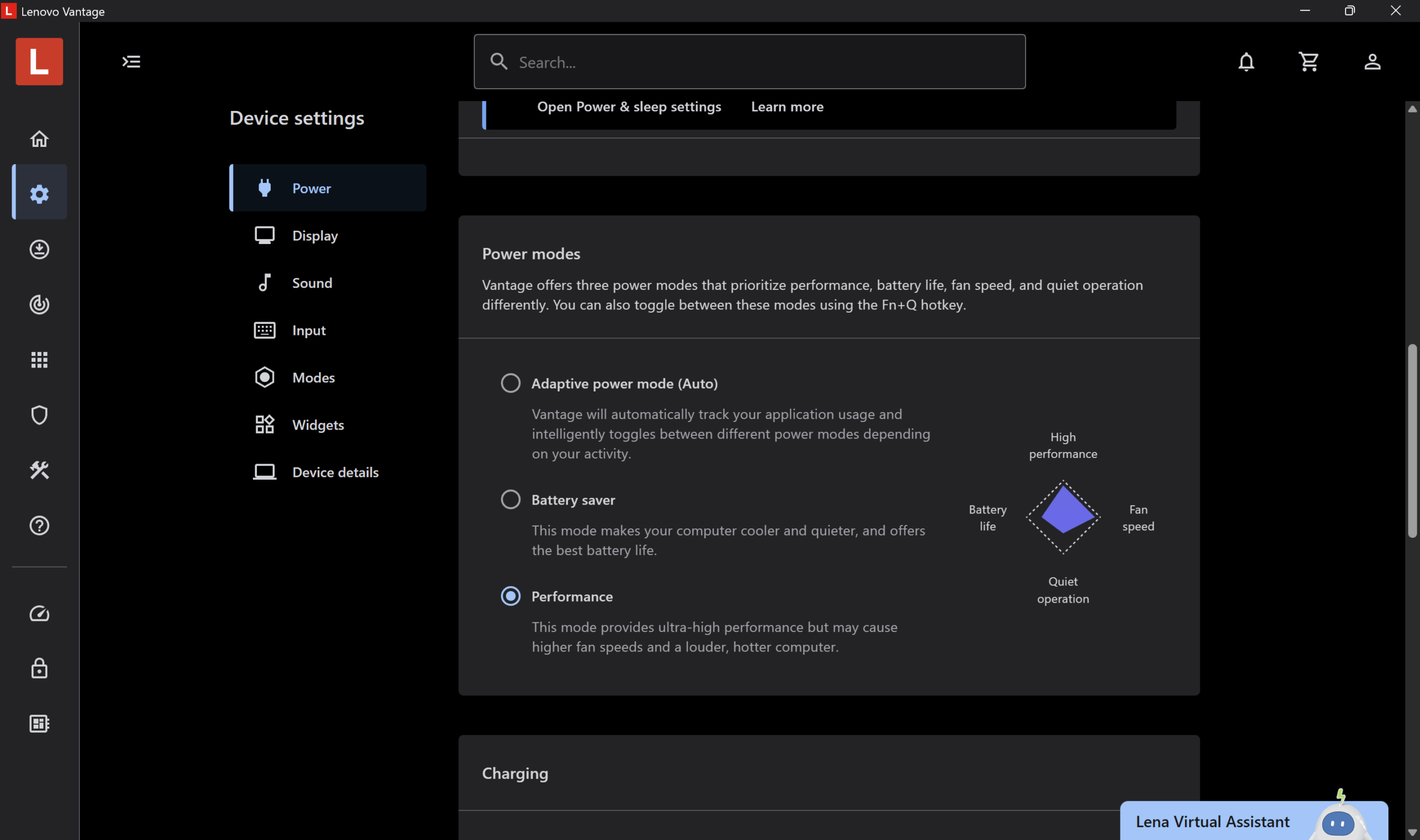
All performance and temperature tests are conducted with Performance mode activated in Lenovo Vantage:
CPU and Work Performance
The Lenovo Yoga Slim 7a (14″, Gen 11) is offered with AMD Ryzen AI 400 series processors, including the Ryzen AI 5 430 and Ryzen AI 7 445. The Ryzen AI 5 430 has 4 cores and 8 threads, while the Ryzen AI 7 445 increases this to 6 cores and 12 threads. Both chips include an NPU rated at up to 50 TOPS, so the platform is ready for Copilot+ PC features and newer AI-assisted workloads. For a broader performance comparison, you can check our Top Laptop CPU Ranking.
In our benchmarks, the Ryzen AI 7 445 in the Yoga Slim 7a performs well for a thin 14-inch laptop, but it is not a class-leading CPU. Its single-core and multi-core Geekbench 6 results are competitive, although some Core Ultra 200V and Ryzen AI alternatives are slightly faster. The more impressive part is the sustained 3D rendering result, where this compact machine scores ahead of many Intel-based competitors and stays close to the larger Yoga 7a 2-in-1 with the same processor.
Interestingly, the Lenovo IdeaPad Pro 5 (detailed review) equipped with the lower-tier AMD Ryzen AI 5 340 achieves a higher score in the same test, which is particularly impressive considering the processor difference, although the IdeaPad is not as ultra-thin as the Yoga Slim 7a. In short, the Yoga Slim 7a feels quick for everyday work, office multitasking, and light creative tasks, but heavier long-duration workloads still favor thicker laptops with stronger cooling.
Single-core performance ensures smooth operation and responsiveness in operating systems, providing a better user experience.
Results are from the Geekbench 6 Single-Core test (higher is better)


Multi-core performance is essential for handling complex and demanding tasks, such as Video editing, CAD, and Scientific simulations.
Results are from the Geekbench 6 Multi-Core test (higher is better)
Here, we evaluate the CPU's performance using a real-world 3D rendering task, assessing its ability to handle complex computations and rendering workloads efficiently.
Results are from the Cinebench 2024 Multi-Core test (higher is better)
Storage Performance
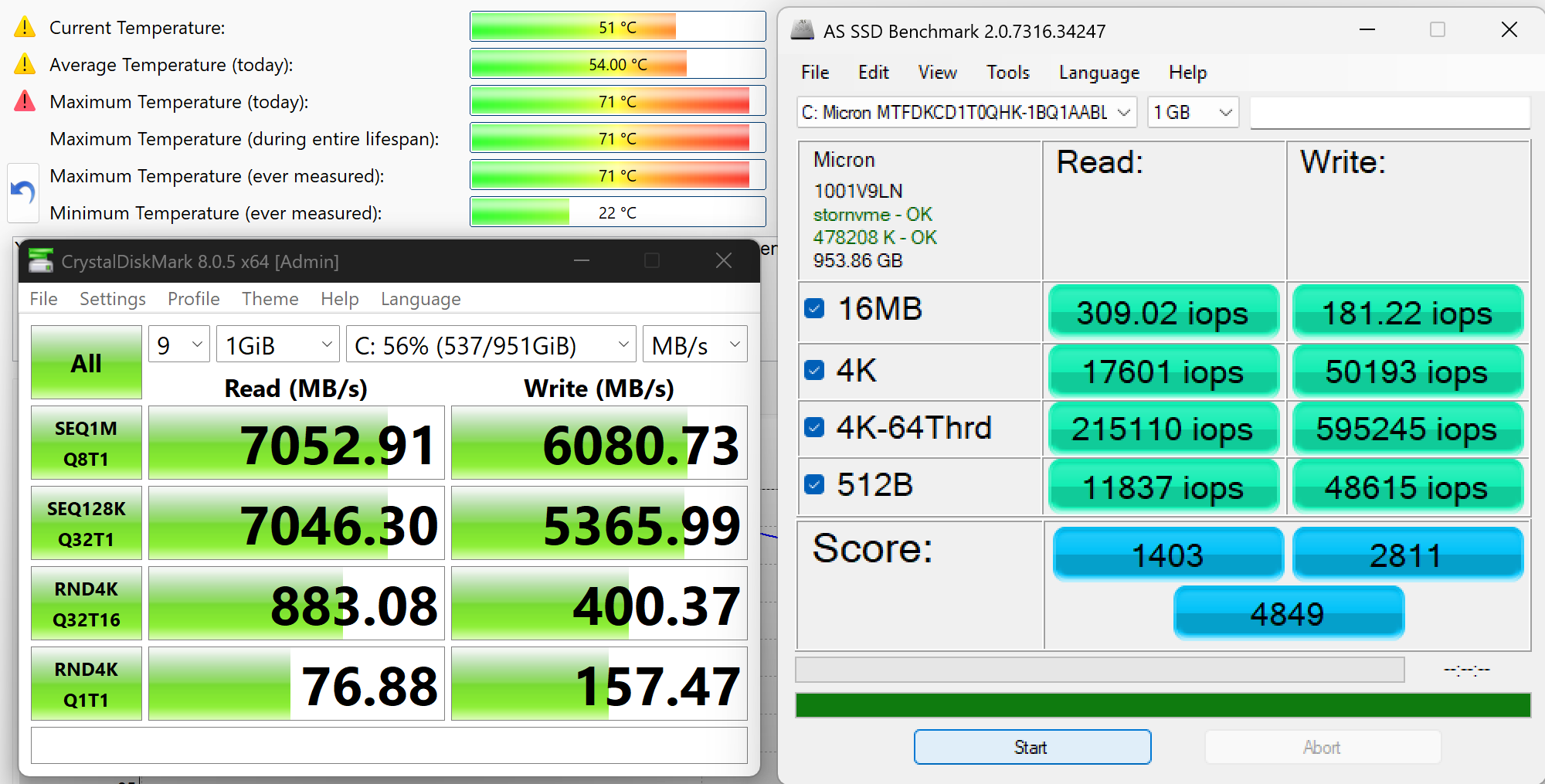
We ordered a configuration with 1TB of storage and the Slim 7a arrived with Micron MTFDKCD1T0QHK-1BQ1AABLA.
It’s a very fast PCIe 4.0 NVMe drive, reaching 7.1GB/sec sequential read and 6.1GB/sec sequential write speeds in our benchmark, while keeping the temperatures within acceptable limits – up to 71ºC during our heavy benchmark process.
AI Performance
Here you can see the position of the GPUs and CPUs (NPUs) found within the Lenovo Yoga Slim 7a (14", Gen 11) in our AI Hardware Performance Rankings based on their AI processing power, measured in TOPS (Tera Operations Per Second) - a critical metric indicating the computational throughput, particularly for AI tasks.
The first column shows peak performance for INT8/FP8 precision, which is the most widespread metric for evaluating AI inference capabilities. We exclude Sparsity to provide a more accurate reflection of AI performance in dense computation scenarios where sparsity optimizations may not be applicable. The second and third columns show the performance with Sparsity, and FP4 TFLOPS, when supported.
For SoCs, the results reflect the peak performance of the integrated NPU. Additionally, it’s important to note that, according to Microsoft, a NPU must have at least 40 TOPS of AI computing power for the PC to be considered “AI-capable.”
| # | GPU / CPU (NPU) | TOPS INT8/FP8 No Sparsity | TOPS INT8/FP8 Sparsity | TFLOPS FP4 Sparsity |
|---|---|---|---|---|
| 1563. | AMD Ryzen AI 5 430 | 50 | — | — |
| 1574. | AMD Ryzen AI 7 445 | 50 | — | — |
GPU and Gaming Performance
Graphics are handled by the integrated AMD Radeon 840M, which is shared across the listed CPU options. This GPU is suitable for general use, media playback, office work, and light creative tasks, but it should not be confused with a dedicated gaming GPU. It can still handle some casual gaming and GPU-accelerated workloads, especially when paired with fast memory, but expectations should remain realistic for a slim 14-inch laptop. You can compare it with other integrated and discrete GPUs in our Top Laptop Graphics Ranking.
In synthetic graphics tests, the Radeon 840M in the Yoga Slim 7a lands near the lower end of this comparison. It is close to basic Intel integrated graphics in 3DMark Time Spy, but the newer Intel Arc Graphics 130V and 140V solutions are much faster, especially in Wild Life Extreme. Even other Radeon 840M laptops can score higher, which suggests that the ultra-thin chassis and power limits of the Yoga Slim 7a hold the GPU back. In practice, this is a laptop for light gaming and everyday GPU acceleration, not for demanding 3D workloads.
The results are from 3DMark Time Spy (Graphics). Higher is better.
The results are from 3DMark Wild Life Extreme Unlimited. Higher is better.
Gaming tests

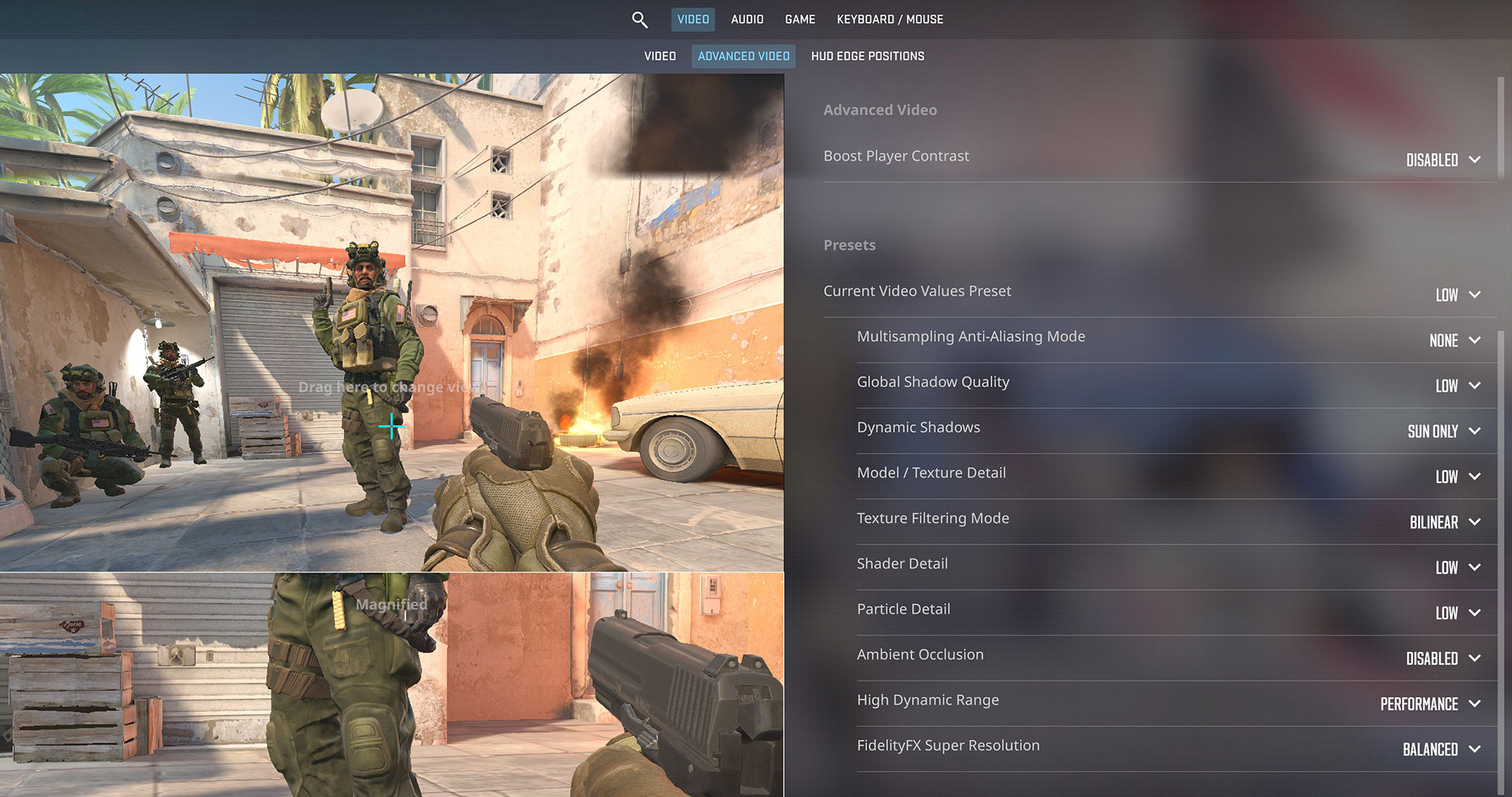
The gaming results confirm the same story. Counter-Strike 2 is very playable on the Yoga Slim 7a, especially if you are willing to lower the resolution and graphics preset. At 1200p on Low settings, the laptop reaches 140 FPS, which pairs nicely with the 120Hz OLED panel. Even at the sharper 1800p resolution, it still maintains a playable 72 FPS, although this is still on the Low preset.
| Counter-Strike 2 | 1200p, Low (Check settings) | 1800p, Low (Check settings) |
| Average FPS | 140 FPS | 72 FPS |

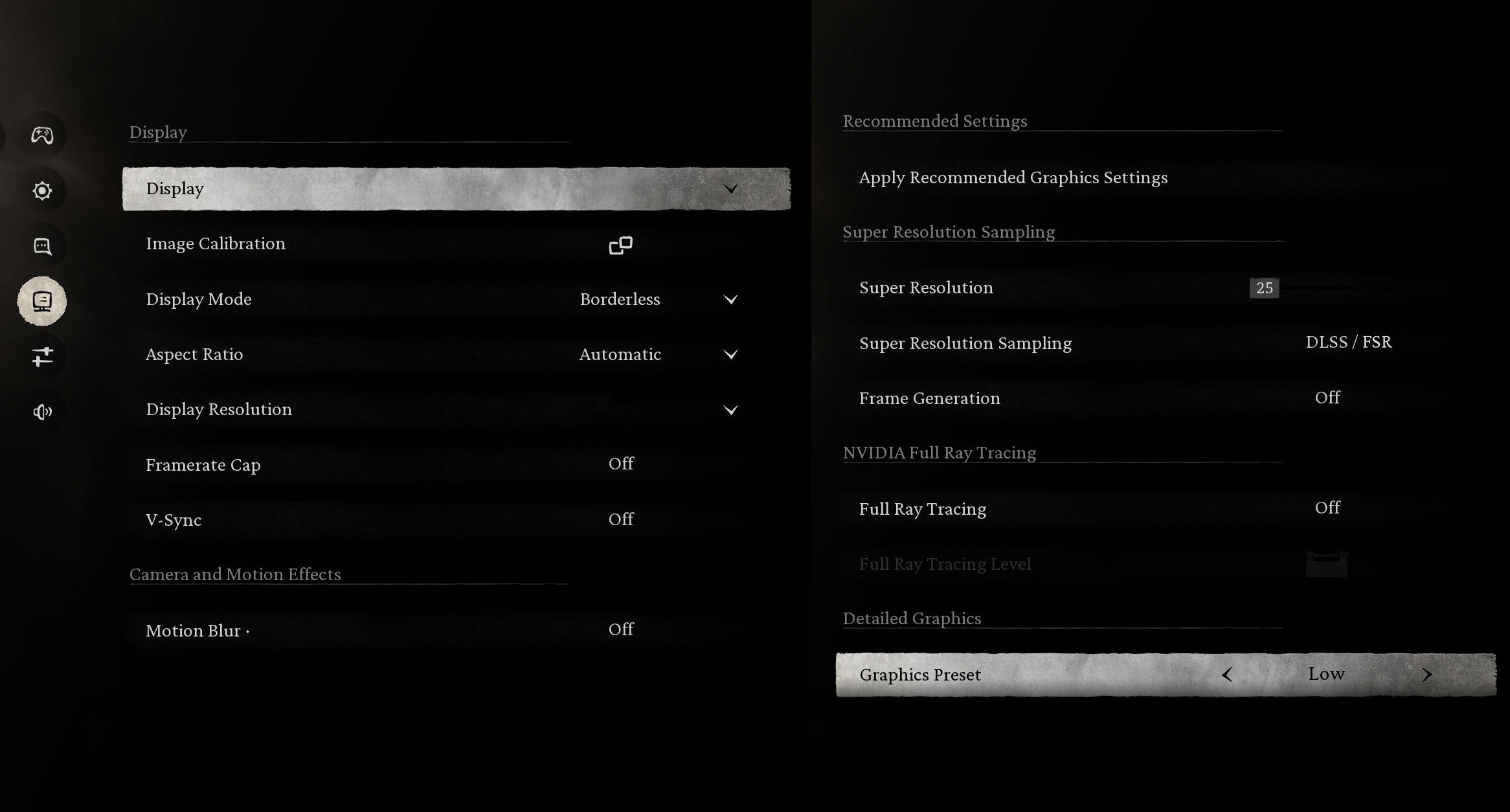
Heavy modern AAA titles like Black Myth: Wukong are a much tougher challenge for integrated graphics. At 1200p on Low settings, the laptop manages 31 FPS. This is not a truly smooth experience, but it shows that demanding games can run if you accept low settings and modest frame rates.
| Black Myth: Wukong | 1200p, Low (Check settings) |
| Average FPS | 31 FPS |

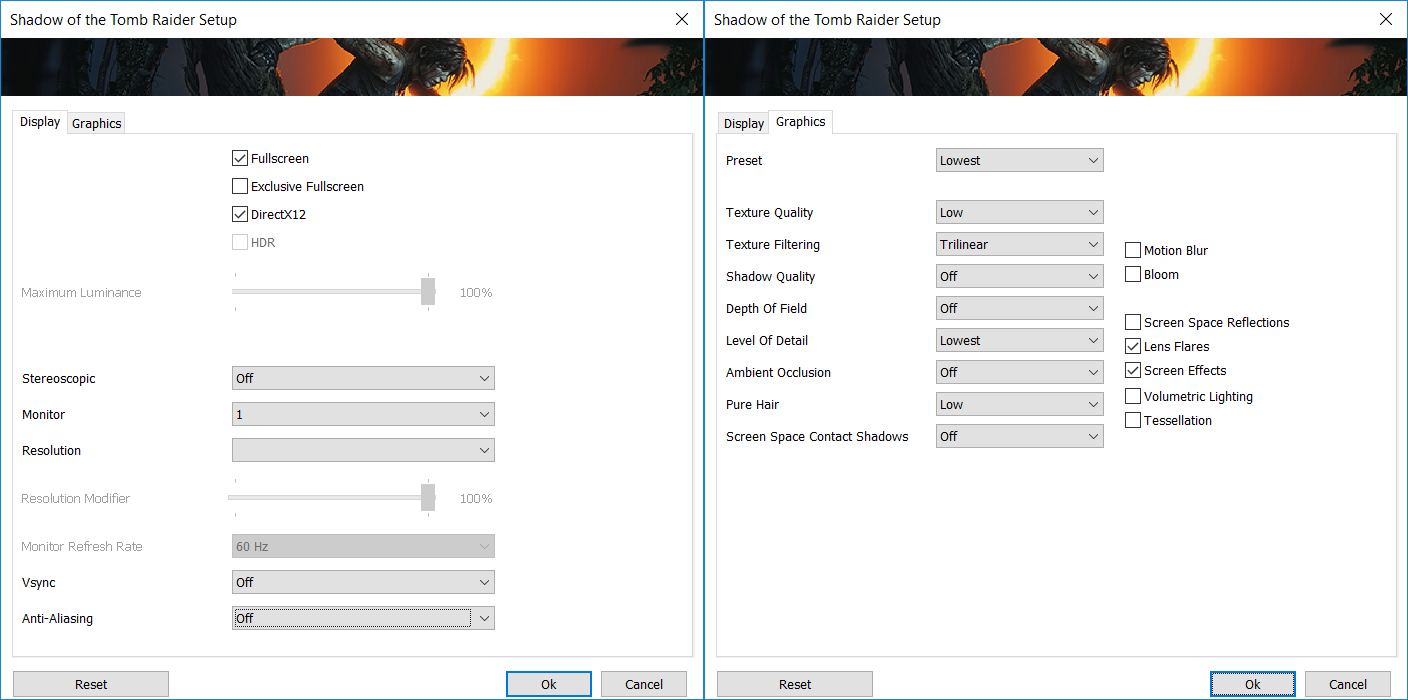
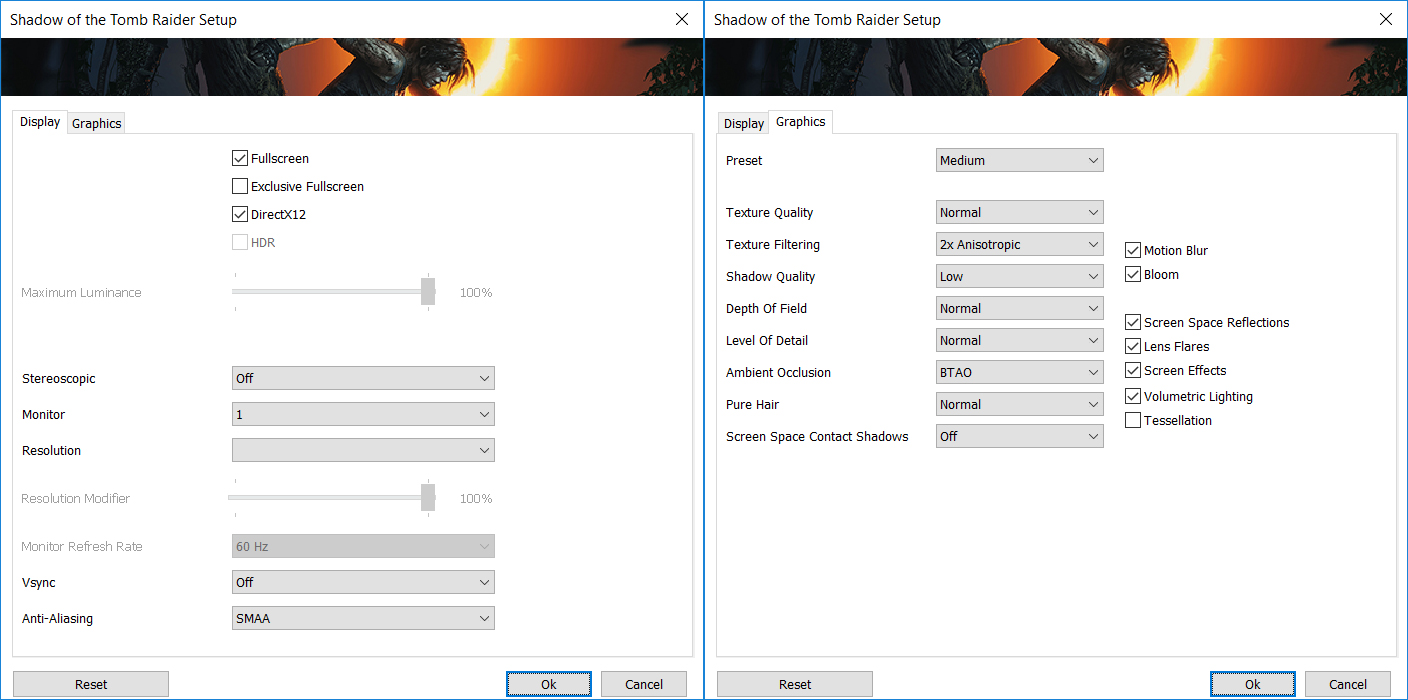
Older but still visually rich games like Shadow of the Tomb Raider are a better match for the Radeon 840M. The Yoga Slim 7a delivers 52 FPS on the Lowest preset at 1200p, while switching to Medium drops the result to 30 FPS. This makes the laptop usable for lighter and older titles, but modern AAA gaming still requires significant compromises.
| Shadow of the Tomb Raider | 1200p, Lowest (Check settings) | 1200p, Medium (Check settings) |
| Average FPS | 52 FPS | 30 FPS |
Temperatures and Comfort, Noise, Stability
At idle, the CPU package of the AMD Ryzen AI 7 445 maintains a temperature of 35ºC, and the notebook remains completely silent. This is exactly what we want to see from a premium thin-and-light machine during light daily use.
Office Work, Web Development, Design
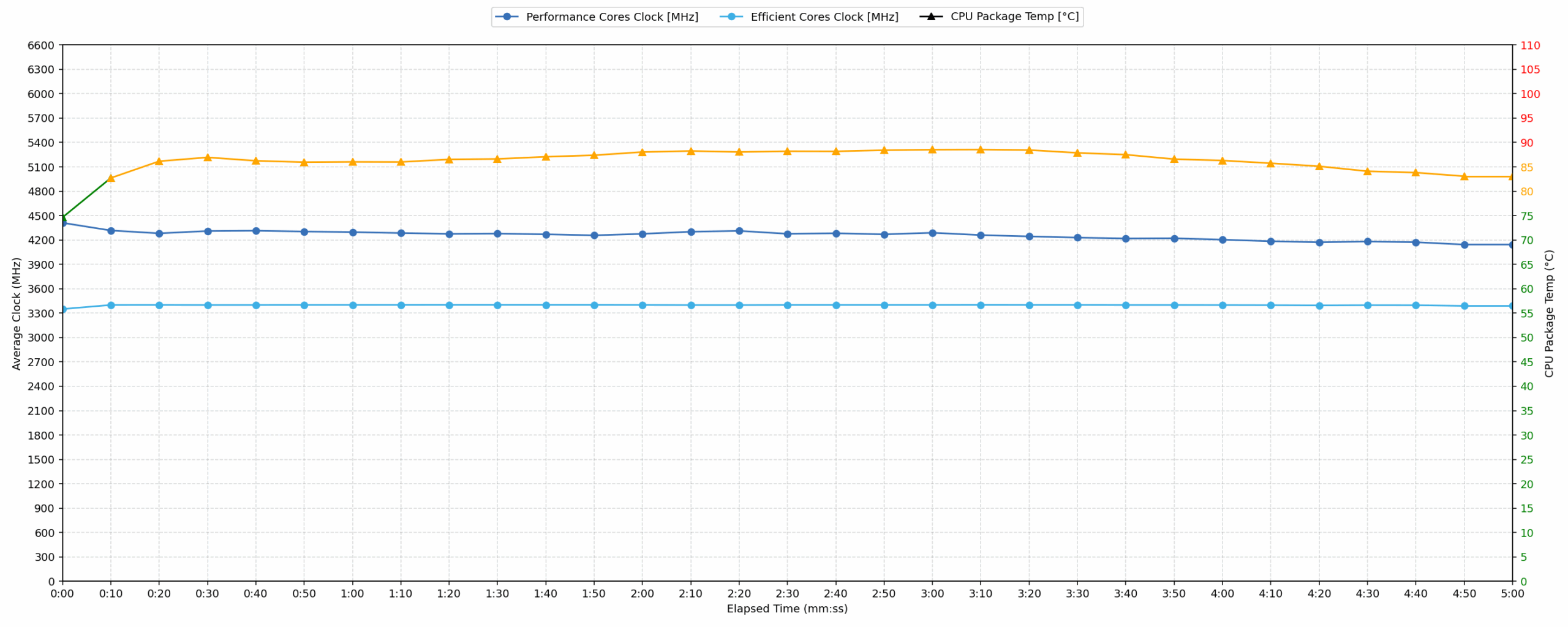
Short periods (0:00 – 0:10 s) of 100 % CPU load
This test shows the CPU behavior during short periods of serious load. It’s important for users who are looking for laptops suitable for tasks like Web Design and Programming.
| AMD Ryzen AI 7 445 | Avg. CPU Clock | Avg. CPU Temp. | Avg. CPU Power |
| ASUS Vivobook 18 (M1807) | 4418 MHz | 77 °C | 44 W |
| Lenovo Yoga Slim 7a (14″, Gen 11) | 4411 MHz | 74 °C | 42 W |
| Lenovo Yoga 7a 2-in-1 (16″, Gen 11) | 4402 MHz | 65 °C | 42 W |
During short bursts of activity, the Lenovo Yoga Slim 7a pushes its AMD Ryzen AI 7 445 very hard. In the first five seconds, the CPU reaches a peak clock of 4480 MHz and 49 W, while over the first ten seconds it maintains an average of 4411 MHz at 42 W. The average temperature of 74 °C is perfectly fine for such a compact chassis, and the 88 °C peak is not alarming for a short boost period. In this scenario, the Yoga Slim 7a performs almost identically to the larger ASUS Vivobook 18 and slightly ahead of the Yoga 7a 2-in-1 with the same processor, which is a very good result for a 13.9 mm ultraportable.
Video editing, Scientific computing, Software compilation, 3D rendering
Long periods (0:00 – 30:00 min) of 100 % CPU load
This test shows the CPU behavior during long periods of serious load. It’s important for users who are looking for laptops suitable for tasks like Video Editing and 3D Rendering.
| AMD Ryzen AI 7 445 | Avg. CPU Clock | Avg. CPU Temp. | Avg. CPU Power |
| ASUS Vivobook 18 (M1807) | 4305 MHz | 84 °C | 40 W |
| Lenovo Yoga 7a 2-in-1 (16″, Gen 11) | 4175 MHz | 82 °C | 36 W |
| Lenovo Yoga Slim 7a (14″, Gen 11) | 3936 MHz | 71 °C | 30 W |
Under prolonged 30-minute loads, the Yoga Slim 7a clearly shifts its priorities from maximum sustained performance to temperature control and comfort. It maintains an average clock speed of 3936 MHz at a sustained power draw of 30 W, while the average CPU temperature stays at just 71 °C. This is much cooler than the Yoga 7a 2-in-1 and ASUS Vivobook 18, but also comes with lower sustained power and lower clock speeds.
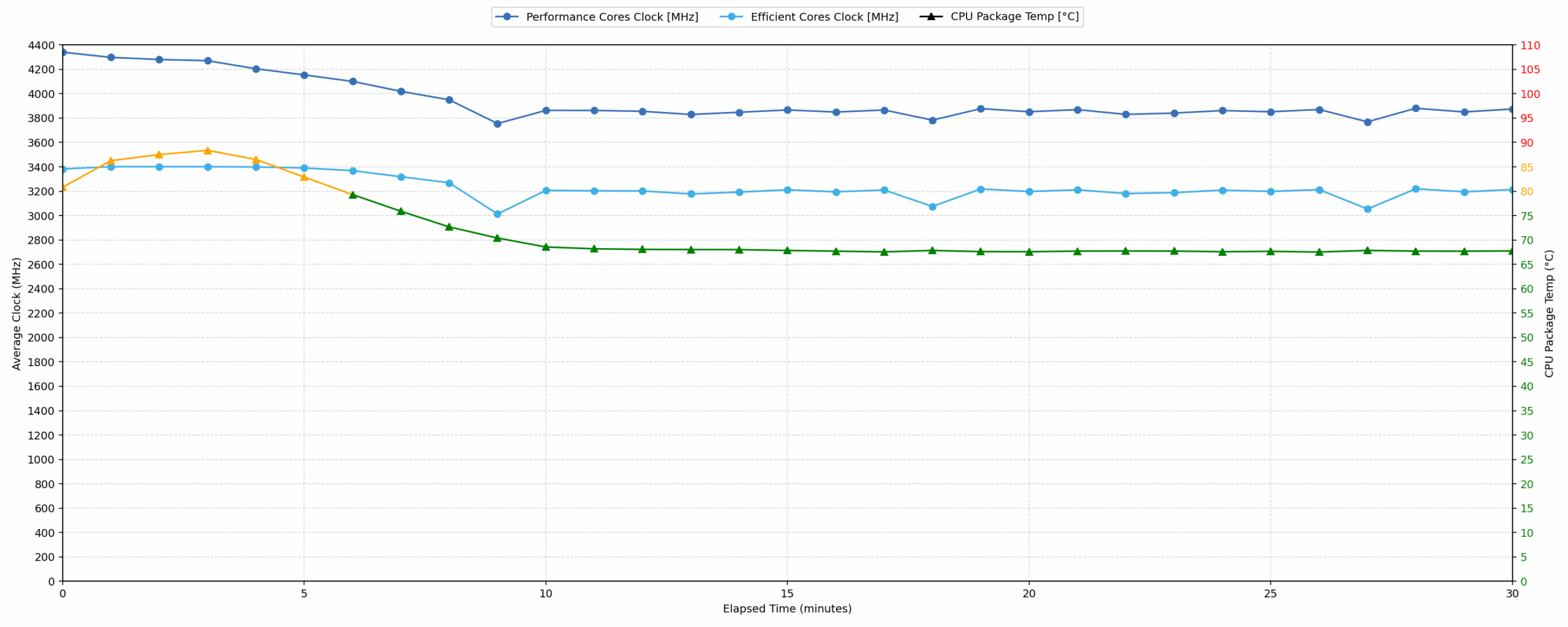
The overall behavior is easy to summarize: the Yoga Slim 7a is excellent for short, responsive workloads and remains impressively cool during long stress tests, but it is not tuned to extract the maximum possible sustained performance from the Ryzen AI 7 445. For a thin 14-inch laptop, this is a reasonable trade-off, especially if quiet operation and surface comfort matter more than shaving seconds off long rendering or compilation tasks.
Battery Life
The battery of the Lenovo Yoga Slim 7a (14″, Gen 11) is a 4-cell Li-Ion unit, model L25N4PH1. It has a nominal voltage of 15.48 V and a capacity of 70 Wh. We tested the battery with “Battery saver” mode enabled in the Lenovo Vantage app, with the display set to 180 nits and SDR mode.
In our video playback test, the Yoga Slim 7a lasted 10 hours and 29 minutes on a single charge. This is a good result, especially considering the sharp 2.8K OLED panel, but it is not class-leading in this comparison. Some rivals, such as the Lenovo ThinkPad X9-14 Gen 1 (detailed review) and Dell Pro 14 Plus (detailed review), last significantly longer, while the larger Yoga 7a 2-in-1 with the same 70Wh battery falls behind. In practice, the Yoga Slim 7a should be able to handle a normal workday of light use, but users who keep the 120Hz OLED panel bright or run heavier workloads should still expect noticeably shorter runtimes.
Brightness: 180 nits; Display Mode: SDR
Time to Full Discharge: Higher is Better

Disassembly, Upgrade options, and Maintenance
Getting inside the Lenovo Yoga Slim 7a 14AGP11 is fairly simple. The bottom panel is held by four Torx T5 captive screws, so they remain attached to the cover after being loosened. After that, the panel can be popped open with a thin plastic tool. There is also an extra retaining clip near the center, so do not force the cover upward before the surrounding clips are released.
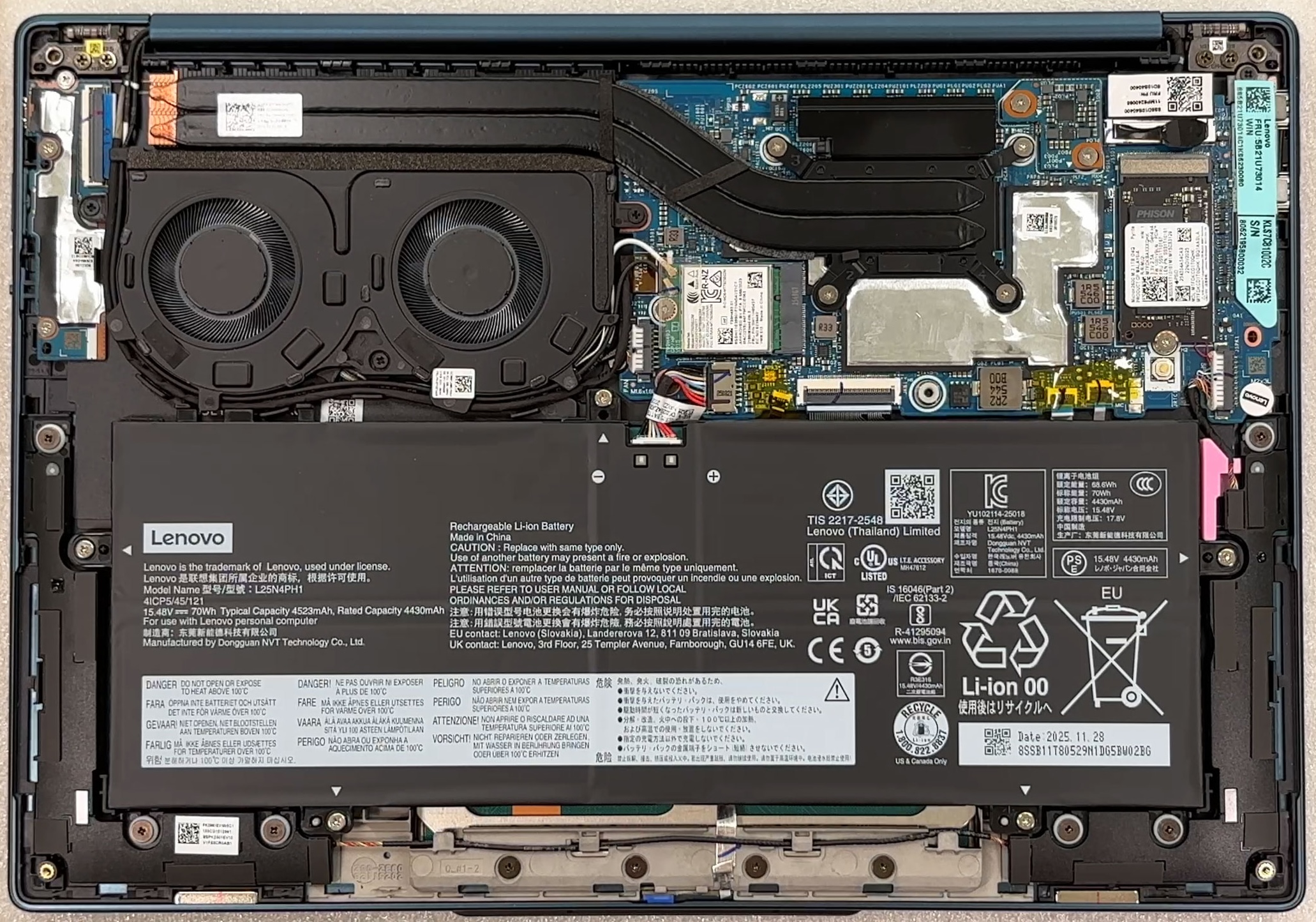
Once inside, the layout is very compact but neatly arranged. The cooling system uses two fans and a shared heat-pipe assembly that covers the processor area. For a 14-inch ultraportable, this is a serious-looking cooling setup, and the fans and heatsink are easy to access for cleaning.
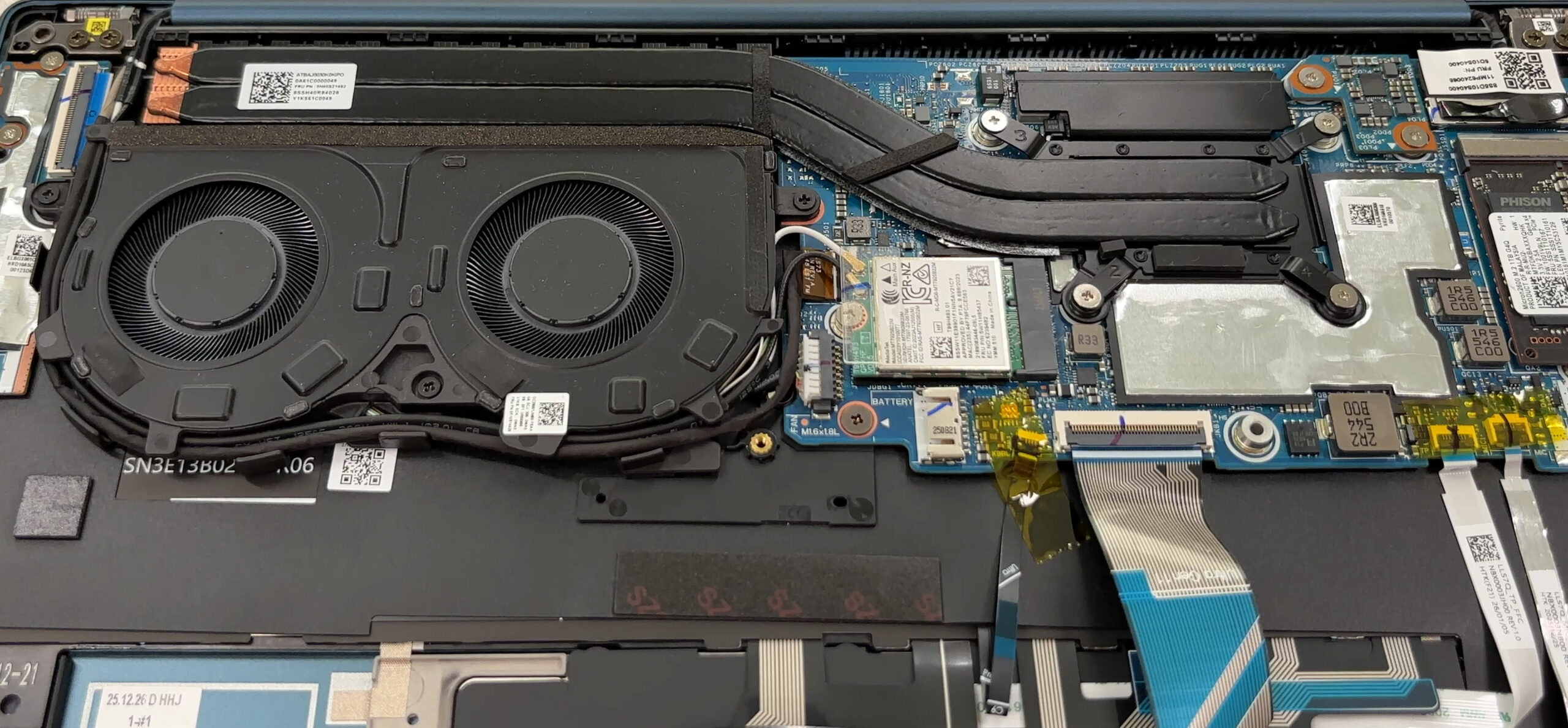
For memory, Lenovo uses soldered LPDDR5X-8000 RAM. The series is available with 16GB or 32GB configurations, and we ordered a configuration with 32GB. There are no RAM slots, so memory upgrades after purchase are not possible. If you plan to keep the laptop for several years, the 32GB version is the safer choice.
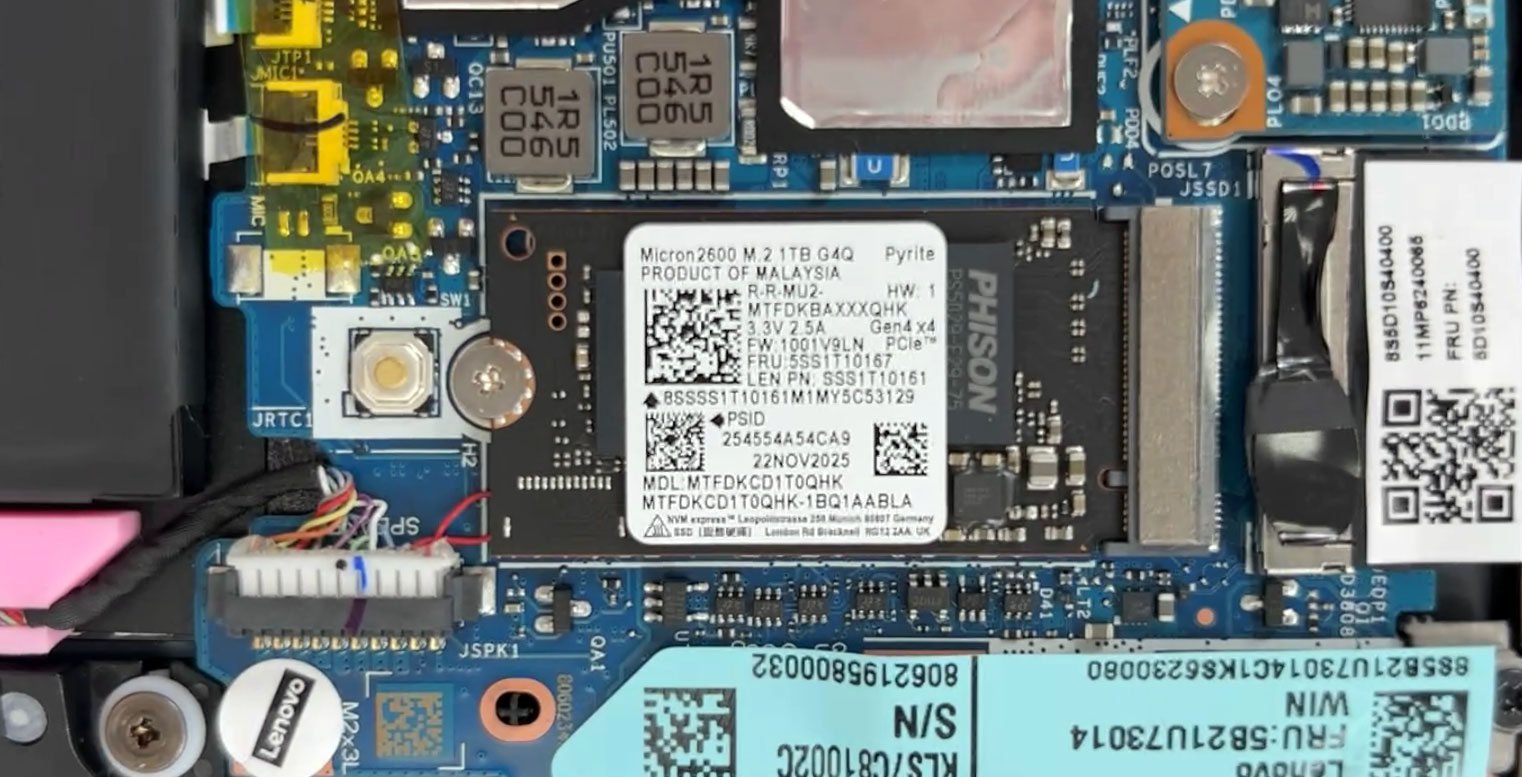
Storage is handled by a single M.2 2242 slot with PCIe 4.0 x4 support. Our configuration comes with a 1TB Micron 2600 NVMe SSD. The drive is held firmly in place and uses a thermal pad for heat transfer. There is no second M.2 slot, so any storage upgrade means replacing the installed drive rather than adding another one.
The Wi-Fi card is replaceable, which is good to see in such a thin machine. Our unit uses a MediaTek MT7925B22M module, marketed as a Wi-Fi 7 card. Bluetooth 5.4 support depends on the platform configuration, drivers, and regional setup.
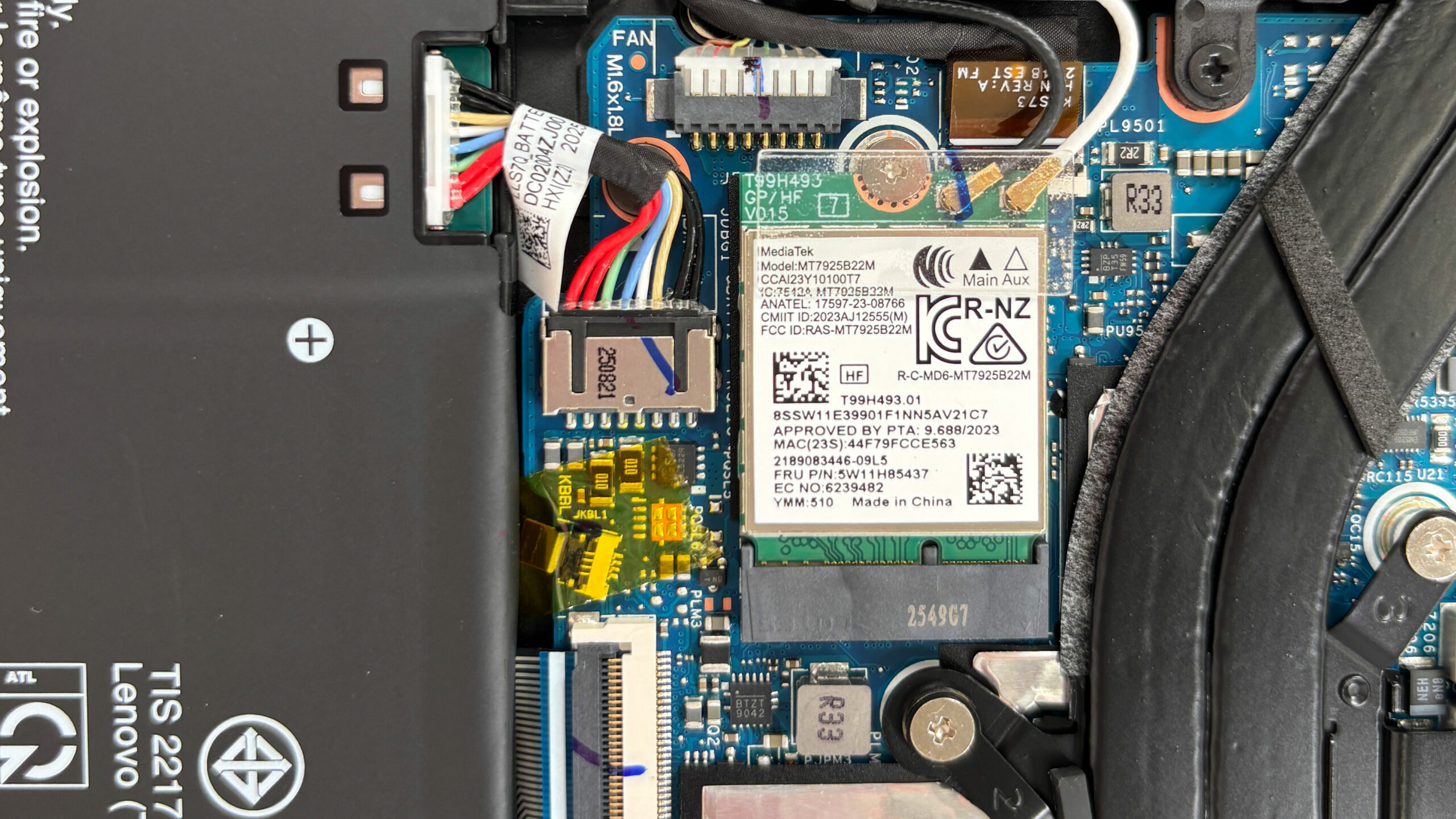
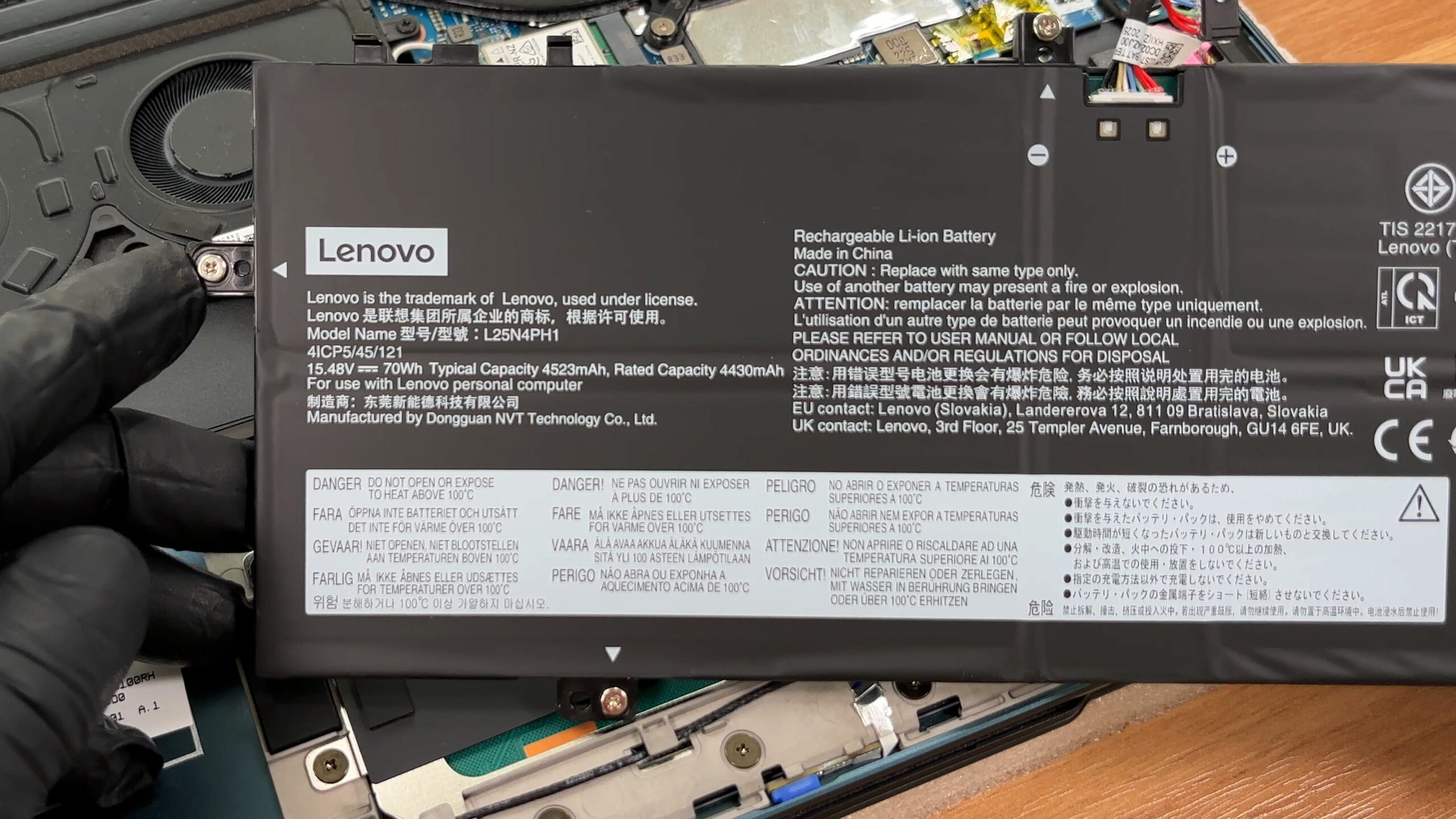
The battery is a 70Wh Lenovo L25N4PH1 pack. It is fixed with captive screws, which helps avoid losing them during removal. As usual, the battery connector should be disconnected before touching other internal components. The pack can resist slightly when lifted, so it is better to work slowly and evenly rather than bending it upward from one side.
With the battery removed, the touchpad area and several ribbon cables become visible. This is useful for servicing, but it also means extra care is needed during deeper disassembly. The large internal battery takes up most of the front half of the chassis, which is one of the reasons why there is no room for additional storage or memory slots.
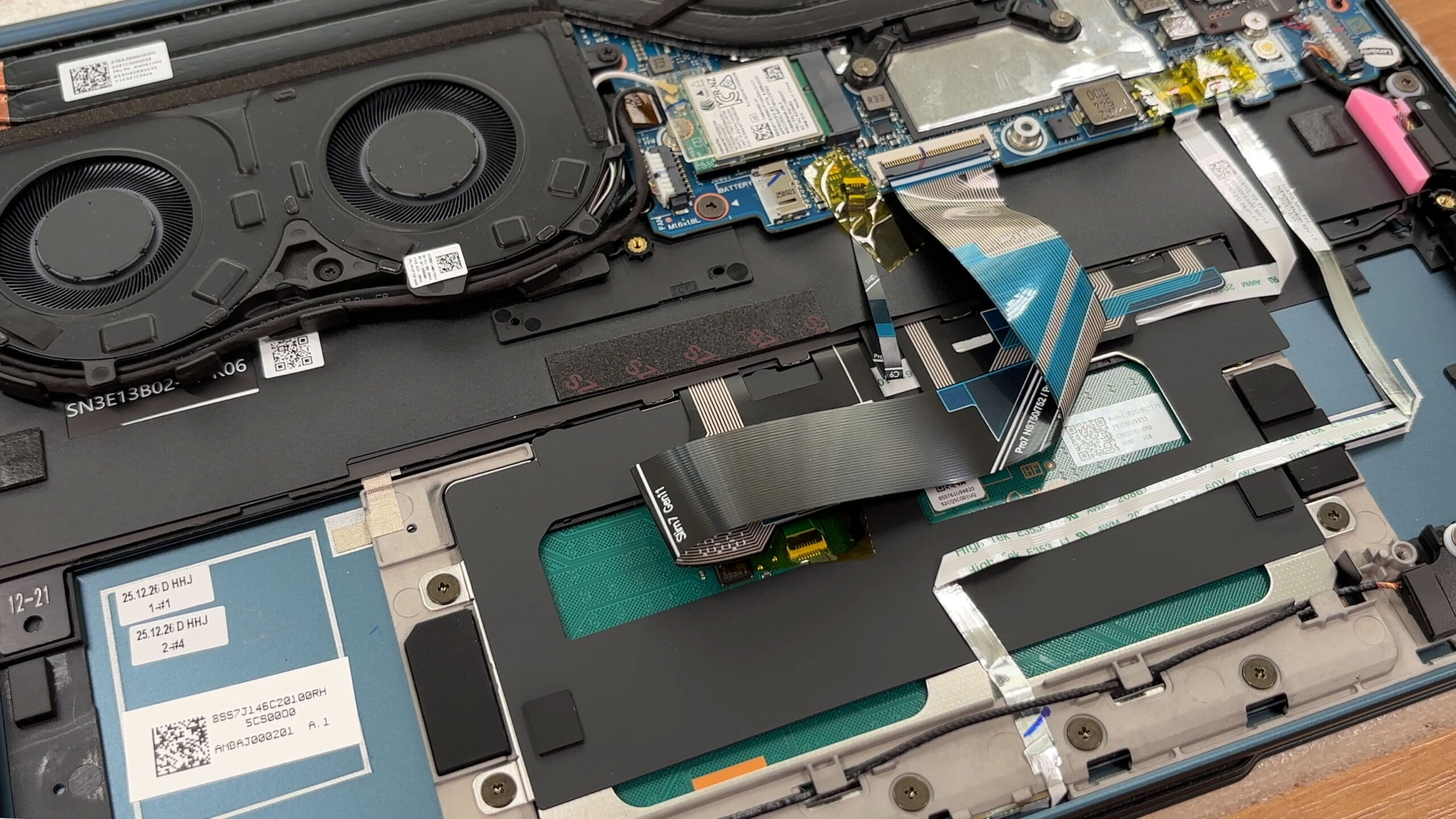
In terms of replaceable parts, the SSD, Wi-Fi card, battery, fans, and cooling assembly are accessible. The main upgrade limits are the soldered memory and the single M.2 2242 storage slot. Overall, maintenance is straightforward for cleaning and basic part replacement, but upgradeability is limited mainly to replacing the SSD and wireless card.
Verdict
The Lenovo Yoga Slim 7a (14″, Gen 11) is an excellent example of a modern premium ultraportable. It combines an extremely thin and light aluminum chassis with a sharp OLED display, very good input devices, and snappy everyday performance. It feels elegant, compact, and genuinely enjoyable to use, especially if your daily workflow revolves around office work, web browsing, content consumption, video calls, and light creative tasks.
However, the ultra-slim format comes with clear compromises. This is not a laptop designed for serious upgradeability or maximum sustained performance. Instead, Lenovo has prioritized portability, build quality, display quality, quiet operation, and immediate responsiveness. For the right user, that is a very attractive balance, but power users should understand the limitations before buying.
This is a laptop for users who value mobility, screen quality, premium feel, and quiet everyday operation more than upgradeability, port variety, or maximum sustained performance.
You can check the prices and configurations in our Specs System: https://laptopmedia.com/series/lenovo-yoga-slim-7a-14-gen-11/
✅ The Good
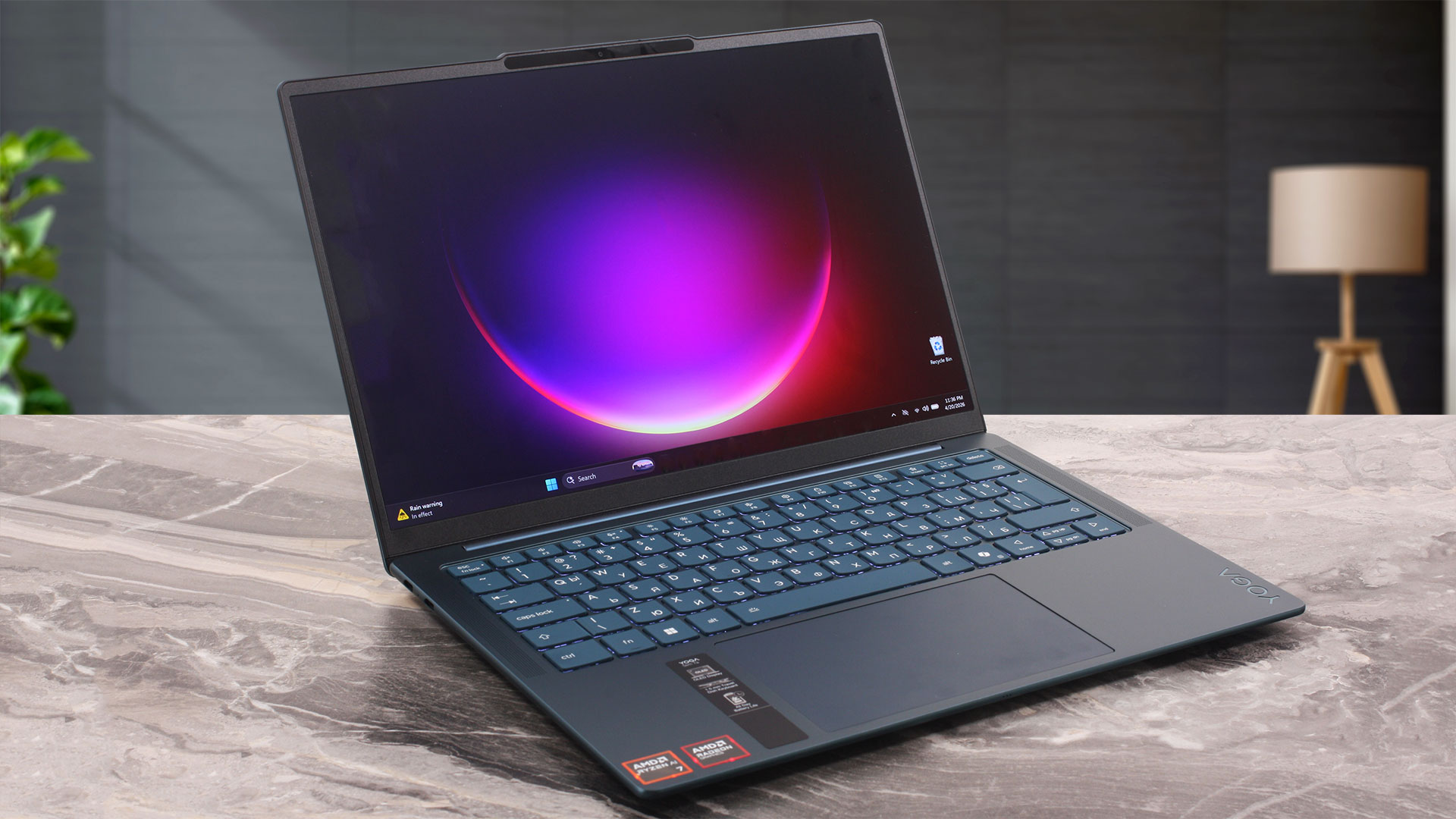 The absolute star of the show is the 14-inch 2.8K 120Hz OLED display. It delivers perfect blacks, 100% DCI-P3 coverage, excellent color accuracy straight out of the box, and a very sharp image thanks to the 242 PPI pixel density. This makes the laptop a great choice for media consumption, photo work, design tasks, and anyone who simply wants a premium-looking screen. The panel does use brightness pulsations, as expected from many OLED displays, but the amplitude is limited, so we find it relatively comfortable compared to more aggressive PWM implementations.
The build quality is also excellent. The all-aluminum Tidal Teal chassis feels rigid and premium, and the 1.15 kg starting weight makes the Yoga Slim 7a remarkably easy to carry around. The large glass touchpad is one of the best parts of the input setup, and the keyboard is comfortable despite the compact 14-inch footprint. The machine is also very strong in short, bursty workloads, where it feels fast and responsive while staying cool and quiet.
Connectivity is modern, too. The dual USB4 ports, the additional USB-C port on the opposite side, and Wi-Fi 7 support make the laptop well-suited for a modern docking-based setup.
❌ The Bad
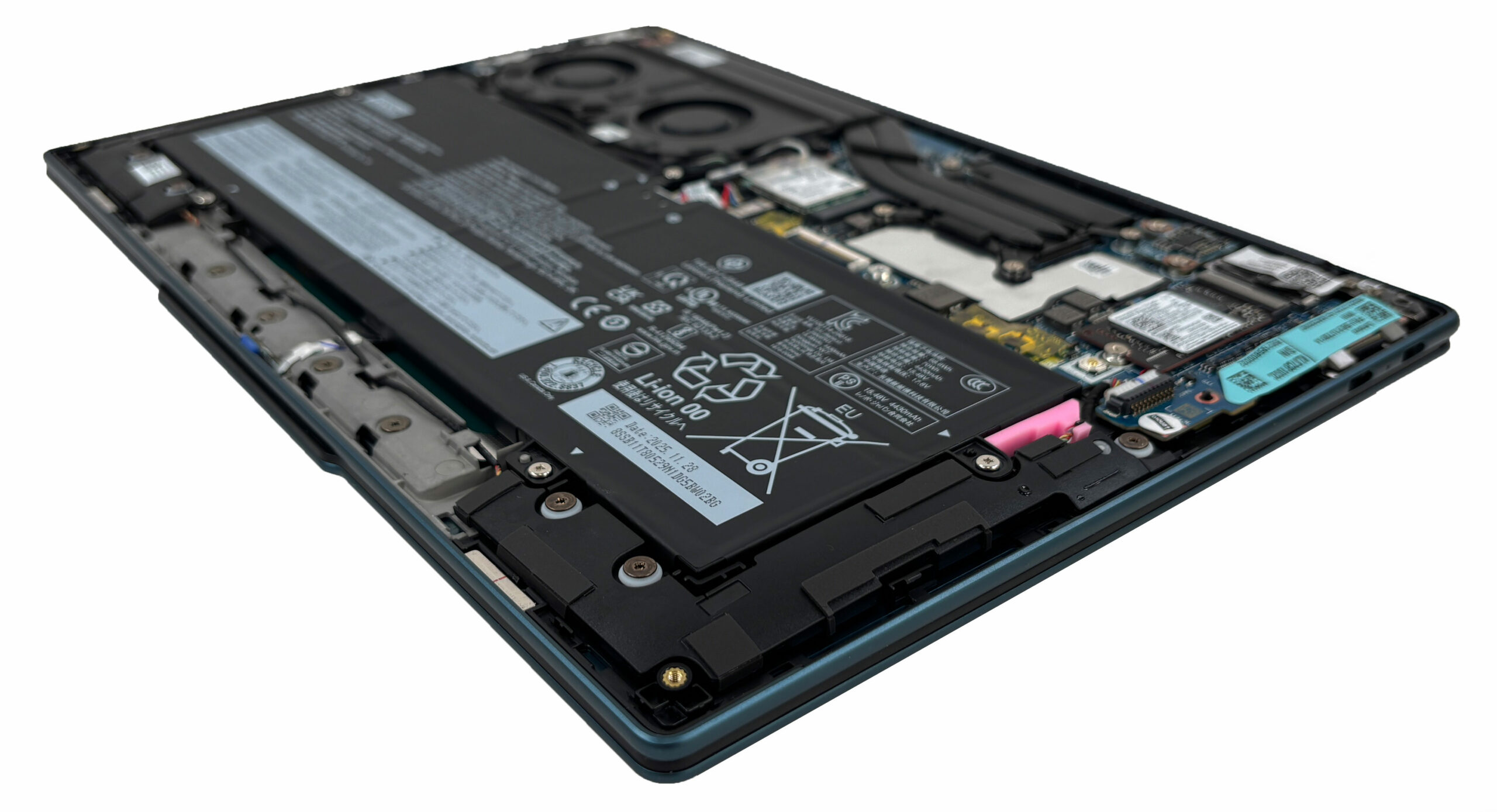 The biggest long-term drawback is the completely soldered RAM. You are locked into the memory configuration you buy, so the 32GB version is the safer choice if you plan to keep the laptop for several years. Storage upgrade options are also limited. There is only one M.2 slot, and it uses the shorter 2242 SSD format, so upgrading means replacing the existing drive rather than adding a second one.
Sustained performance is another expected compromise. The Yoga Slim 7a is excellent in short workloads, but under long 100% CPU loads it settles at a more conservative power level to keep temperatures and noise under control. This makes sense for a 13.9 mm ultraportable, but thicker laptops with the same or similar processors can be faster in rendering, compiling, and other long-duration tasks.
The OLED screen is beautiful, but it is also highly reflective. With a measured reflectance of 129 GU, bright rooms and windows can become distracting. The port selection is also very minimalistic: there is no USB-A, HDMI, card reader, Ethernet, or 3.5mm audio jack, so many users will need a USB-C hub or docking station.
🆚 The Competitors
Compared to the Dell XPS 13 9350 (detailed review), the Yoga Slim 7a feels more conventional and arguably more practical. It offers a larger touchpad, a more familiar keyboard layout with physical function keys, and a very premium build. However, the Dell has a clear advantage in battery life and its Intel Arc Graphics 140V is much faster than the Radeon 840M in synthetic GPU tests.
Against the Lenovo ThinkPad X9-14 Gen 1 (detailed review), the Yoga Slim 7a cannot match the ThinkPad’s exceptional battery endurance. The ThinkPad is the better choice for users who spend long hours away from the charger, while the Yoga Slim 7a counters with its sleeker consumer design, excellent OLED panel, and very low weight.
Overall, the Lenovo Yoga Slim 7a (14″, Gen 11) is a great choice for users who want a stylish, ultra-light OLED laptop with premium construction and fast everyday responsiveness. It is less suitable for users who need lots of ports, strong sustained performance, easy upgrades, or long battery life above everything else.
Pros
- Excellent 2.8K 120Hz OLED display with accurate colors
- 100% sRGB and 100% DCI-P3 color coverage
- Premium, rigid, and very light aluminum chassis
- Very snappy responsiveness in short everyday workloads
- Cool and quiet behavior under light and moderate use
- Massive, smooth glass touchpad
- Modern connectivity with dual USB4 and Wi-Fi 7
- Replaceable Wi-Fi card
Cons
- Soldered RAM with no upgrade option
- Only one M.2 2242 SSD slot
- Lower sustained performance than thicker laptops with similar CPUs
- Highly reflective glossy OLED screen
- No USB-A, HDMI, card reader, Ethernet, or 3.5mm audio jack
- Integrated Radeon 840M is suitable only for light gaming
 Author: Simeon NikolovEditor-in-Chief at LaptopMedia.com with 20+ years of experience in testing and analyzing laptops and mobile devices.
 Author: eng. Kroum NikolovHead of Engineering at LaptopMedia.com, inventor and innovator with 40+ years of experience in electronics and high technology.

![[August 2026] Amazon USA: Top 10 Best-Selling Laptops – Apple MacBook Neo Dominates the Market with Massive Unit Sales!](https://laptopmedia.com/wp-content/uploads/2026/09/Best-Selling-Laptops-COM-Top-10-400x225.jpg)
![[August 2026] Amazon USA: Top 10 Best-Selling Gaming Laptops – ASUS ROG Strix G16 Dominates the Market with Massive Unit Sales](https://laptopmedia.com/wp-content/uploads/2026/09/Best-Selling-Gaming-Laptops-COM-Top-10-400x225.jpg)
![[July 2026] Amazon Global: Top 10 Best-Selling Laptops – Apple MacBook Neo Dominates the Charts as Budget and Premium Notebooks Split the Market](https://laptopmedia.com/wp-content/uploads/2026/08/Best-Selling-Laptops-GLOBAL-Top-10-400x225.jpg)
![[July 2026] Amazon Global: Top 10 Best-Selling Gaming Laptops – ASUS ROG Strix G16 Dominates the Global Market with Record-Breaking Unit Sales](https://laptopmedia.com/wp-content/uploads/2026/08/Best-Selling-Gaming-Laptops-GLOBAL-Top-10-400x225.jpg)
![[July 2026] Global Ranking of Best-Selling Laptop GPUs on Amazon – RTX 5060 Dominate Premium, Intel Still Rules Budget](https://laptopmedia.com/wp-content/uploads/2026/08/Best-Selling-GPUs-GLOBAL-Top-10-400x225.jpg)