ASUS Vivobook Pro 15 OLED (N6506) – Un écran de qualité, une batterie durable, des compromis mineurs
Design et construction
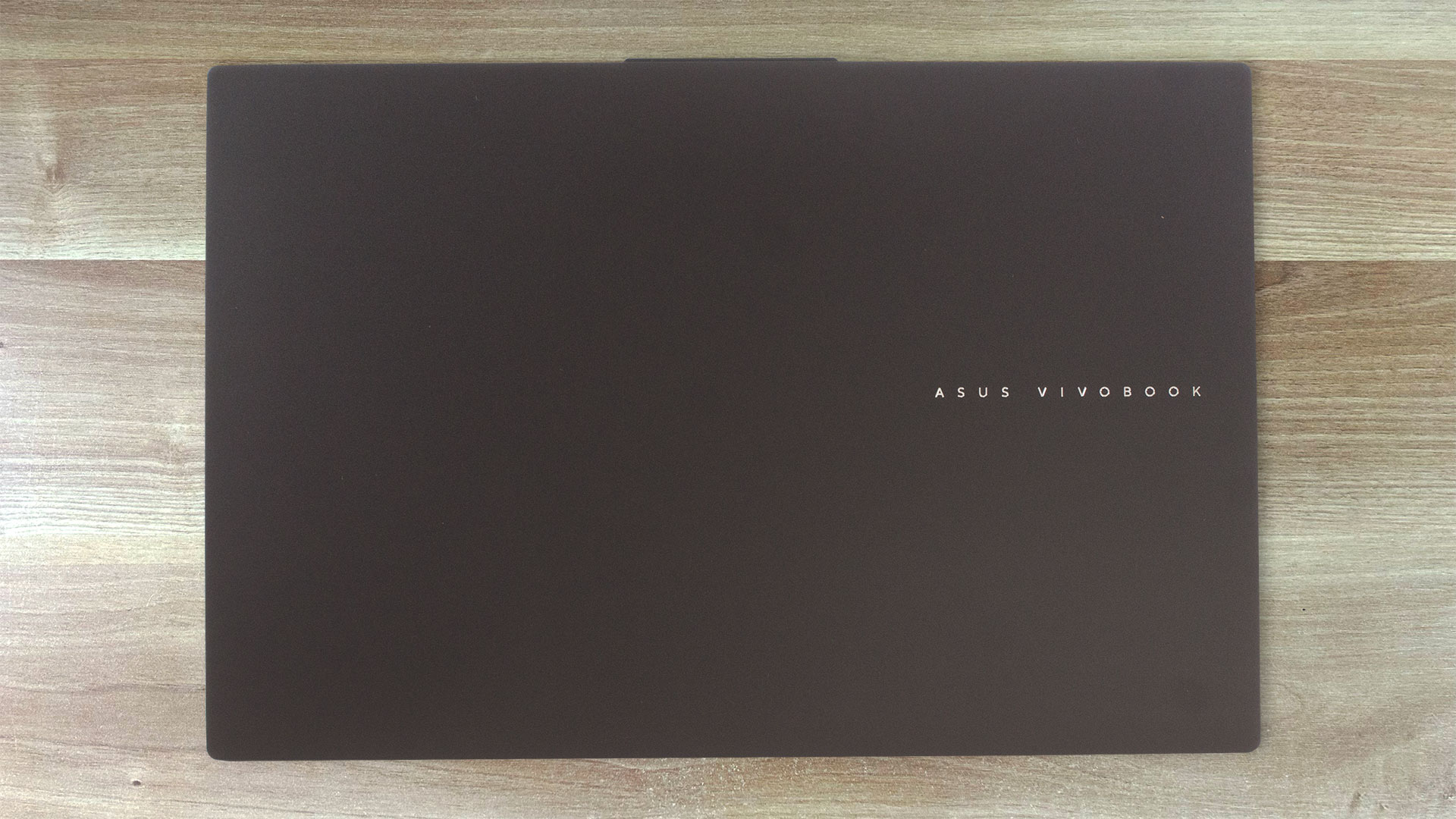
Le design de l’ASUS Vivobook Pro 15 OLED (N6506) est propre et non intrusif, surtout en couleur Earl Grey. La base est stable, nous avons repéré une légère courbure sous les touches fléchées, mais ce n’est pas grave. Le couvercle est en métal et il fléchit un peu plus que d’habitude lorsque nous essayons de le tordre. Les dimensions sont bonnes pour un 15 pouces avec du matériel puissant – 1,80 kg et 19,9 mm d’épaisseur.
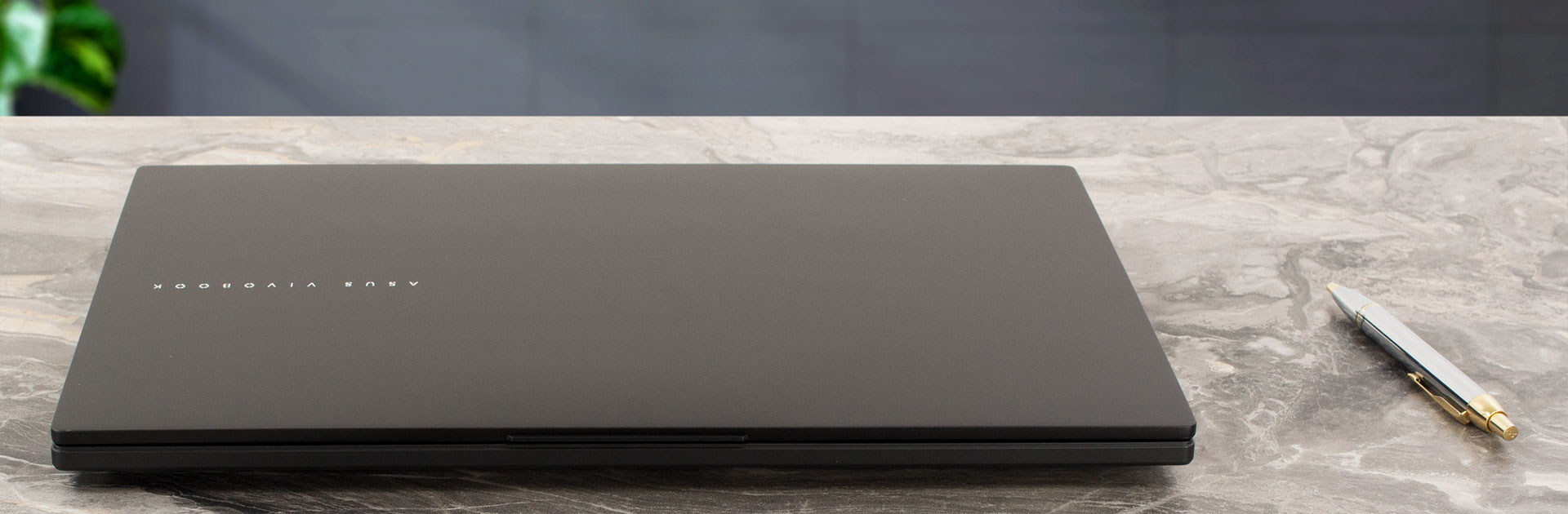
Le couvercle s’ouvre sans effort d’une seule main et le mécanisme de charnière est agréablement souple. Toutefois, l’appareil est un peu instable lors des changements d’angle.
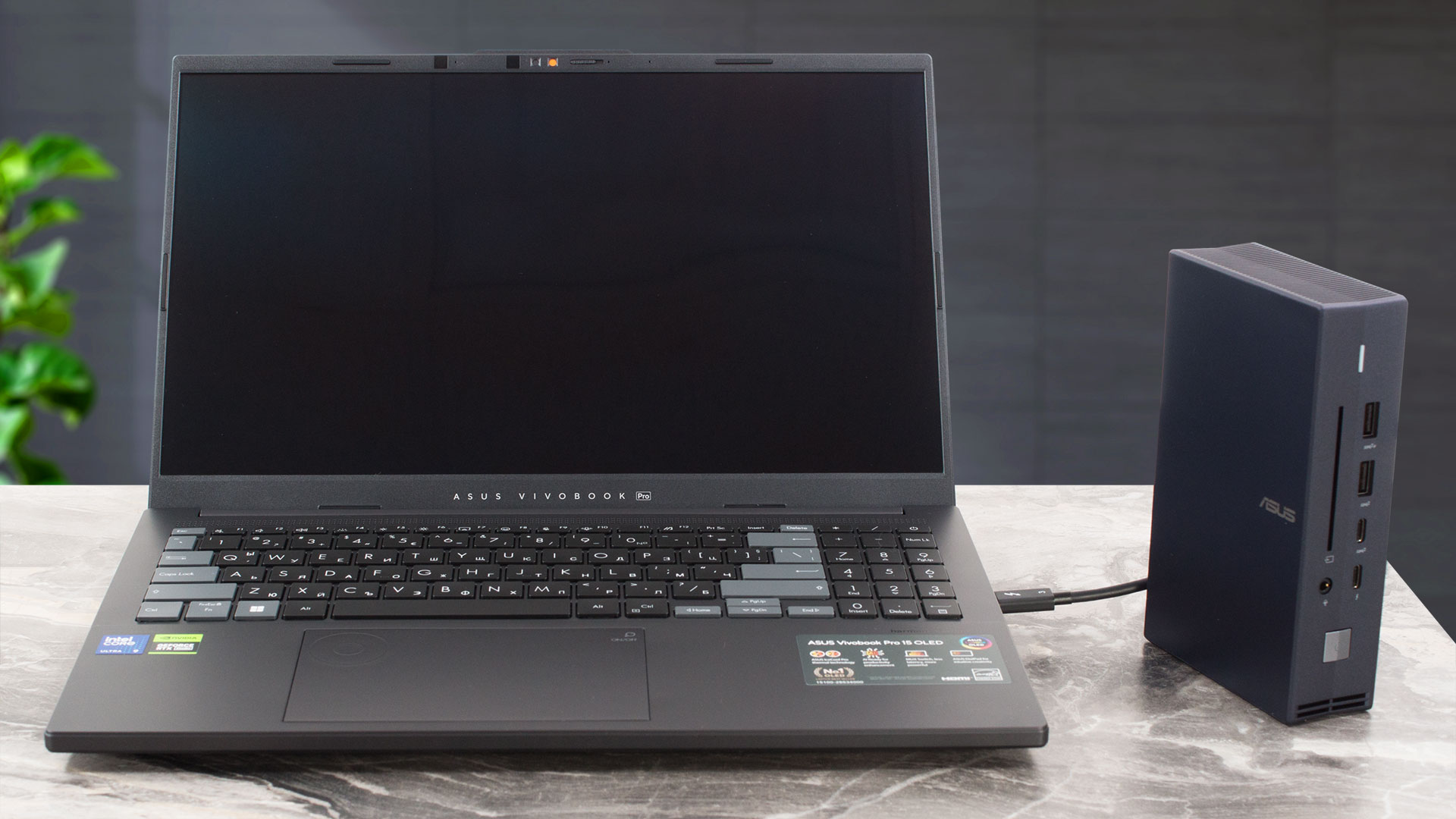
L’écran OLED au rapport de contraste infini est entouré de fines bordures. D’accord, celle du bas est un peu plus épaisse que les trois autres.

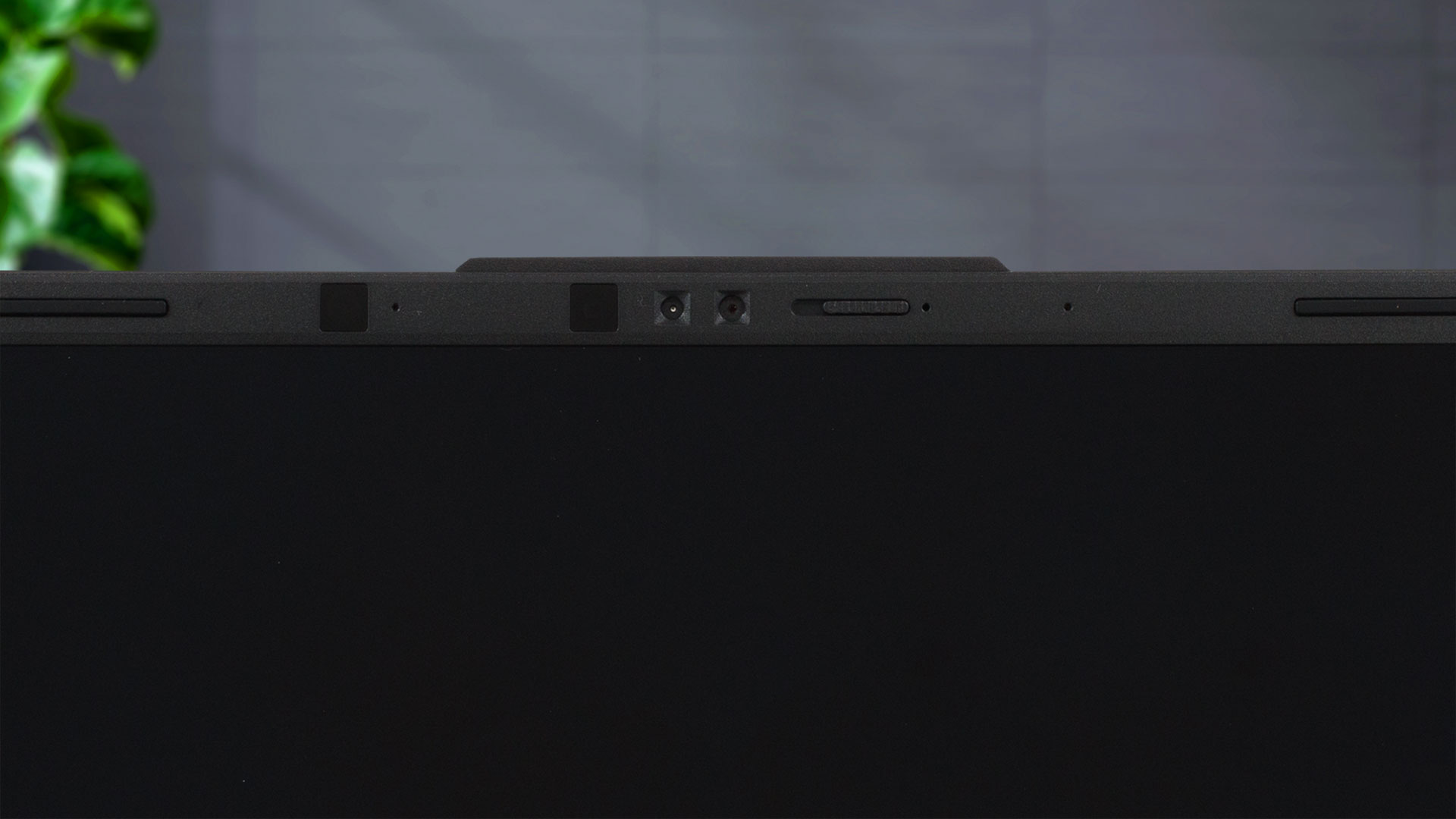
Le cadre supérieur abrite une caméra Web infrarouge de 5 mégapixels avec obturateur de confidentialité et annulation du bruit par l’IA.
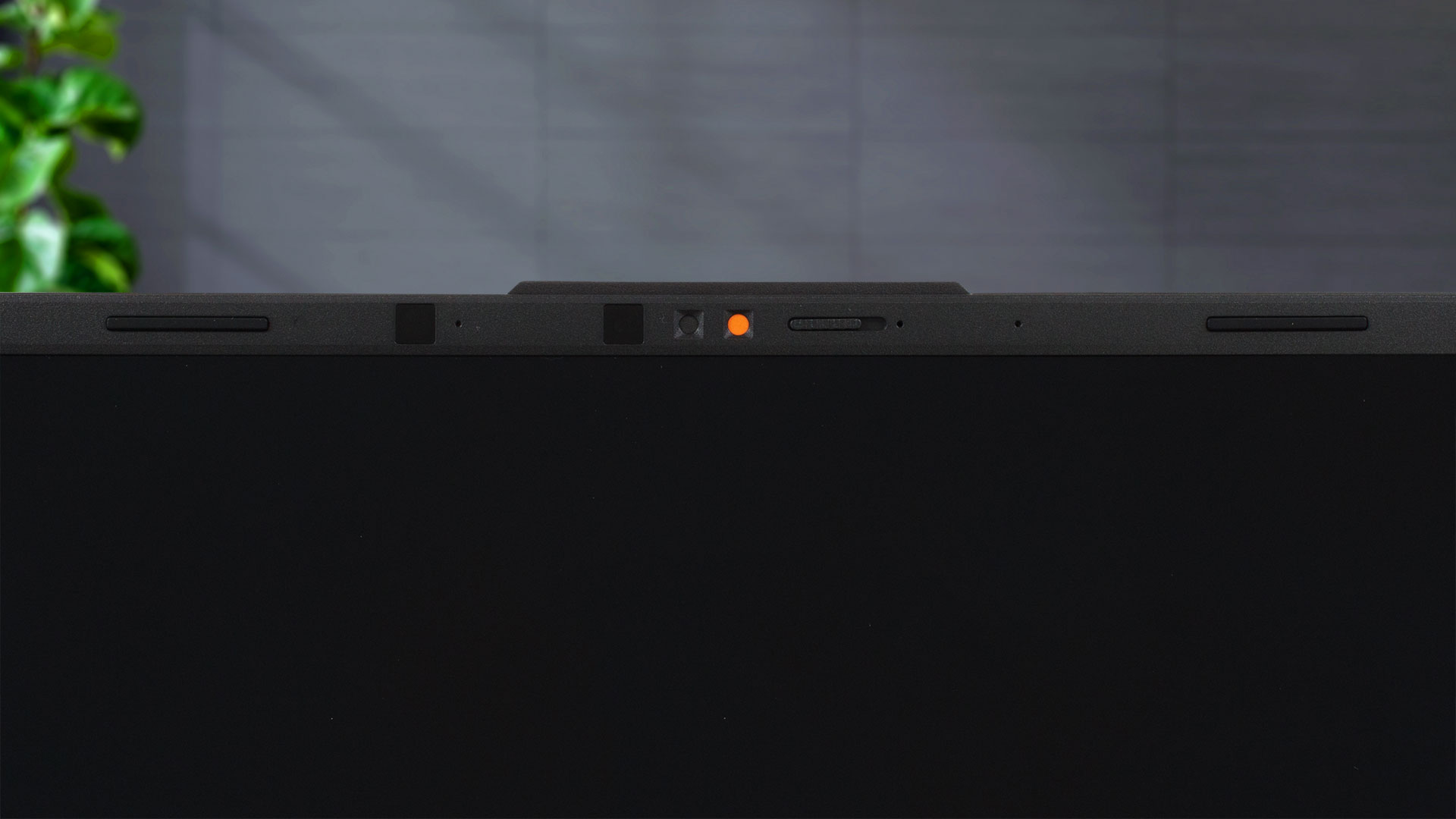
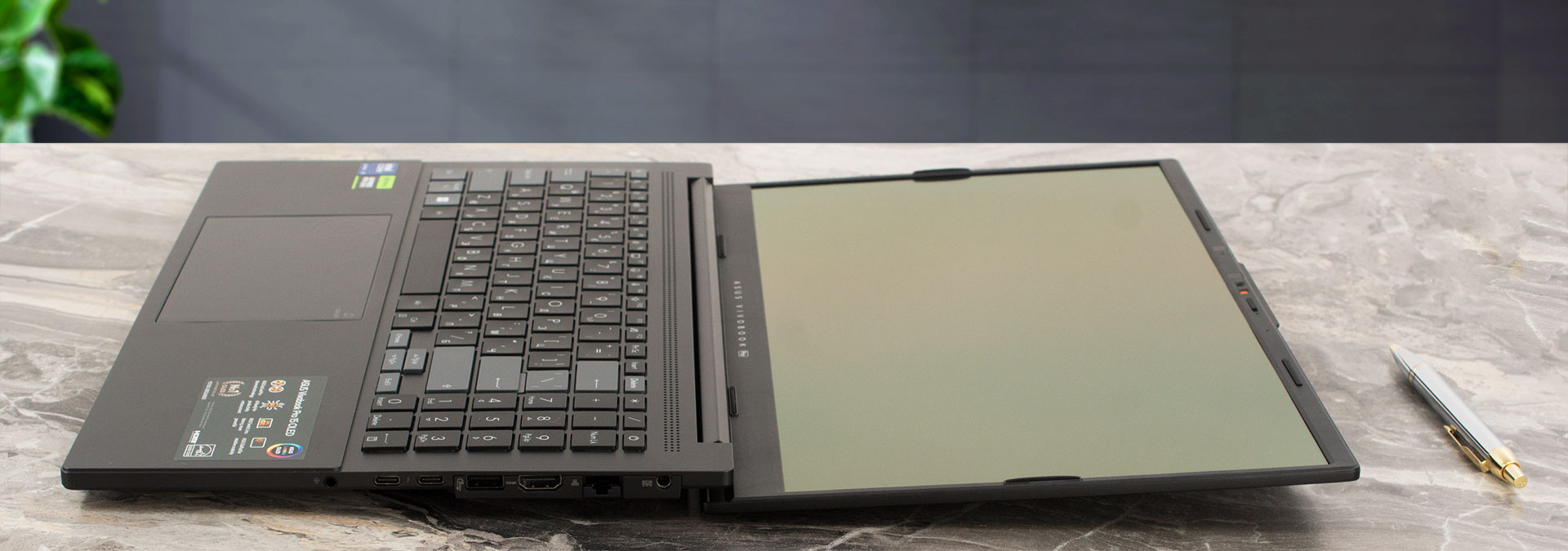
L’ordinateur portable peut être posé presque entièrement à plat sur une surface plane. La base est assez haute par rapport au sol, ce qui influe positivement sur la solution de refroidissement. Le clavier rétroéclairé ErgoSense à deux tons est confortable pour le travail grâce à la longue course des touches et à la sensation de clic. De plus, la carte dispose d’une section NumPad et les capuchons de touches offrent un fonctionnement silencieux.
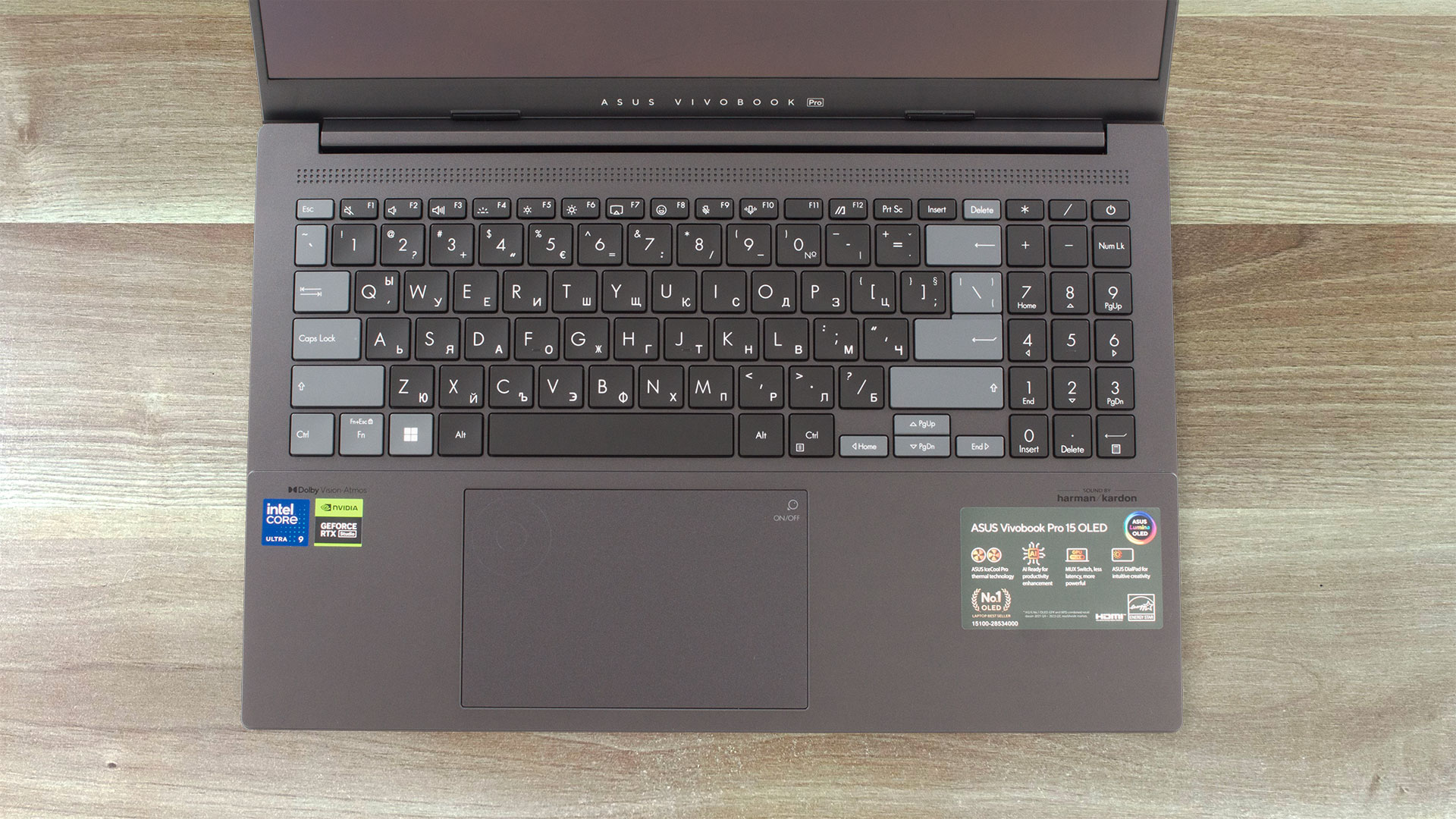
Je n’ai rien à redire sur le pavé tactile. Il est de taille décente, fluide et précis. Le DialPad intégré est visible dans le coin supérieur gauche du pavé. Cette fonction est très utile pour les applications créatives.
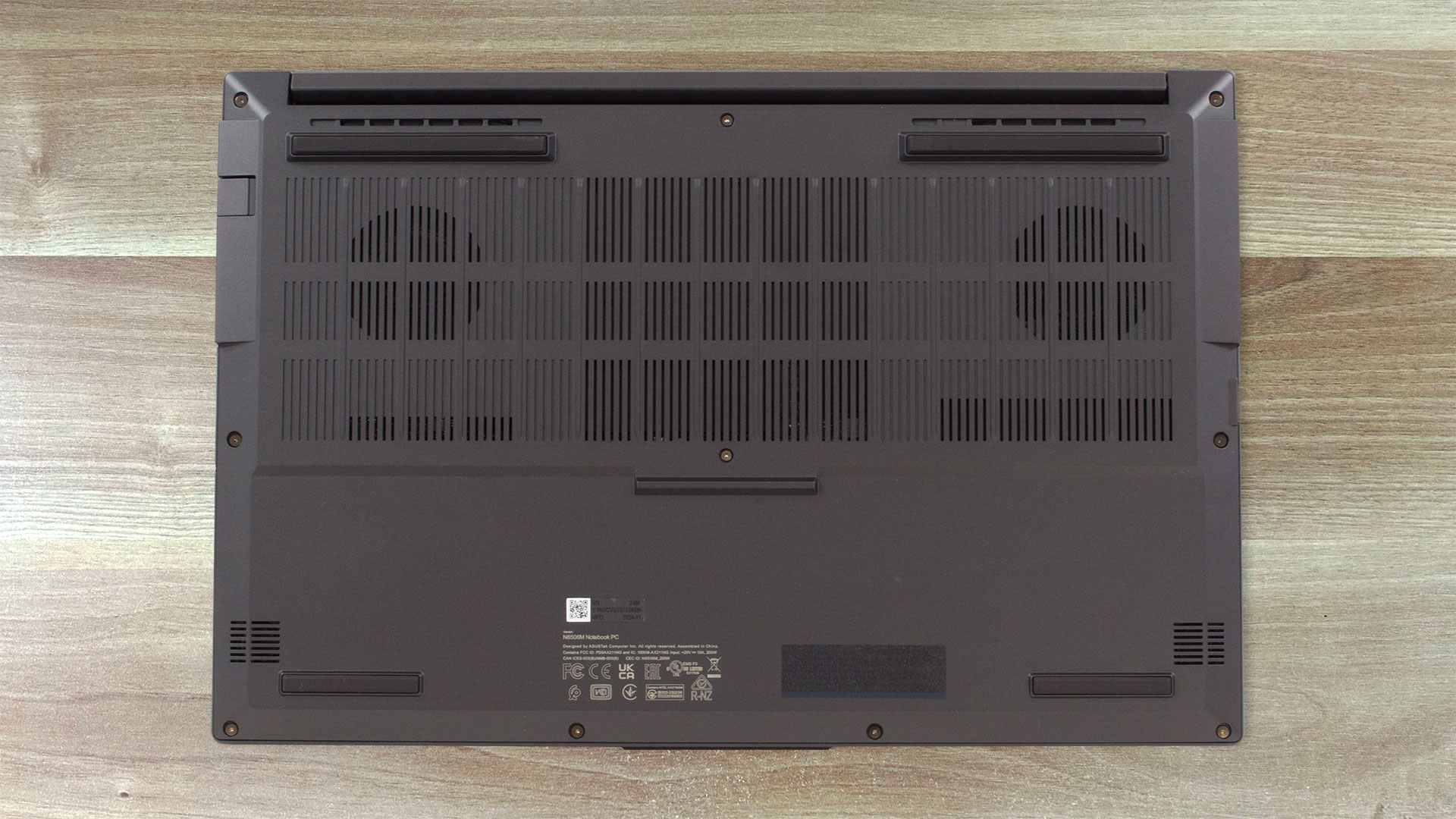
La plaque inférieure comporte quatre pieds en caoutchouc sur les côtés et un pied en plastique au centre, ainsi que deux découpes pour les haut-parleurs. L’air chaud est acheminé par trois évents – deux à l’arrière et un à gauche. Une petite quantité d’air chaud atteint l’écran en cas de charge lourde, car le couvercle de la charnière se trouve juste devant les évents arrière.
Ports
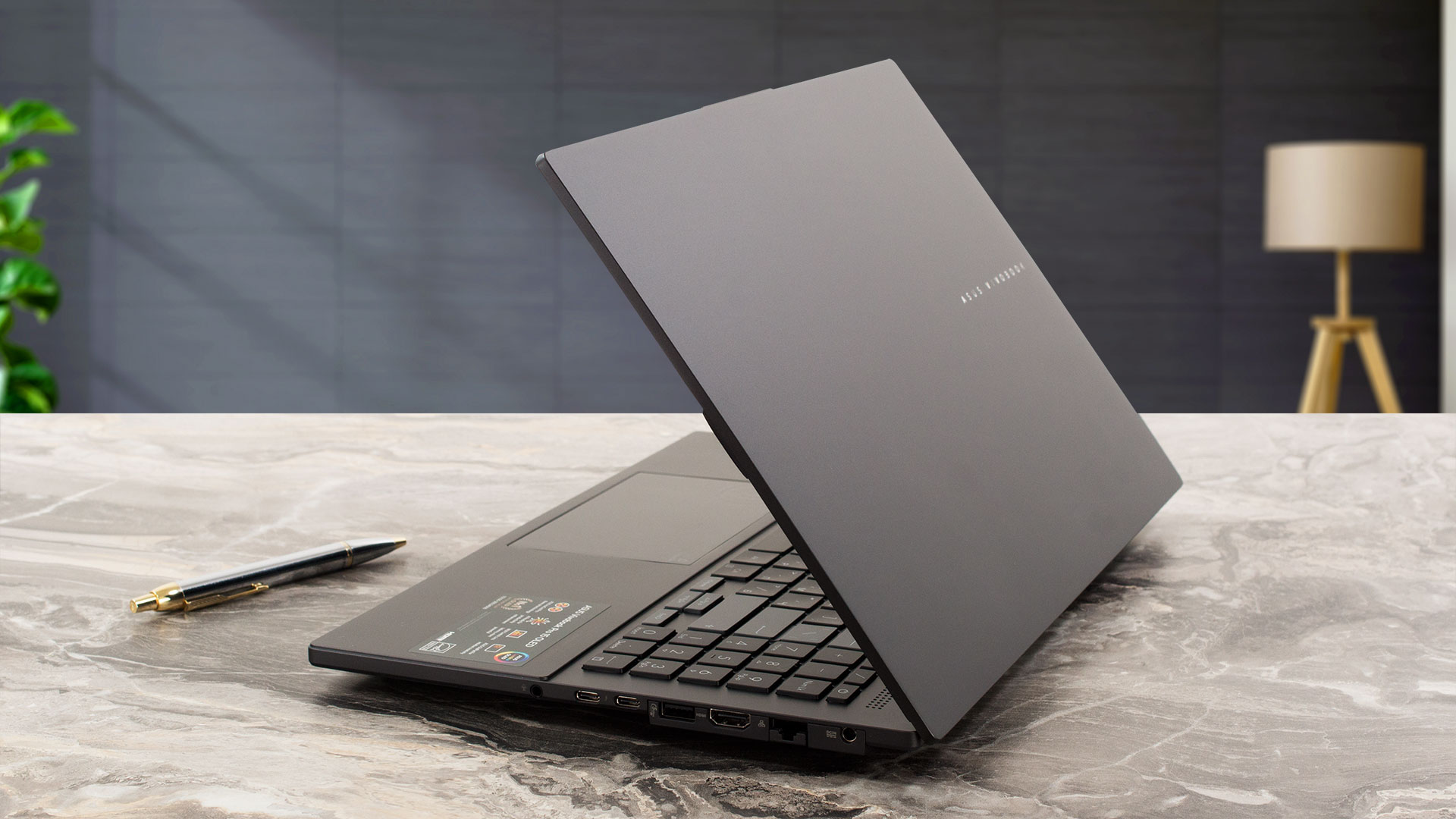
Sur la gauche, vous disposez d’un port USB Type-A 3.2 (Gen. 1) et d’un lecteur de cartes SD 4.0. La majorité des connecteurs se trouvent sur le côté droit : une prise d’alimentation, un LAN, un HDMI 2.1 TMDS, un port USB Type-A 3.2 (Gen. 1), un port Thunderbolt 4, un port USB Type-C 3.2 (Gen. 2) et une prise combinée audio. Les deux Type-C prennent en charge les fonctions Power Delivery et DisplayPort.


 Author: Nikolay Palaozov
 Author: eng. Kroum NikolovHead of Engineering at LaptopMedia.com, inventor and innovator with 40+ years of experience in electronics and high technology.

![[Juillet 2026] Classement mondial des cartes graphiques pour ordinateurs portables les plus vendues sur Amazon : la RTX 5060 domine le segment haut de gamme, tandis qu’Intel reste en tête du segment économique](https://laptopmedia.com/wp-content/uploads/2026/08/Best-Selling-GPUs-GLOBAL-Top-10-400x225.jpg)
![[Juillet 2026] Classement mondial des processeurs d’ordinateurs portables les plus vendus sur Amazon : Apple domine le segment haut de gamme, Intel conserve la première place au classement général](https://laptopmedia.com/wp-content/uploads/2026/08/Best-Selling-CPUs-GLOBAL-Top-10-400x225.jpg)
![[July 2026] Amazon Canada: Top 10 Best-Selling Laptops – Apple MacBook Neo Dominates the Market to Claim the #1 Spot](https://laptopmedia.com/wp-content/uploads/2026/08/Best-Selling-Laptops-CA-Top-10-2-400x225.jpg)
![[July 2026] Best-Selling Laptop Brands on Amazon Japan – HP and Lenovo Dominate Units and Revenue Amid Fierce Competition](https://laptopmedia.com/wp-content/uploads/2026/08/CO.JP-Best-Brands-2-400x225.jpg)
![[July 2026] Amazon Italy: Top 10 Best-Selling Laptops – Apple MacBook Neo Claims the #1 Spot Amid Budget-Friendly Dominance](https://laptopmedia.com/wp-content/uploads/2026/08/Best-Selling-Laptops-IT-Top-10-400x225.jpg)

Does the laptop support the installing of a 32GB stick of memory in the sodimm slot or intalling it results in the system not booting up, not recognize the memory or behave strangely? On the zephyrus g14 2022 Asus claims a maximum memory of 32GB but I knew of people reaching 48GB with no problem changing the 16GB stick with a 32GB one.
Thank you in advance.
According to ASUS, the maximum amount of RAM supported is 24GB. However, since the CPU can support up to 96GB, the Vivobook Pro 15 OLED likely wouldn’t have issues running with up to 56GB of DDR5-5600MHz RAM (8GB soldered + 48GB in the SODIMM slot).
Yes. But 32GB is a 2 rank memory, so the frequency will be lowered to 4800 and the total speed will be around 40GB/s.
Thank you for such a comprehensive review. I would really appreciate if you could incorporate the fan noise for a normal workload – web browsing, movies, etc. This is often left out in favor of fan noise at full load, which is seldom relevant.
How would you categorize the fan noise under normal office work, please?
It’s basically silent, occasionally there is some fan noise but it’s very quiet. Does get very loud sometimes during intensive workloads, but silent mode should do the trick in most cases.
Is the GPU eco mode disabled when the laptop is connected via the power brick? 🙁
With my current asus laptop I usually always have eco mode on even when connected to power to keep my laptop cool (often have it my lap or chest)
For the display what is the max brightness in HDR (small window and full screen)? Also what is the colour accuracy like in HDR?
Measuring color accuracy in HDR mode is more complex and influenced by various external and internal factors, which is why our current measurements are limited to SDR mode. Additionally, manufacturers typically prioritize more attractive picture over color accuracy in HDR. If you aim for the most realistic colors, working in SDR mode is the better option.
Regarding the size of the white window when measuring screen brightness, we’ve conducted tests with both 10% fill and fullscreen fill. In both cases, the max brightness was similar, just below 400 nits.
Did you really get 25 hours of browser time or is that a mistake?
I have this laptop at idle on minimum brightness consumes about 9 watts, that is about 8 hours of idle time with no applications running.
Any activity increases the consumption and the actual browser time is about 6 hours.
But I have a second module 32 GB, maybe the reason is this, or the drivers are not installed correctly. Installed different Windows builds several times, different drivers – nothing helps.
Hi,
I have this laptop, and with browsing on chrome, I only get 2-3 hours. Could you tell me what settings you are using?
Even though they said 25 hours, 6 hours is still better than the 3 hours that I’m getting.
I’m on silent mode, and it’s fairly new. I usually just use google docs and some other websites like amazon, makerworld, but nothing super power intensive.
Thank you!!
Just use Optimal Operation mode to disconnect Nvidia from the battery (this is crucial) and Standard or Quiet cooler mode.
If only 2-3 hours in this case as well,
1. Look in Task Manager to see which applications are loading the CPU and/or graphics card
2. Install drivers for your laptop from the official Asus website, because other, even newer drivers not from Asus may not work correctly.
Thank you so much for your helpful response! I looked in the Task Manager and found that a few background apps like steam were using a lot of resources, so I just closed out of them, and with a few chrome tabs, I also let MyASUS auto install some drivers, and I’m getting much better battery life! (Nvidia was already disconnected and quiet mode was on before.)
Thanks for your help! I’m getting around an estimate of around 5 hours, seeing that I lost around 50 percent after 3 hours.
Hi,
Please tell me how you got it to 25 hours of battery life!!! I can’t even get 3 hours on this thing and I’m just doing basic web browsing with google docs!
Anything helps!!
Thank you so much!