How to open Lenovo ThinkBook 14 Gen 7 (Intel) – disassembly and upgrade options
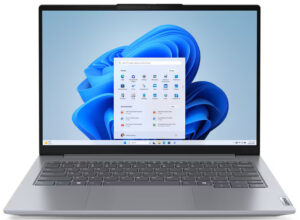
Opening the Device
Hint: Ensure the laptop is powered off and disconnected from any power source before starting.
- Undo the nine Phillips-head screws on the bottom of the laptop. Note that the screws on the top and middle are captive.
- Use a lever tool to pop the rear around the hinge cover.
- Begin by popping the back in the zones close to the top two edges and the central screw.
- Once these areas are released, the rear side should be fully pried open.
- Pry the remaining panel starting from the sides to fully remove the back cover.
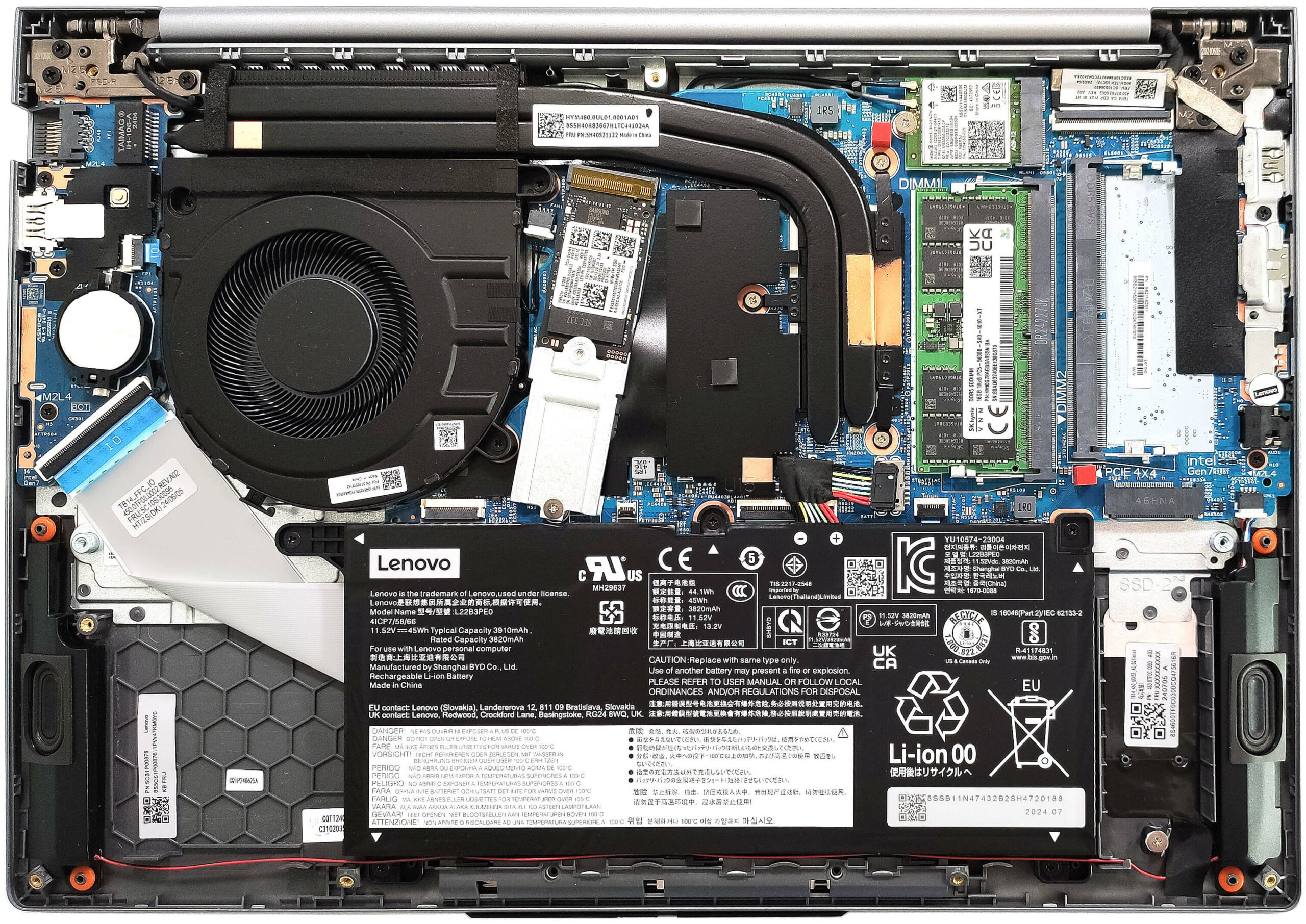
More info: The inside of the bottom plate houses a cooling pad for the WWAN slot, enhancing thermal management and supporting optional 5G or 4G LTE connectivity.
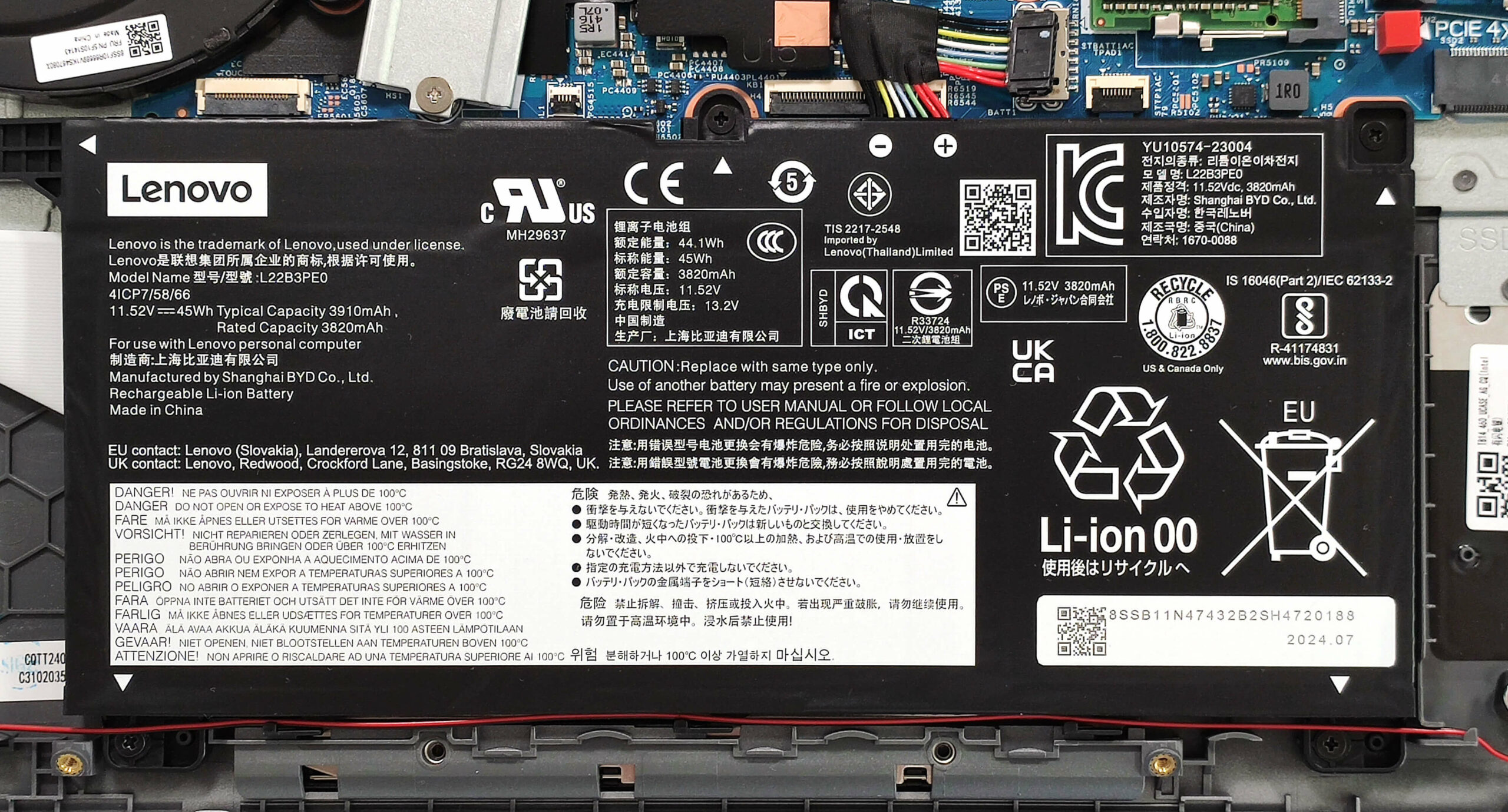
Battery Removal
Caution: Handle the battery with care to avoid damage or injury.
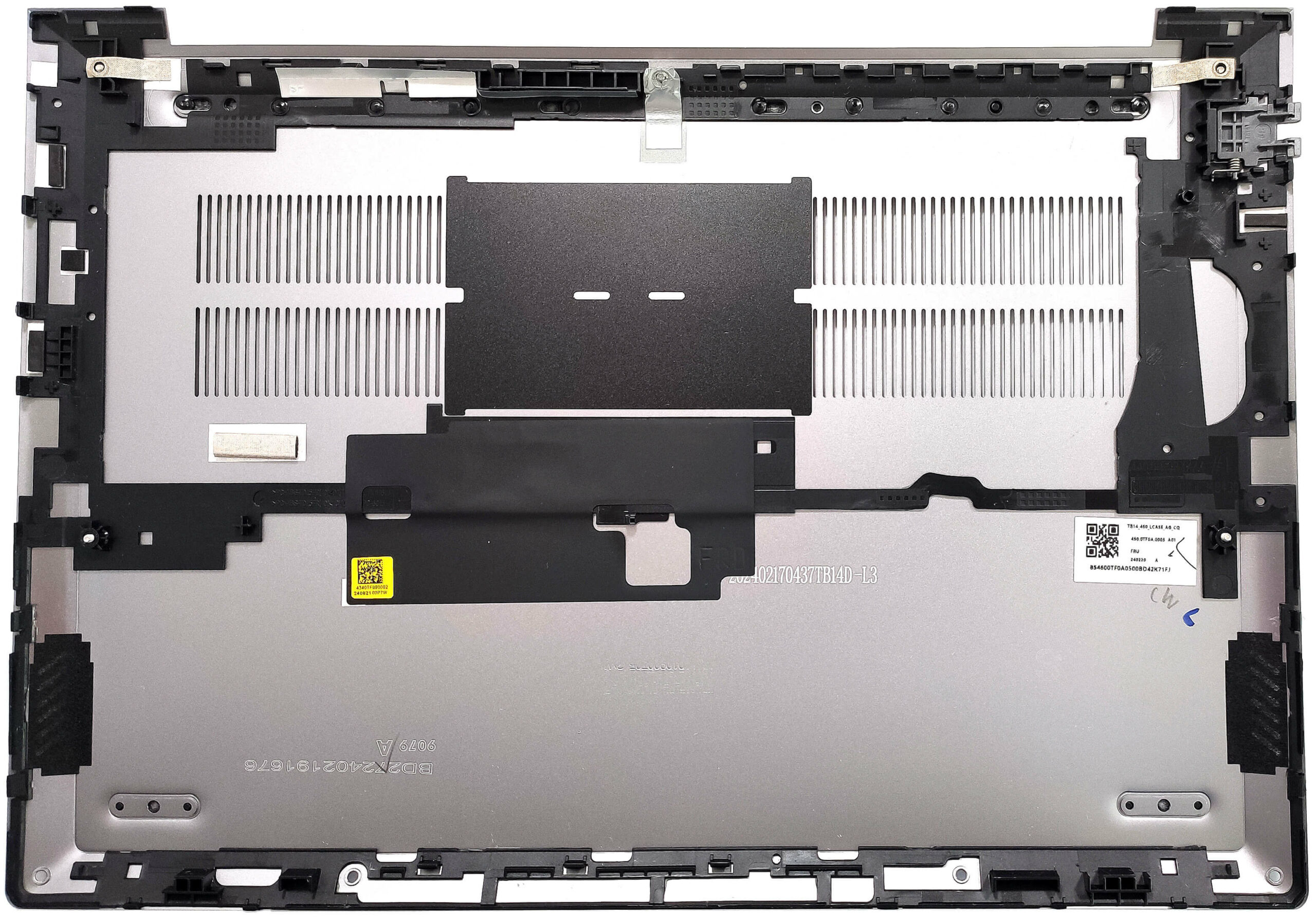
- Unplug the battery connector from the motherboard.
- Undo the five Phillips-head screws that secure the 45Wh battery to the chassis.
- Carefully untangle the speaker cables around the battery housing.
- Detach the battery from the laptop.
More info: The notebook is equipped with a base 45Wh battery variant. For longer autonomous life, the optional 60Wh model is available, providing around 12 hours of video playback.
You can buy compatible batteries here: Buy from Amazon.com (#CommissionsEarned)
Memory Upgrade and Wi-Fi Card Placement
Hint: Ensure you are grounded to prevent static discharge when handling memory modules.
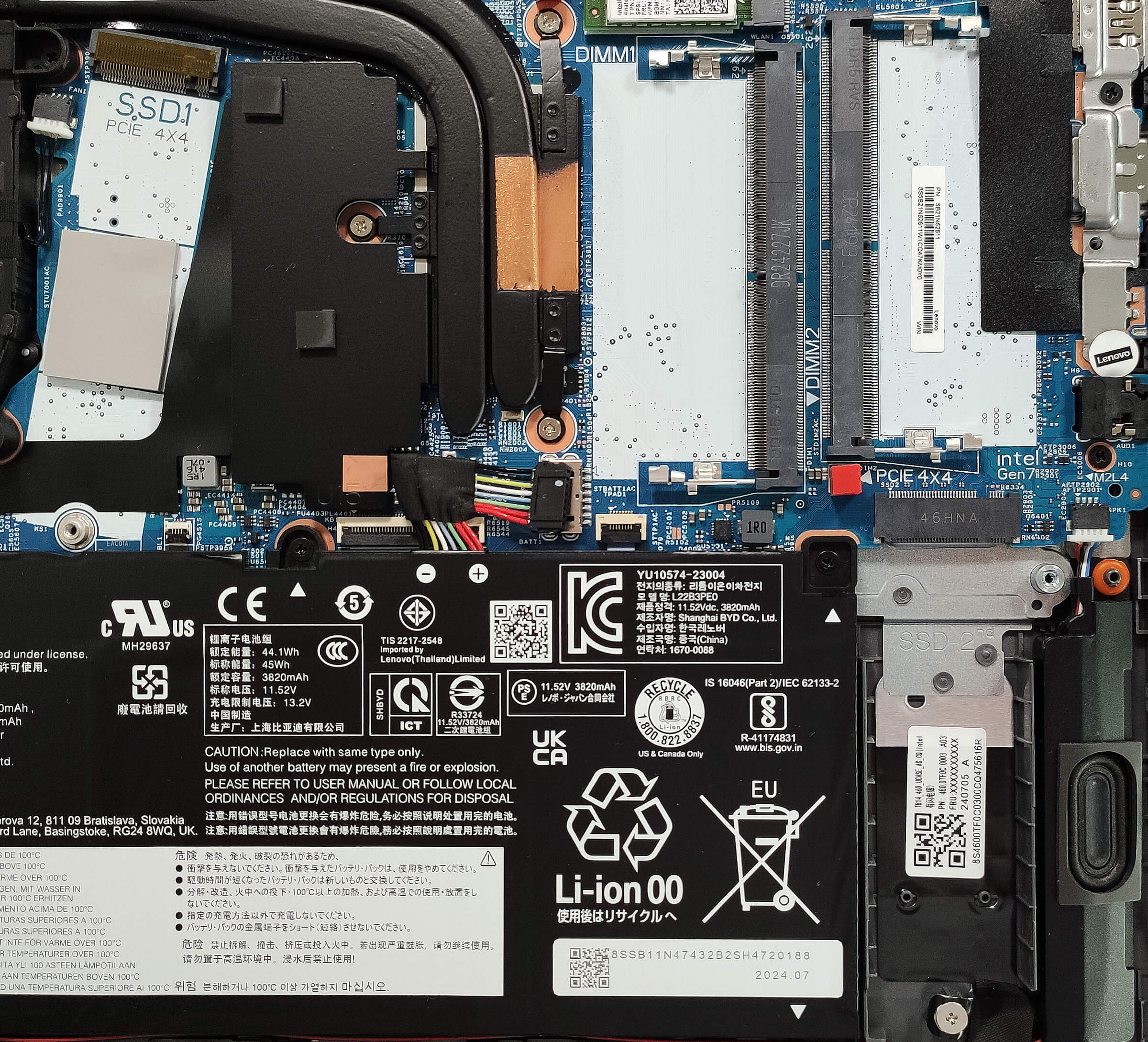
- Peel the Mylar heat shield over the memory section to access the RAM slots.
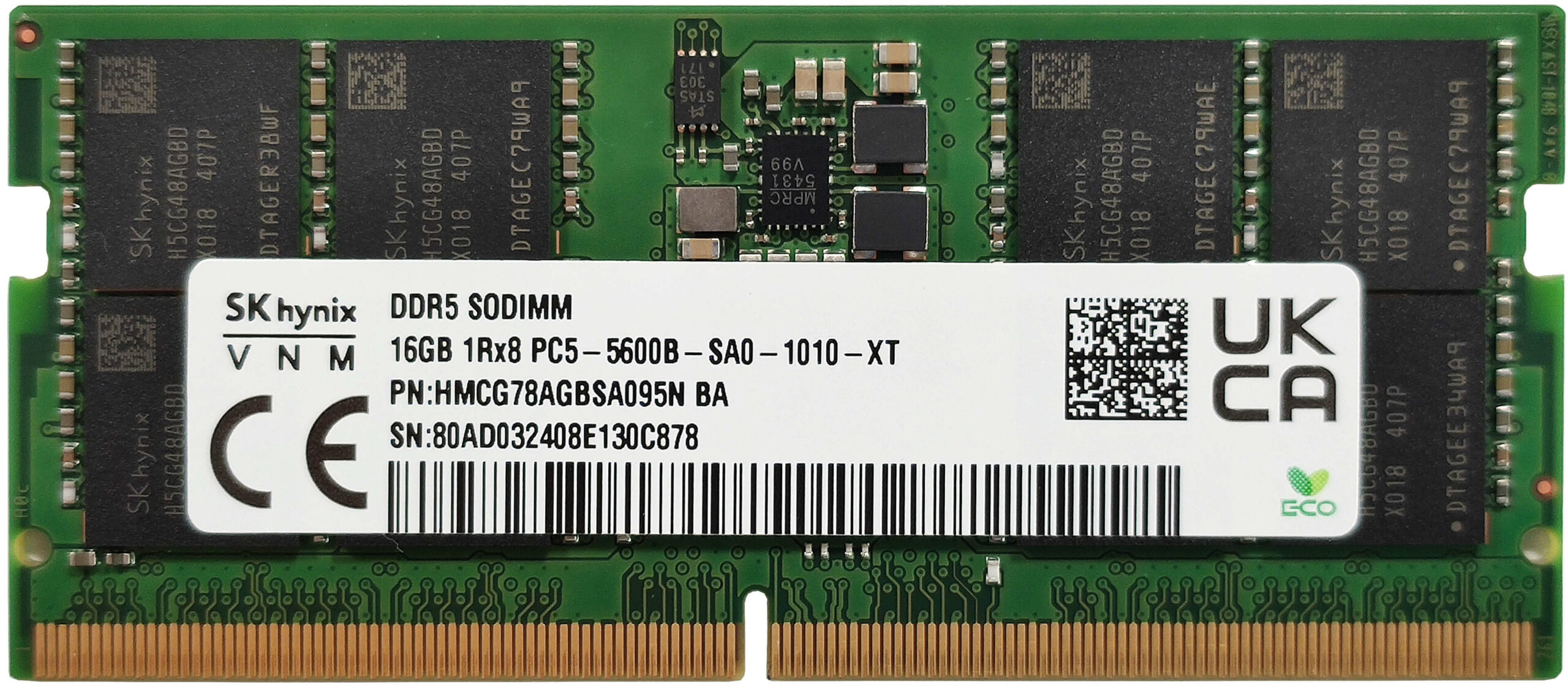
- Insert the new DDR5-5600MHz RAM modules into the SODIMM slots, ensuring they are properly seated.
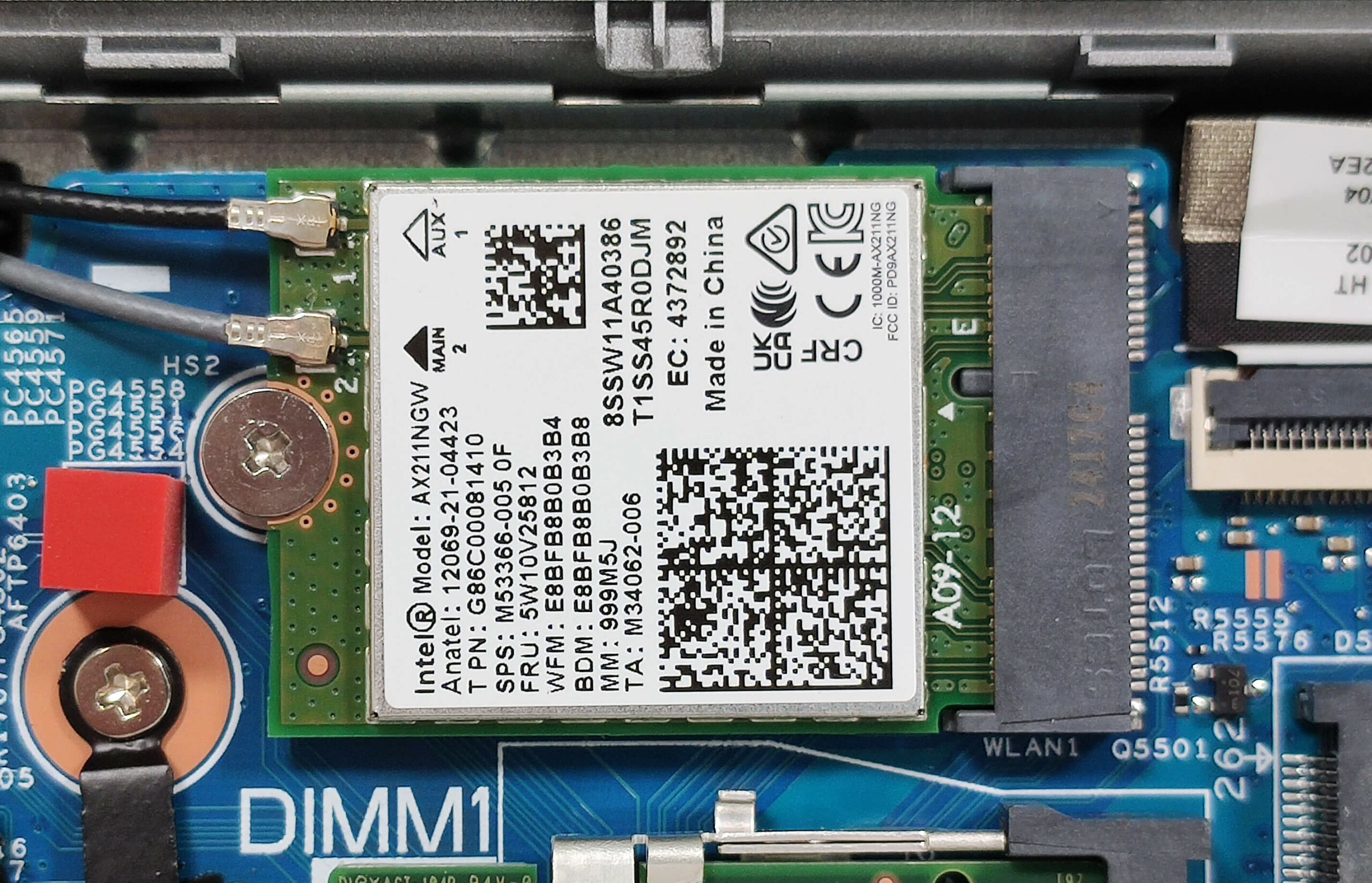
- The Wi-Fi card is placed in the top right section of the motherboard.
More info: According to Lenovo, the two SODIMMs can handle up to 64GB of DDR5-5600MHz memory in dual-channel mode. Although the CPU can support up to 96GB, it is recommended to adhere to the manufacturer’s specified limit for optimal performance.
You can buy compatible RAM modules here: Buy from Amazon.com (#CommissionsEarned)
Storage Upgrade
Hint: Handle the SSD with care to avoid any data loss or damage during installation.
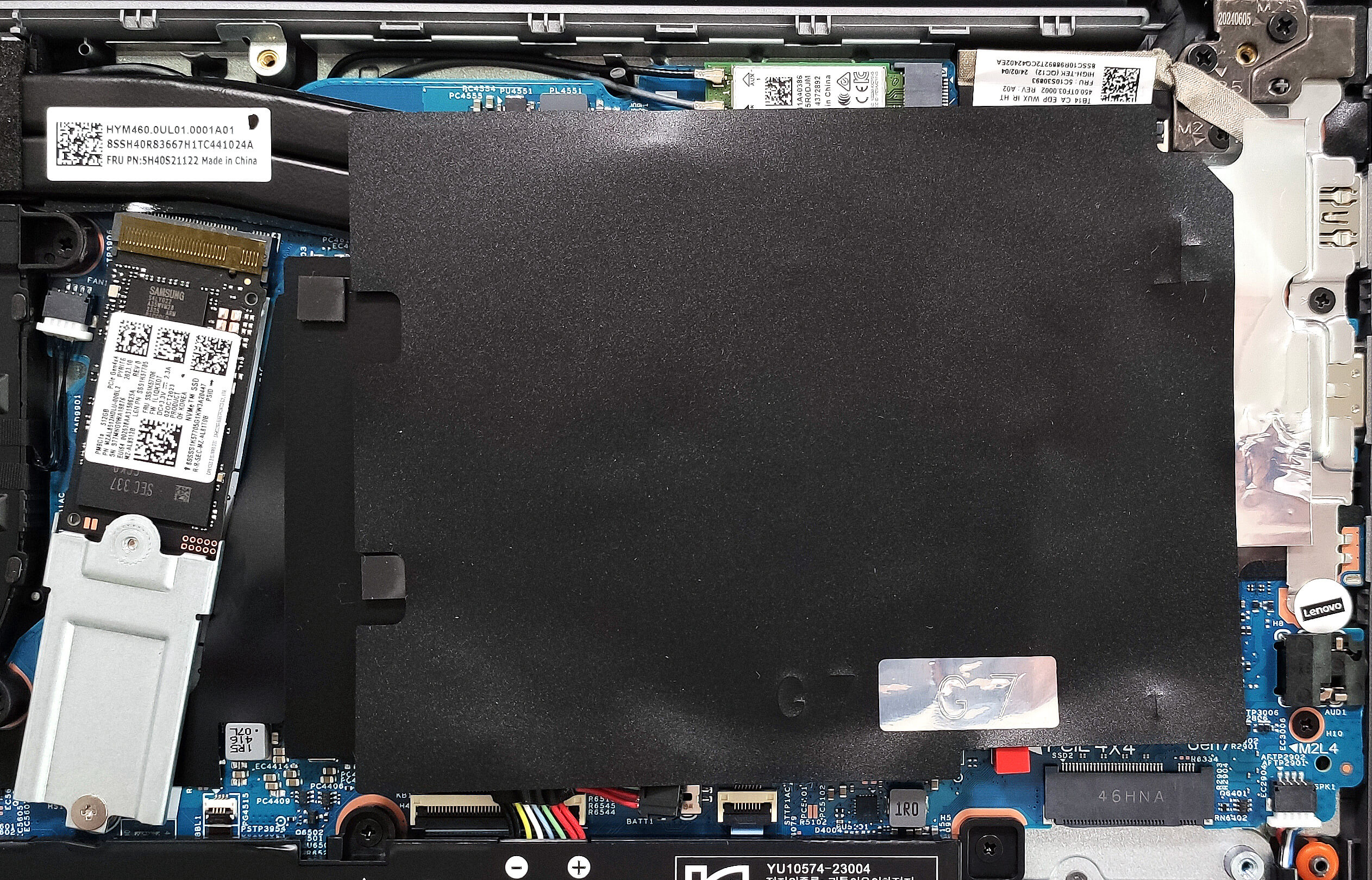
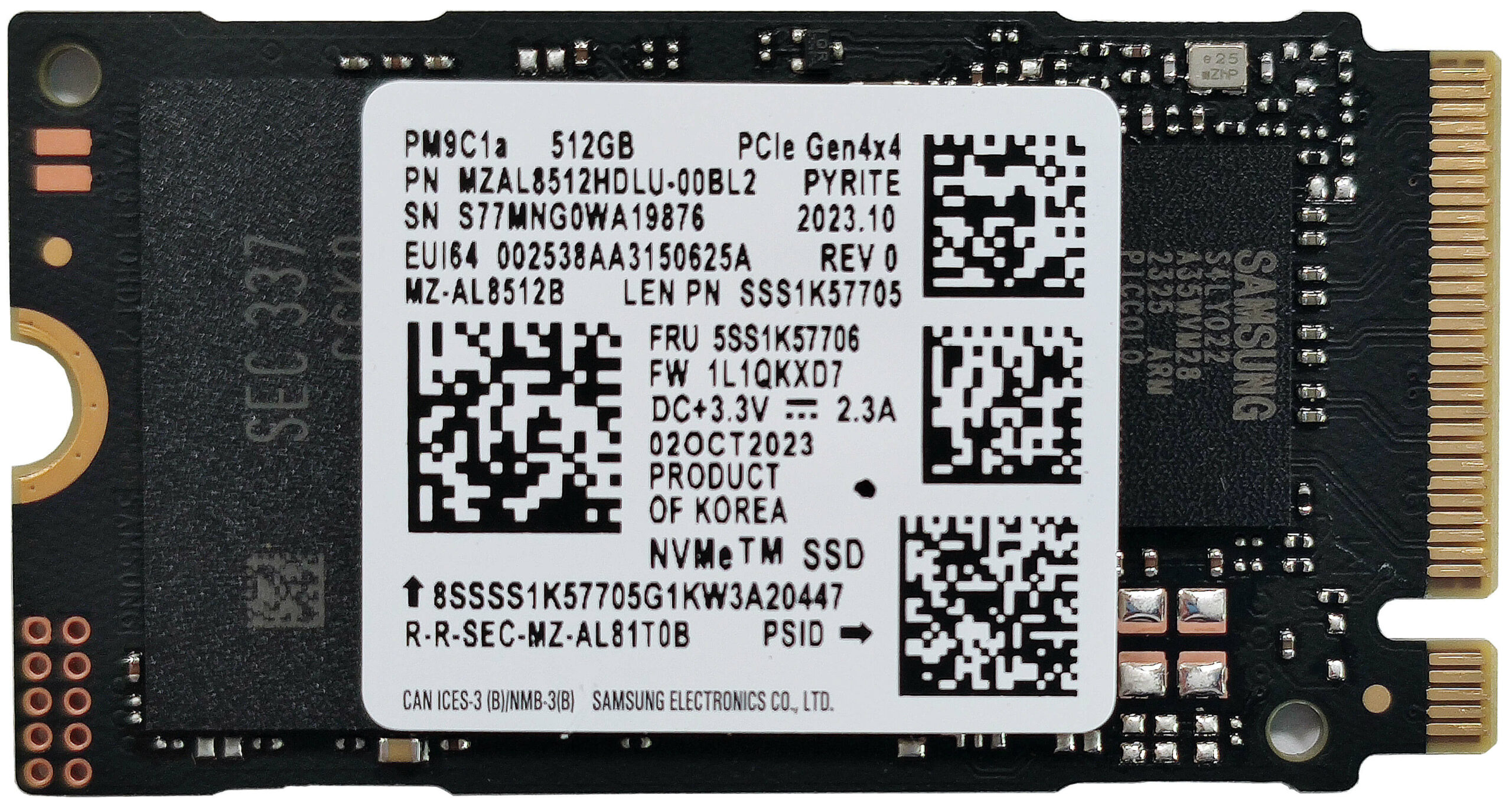
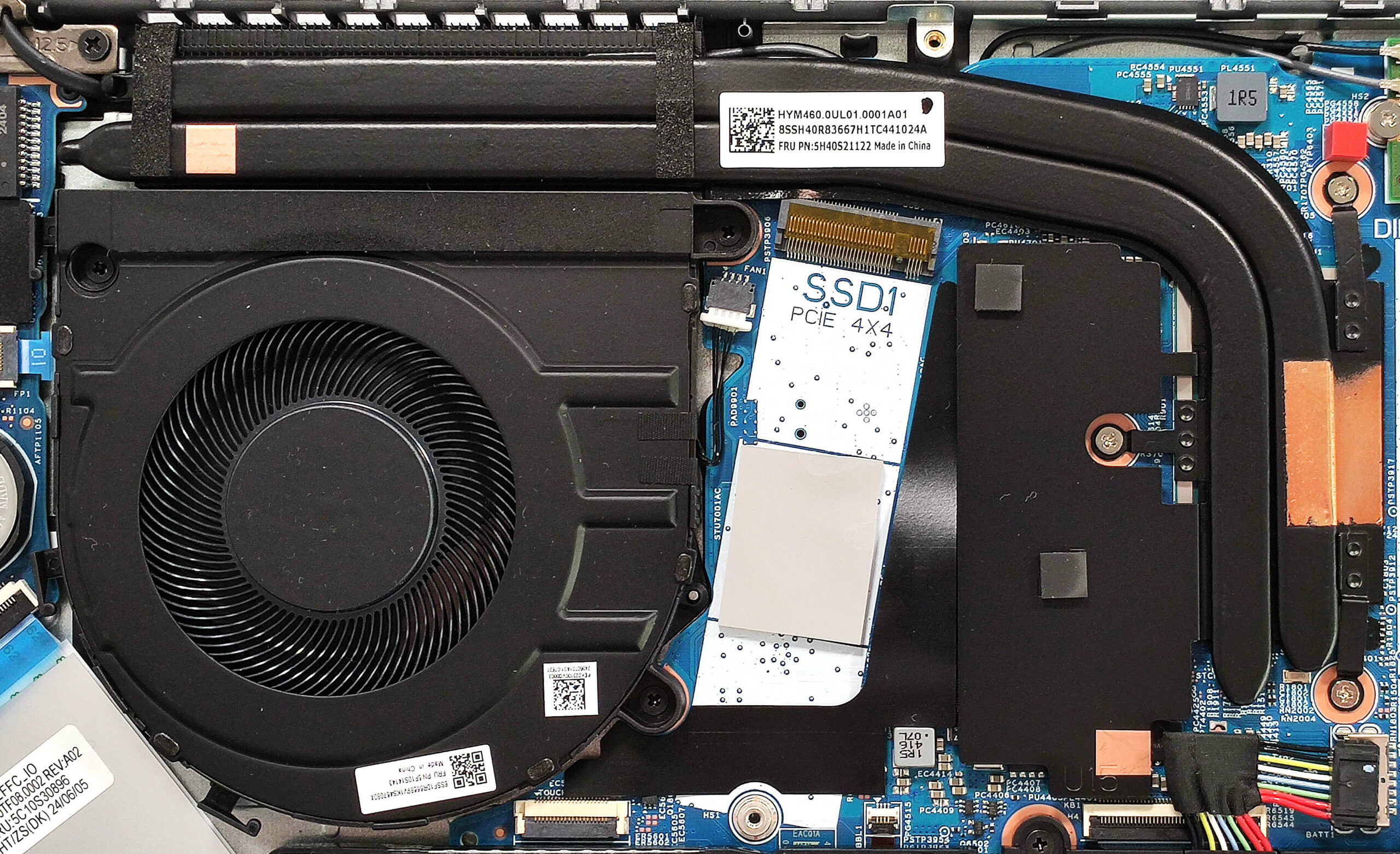
- Locate the pair of M.2 slots compatible with 2242 or 2280 Gen 4 SSDs.
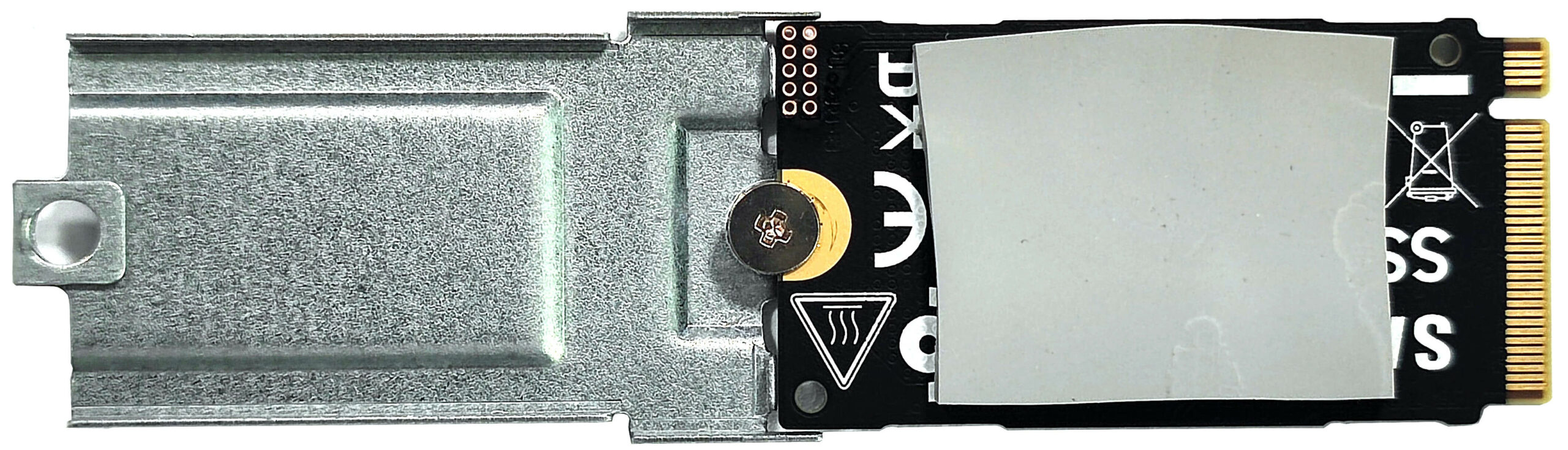
- Remove the Mylar heat shields covering the SSD slots by carefully lifting the attached fabric handles.
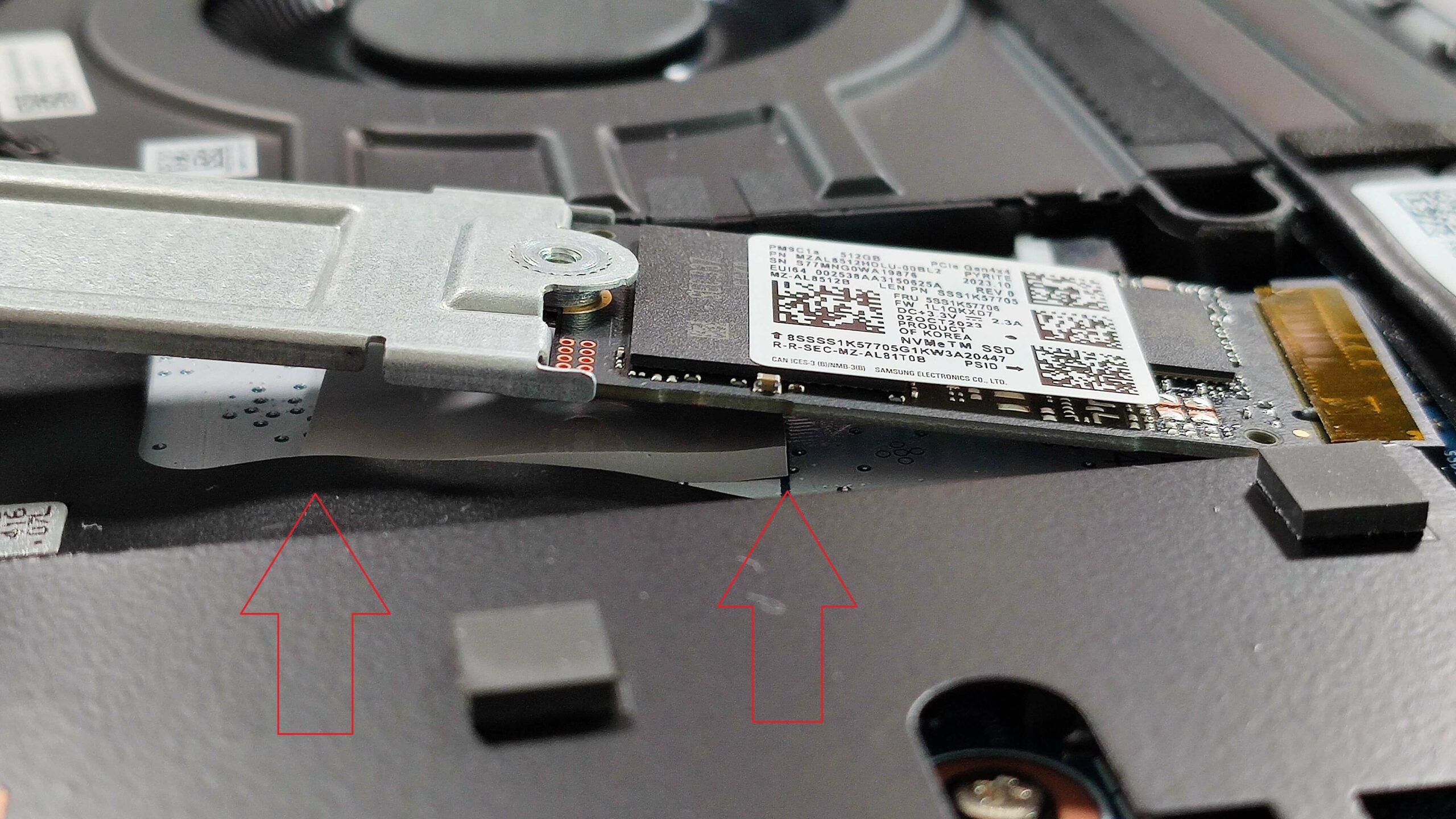
- If necessary, adjust the pad below the NVMe SSD to ensure proper installation.
- Insert the new Gen 4 M.2 SSD into the desired slot and secure it with the heat shields.
More info: The storage compartment includes a pair of M.2 slots compatible with 2242 or 2280 Gen 4 SSDs. The pad below the NVMe drive is not optimally positioned but can be adjusted for better fitment.
Hint: Don’t forget to check out our Top M.2 SSDs Performance Rankings for insights on the best storage options available.
You can buy compatible SSDs here: Buy from Amazon.com (#CommissionsEarned)
Cooling System Overview
More info: The cooling system is efficient for a 14-inch laptop without dedicated graphics. It includes a large fan, two long heat pipes, a sizable long top-mounted heat sink, and a heat spreader to ensure effective thermal management.
- Inspect the large fan to ensure it is free of dust and debris.
- Check the two long heat pipes for any signs of wear or damage.
- Verify that the long top-mounted heat sink is properly seated and unobstructed.
- Ensure the heat spreader is securely in place to maintain optimal cooling performance.
Lenovo ThinkBook 14 Gen 7 (Intel) in-depth review
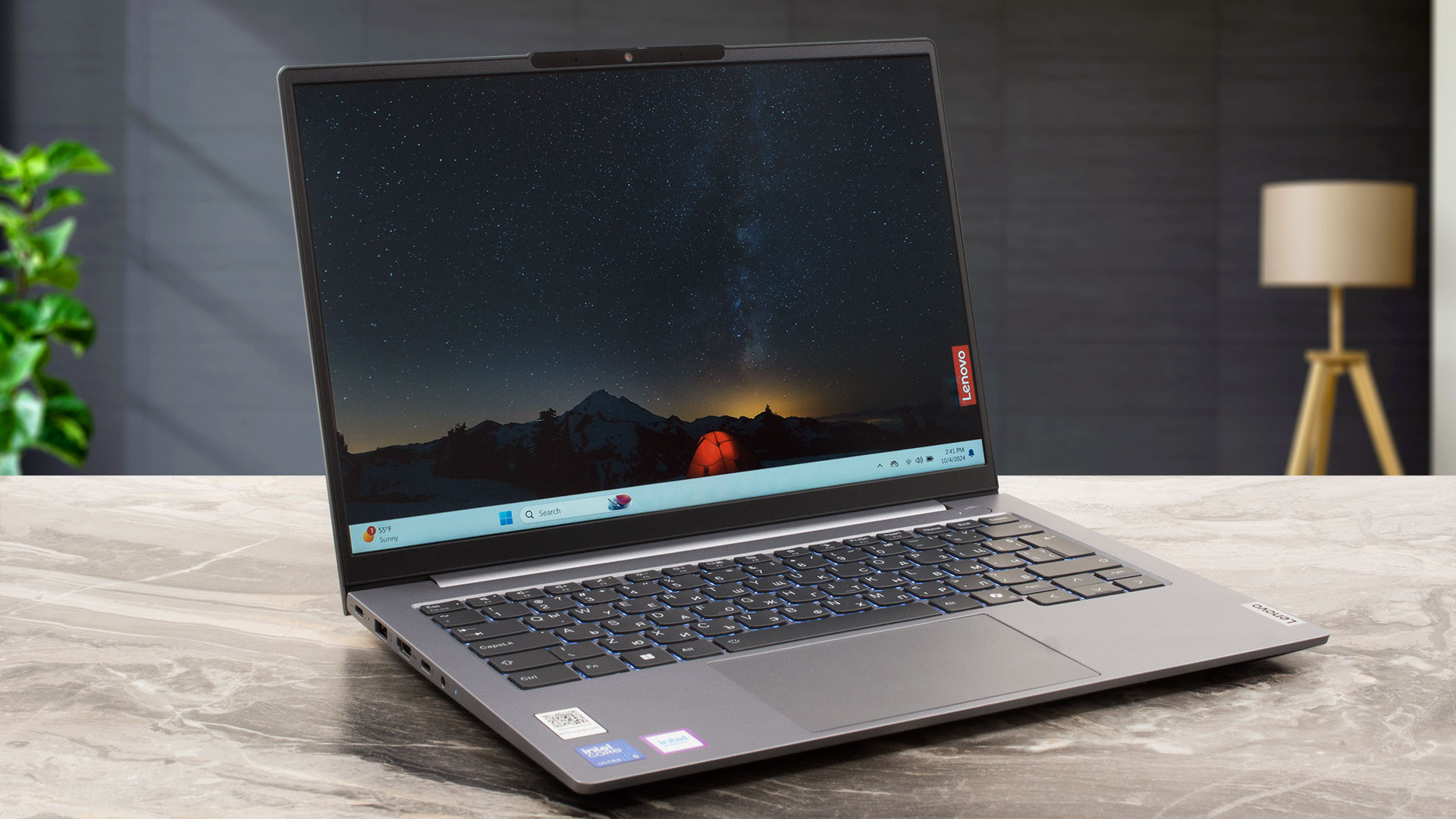
The ThinkBook 14 Gen 7 is virtually the same device as the 16-inch model but expectedly, the 14-incher is more compact and light. Aside from that, almost all its features are identical compared to the bigger sibling including the Meteor Lake-U or H CPU options, the good upgradability, and the rich port selection. That sounds pretty mouthwatering for this kind of form factor.You can find this device even with a 1200p IPS touchscreen. If you don't need such functionality, you pick a machine with one of the other two panels with the same resolution. If your budget isn't too limited, you can g[...]
Pros
- The fan isn't noisy during max CPU stress
- Compact (1.38 kg / 16.9 mm)
- Very good performance, especially for a 14-incher
- 2x SODIMMs + 2x M.2 Gen 4 slots
- PWM-free display (LEN9125)
- 16:10 aspect ratio and wide viewing angles (LEN9125)
- 320 nits of max brightness + 1540:1 contrast ratio (LEN9125)
- Aluminum chassis (option)
- Optional IR Web camera + fingerprint reader
- Privacy shutter
- Comfortable spill-resistant keyboard with optional backlight
- Modern port selection
- The Core Ultra 5 125U can maintain a 3.02 GHz / 2.39 GHz P and E-core frequency in long loads
- Long battery life for a 45Wh capacity (~10 hours of videos)
- Solid chassis
- Fast SSD for a 512GB 2242 unit (Samsung PM9C1a)
Cons
- The lid can't be opened with a single hand
- Low sRGB coverage (LEN9125)
 Author: Dimitar Stalev

![[June 2026] Best-Selling Laptop Brands on Amazon Global – Apple’s Unrivaled Dominance in Units and Revenue](https://laptopmedia.com/wp-content/uploads/2026/07/GLOBAL-Best-Brands-400x225.jpg)
![[June 2026] Amazon Global: Top 10 Best-Selling Laptops – Apple’s New MacBook Neo Storms to #1, Reshaping the Market with Affordability](https://laptopmedia.com/wp-content/uploads/2026/07/Best-Selling-Laptops-GLOBAL-Top-10-400x225.jpg)
![[June 2026] Amazon Global: Top 10 Best-Selling Gaming Laptops – Acer’s Nitro V 16S AI Dominates Sales, While ASUS Leads Overall Revenue](https://laptopmedia.com/wp-content/uploads/2026/07/Best-Selling-Gaming-Laptops-GLOBAL-Top-10-400x225.jpg)
![[June 2026] Global Ranking of Best-Selling Laptop GPUs on Amazon – NVIDIA RTX 5060 is the Top-Selling Dedicated GPU](https://laptopmedia.com/wp-content/uploads/2026/07/Best-Selling-GPUs-GLOBAL-Top-10-400x225.jpg)
![[June 2026] Global Ranking of Best-Selling Laptop CPUs on Amazon – Apple M5 Dominates, AMD Ryzen 7 260 Gets Solid Premium Share](https://laptopmedia.com/wp-content/uploads/2026/07/Best-Selling-CPUs-GLOBAL-Top-10-400x225.jpg)