Lenovo Legion Pro 5 (16″, Gen 10) review – Another Record-Breaker by Lenovo!
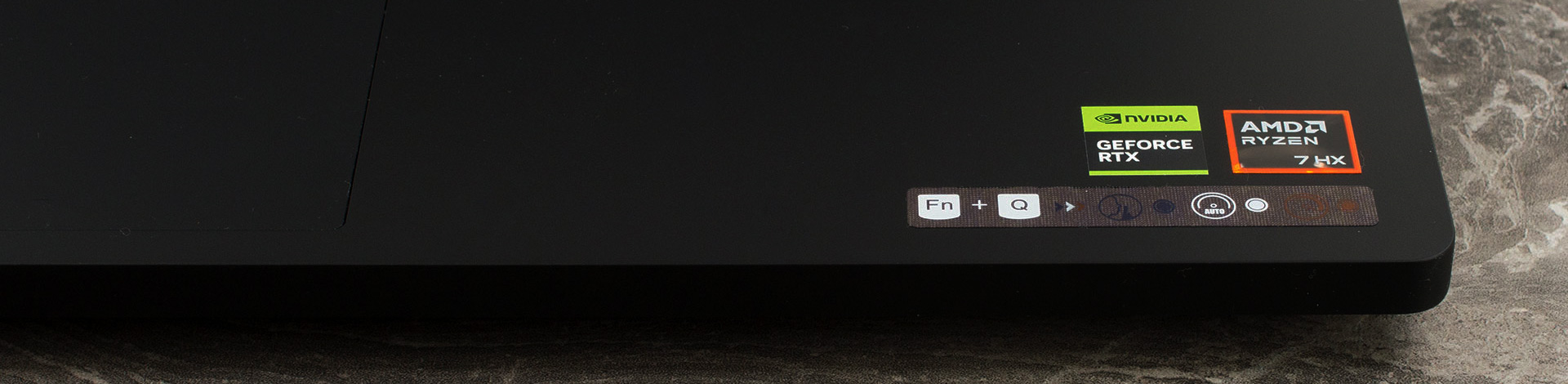
The Lenovo Legion Pro 5 (16″, Gen 10) arrives with a singular purpose: to deliver the absolute best gaming performance in its class, wrapped in a chassis that means business. It doesn’t rely on flashy gimmicks or overly aggressive styling; instead, it lets its benchmarks do the talking. And talk they do – in our testing, this unassuming machine shattered expectations, clocking in as the fastest RTX 5060 laptop we have ever reviewed. But this relentless pursuit of speed comes with a significant compromise that tethers it to the wall. Is record-breaking performance enough to make you overlook a battery life that feels stuck in the past?
You can check the prices and configurations in our Specs System: https://laptopmedia.com/series/lenovo-legion-pro-5-16-gen-10/
Contents
Specs, Drivers, What’s in the box
Lenovo Legion Pro 5 (16", Gen 10) - Specs

- HDD/SSD
- up to 4000GB SSD
- M.2 Slot
- 2x 2280 M.2 NVMe PCIe 4.0 x4 See photo
- RAM
- up to 64GB
- OS
- Windows 11 Pro, Windows 11 Home, No OS
- Battery
- 80Wh
- Body material
- Plastic / Polycarbonate, Aluminum
- Dimensions
- 364.38 x 268.06 x 21.69 - 25.95 mm (14.35" x 10.55" x 0.85")
- Weight
- 2.30 kg (5.1 lbs)
- Ports and connectivity
- 2x USB Type-A
- 3.2 Gen 1 (5 Gbps)
- 1x USB Type-A
- 3.2 Gen 2 (10 Gbps)
- 1x USB Type-C
- 3.2 Gen 2 (10 Gbps), DisplayPort
- 1x USB Type-C
- 3.2 Gen 2 (10 Gbps), Power Delivery (PD), DisplayPort
- HDMI
- 2.1 (8K@60Hz)
- Card reader
- Ethernet LAN
- 10, 100, 1000 Mbit/s
- Wi-Fi
- Wi-Fi 6E / Wi-Fi 7
- Bluetooth
- 5.3 / 5.4
- Audio jack
- 3.5mm Combo Jack
- Features
- Fingerprint reader
- Web camera
- 5.0MP, with E-shutter, fixed focus
- Backlit keyboard
- optional
- Microphone
- Dual-microphone array
- Speakers
- Stereo speakers, 2W x2, audio by HARMAN, optimized with Nahimic Audio
- Security Lock slot
All Lenovo Legion Pro 5 (16″, Gen 10) configurations
Drivers
All drivers and utilities for this notebook can be found here: https://pcsupport.lenovo.com/us/en/products/laptops-and-netbooks/legion-series/legion-pro-5-16adr10/downloads
What’s in the box?
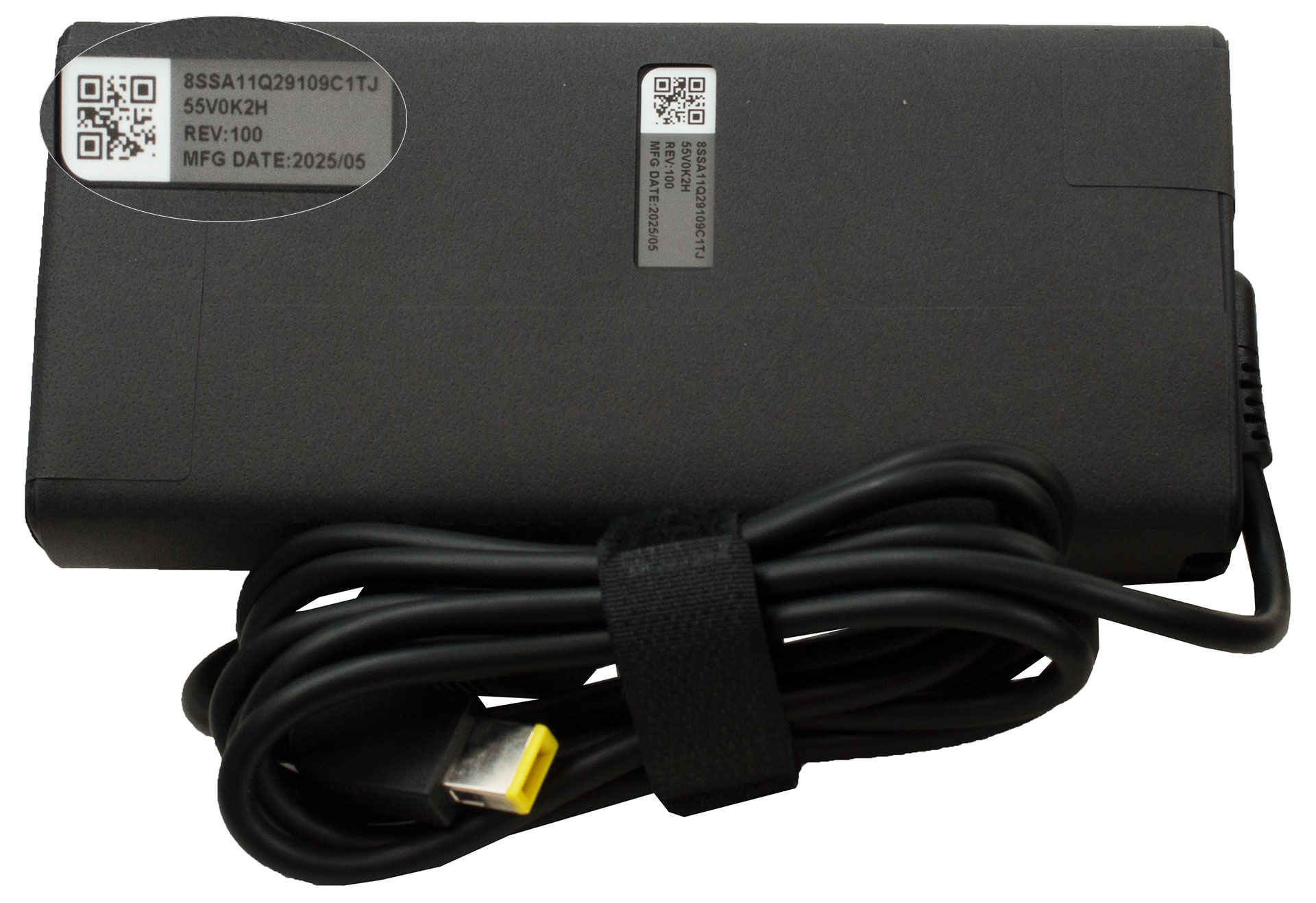
Opening the box for the Legion Pro 5 is a bit of a regional lottery, as Lenovo sometimes bundles in cool extras like switchable keycaps, a gaming mouse pad, or even an M300s RGB mouse.
Unfortunately, our luck didn’t hold out this time, and our package arrived with just the bare essentials: the laptop itself and this 245W slim tip power adapter:
Design and construction
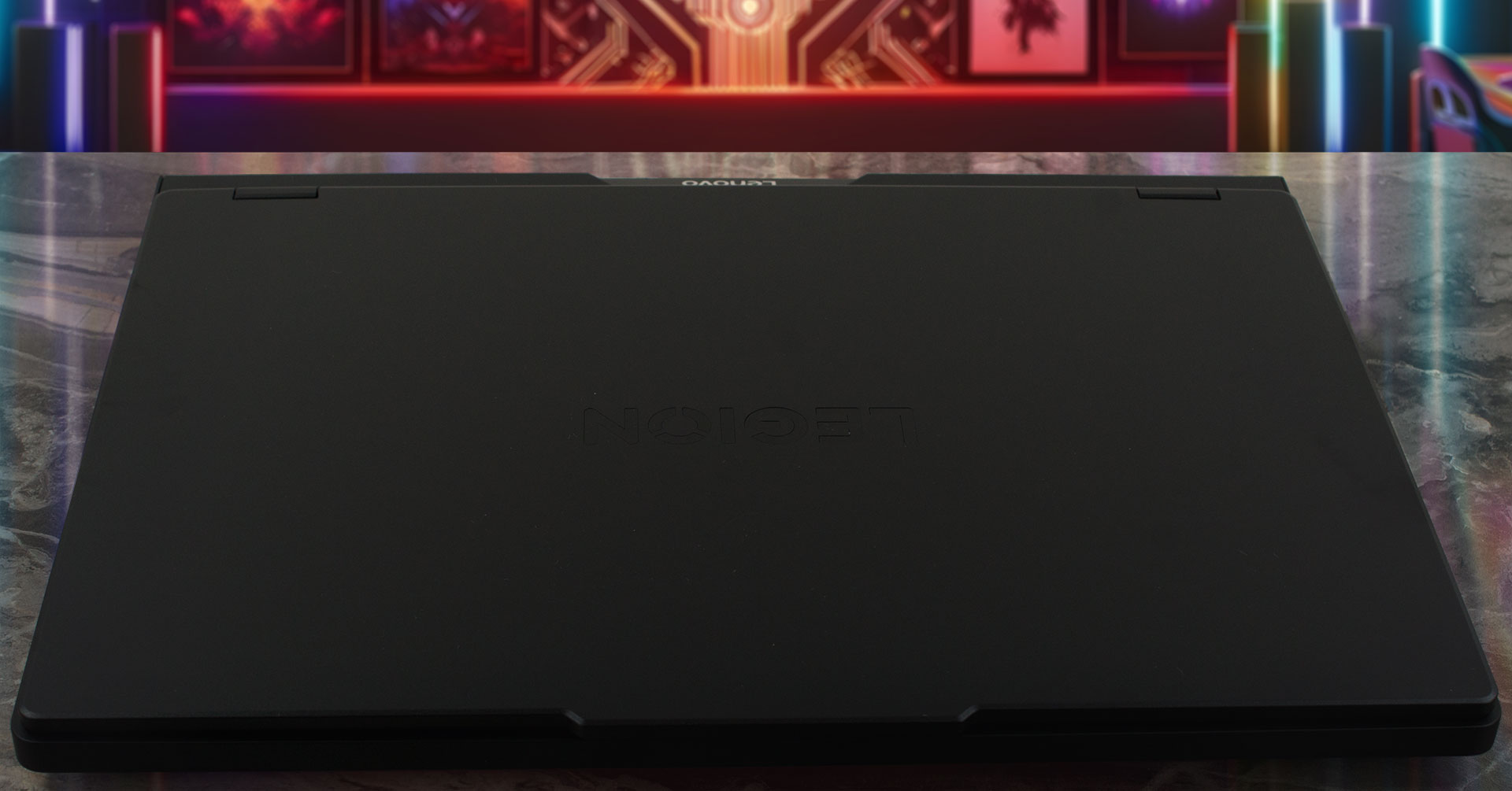
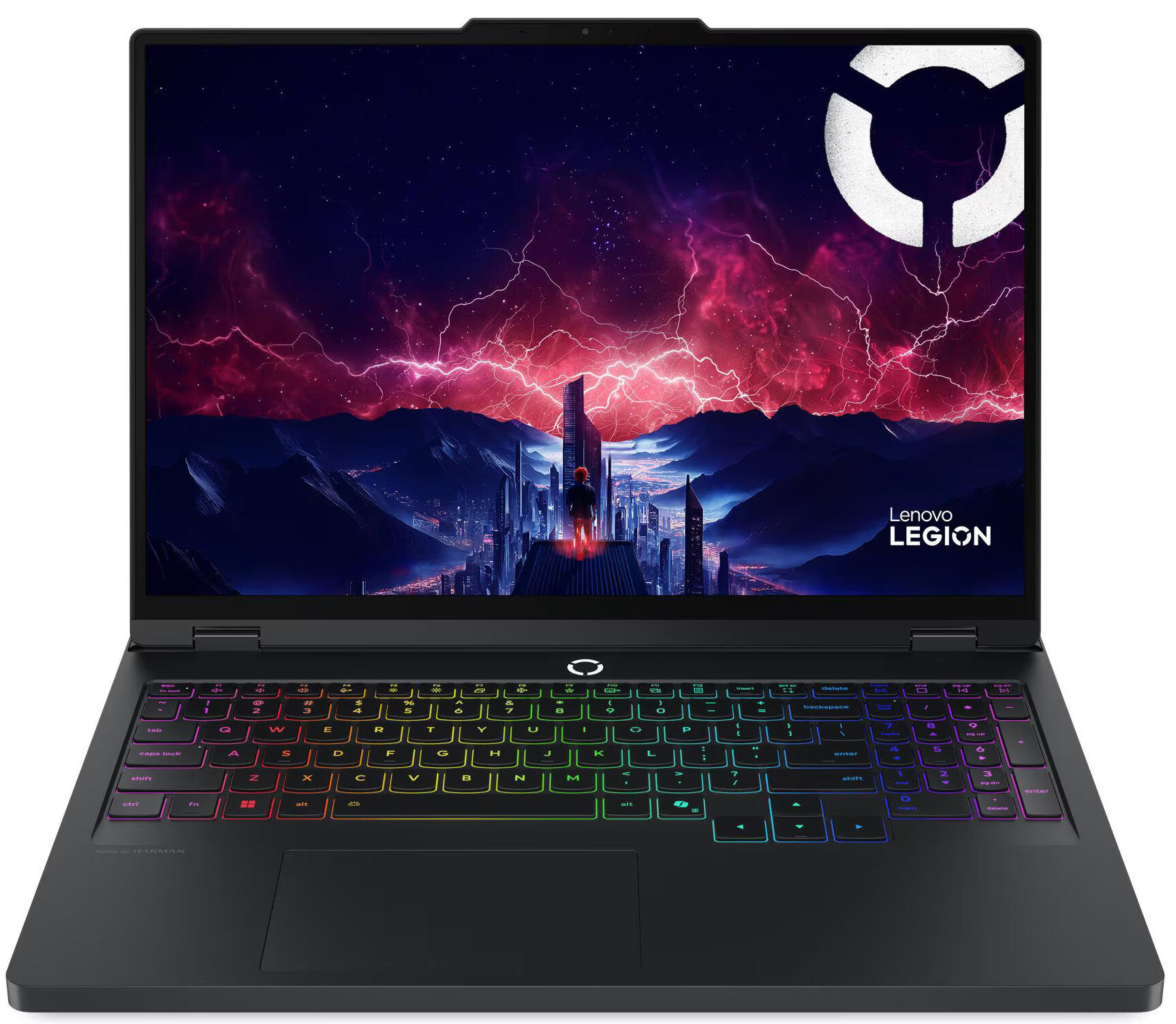
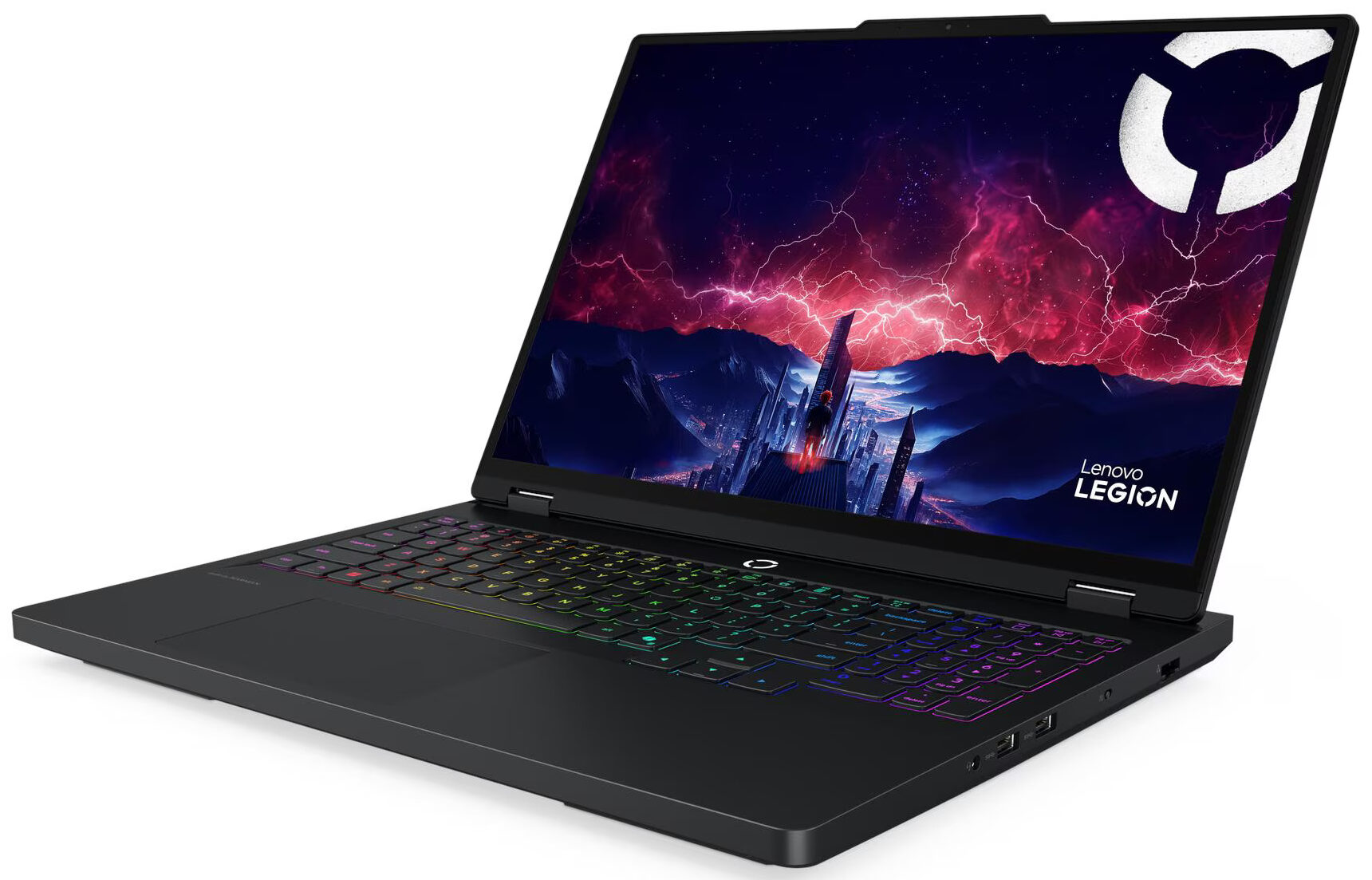
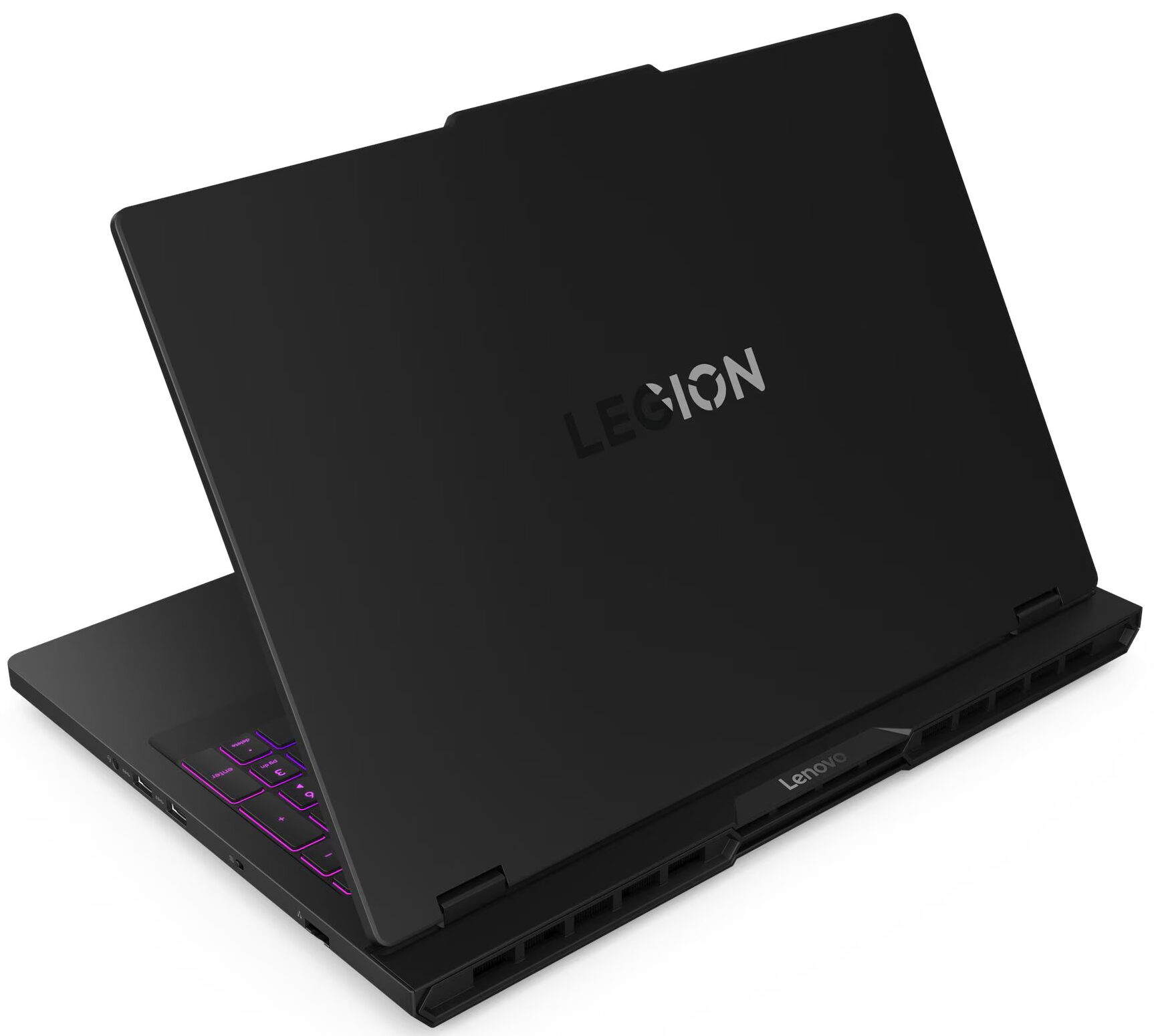
The Lenovo Legion Pro 5 (16″, Gen 10) embraces a “gaming/creator” aesthetic, offering a powerful machine in a chassis that is refreshingly clean and understated. It avoids being overly loud or flashy, opting instead for a mature look that fits well in both gaming setups and professional environments. Available exclusively in “Eclipse Black,” a sleek matte finish, the design is punctuated by a glossy black Legion logo centered on the lid, adding a touch of stylish branding without being intrusive.
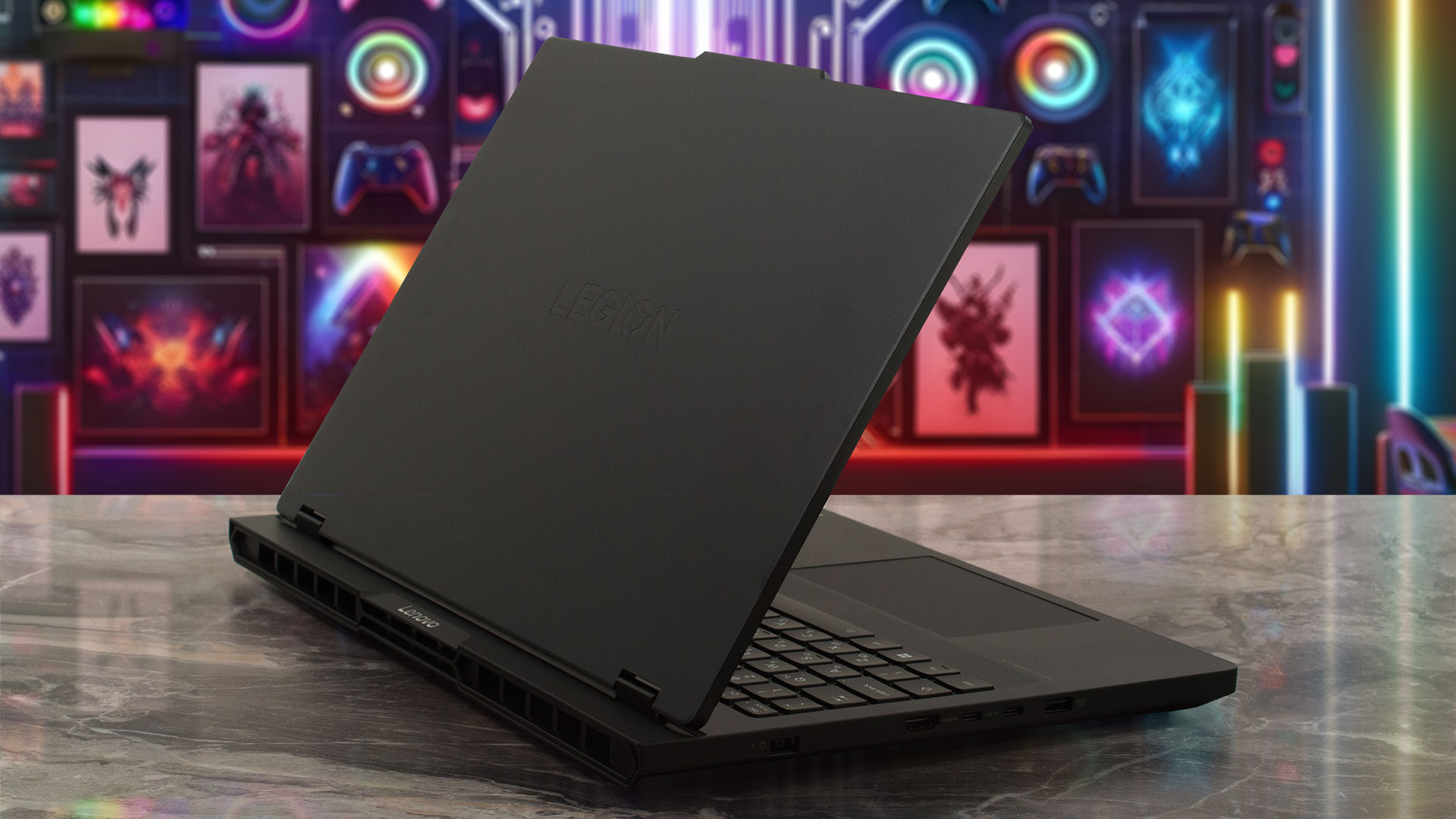
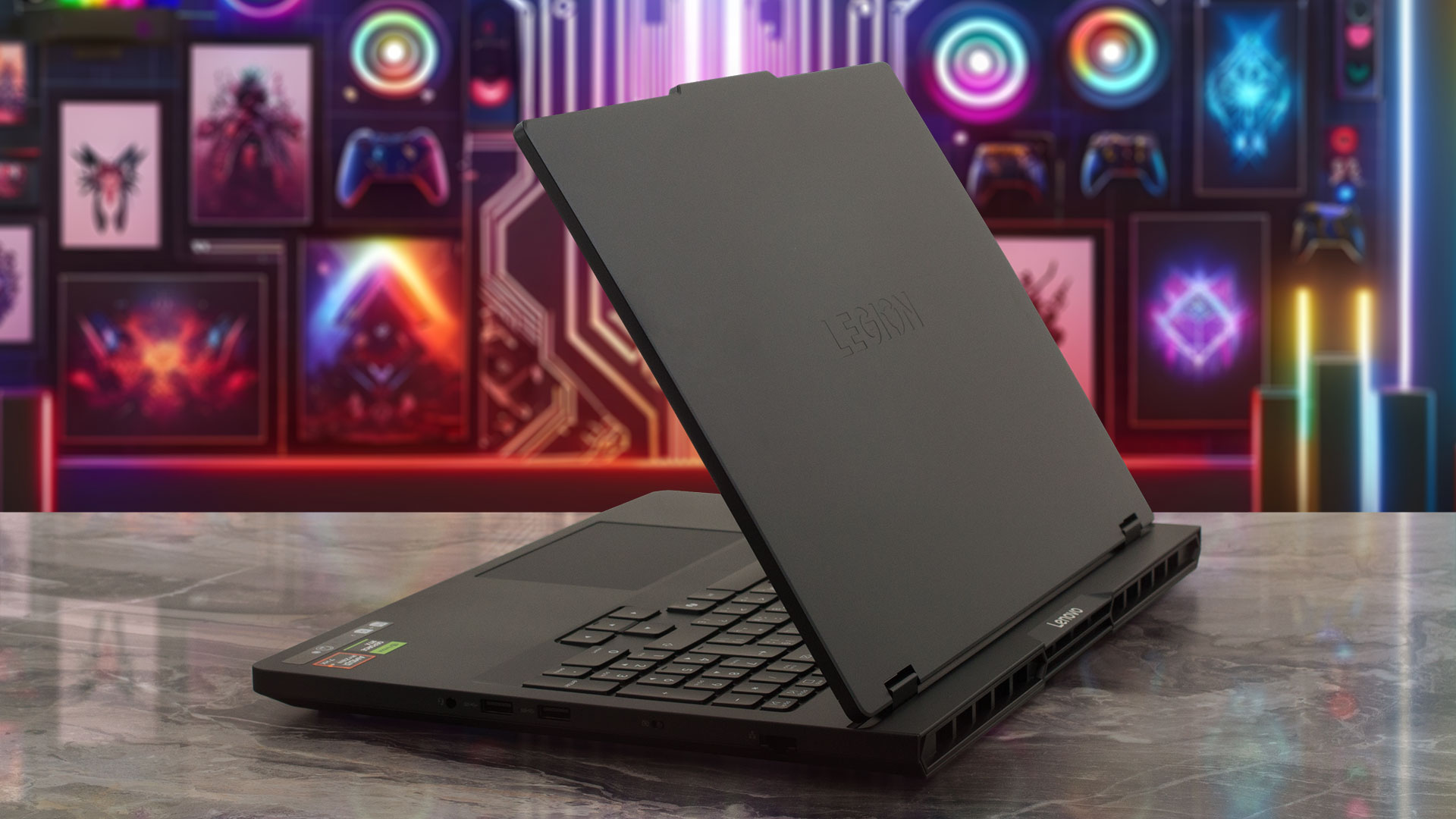
The lid is crafted from anodized sandblasted aluminum, providing a premium feel, while the bottom chassis is made of durable PC-ABS plastic. This combination results in a stable build, though you might notice some minor flex if you press firmly in the center of the panels. The surface treatment does an excellent job of resisting fingerprints, keeping the laptop looking sharp with minimal maintenance.
As expected for a 16-inch performance laptop, it has a substantial footprint. Here are the dimensions and weight:
| Lenovo Legion Pro 5 (16″, Gen 10) | Dimensions | Weight |
| Metric units | 364.38 x 268.06 x 21.69 – 25.95 mm | IPS: 2.4 kg; OLED: 2.3 kg |
| U.S. customary | 14.35 x 10.55 x 0.85-1.02 in | IPS: 5.29 lbs; OLED: 5.07 lbs |
Despite its heft, the hinge is well-tuned, allowing for a smooth, one-handed opening of the lid while keeping the display stable. The screen opens to almost full 180 degrees, a versatile feature even without touchscreen capabilities.
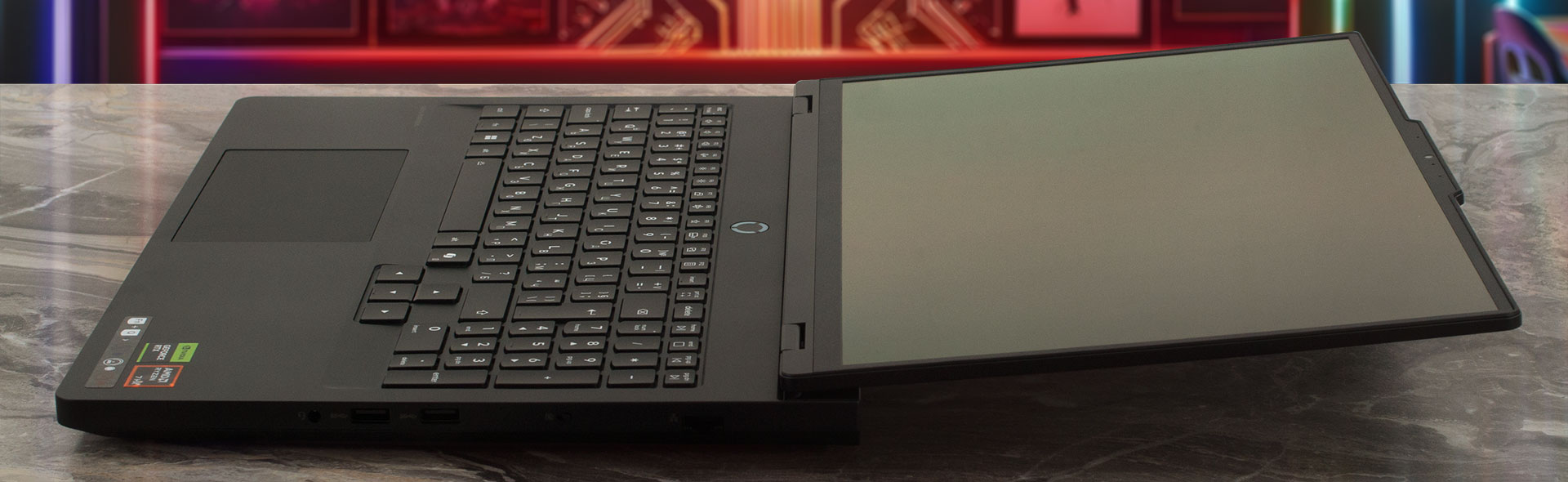
The display is framed by relatively thin bezels measuring 7.5 mm on the sides and top, with a small central “bump” extending to 12 mm to house the camera module. This module contains a dual-microphone array and either a 5.0MP or an HD 720p camera, both equipped with an E-shutter for privacy.
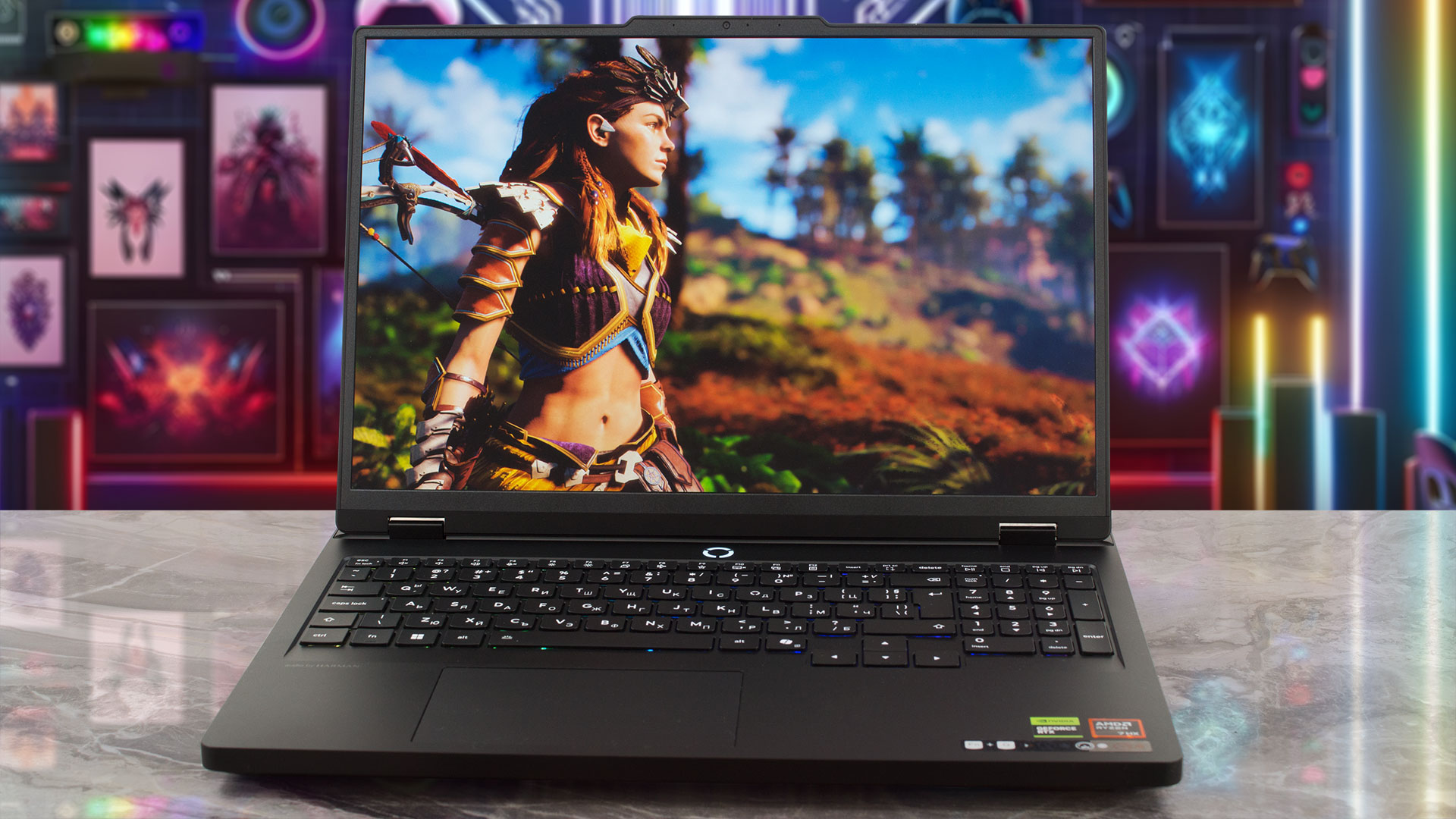
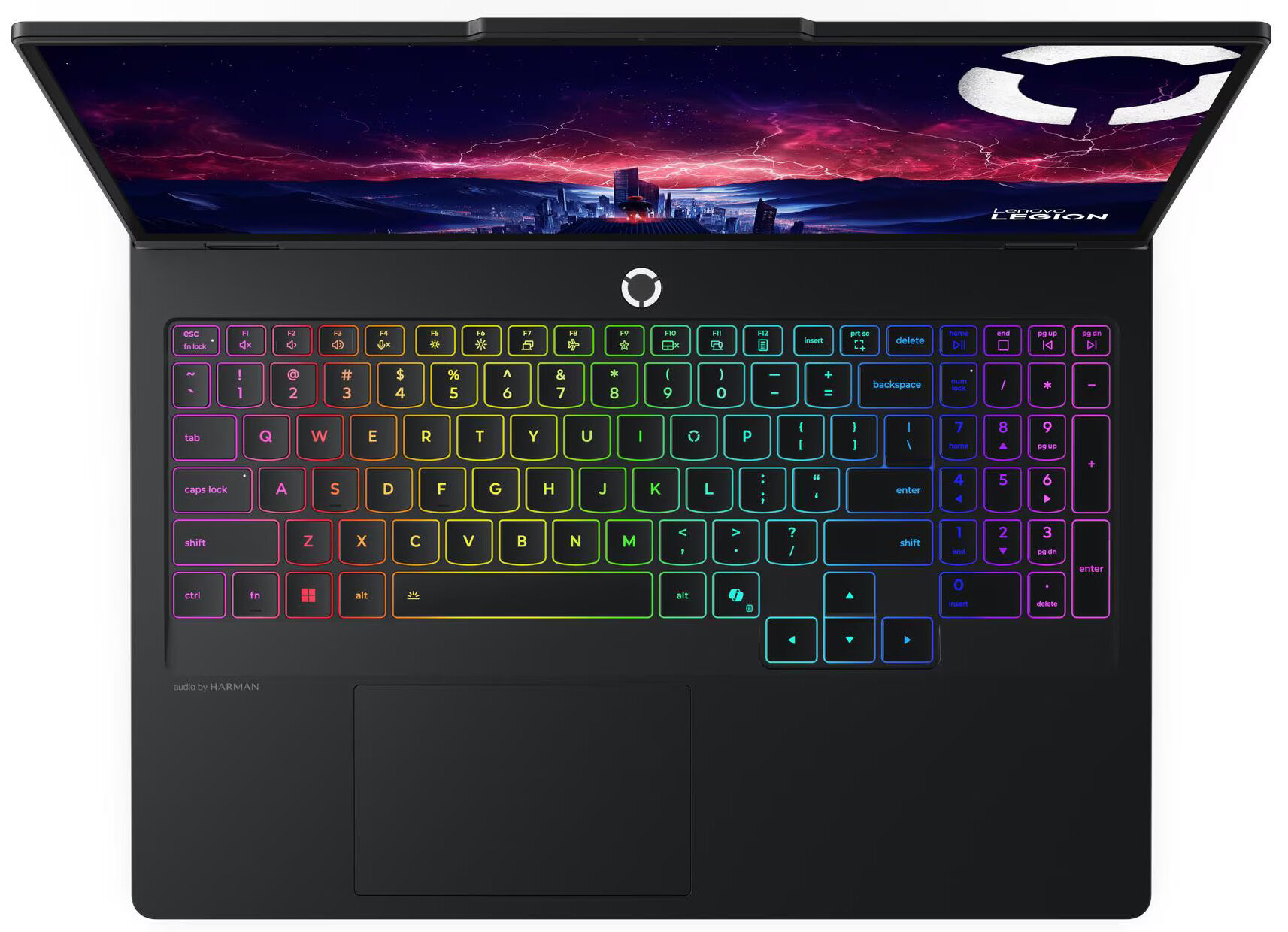
The keyboard deck is spacious and includes a full numeric keypad, a boon for productivity. The keys offer a comfortable 1.6mm of travel with a 0.3mm cap recess, providing a satisfying typing experience. We were pleasantly surprised to find that even our relatively base model (configured with an RTX 5060) came with a vibrant 24-Zone RGB backlight, though a simple white backlight is also an option on some configurations.
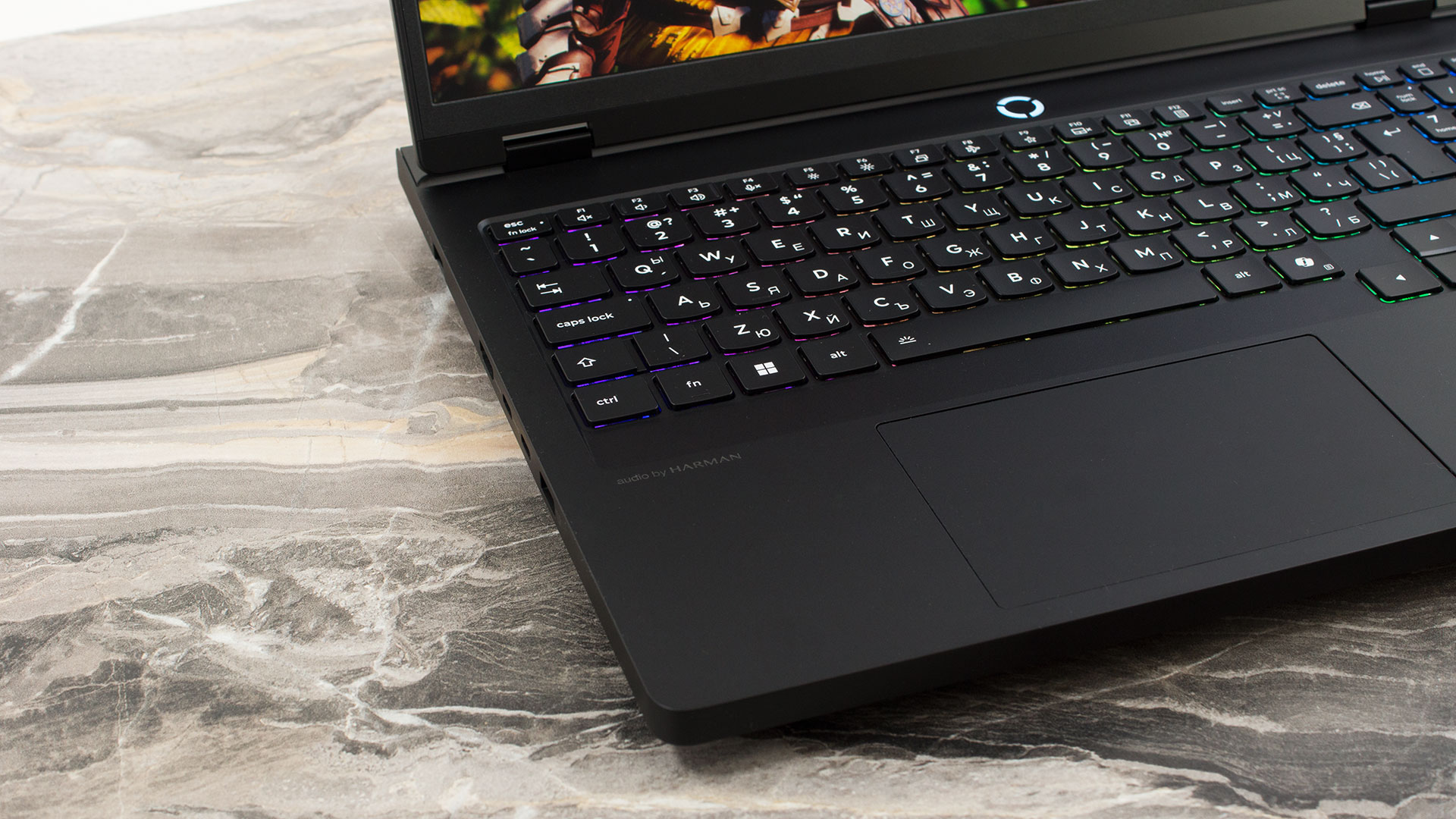
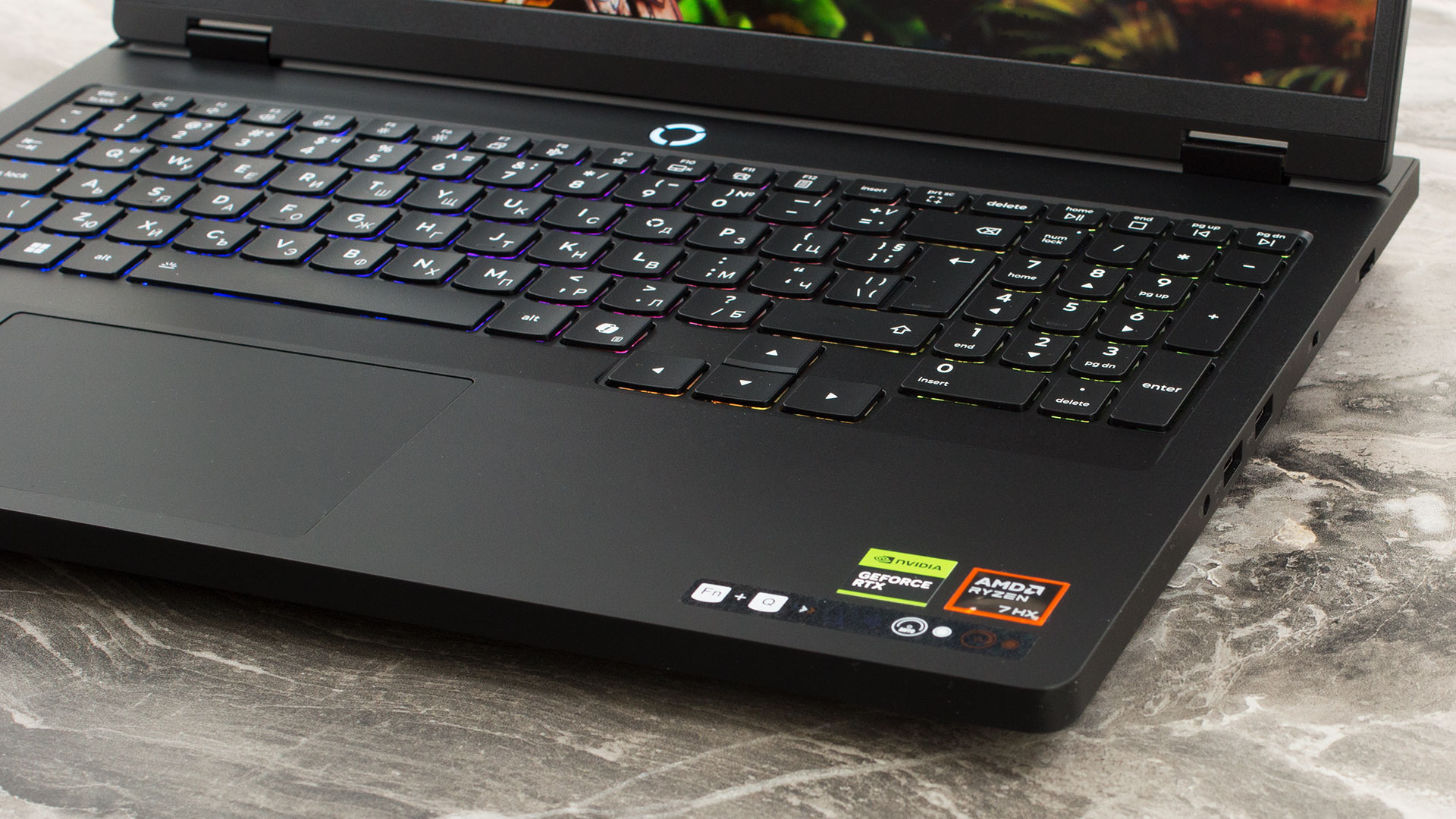
Gamers will appreciate the large, full-sized arrow keys – a feature that is becoming increasingly rare but is very welcome here. There is no fingerprint reader for biometric login. Below the keyboard, the buttonless Mylar trackpad measures 75 x 120 mm (~2.95 x 4.72 inches) and supports Precision TouchPad gestures, offering smooth and reliable navigation.

Ports and Connectivity
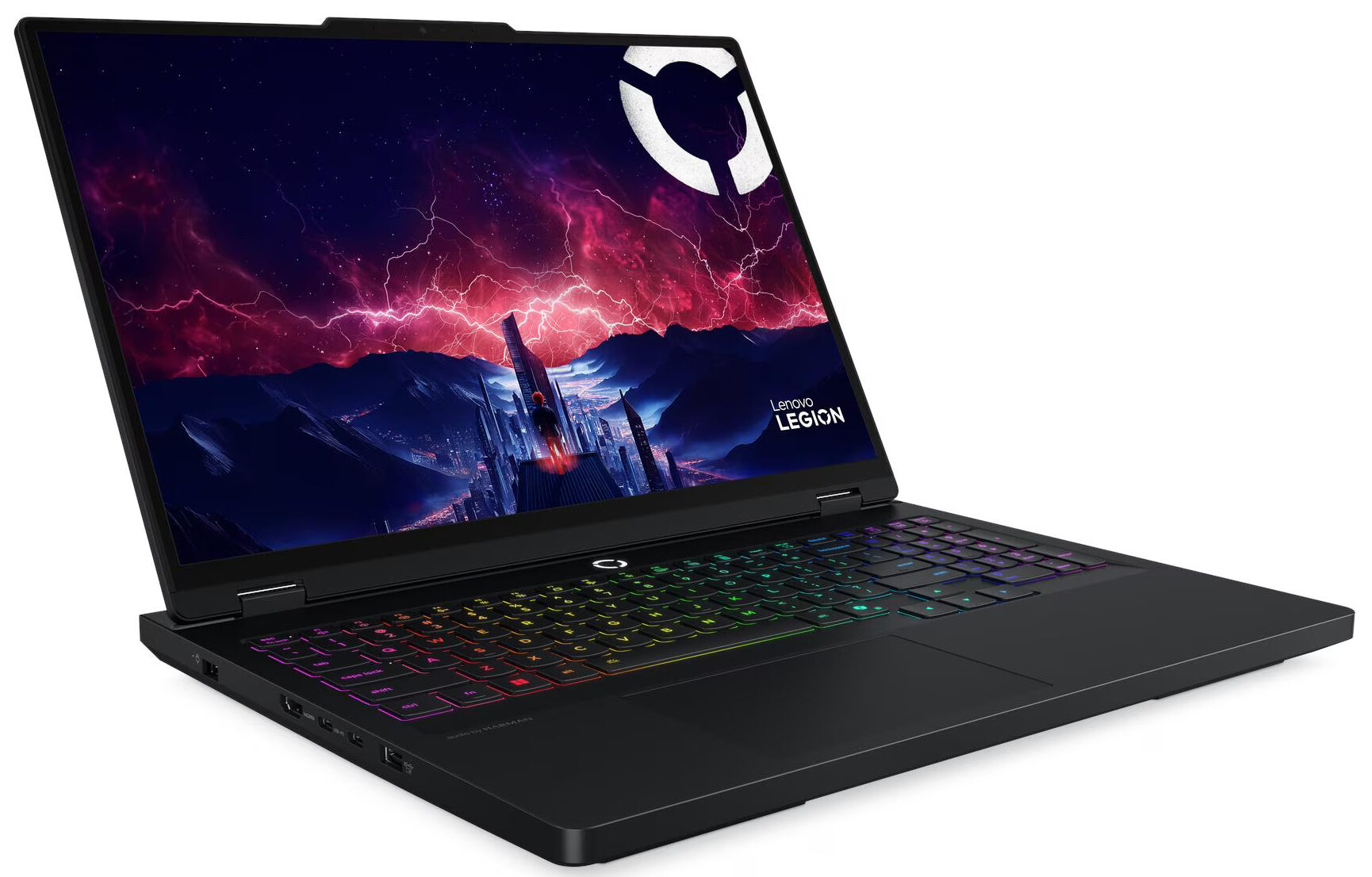
The Lenovo Legion Pro 5 (16″, Gen 10) concentrates its high-performance connectivity primarily on the left side of the chassis. Here you will find the proprietary “slim tip” power connector and an HDMI 2.1 port capable of driving high-resolution external displays. Alongside these are two USB-C ports, both operating at 10Gbps (USB 3.2 Gen 2) speeds; notably, one of these supports USB Power Delivery (65–100W) for flexible charging options. A high-speed USB-A port (10Gbps) with an “Always On” feature allows for charging peripherals even when the laptop is powered down.

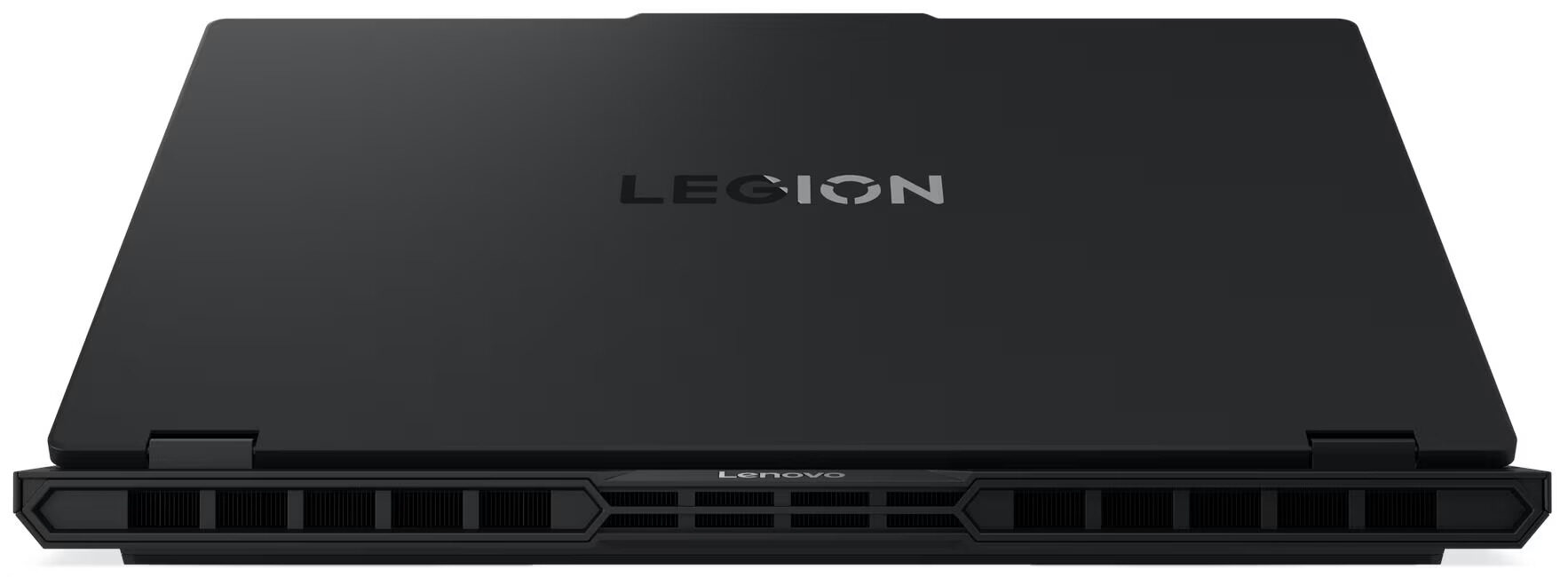
The right side offers a mix of utility and connectivity. It houses a standard 3.5mm headphone/microphone combo jack and a physical slider switch for the webcam’s privacy shutter. Two additional USB-A ports are located here, though users should note that these operate at the standard 5Gbps (USB 3.2 Gen 1) speed. A Gigabit Ethernet (RJ-45) port is also present for stable wired networking. Unlike many other gaming laptops in this class, the rear of the Legion Pro 5 is reserved entirely for air exhaust vents and features no I/O ports. Additionally, content creators should be aware that there is no SD card reader on this device.

Wireless connectivity varies by configuration. The laptop can be equipped with either a reliable Wi-Fi 6 (802.11ax) module paired with Bluetooth 5.2, or the latest Wi-Fi 7 (802.11be) card which includes Bluetooth 5.4. Prospective buyers looking for the best possible wireless speeds and lower latency should verify the specific specifications of the unit they intend to purchase.

Display and Sound Quality, Display Profiles
We ordered the Lenovo Legion Pro 5 (16″, Gen 10) with the premium 16-inch WQXGA (2560 × 1600) OLED panel at 165 Hz (ATNA60HS03-0 / SDC4219). If you prefer a higher refresh rate and an anti-glare finish, there is also a 16-inch WQXGA IPS option that goes up to 240 Hz.
| Lenovo Legion Pro 5 (16″, Gen 10) | 16″, WQXGA (2560 x 1600), 240 Hz, IPS | 16″, WQXGA (2560 x 1600), 165 Hz, OLED (ATNA60HS03-0 / SDC4219) |
| Diagonal | 16.0 inches (40.6 cm) | 16.0 inches (40.6 cm) |
| Panel Type | IPS | OLED |
| Resolution | 2560 x 1600 pixels | 2560 x 1600 pixels |
| Max Refresh Rate | 240 Hz | 165 Hz |
| Aspect Ratio | 16:10 | 16:10 |
| Pixel Density | 189 PPI | 189 PPI |
| ‘Retina’ Distance | Greater than or equal to 46 cm | Greater than or equal to 46 cm |
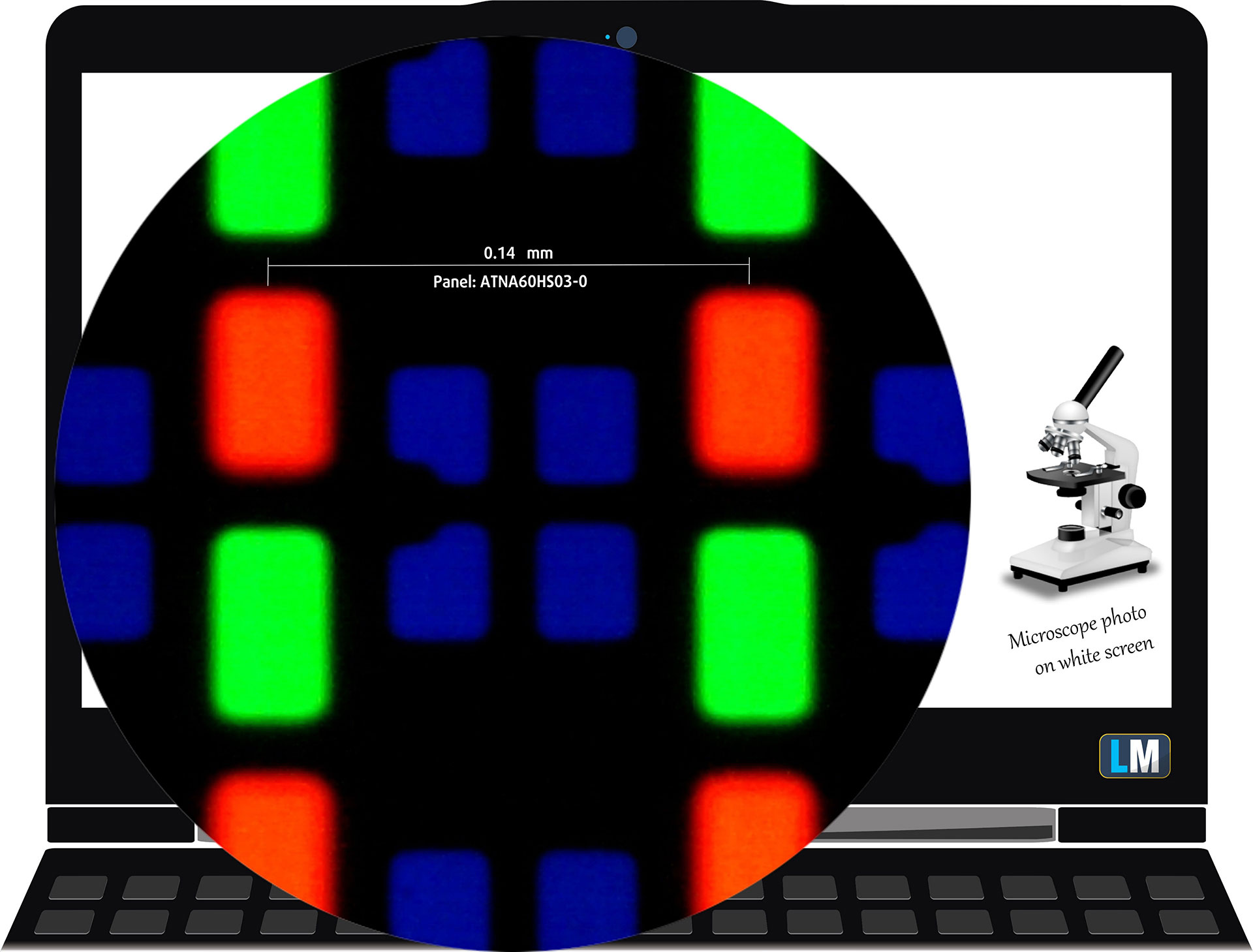 The WQXGA (2560 × 1600), 165 Hz, OLED display variant under our microscope
Viewing Angles
Viewing angles are good. We take photos from different angles to evaluate the quality.

Also, a video with locked focus and exposure.
Color Coverage
The whole “sail-shaped” map below (Fig. 1) consists of all the colors we can see, while the black crooked line shows all the colors from real-world scenes and nature around us.
Then, we’ve drawn some of the most important and interesting color spaces, compared to the colors the panel of Lenovo Legion Pro 5 (16″, Gen 10) can show:
Standard/For Web: sRGB – widely used color space for most consumer devices, ideal for Web design and development
For Print: AdobeRGB – used in professional photo editing, graphic design, and print
For Photographers/Video Editors: DCI-P3 – used in high-end film production, post-production, and digital cinema
Premium HDR: Rec.2020 – the widest consumer ITU color standard, covering a massive 75.8% of the visible spectrum, a benchmark for premium HDR content.
Lenovo Legion Pro 5 (16″, Gen 10): the yellow dashed triangle (– – – – – –) represents the range of colors this display can show.
In our tests, we calculated the total color coverage of the display at 100% of the sRGB color gamut and 100% of the DCI-P3 color gamut.
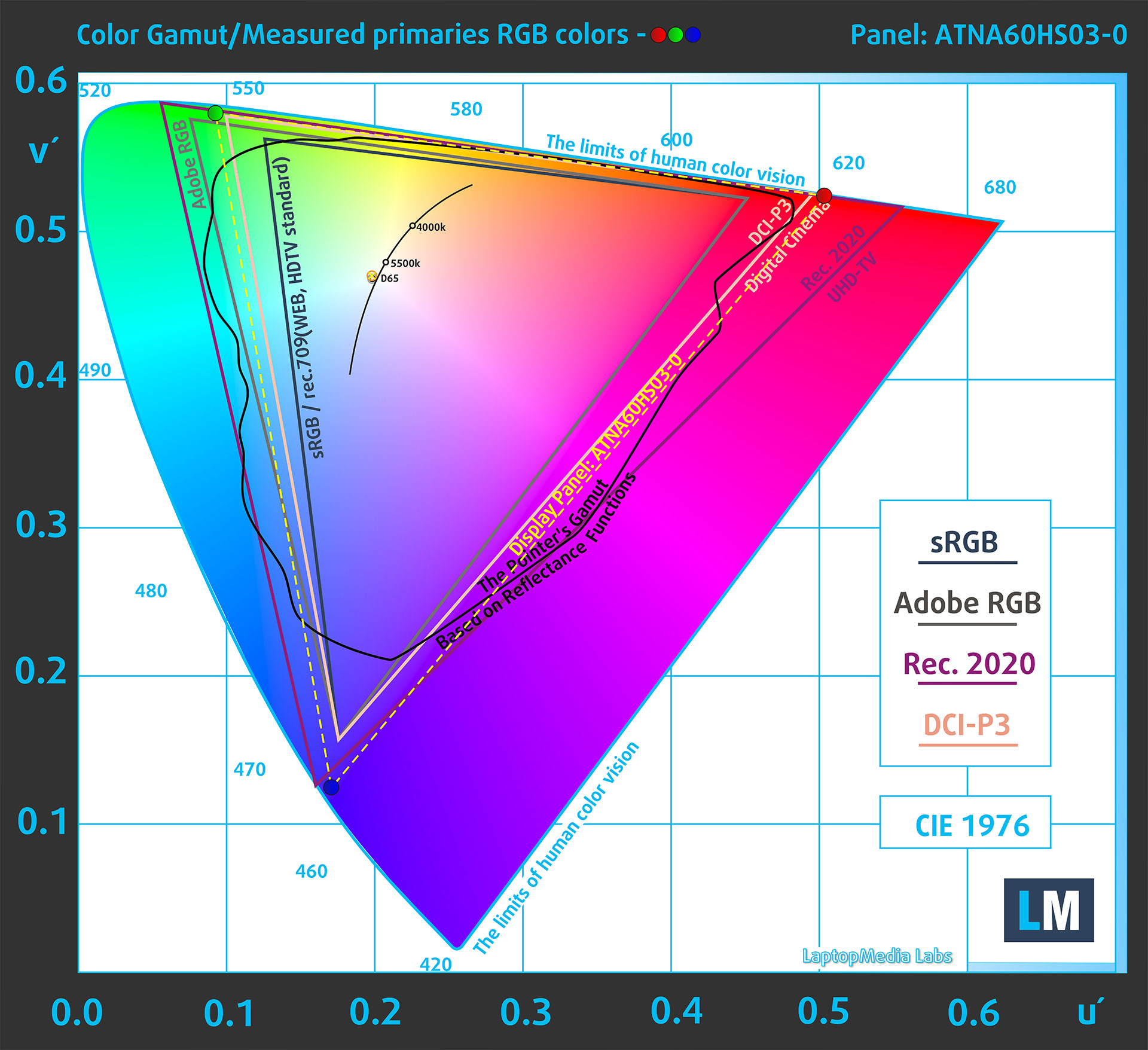
(Fig.1) Lenovo Legion Pro 5 (16″, Gen 10) covers 100% of the DCI-P3 gamut
Brightness and Contrast
The maximum brightness in HDR mode is 1060 cd/m² at 8% white fill and 631 cd/m² on a full white screen
The maximum brightness in SDR mode is 482 cd/m² in the center of the screen and 481 cd/m² averaged across the surface with a maximum deviation of 2%.
The Correlated Color Temperature (CCT) on a white screen at maximum brightness is 6340K.
The contrast ratio of OLED panels is excellent because the pixels turn off completely when displaying black.

Uniformity: Luminance, Contrast, and Color Deviation
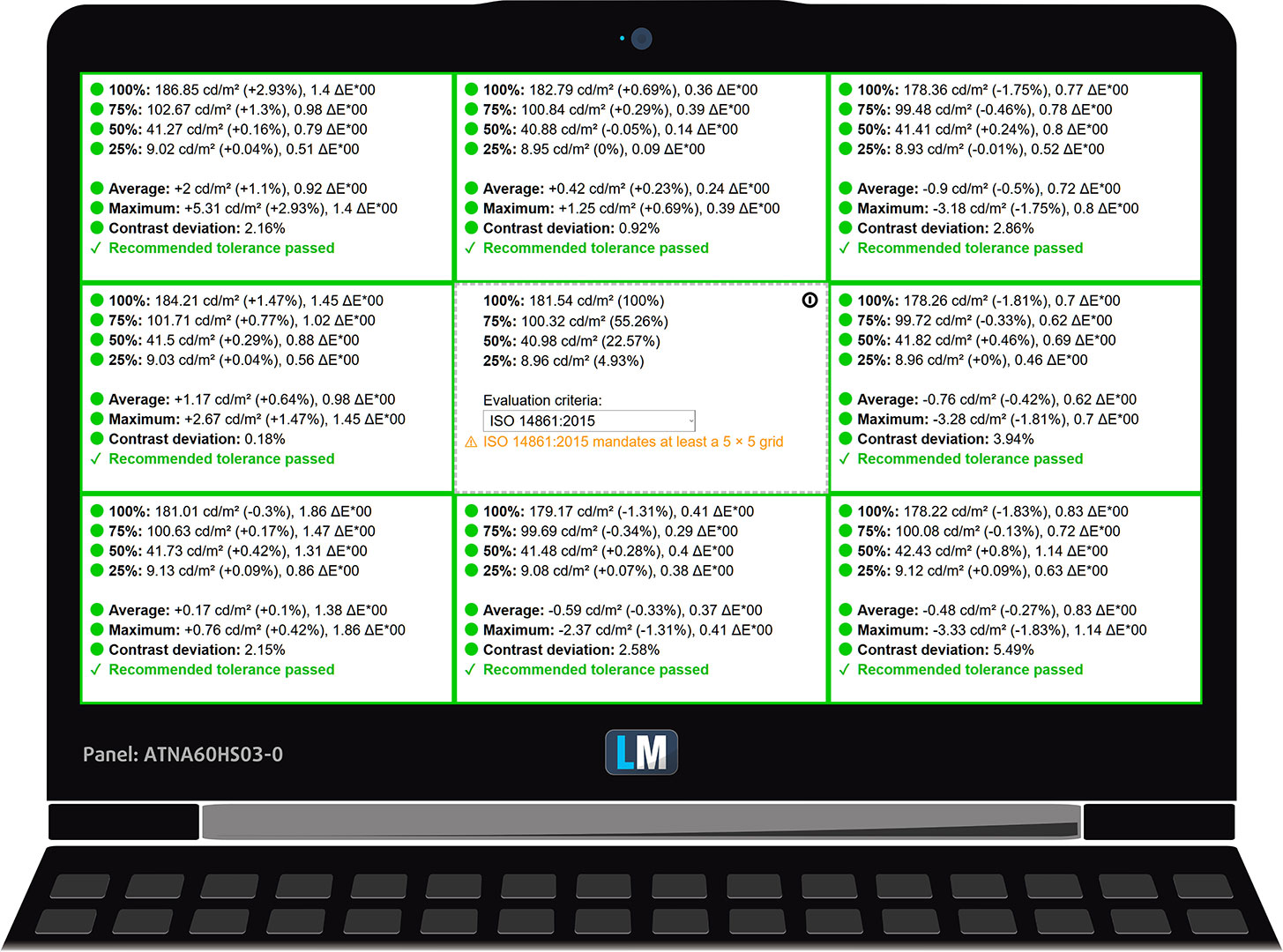
The figure below shows the results from our uniformity test across different sections of the screen. It’s measured at 182 nits (Windows slider = 64%) – a brightness level we consider typical for standard working conditions.
DeltaE values below 4.0 are acceptable for regular users. For those working with colors, screens with DeltaE values no higher than 2.0 are recommended.
Color Accuracy
Let’s check the difference between real colors and those you’ll see on the Lenovo Legion Pro 5 (16″, Gen 10). We measure that distance in DeltaE – the higher the number, the more different they look.
Values below 4.0 are acceptable for regular users, while values below 2.0 are suitable for color-sensitive work. A value below 1.0 means the difference is indistinguishable to the naked eye.
For the next graph, we’ve selected 24 common colors, including dark/light skin, blue sky, green grass, etc.
Before our calibration of the Lenovo Legion Pro 5 (16″, Gen 10), the Average color accuracy was 1.2 dE (Fig. 2), and with our Design and Office profile, it lowered to 0.9 dE (Fig. 3).
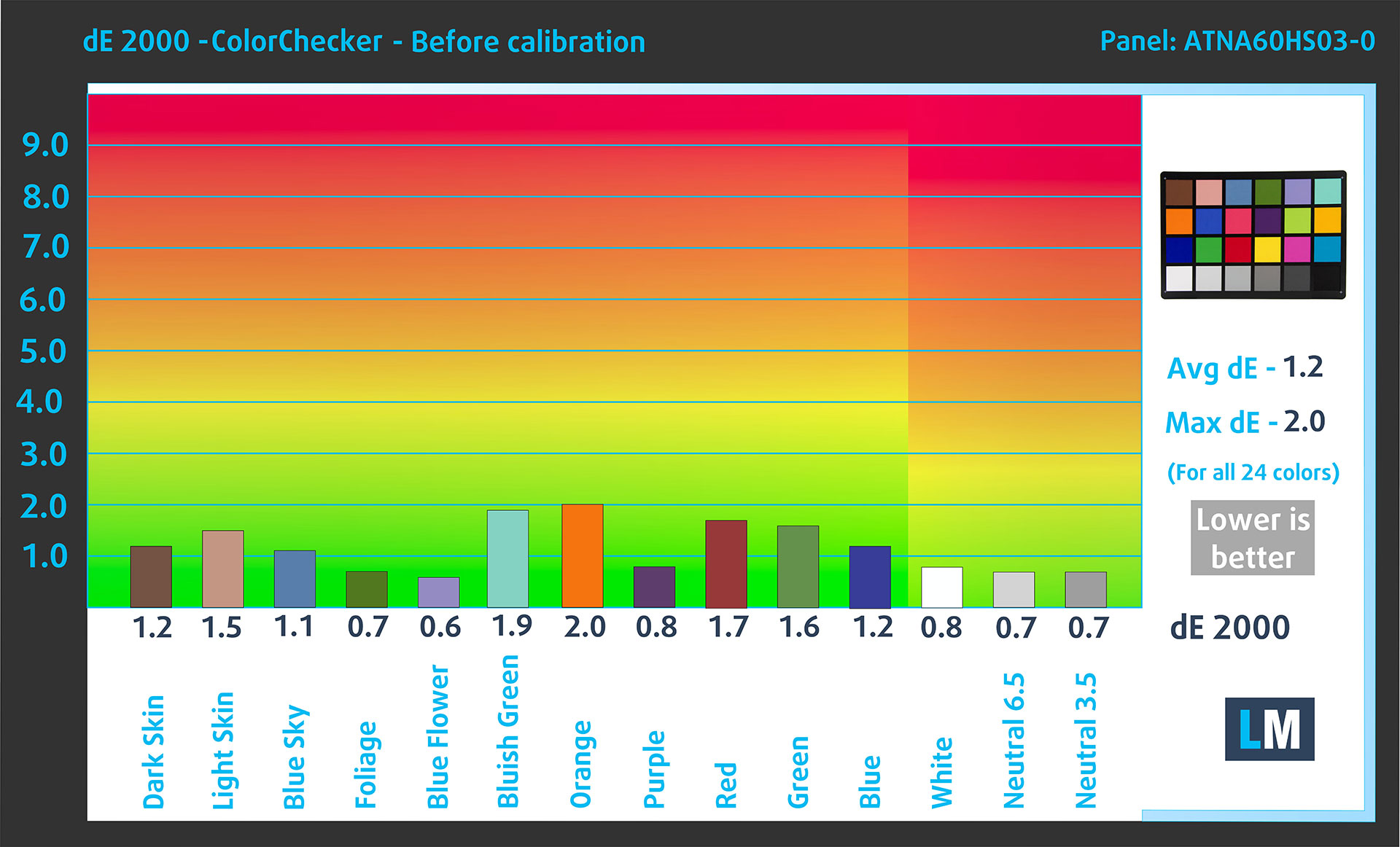
(Fig. 2) Lenovo Legion Pro 5 (16″, Gen 10) in its factory condition
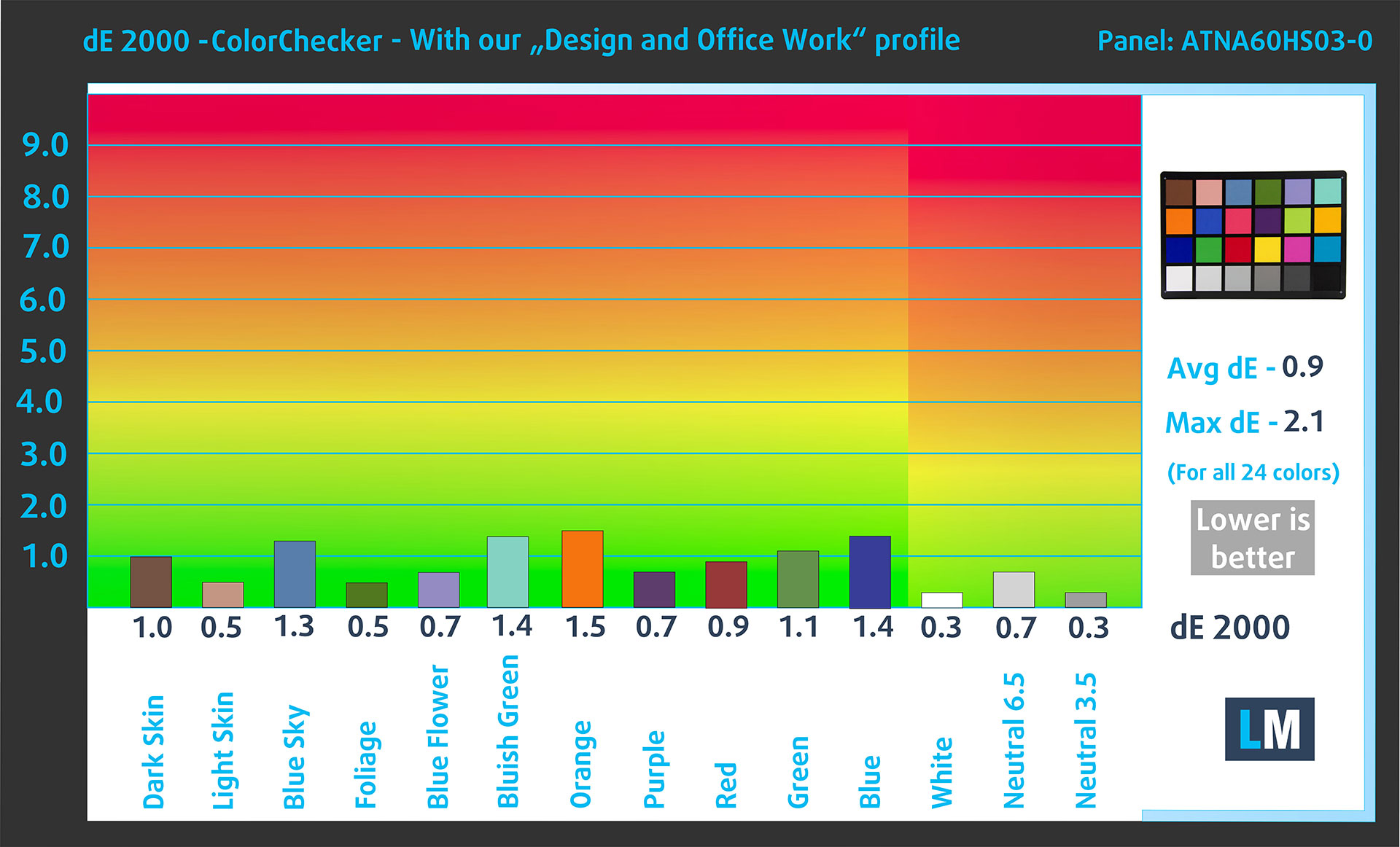
(Fig. 3) Lenovo Legion Pro 5 (16″, Gen 10) with our display profile
Comparison in the Display P3 color space.
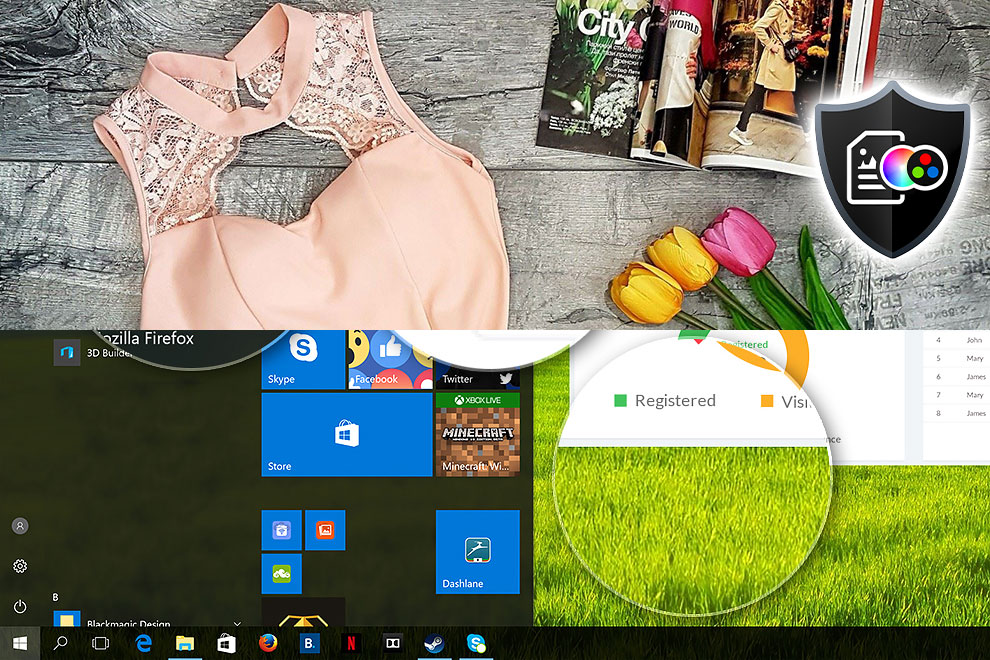
Here’s an illustration of what the Design and Office profile aims to deliver:
Left: No Profile | Drag the slider to see the difference | Right: Design & Office Profile

Visibility in dark scenes
Have you ever watched a movie with dark scenes where you could barely see anything? This often happens because many display panels struggle to differentiate the darkest nuances, making them appear the same.
The next figure illustrates how well the display reproduces these dark nuances. The left side of the image shows the display with stock settings, and the right side shows it with our Gaming and movies profile activated.
On the horizontal axis are the grayscale levels, and on the vertical axis – the corresponding display brightness.
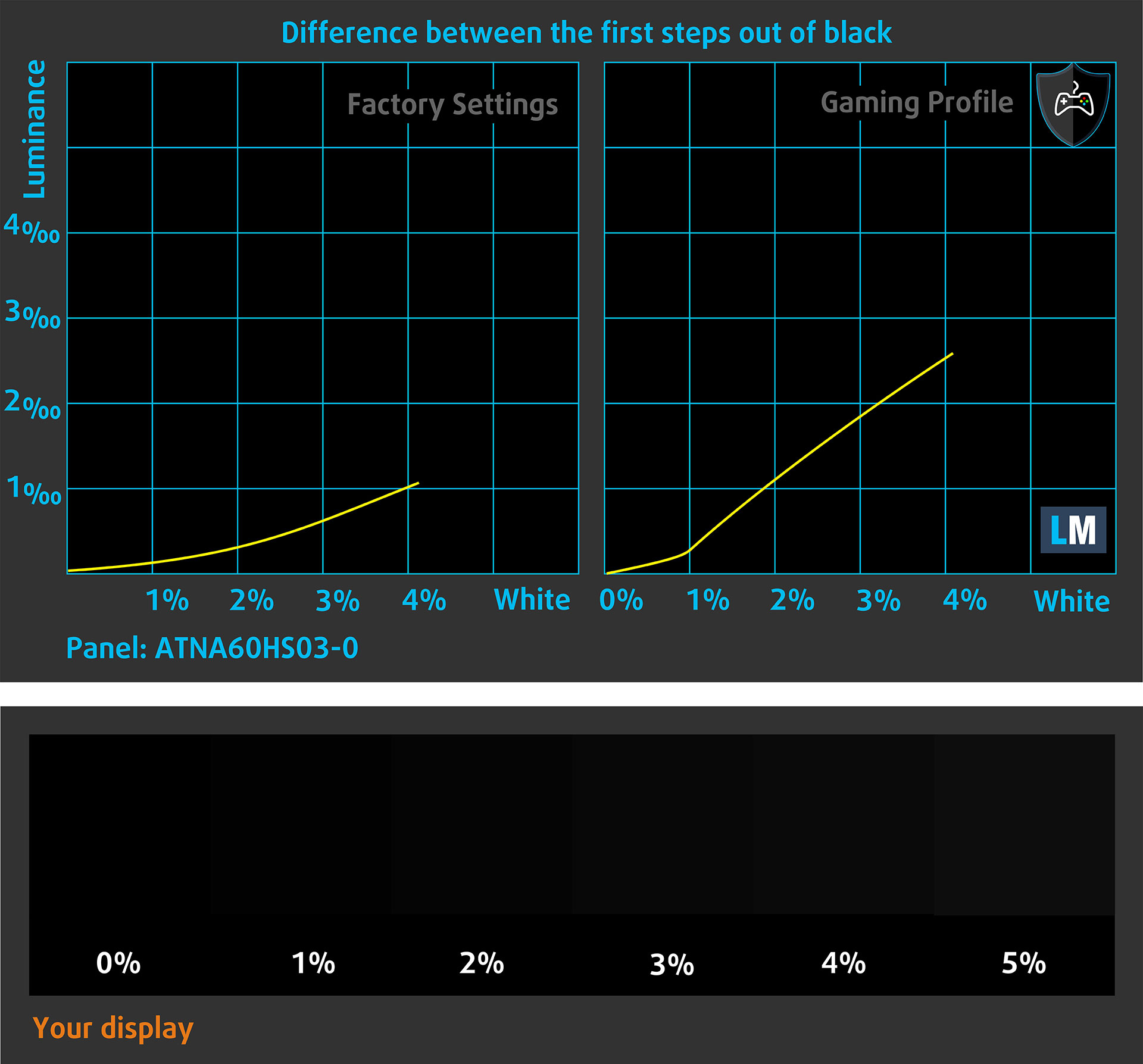
You can also check how your display handles the darkest nuances but keep in mind that this also depends on the settings of your current display and the surrounding light conditions.
Health Impact: PWM (Screen flickering)
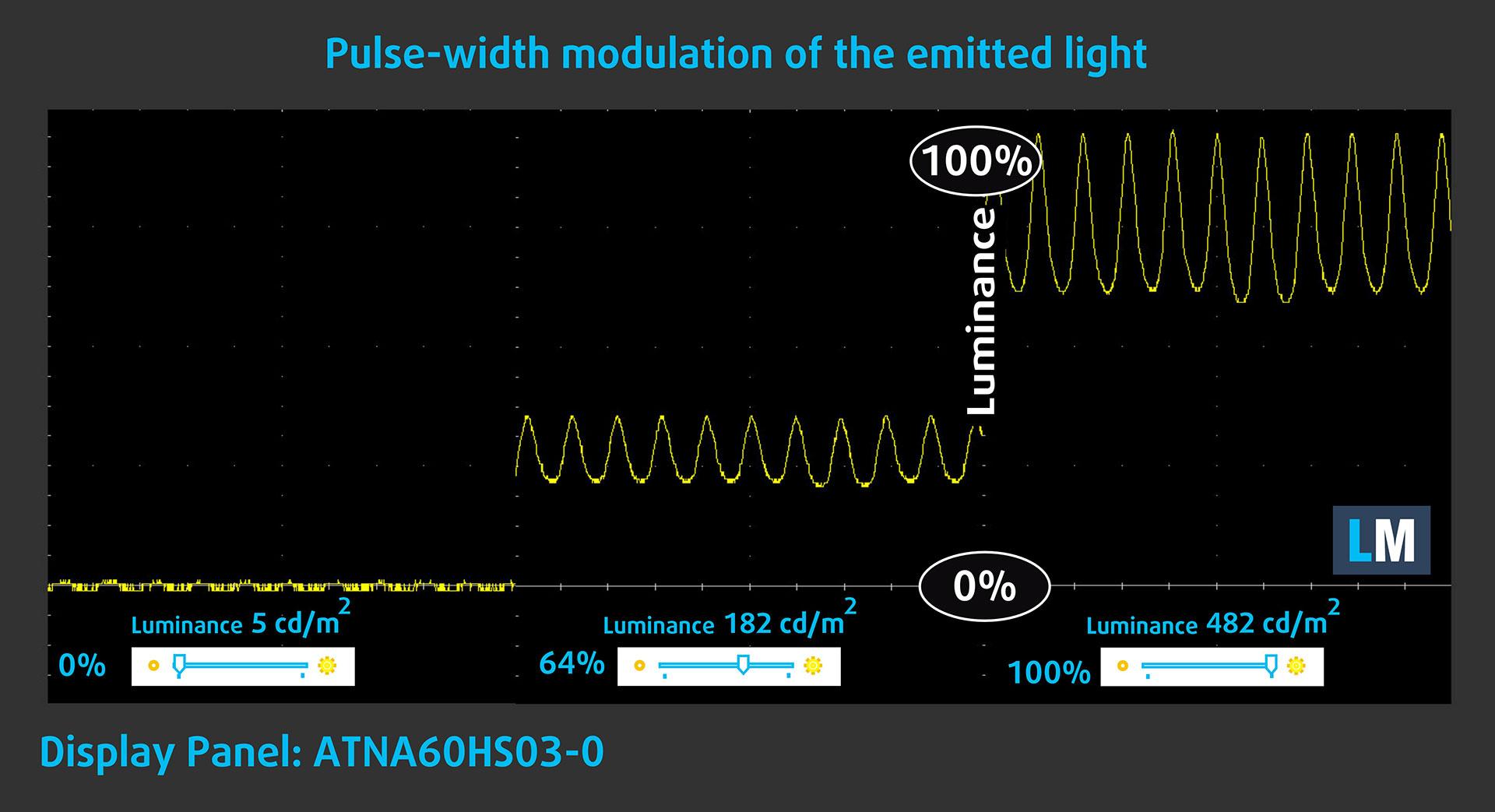
Some use PWM to regulate their brightness, which means that instead of reducing the light intensity, they pulse or flicker. Our brain merges the image, so it appears darker, but this strains both it and our vision, especially when the frequency of the pulses is low. You can read more about that in our dedicated article on PWM.
In the graph below, you see the intensity of light at different brightness levels—on the vertical axis is the brightness of the emitted light, and on the horizontal axis—time.
The display light of the Lenovo Legion Pro 5 (16″, Gen 10) pulsates, but with limited amplitude across the entire brightness range. In this regard, we find the display relatively comfortable on the eyes.
Health Impact: Blue light emissions
Installing our Health-Guard profile reduces harmful Blue Light emissions while keeping the colors of the screen perceptually accurate.
If you’re not familiar with the Blue light, the TL;DR version is – emissions that negatively affect your eyes, skin, and your whole body. You can find more information about that in our dedicated article on Blue Light.
Health Impact: Screen Reflectance
Glossy-coated displays can cause eye fatigue in high ambient light conditions due to reflections. We measure the level of screen reflection with the display turned off, at a 60° angle.
The reflectance of the Lenovo Legion Pro 5 (16″, Gen 10)’s screen is 151 GU. Unfortunately, this can lead to eye-strain, as it’s a very high reflectance level.
High Gloss: >70 GU
Medium Gloss: 30 – 70 GU
Low Gloss: <30 GU
Get our profiles
Since our profiles are tailored for each individual display model, this article and its respective profile package are meant for Lenovo Legion Pro 5 (16″, Gen 10) configurations with ATNA60HS03-0 (SDC4219), 2880 x 1800, OLED panel.
*Should you have problems with downloading the purchased file, try using a different browser to open the link you’ll receive via e-mail. If the download target is a .php file instead of an archive, change the file extension to .zip or contact us at [email protected].
Read more about the profiles HERE.
In addition to receiving efficient and health-friendly profiles, by buying LaptopMedia's products you also support the development of our labs, where we test devices in order to produce the most objective reviews possible.

Design and Office
The Design and Office profile makes display colors as close to real as possible.Ideal not only for professionals but also for everyday users, it meets sRGB standards (D65 white point, sRGB gamma) with minimal DeltaE for precise color reproduction on your panel.

Gaming and Movies
Have you ever watched a movie where, during dark scenes, you can barely see anything? Many displays fail to distinguish dark tones properly. Our Gaming and Movies profile enhances low-light performance, like HDR tech, using a gamma curve tailored to human perception — ideal for gamers seeking faster reactions and clearer visuals.

Health-Guard
Our Health-Guard profile protects your eyes by eliminating PWM flickering, reducing strain and fatigue, and minimizing harmful Blue light exposure that can disrupt sleep and health. It uses software dimming and a gamma curve tailored to human perception for comfort and safety during screen use.
Get All The Profiles With 33% Discount!

Sound
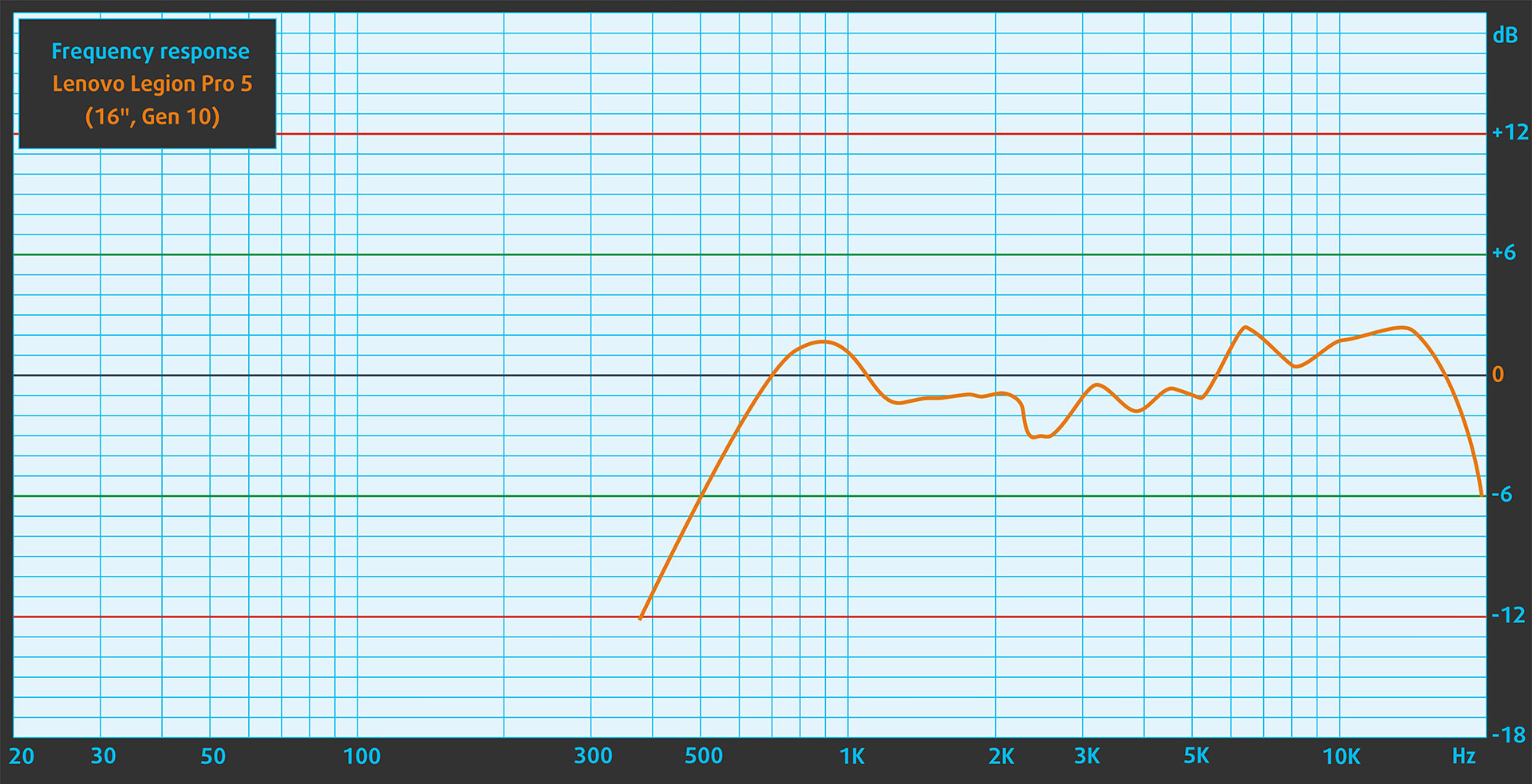
When we subjectively listen to a sound file through the built-in speakers, the sound quality offered by Lenovo Legion Pro 5 (16″, Gen 10) is relatively good. However, the low, mid and high frequencies have deviations in clarity.
Work Performance: CPU, Storage, AI
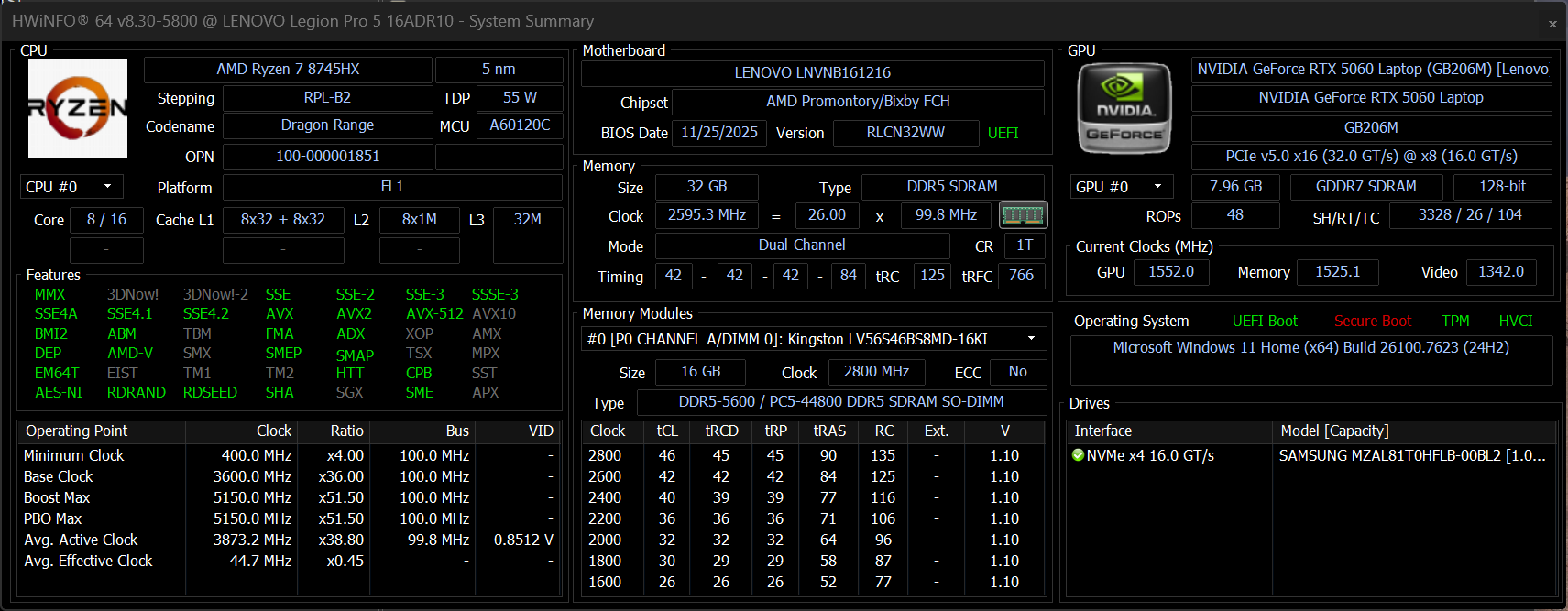
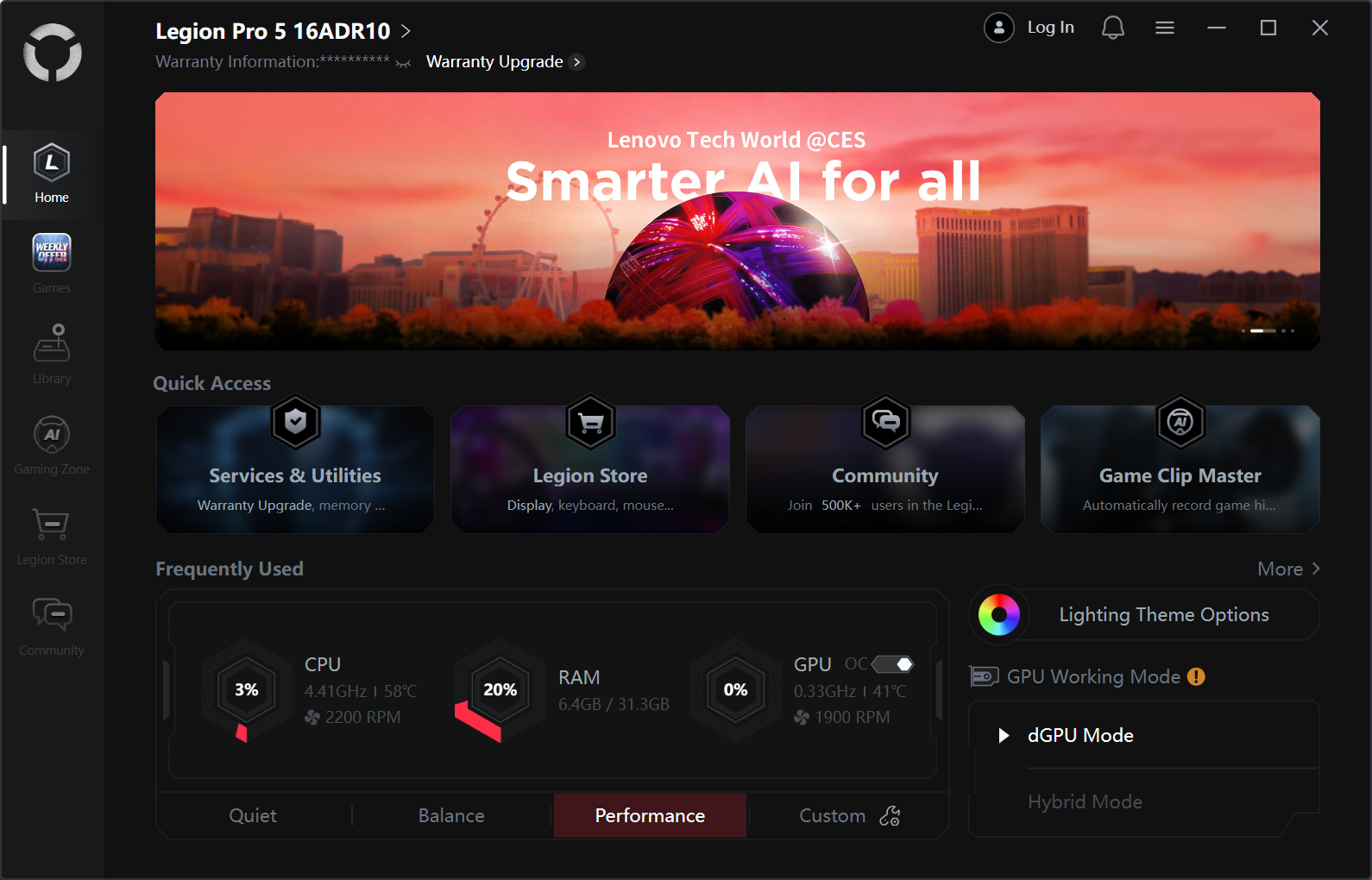
All performance and temperature tests are conducted with Performance/dGPU mode activated in LegionSpace:
CPU and Work Performance
The Lenovo Legion Pro 5 (16″, Gen 10) pairs AMD’s high-performance Laptop HX processors with a capable GPU lineup. The AMD Ryzen 9 8940HX sits near the top of our Top Laptop CPU Ranking at #11, offering strong multi-core performance for gaming, content creation, and heavy multitasking. While exact positions for the Ryzen 9 8945HX and Ryzen 7 8745HX aren’t listed on our ranking yet, the 8945HX is generally understood to be slightly ahead of the 8940HX in performance based on aggregate benchmarks, and the 8745HX is a capable 8-core alternative for lighter workloads.
The AMD Ryzen 7 8745HX is a great choice for a gaming laptop, in terms of performance, especially in single-core.
Single-core performance ensures smooth operation and responsiveness in operating systems, providing a better user experience.
Results are from the Geekbench 6 Single-Core test (higher is better)
Multi-core performance is essential for handling complex and demanding tasks, such as Video editing, CAD, and Scientific simulations.
Results are from the Geekbench 6 Multi-Core test (higher is better)
Here, we evaluate the CPU's performance using a real-world 3D rendering task, assessing its ability to handle complex computations and rendering workloads efficiently.
Results are from the Cinebench 2024 Multi-Core test (higher is better)
Storage Performance
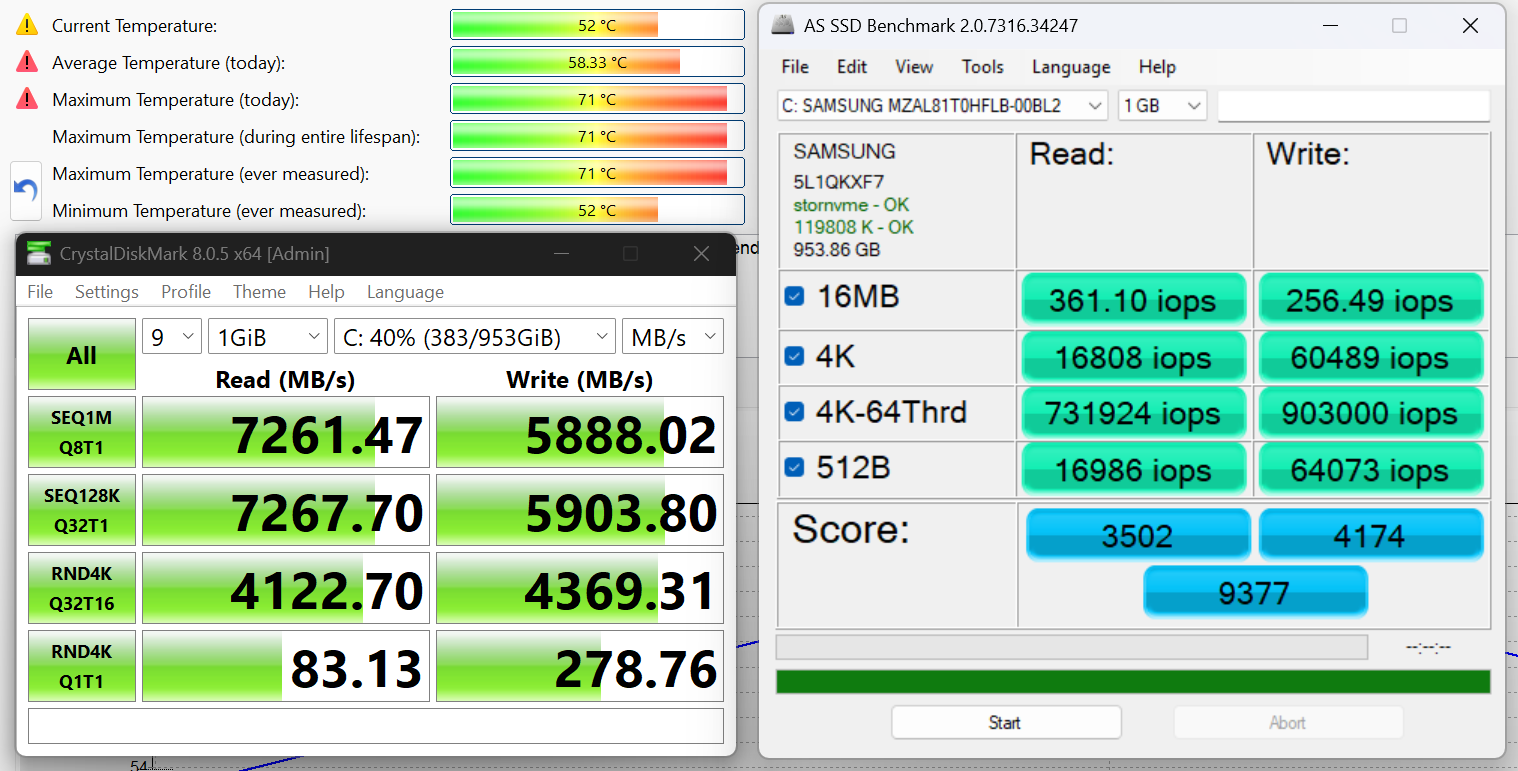
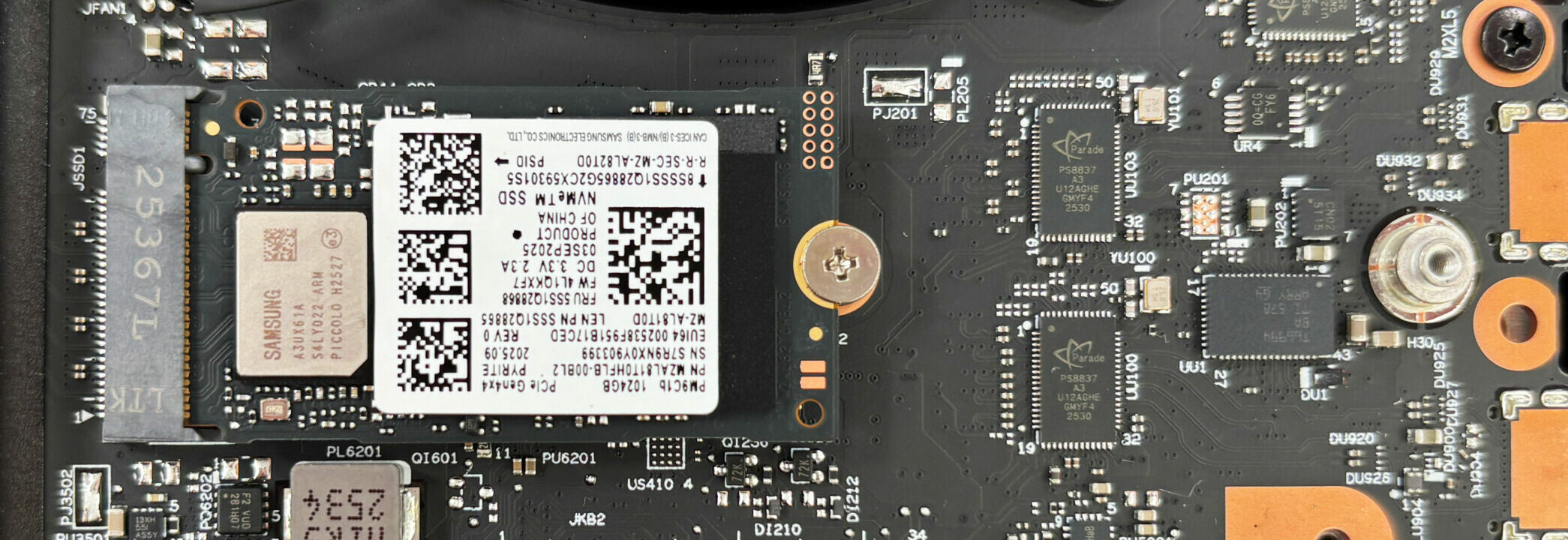
We ordered a configuration with 1TB of storage and the Legion Pro 5 arrived with Samsung MZAL81T0HFLB-00BL2.
It’s a very powerful PCIe 4.0 NVMe drive, reaching 7.3GB/sec sequential read and 5.9GB/sec sequential write speeds in our benchmark, while keeping the temperatures within normal limits.
AI Performance
Here you can see the position of the GPUs and CPUs (NPUs) found within the Lenovo Legion Pro 5 (16", Gen 10) in our AI Hardware Performance Rankings based on their AI processing power, measured in TOPS (Tera Operations Per Second) - a critical metric indicating the computational throughput, particularly for AI tasks.
The first column shows peak performance for INT8/FP8 precision, which is the most widespread metric for evaluating AI inference capabilities. We exclude Sparsity to provide a more accurate reflection of AI performance in dense computation scenarios where sparsity optimizations may not be applicable. The second and third columns show the performance with Sparsity, and FP4 TFLOPS, when supported.
For SoCs, the results reflect the peak performance of the integrated NPU. Additionally, it’s important to note that, according to Microsoft, a NPU must have at least 40 TOPS of AI computing power for the PC to be considered “AI-capable.”
| # | GPU / CPU (NPU) | TOPS INT8/FP8 No Sparsity | TOPS INT8/FP8 Sparsity | TFLOPS FP4 Sparsity |
|---|---|---|---|---|
| 669. | NVIDIA GeForce RTX 5070 Ti (Laptop) | 209 | 418 | 836 |
| 849. | NVIDIA GeForce RTX 5070 (Laptop, 8GB GDDR7) | 173 | 346 | 692 |
| 1014. | NVIDIA GeForce RTX 5060 (Laptop) | 133 | 266 | 532 |
GPU and Gaming Performance
Graphics options for the Pro 5 include NVIDIA’s GeForce RTX lineup, from the RTX 5070 (Laptop) at #27 in our Top Laptop Graphics Ranking down to the RTX 5060 (#60) and RTX 5050 (#85). These GPUs provide a range of performance levels, so you can choose a configuration that suits your balance of gaming performance and price, while still benefiting from modern features like ray tracing and DLSS.
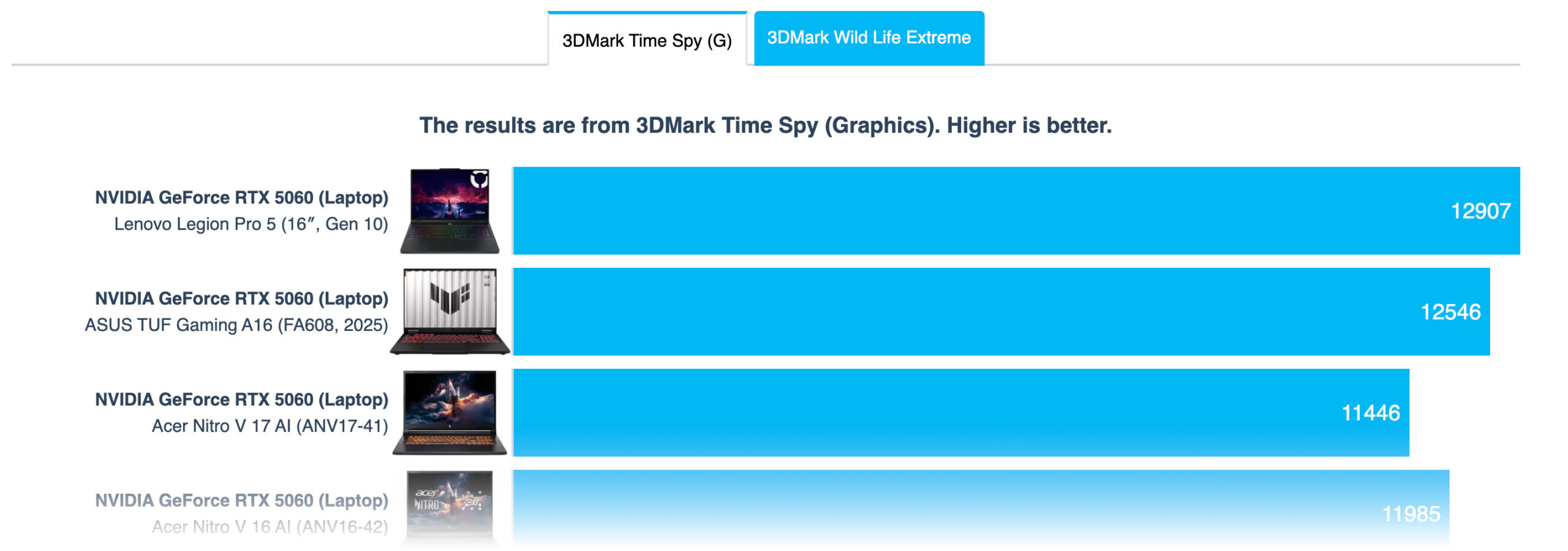
Meet the most powerful RTX 5060 laptop we’ve ever tested! The Lenovo Legion Pro 5 (16″, Gen 10) outperforms the runner-up, the ASUS TUF Gaming A16 (FA608), by 3%, and beats entry-level machines like the ASUS V16 (V3607) by an impressive 33%. Yes, not all RTX 5060 GPUs are created equal.
The results are from 3DMark Time Spy (Graphics). Higher is better.
The results are from 3DMark Wild Life Extreme Unlimited. Higher is better.
Gaming tests

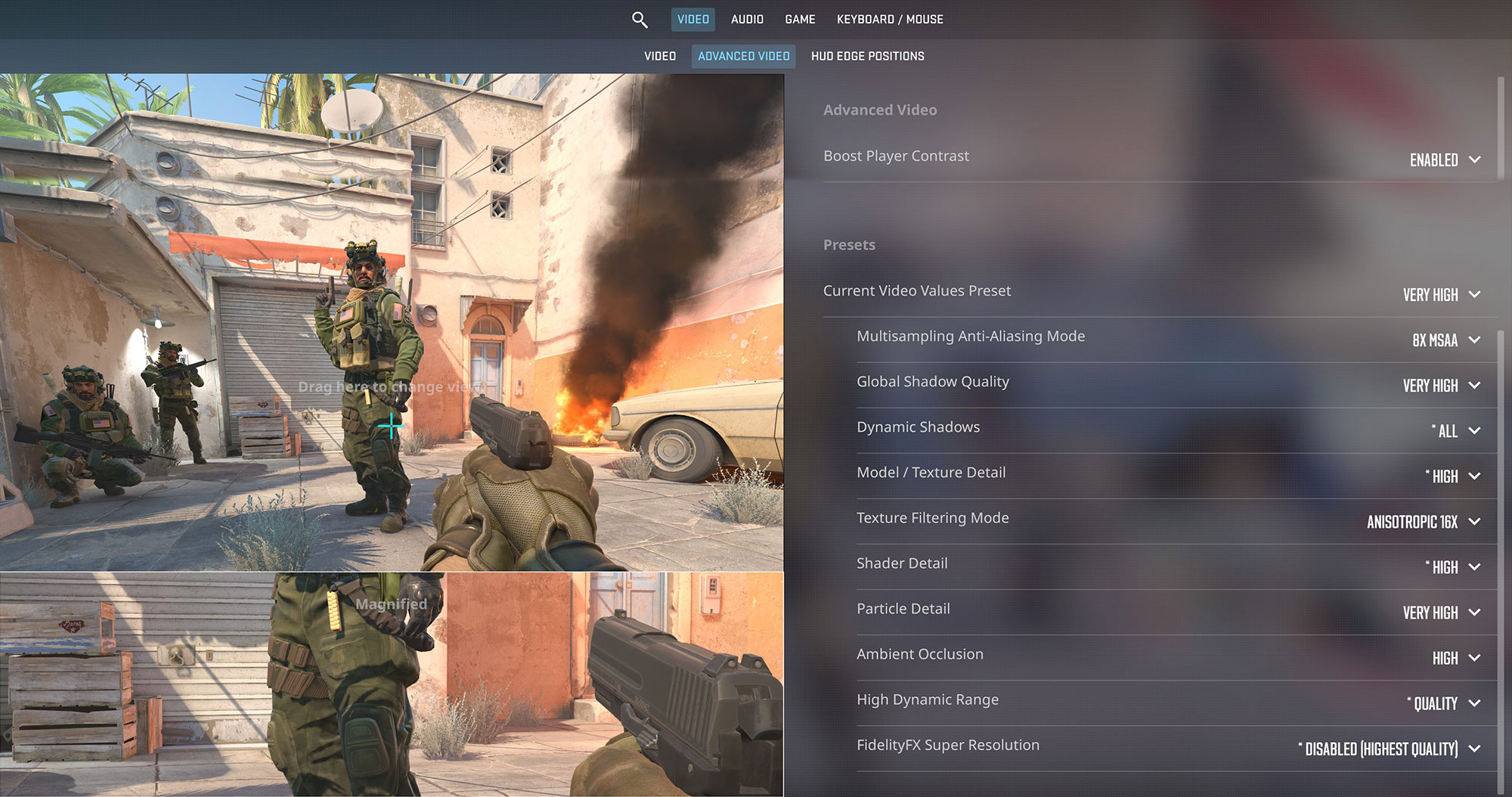
The Lenovo Legion Pro 5 delivers a competitive edge in Counter-Strike 2. At the native 1600p resolution on Very High settings, it averages 144 FPS, providing a smooth experience that looks stunning on the fast OLED panel.
| Counter Strike 2 | 1600p, Very High (Check settings) |
| Average FPS | 144 FPS |

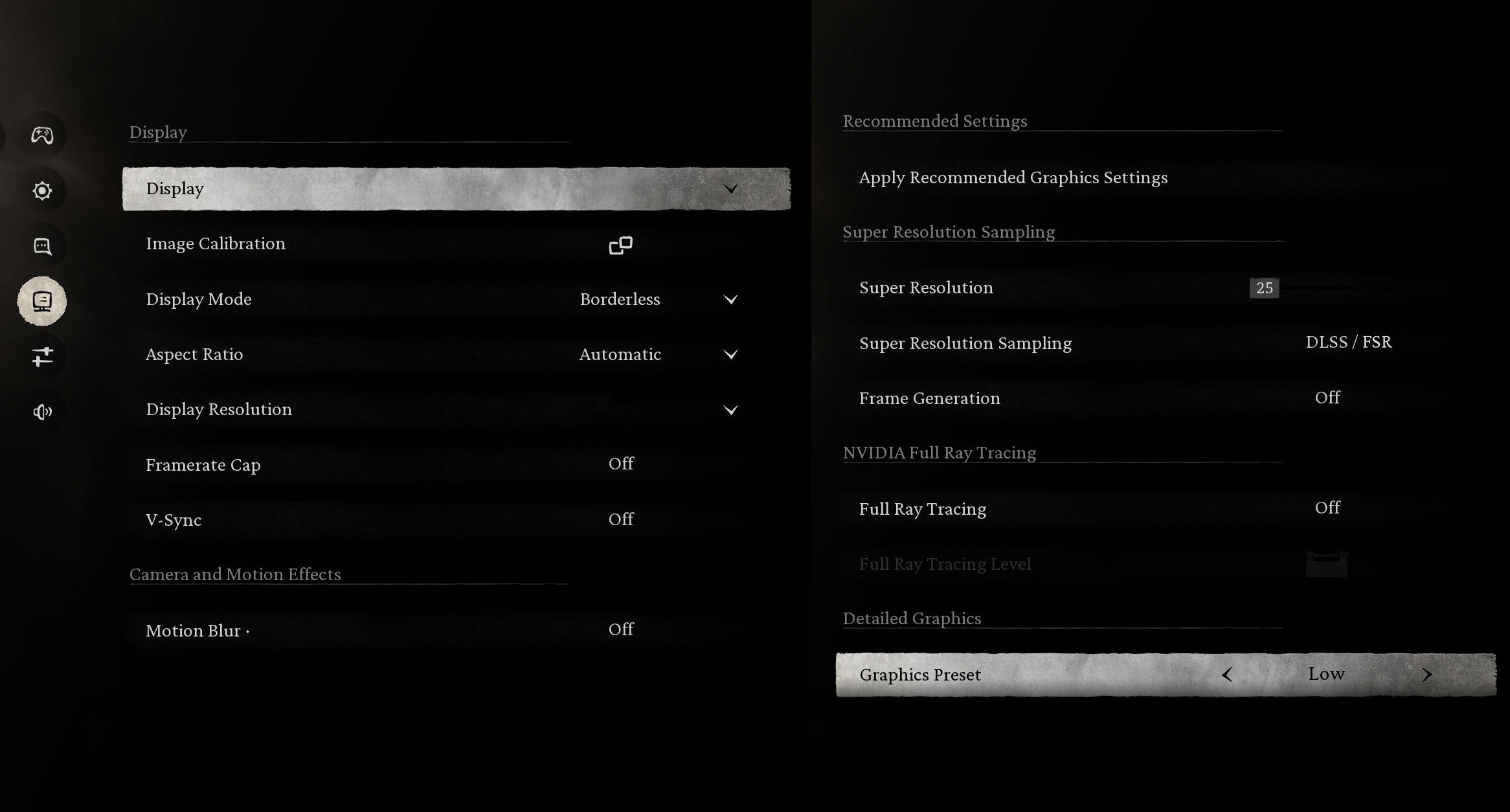
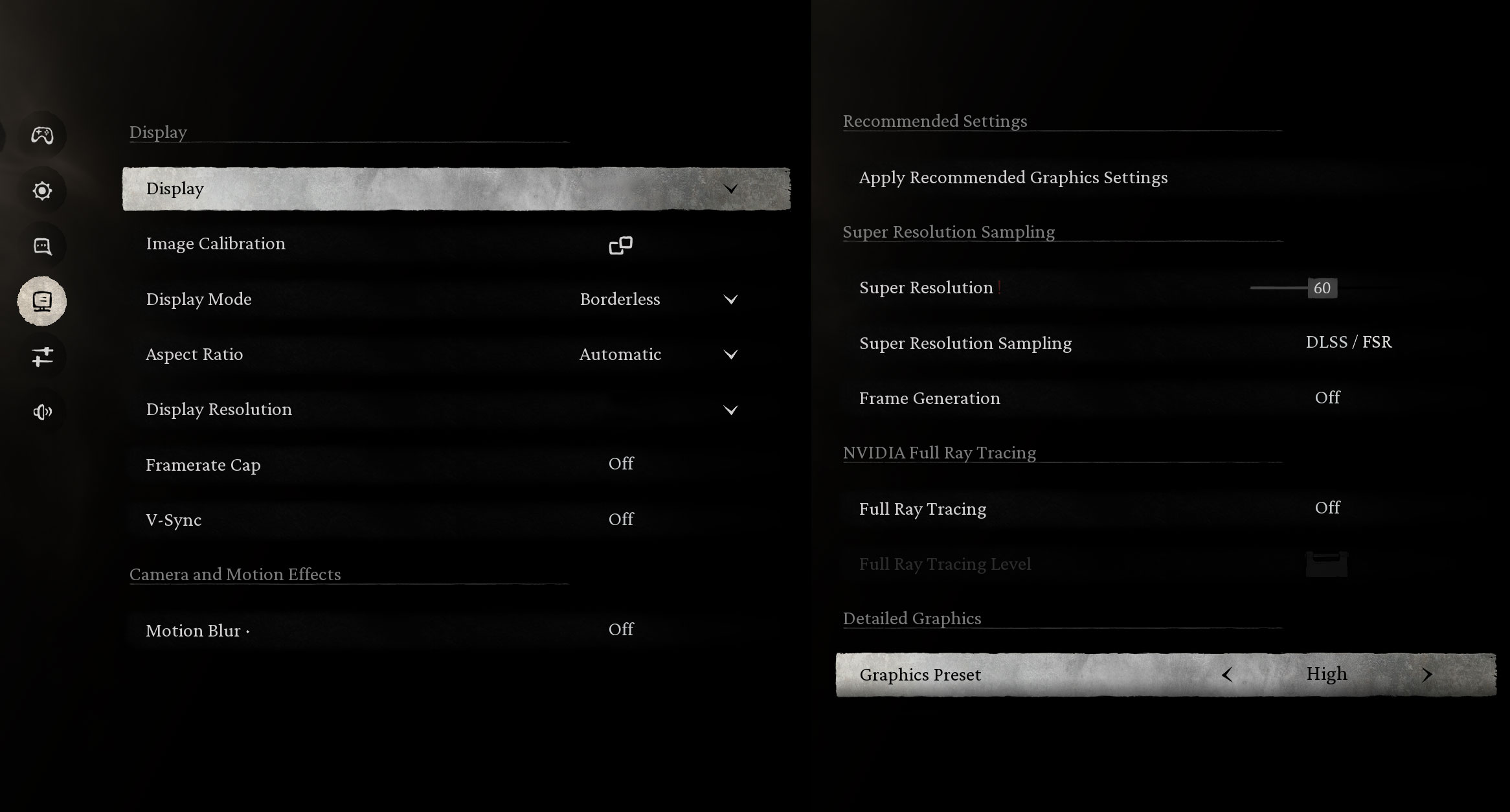
In the visually demanding Black Myth: Wukong, the RTX 5060 performs admirably. It hits a massive 168 FPS on Low settings and maintains a solid 77 FPS on High settings at native 1600p, ensuring fluid combat and beautiful visuals.
| Black Myth: Wukong | 1600p, Low (Check settings) | 1600p, High (Check settings) |
| Average FPS | 168 FPS | 77 FPS |

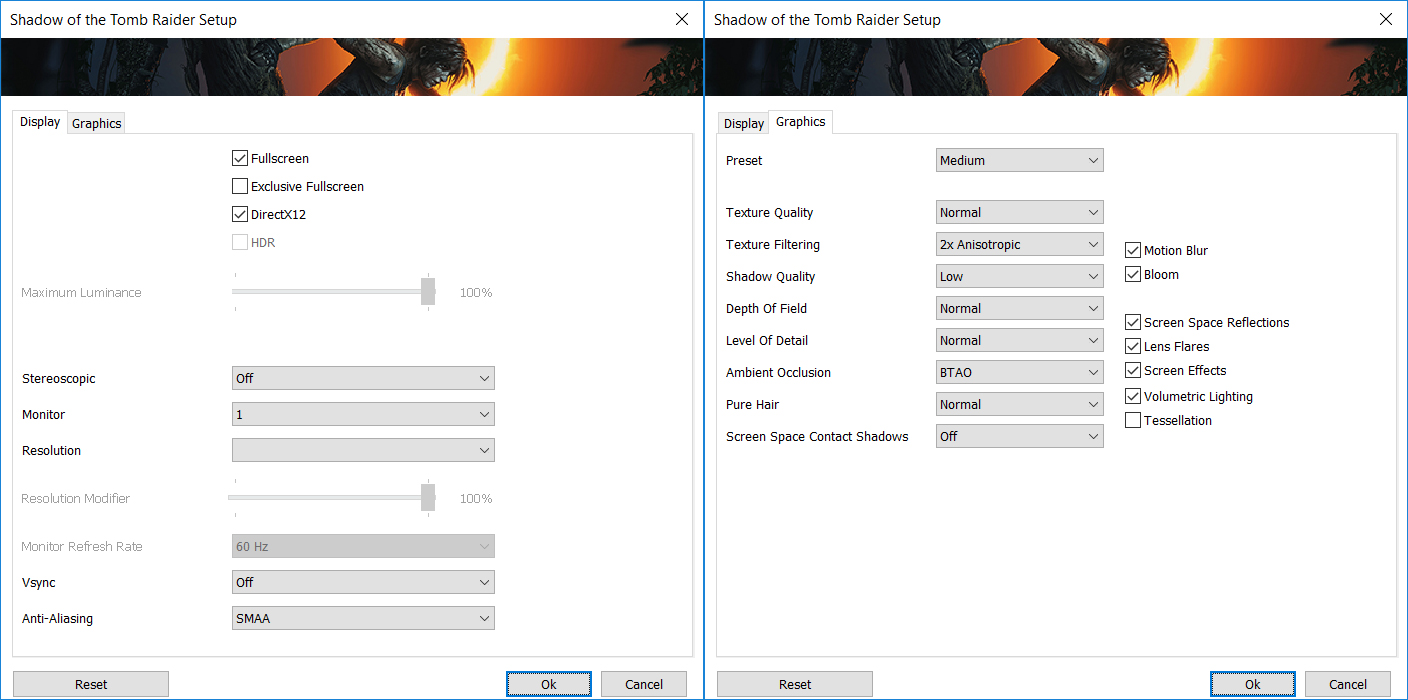
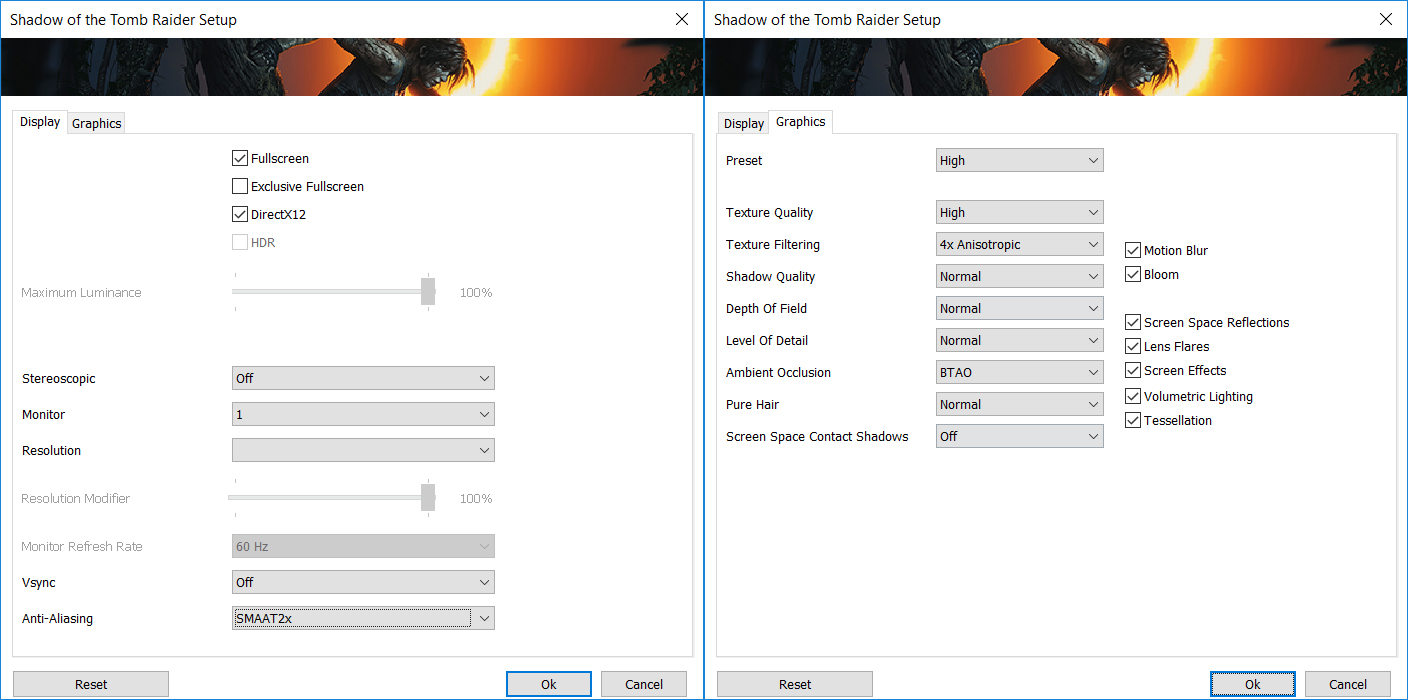
Adventure games look and feel great on this machine. Shadow of the Tomb Raider runs effortlessly at native 1600p, averaging 123 FPS on Medium and 114 FPS on High settings.
| Shadow of the Tomb Raider | 1600p, Medium (Check settings) | 1600p, High (Check settings) |
| Average FPS | 123 FPS | 114 FPS |

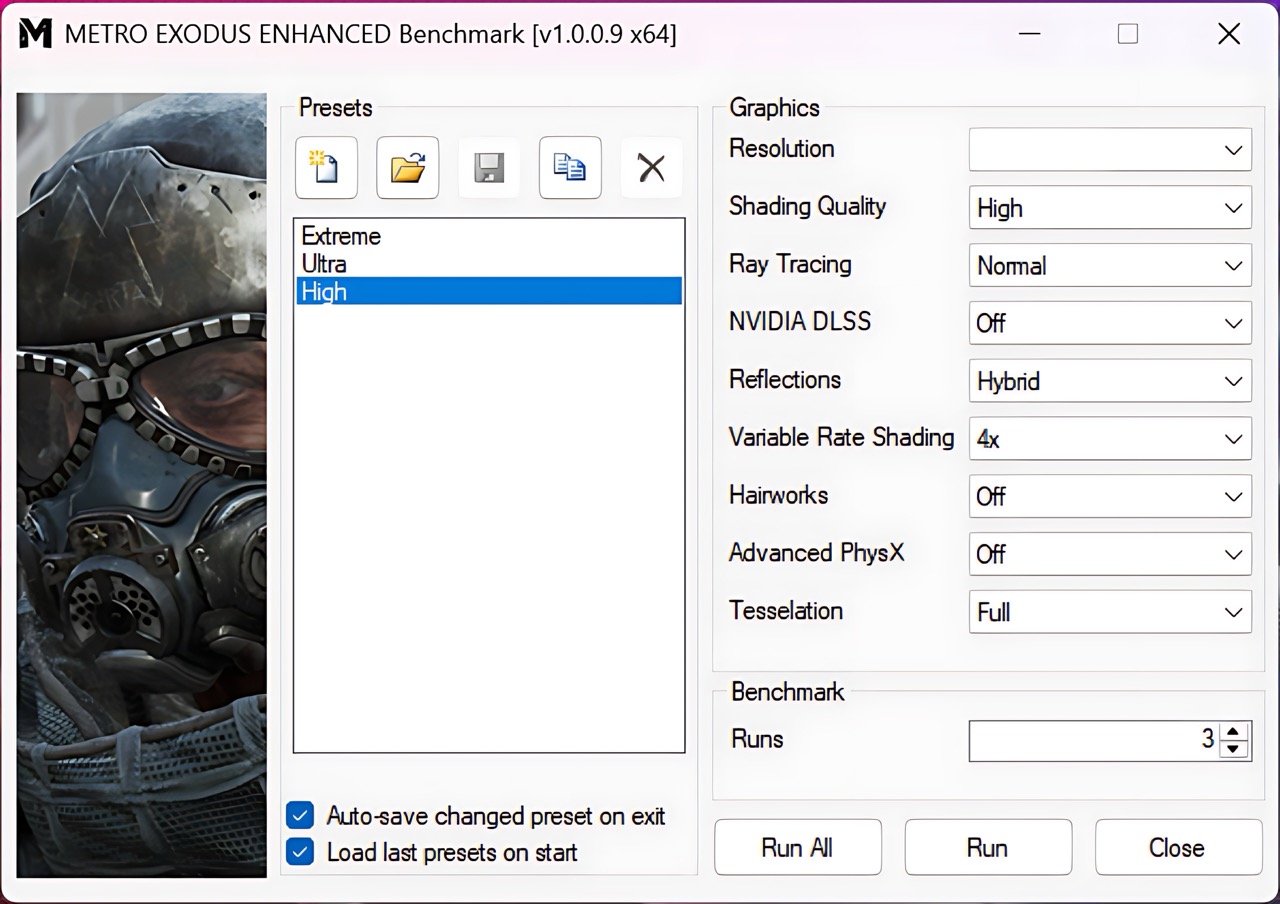
For heavy ray-tracing workloads like Metro Exodus Enhanced Edition, dropping the resolution slightly ensures high frame rates. At 1200p on High settings, the laptop achieves a very smooth 96 FPS.
| Metro Exodus Enhanced Edition | 1200p, High (Check settings) |
| Average FPS | 96 FPS |
Temperatures and Comfort, Noise, Stability
At idle, the Legion Pro 5’s CPU package stays at around 46°C. The laptop cycles between being completely silent and slightly audible every few minutes.
Office Work, Web Development, Design
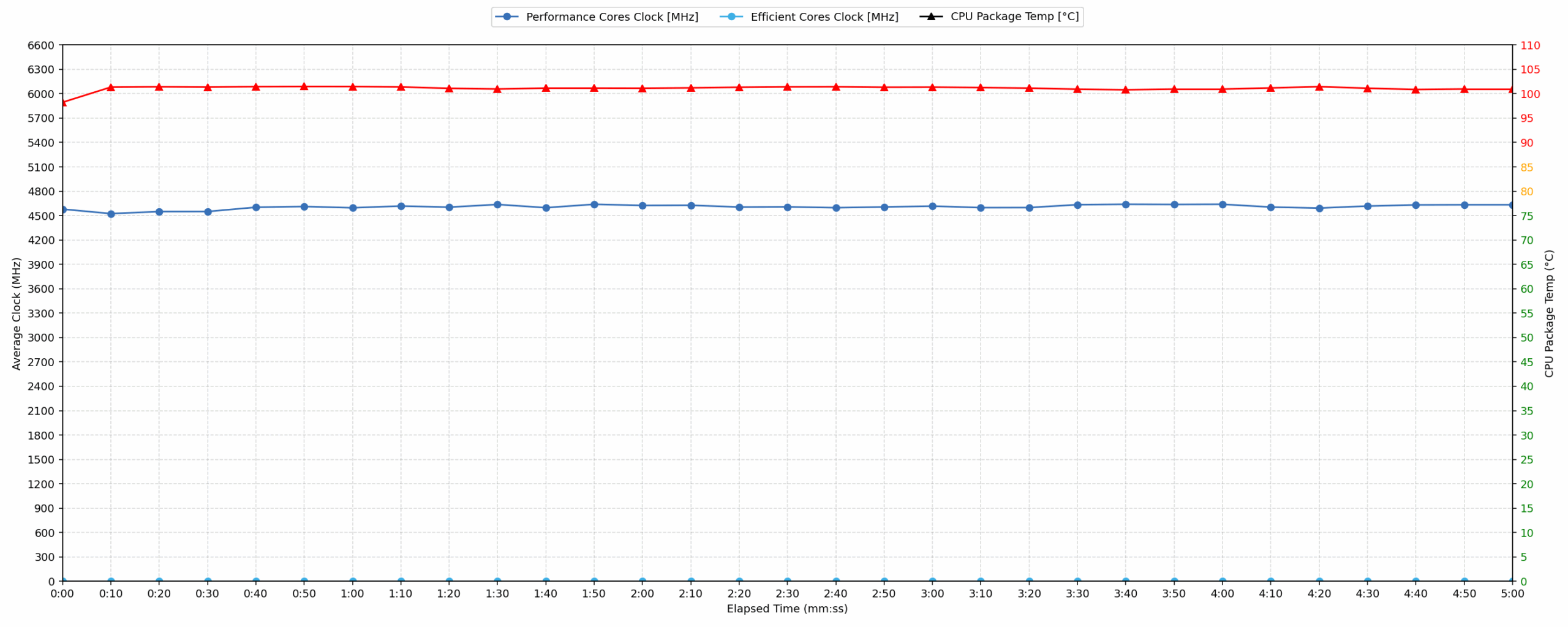
Short periods (0:00 – 0:10 s) of 100 % CPU load
This test shows the CPU behavior during short periods of serious load. It’s important for users who are looking for laptops suitable for tasks like Web Design and Programming.
| AMD Ryzen 7 8745HX | Avg. P-Core Clock | Avg. CPU Temp. | Avg. CPU Power |
| Lenovo Legion Pro 5 (16″, Gen 10) | 4579 MHz | 98 °C | 89 W |
During the initial burst of short-term load, the AMD Ryzen 7 8745HX achieves a high average clock speed of 4579 MHz, peaking at 4654 MHz. This performance is supported by a significant power draw, averaging 89 W and peaking at 95 W. However, these aggressive settings result in high thermal readings. The average temperature during this ten-second window reaches 98 °C, with a peak of 101 °C. This significantly exceeds the 90 °C threshold for high temperatures, indicating the cooling system prioritizes maximum frequency over immediate thermal restraint.
Video editing, Scientific computing, Software compilation, 3D rendering
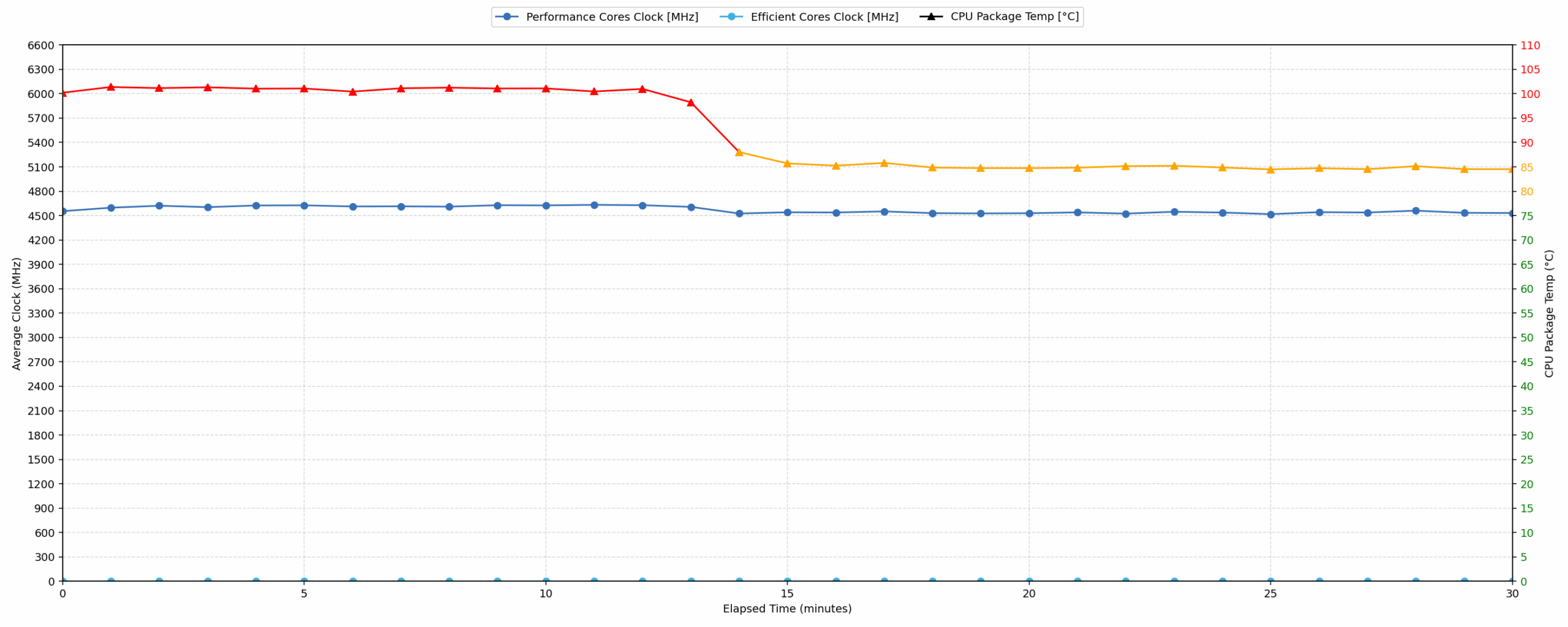
Long periods (0:00 – 30:00 min) of 100 % CPU load
This test shows the CPU behavior during long periods of serious load. It’s important for users who are looking for laptops suitable for tasks like Video Editing and 3D Rendering.
| AMD Ryzen 7 8745HX | Avg. P-Core Clock | Avg. CPU Temp. | Avg. CPU Power |
| Lenovo Legion Pro 5 (16″, Gen 10) | 4572 MHz | 92 °C | 85 W |
Under sustained 30-minute loads, the Legion Pro 5 demonstrates remarkable stability. The average clock speed remains nearly identical to the short-burst phase at 4572 MHz, a minimal drop that ensures consistent performance for rendering or compilation. Power consumption stabilizes at a high 85 W. Temperatures remain in the high category, averaging 92 °C throughout the test. While this is above the 90 °C mark, the lack of significant frequency throttling suggests the system is engineered to maintain high-performance levels consistently during demanding long-term professional workloads.
Gaming Stability
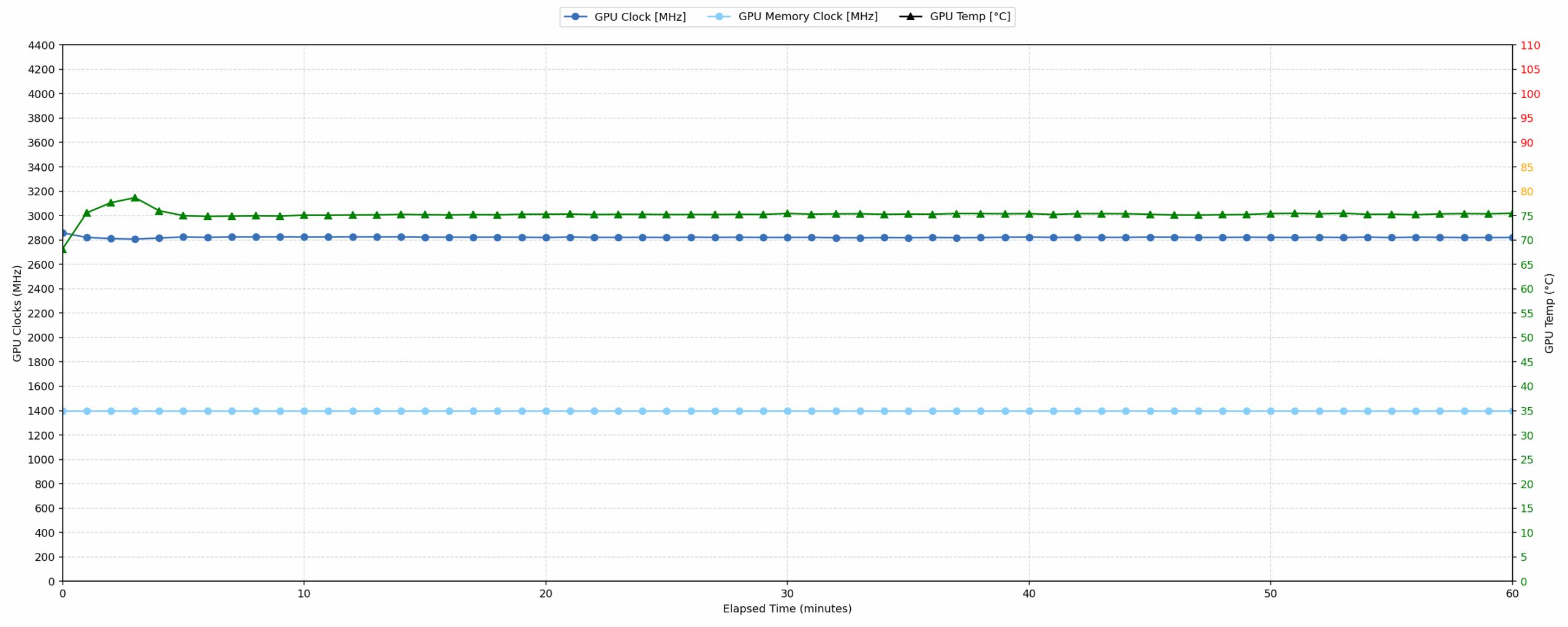
Continuous gaming (1-hour test)
This test evaluates the laptop’s performance under sustained GPU load and high CPU usage.
| NVIDIA GeForce RTX RTX 5060 | Avg. GPU Clock | Avg. GPU Temp. | Avg. Memory Clock | Avg. GPU Mem Temp. | Avg. GPU Power |
| Lenovo Legion Pro 5 (16″, Gen 10) | 2821 MHz | 75 °C | 1400 MHz | 61 °C | 113 W |
| Lenovo LOQ 17IRX10 | 2742 MHz | 85 °C | 1393 MHz | 77 °C | 113 W |
| ASUS TUF Gaming A16 FA608 (2025) | 2708 MHz | 84 °C | 1387 MHz | 78 °C | 111 W |
| Acer Nitro V 16 AI (ANV16-42) | 2575 MHz | 84 °C | 1354 MHz | 79 °C | 93 W |
| ASUS V16 (V3607) | 2120 MHz | 76 °C | 1232 MHz | 79 °C | 68 W |
The Legion Pro 5 delivers superior gaming performance compared to other RTX 5060 laptops. It maintains the highest average GPU clock in the group at 2821 MHz while drawing 113 W. Thermally, it performs excellently; the average core temperature is 75 °C and the memory temperature is 61 °C, both of which are firmly in the good category. Compared to the Lenovo LOQ and ASUS TUF models, which run at 84-85 °C core temperatures at similar power levels, the Legion Pro 5 operates significantly cooler while sustaining higher frequencies.
Battery Life
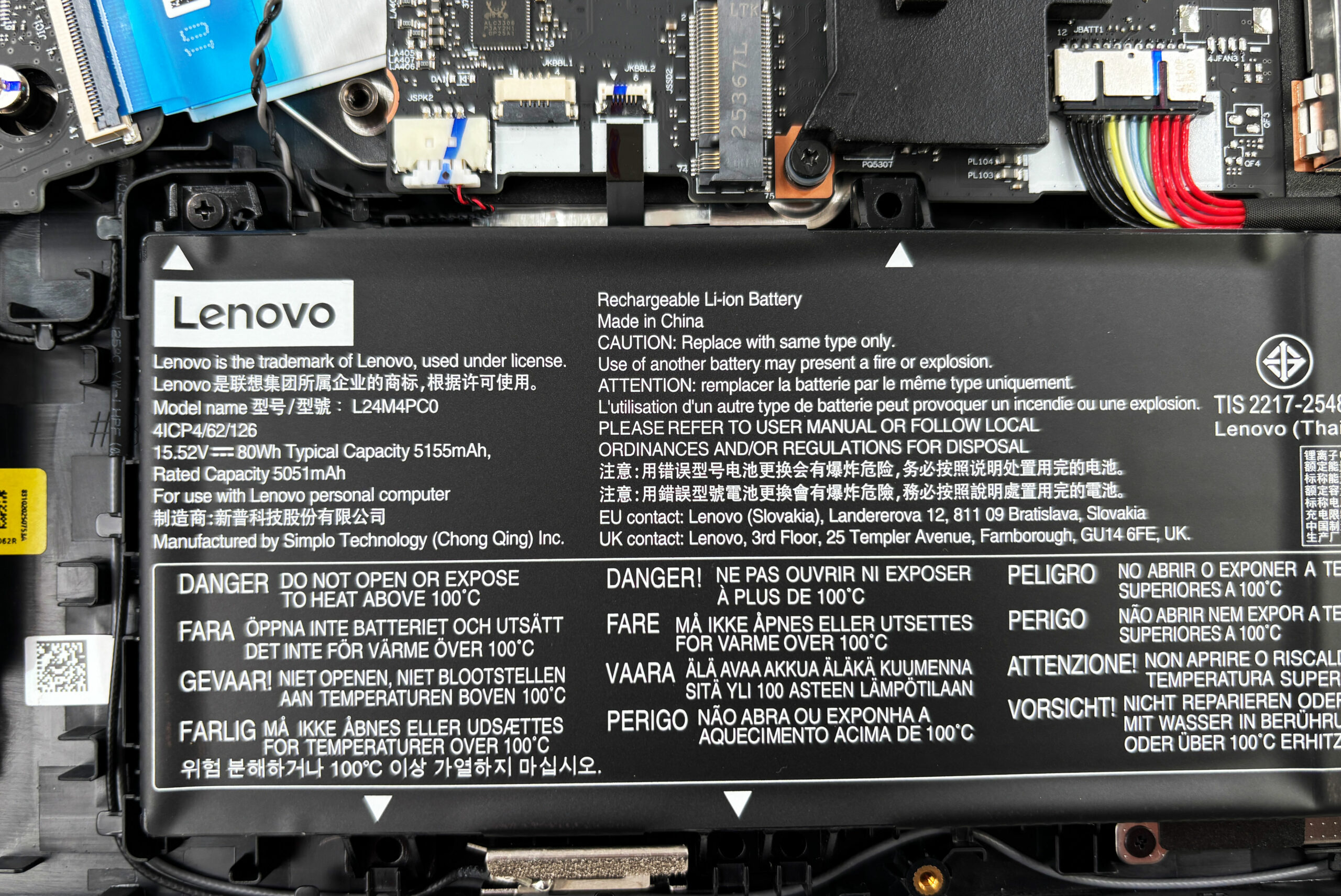
The battery of the Lenovo Legion Pro 5 (16″, Gen 10) is a 4-cell Li-ion, model L24M4PC0. Its nominal voltage is 15.52V and stores 80 Wh of electrical energy.
We tested the laptop with Quiet mode selected in LegionSpace, Best Power Efficiency in Windows Settings and Hybrid mode for the GPU.
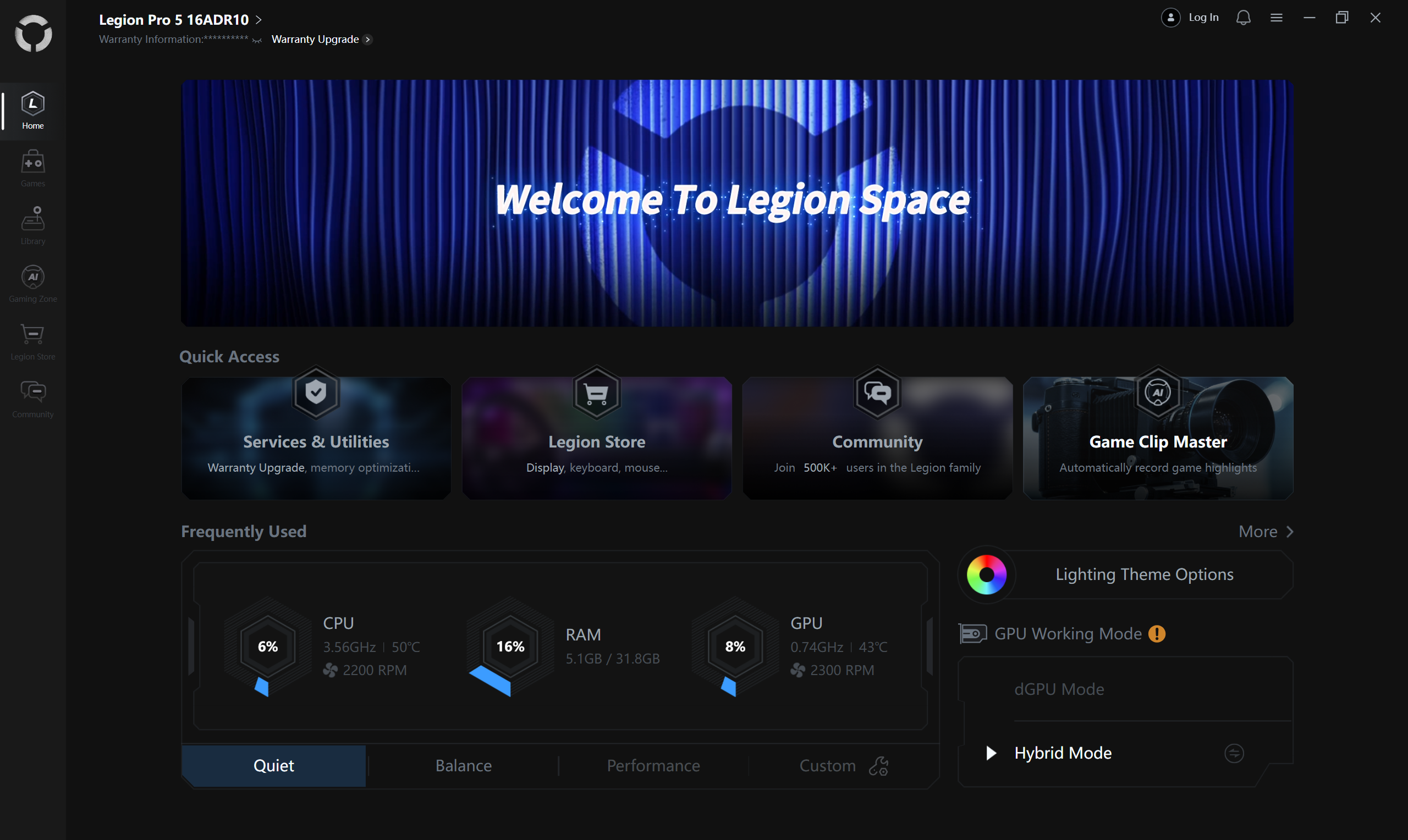
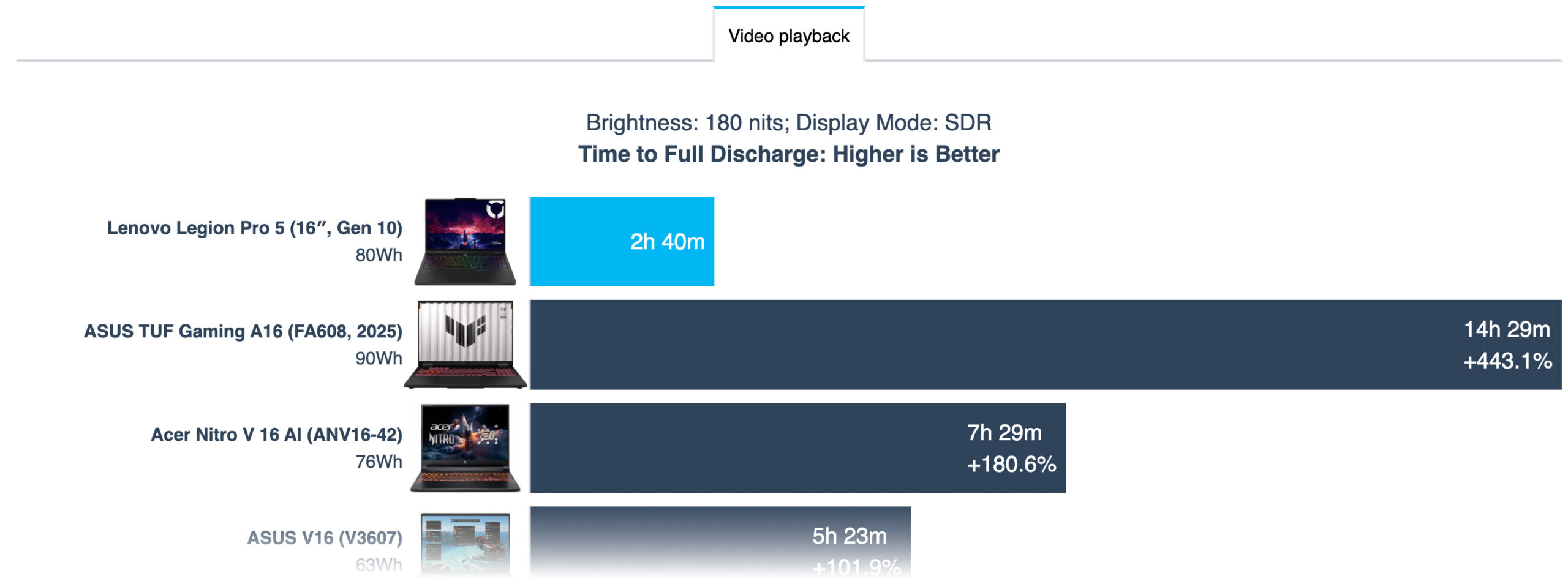
Even in our relatively light battery test, the laptop lasted only 2 hours and 40 minutes, despite official claims suggesting it should run for around 5–6 hours. This is by far the worse contender in our comparison.
That’s why it’s worth reading our in-depth reviews with real laboratory results rather than relying solely on standard technical specifications.
Brightness: 180 nits; Display Mode: SDR
Time to Full Discharge: Higher is Better
Disassembly, Upgrade options, and Maintenance
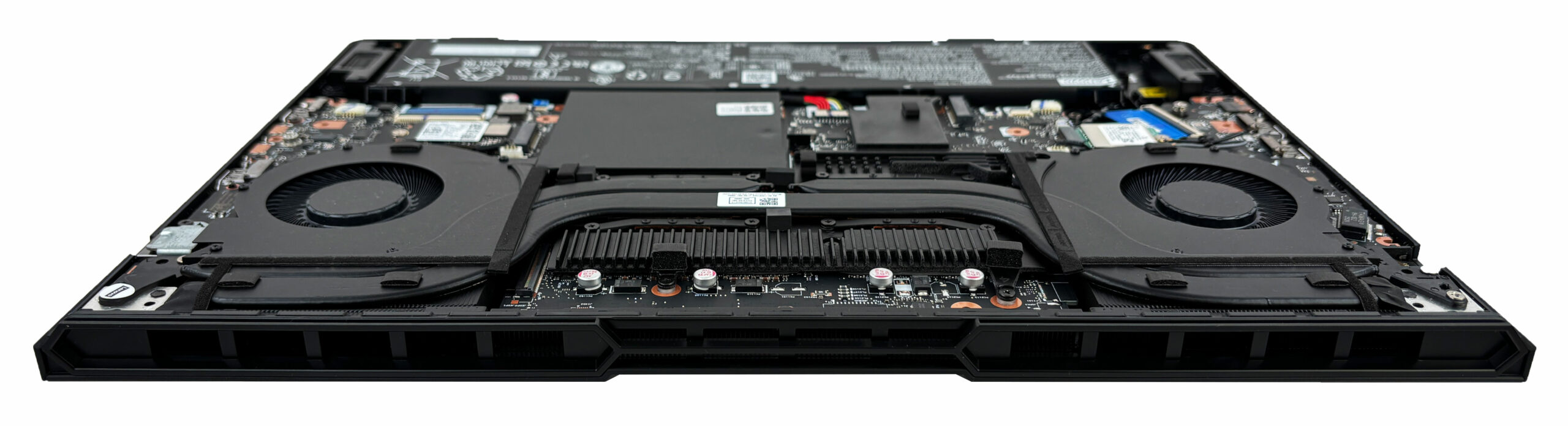
Getting inside the Legion Pro 5 16 Gen 10 is straightforward: remove the ten bottom-panel screws, then work around the clips with a thin plastic tool so you don’t dip into the chassis and nick internal components. Once the cover is off, the layout is clean and easy to read, with clearly separated cooling, memory, storage, wireless, and battery zones.
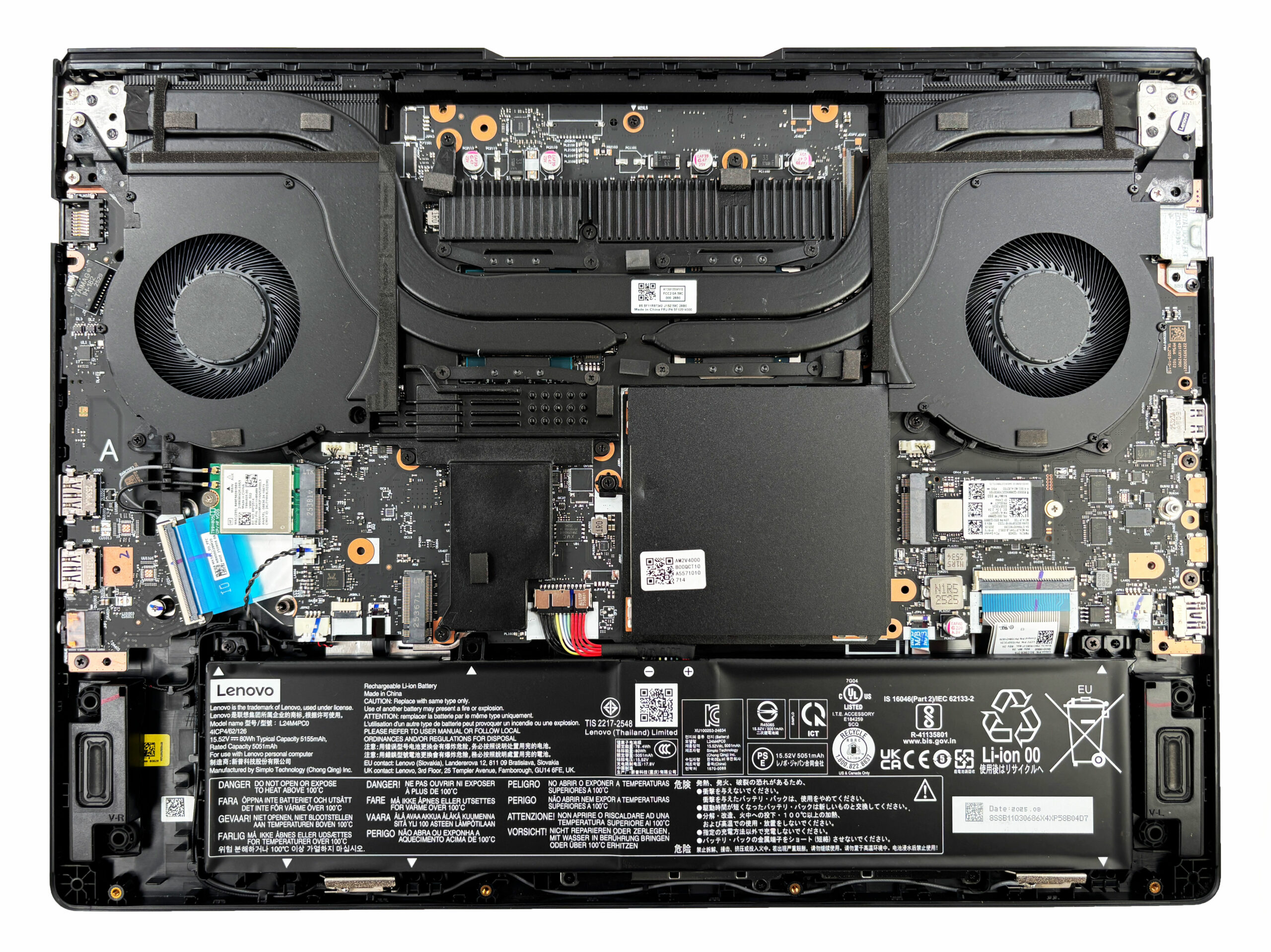
Cooling is one of the highlights here. You get a dual-fan setup, multiple heat pipes, and a large rear fin stack that feeds a wide rear exhaust, with additional venting at the sides. In practice, this is the kind of internal design we like to see on a performance-focused 16-inch machine because service access remains good while thermal hardware is still substantial.
The battery is a removable 80Wh unit labeled 15.52V, and it is secured in a user-friendly way with a cable connector and screws rather than adhesive. Lenovo also advertises Super Rapid Charge support for this platform, which is a nice bonus for day-to-day usability.
Storage is upgrade-friendly: there are two M.2 slots on the board. In our reviewed configuration, the primary drive is a Samsung PM9C1b 1TB NVMe SSD running over PCIe 4.0 x4, and the second slot is available for expansion.
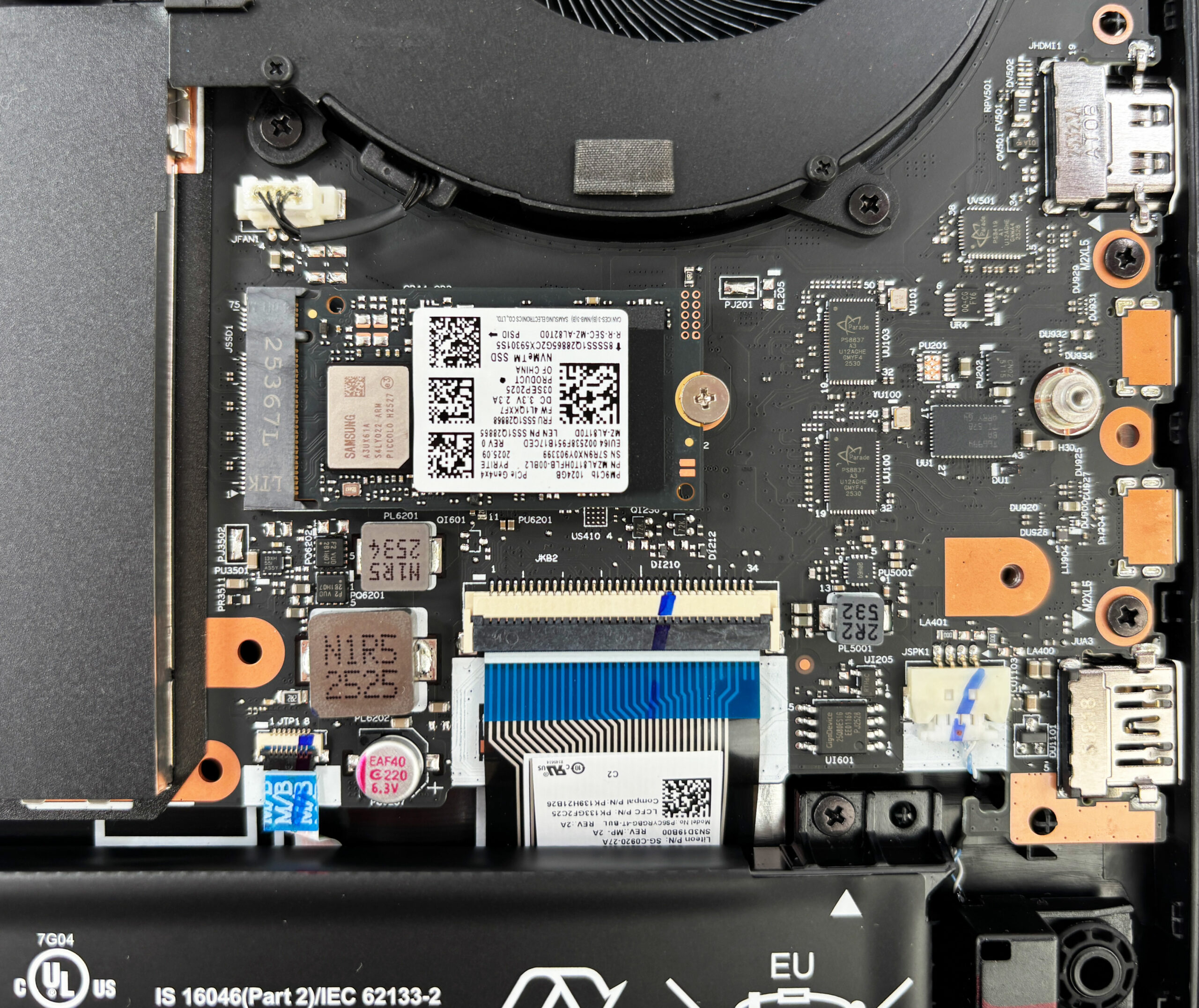
Officially, Lenovo lists support for up to two M.2 2242 SSDs, up to 1TB each in standard offerings. However, it supports 2280-sized modules, and can fit more than 1TB on each one.
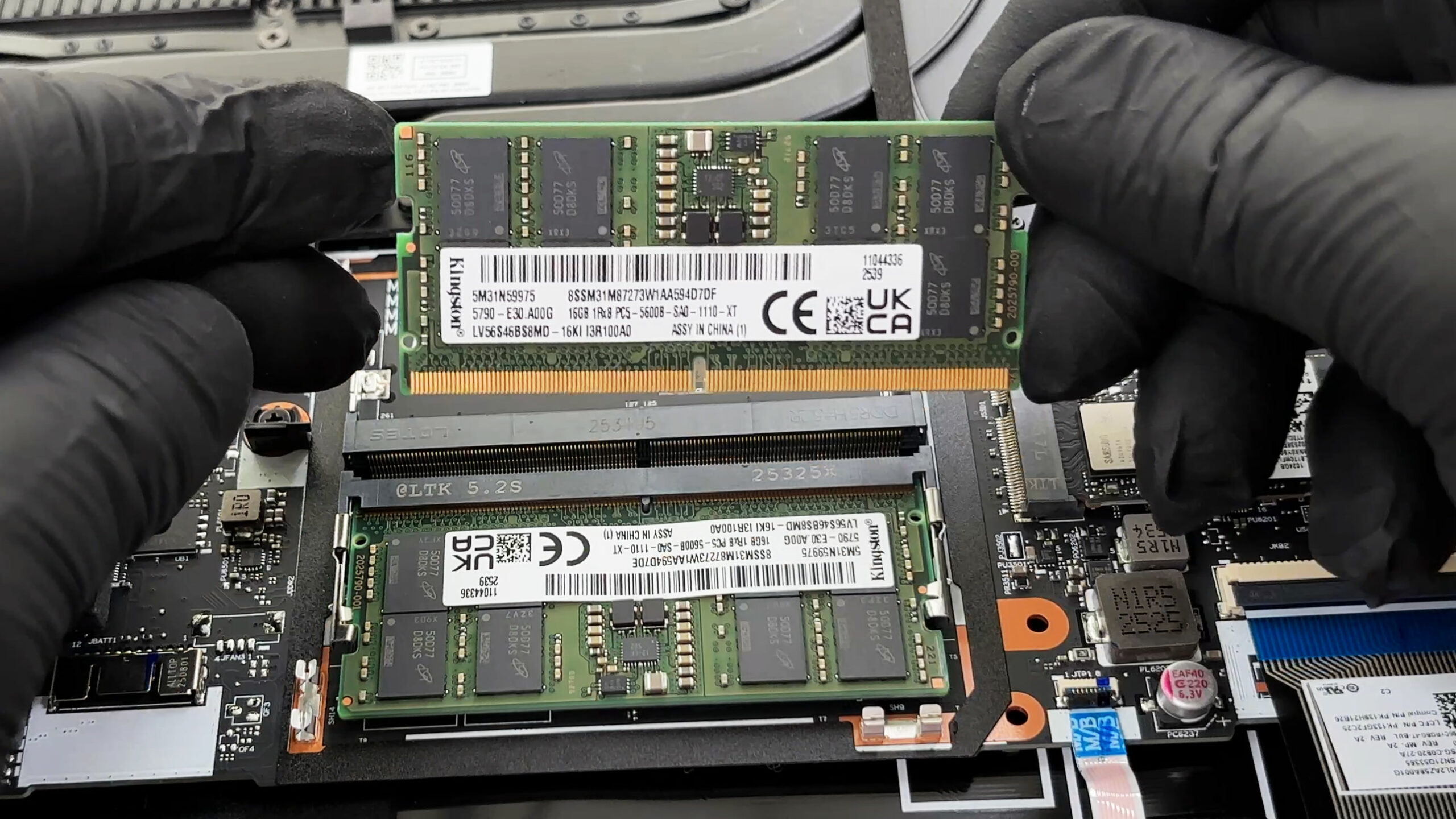
Memory is also a strong point. Under the EMI shield, you get two DDR5 SO-DIMM slots, with official support up to 32GB DDR5-5200 in dual-channel mode. We have two Kingston 16GB sticks PC5-5600 in our unit.
The wireless card is a replaceable M.2 module with two antenna leads, so Wi-Fi serviceability is not locked down. Depending on configuration, this model line can come with either Wi-Fi 6 plus Bluetooth 5.2 or Wi-Fi 7 plus Bluetooth 5.4.
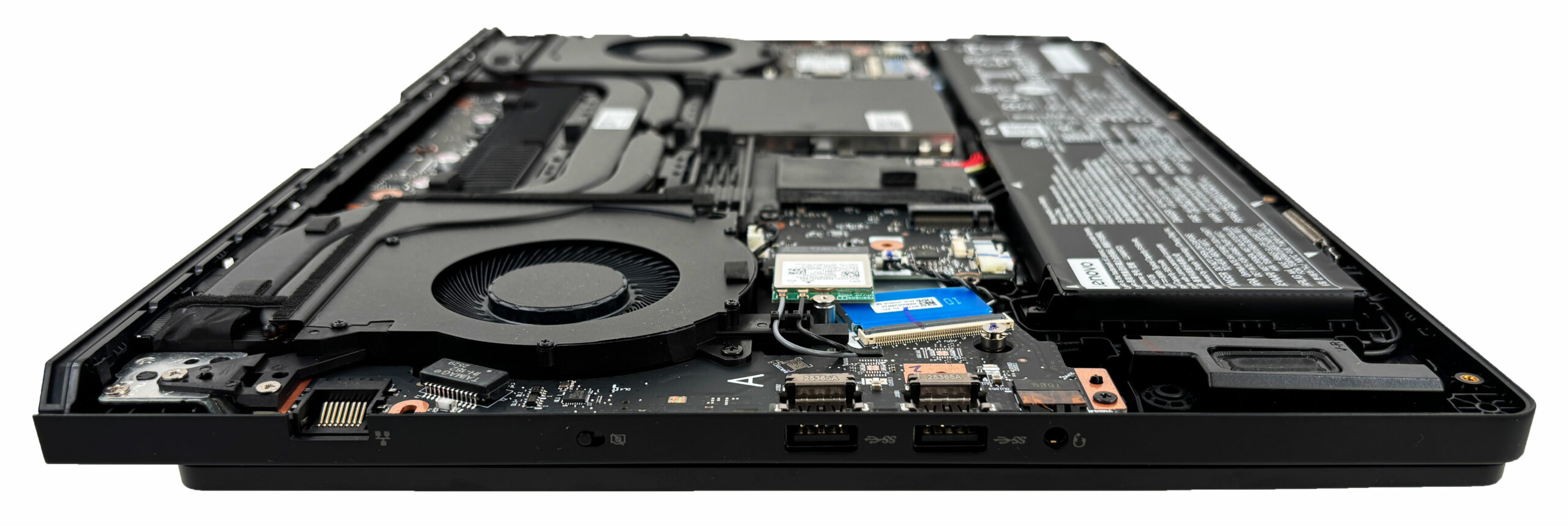
As for what you can and cannot change long-term: RAM, both SSD positions, the Wi-Fi card, and the battery are user-replaceable, while the CPU and GPU are soldered to the motherboard and set your hard performance ceiling from day one.
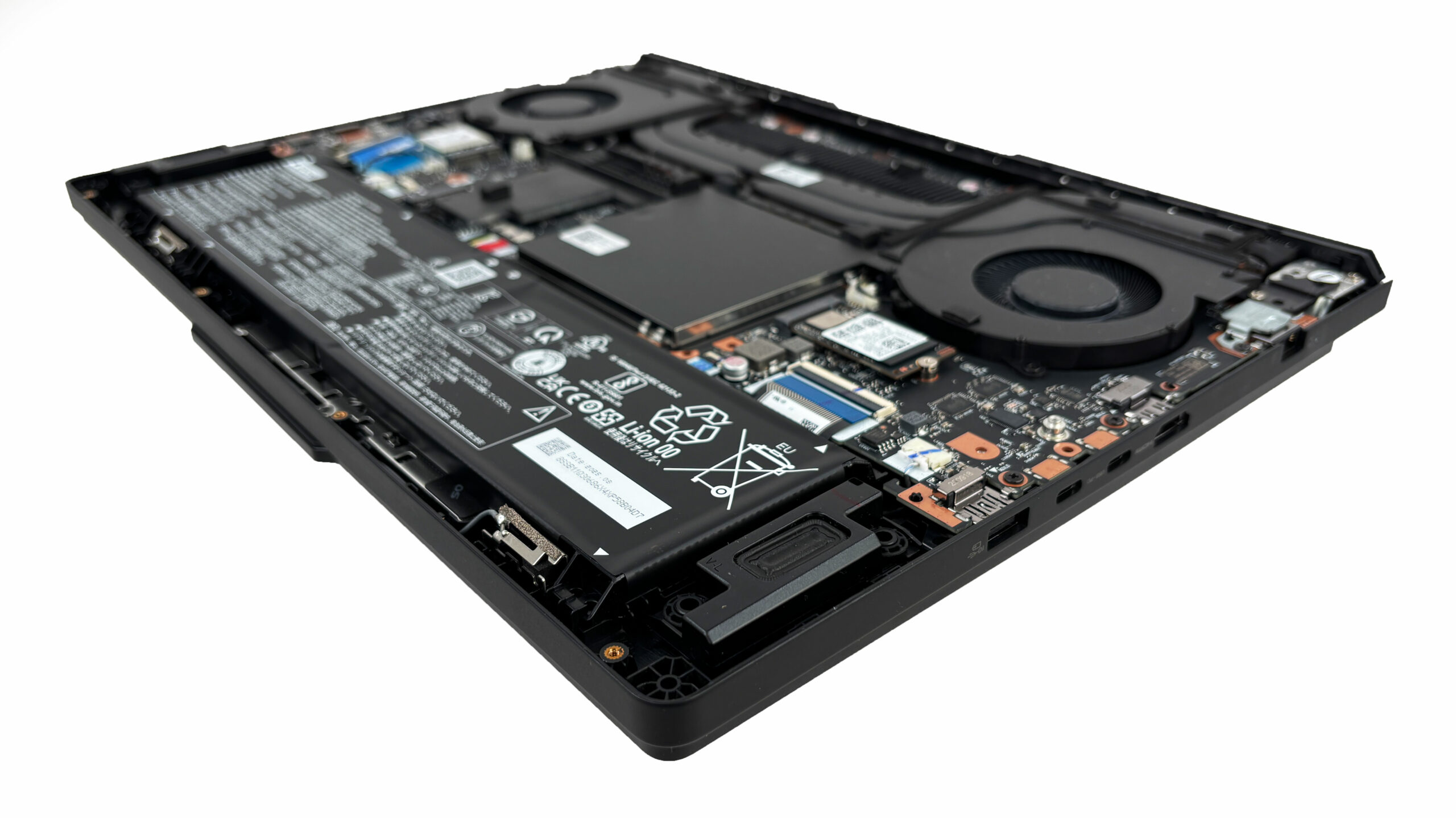
Overall, maintenance is comfortably above average for a modern gaming laptop and upgradeability is good in the areas that matter most.
Verdict
 The Lenovo Legion Pro 5 (16″, Gen 10) is a gaming laptop that knows exactly what it wants to be: a real performance machine. It delivers class-leading gaming power in a chassis that is refreshingly understated and professional. It’s a laptop designed for the gamer who values frame rates and stability over flashy RGB or aggressive styling, offering a mature alternative in a market often dominated by “gamer” aesthetics.
However, this laser focus on performance comes with a significant trade-off. While it excels when plugged in, its portability is severely hampered by abysmal battery life, making it more of a stationary powerhouse than a true mobile companion.
You can check the prices and configurations in our Specs System: https://laptopmedia.com/series/lenovo-legion-pro-5-16-gen-10/
✅ The Good
The standout feature of the Legion Pro 5 is its exceptional gaming performance. Our RTX 5060 model proved to be the fastest laptop with this GPU we have ever tested, outperforming all its competitors. This is achieved thanks to an excellent cooling system that keeps the GPU running cool and stable, allowing for sustained high clock speeds without throttling.
The display options are also fantastic. Whether you choose the fast IPS panel or the stunning 165Hz OLED screen (as tested on the AMD model), you get a high-quality visual experience that is completely PWM-free, ensuring eye comfort. The laptop is also highly upgradeable, featuring two user-accessible RAM slots and two M.2 SSD slots, providing great long-term value.
We also appreciate the excellent keyboard layout with full-sized arrow keys and a NumPad, as well as the robust port selection that includes multiple USB-C ports and HDMI 2.1.
❌ The Bad
The most glaring flaw is the terrible battery life. Lasting less than 3 hours in our tests, it is one of the worst performers in its class, significantly limiting its use away from a power outlet. It is a laptop that demands to be tethered.
While the GPU stays cool, the CPU tends to run very hot under sustained load, often hitting temperatures above 90°C. Additionally, there are no biometric login options (fingerprint or IR), which feels like a missed convenience feature on a modern device. The lack of an SD card reader might also be a disappointment for content creators.
🆚 The Competitors
When compared to the ASUS TUF Gaming A16 FA608 (detailed review), the Legion Pro 5 wins on raw GPU performance but gets absolutely crushed in battery life. The TUF A16 offers over 14 hours of endurance compared to the Legion’s sub-3 hours, making the ASUS a vastly superior choice for mobility.
Against a rival like the Acer Nitro V 16 AI ANV16-42 (detailed review), the Legion justifies its “Pro” moniker with significantly higher GPU clock speeds and better build quality. While the Acer is a competent mid-range option, the Legion Pro 5 delivers a more premium, high-performance experience for the enthusiast gamer.
Pros
- Record-breaking GPU performance (fastest RTX 5060 tested)
- Excellent thermal management for the GPU
- Great display options, including a stunning OLED panel
- Fantastic upgradeability with two RAM and two 2280 M.2 slots
- Comfortable keyboard with full-sized arrow keys
- PWM-free screen is great for eye comfort
Cons
- Extremely poor battery life (under 3 hours)
- CPU runs hot under sustained heavy load
 Author: Simeon NikolovEditor-in-Chief at LaptopMedia.com with 20+ years of experience in testing and analyzing laptops and mobile devices.
 Author: eng. Kroum NikolovHead of Engineering at LaptopMedia.com, inventor and innovator with 40+ years of experience in electronics and high technology.

![[June 2026] Best-Selling Laptop Brands on Amazon Global – Apple’s Unrivaled Dominance in Units and Revenue](https://laptopmedia.com/wp-content/uploads/2026/07/GLOBAL-Best-Brands-400x225.jpg)
![[June 2026] Amazon Global: Top 10 Best-Selling Laptops – Apple’s New MacBook Neo Storms to #1, Reshaping the Market with Affordability](https://laptopmedia.com/wp-content/uploads/2026/07/Best-Selling-Laptops-GLOBAL-Top-10-400x225.jpg)
![[June 2026] Amazon Global: Top 10 Best-Selling Gaming Laptops – Acer’s Nitro V 16S AI Dominates Sales, While ASUS Leads Overall Revenue](https://laptopmedia.com/wp-content/uploads/2026/07/Best-Selling-Gaming-Laptops-GLOBAL-Top-10-400x225.jpg)
![[June 2026] Global Ranking of Best-Selling Laptop GPUs on Amazon – NVIDIA RTX 5060 is the Top-Selling Dedicated GPU](https://laptopmedia.com/wp-content/uploads/2026/07/Best-Selling-GPUs-GLOBAL-Top-10-400x225.jpg)
![[June 2026] Global Ranking of Best-Selling Laptop CPUs on Amazon – Apple M5 Dominates, AMD Ryzen 7 260 Gets Solid Premium Share](https://laptopmedia.com/wp-content/uploads/2026/07/Best-Selling-CPUs-GLOBAL-Top-10-400x225.jpg)

Mam wrażenie, że macie wadliwą baterię.
The battery life on this model is pretty disappointing. I own one myself, and even after adjusting CPU power management settings, switching to hybrid mode, and enabling other battery-saving features, I’m still lucky to get just 1–2 hours of battery life while doing light tasks. On the other hand, it performs really well when plugged in and is solid overall in terms of performance.
I am very keen to get one on my hands but besides the poor battery life, I am afraid of the keyboard running hot. I am both a film editor and a writer and I will need to type quite a lot on the laptop’s keyboard. How is the keyboard temp in your experience?
I can’t say exact numbers but we worked with it for a month, and we’ve haven’t experienced any issues with high keyboard temperature under load