Preliminary Comparison: MSI Claw 8 EX AI+ vs Predator Atlas 8 vs ROG Xbox Ally X20
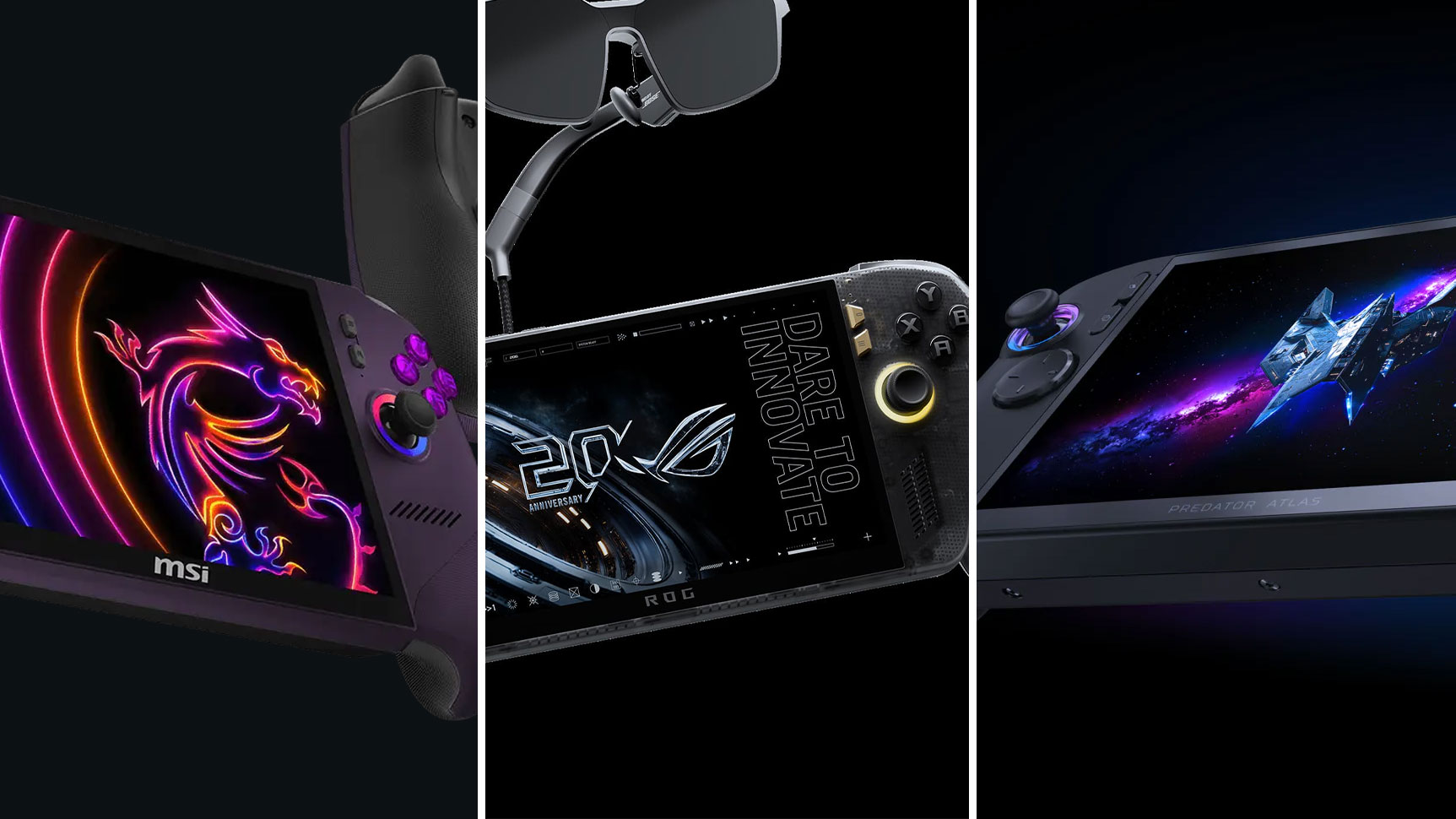 Windows handheld gaming PCs are no longer strange experiments. At COMPUTEX 2026, MSI, Acer, and ASUS ROG all showed devices that treat the category as a real market, not a side project.
The three most interesting models were the MSI Claw 8 EX AI+, the Acer Predator Atlas 8, and the ROG Xbox Ally X20. They all target premium handheld gaming, but they do it in different ways. MSI and Acer are betting heavily on Intel Arc G3 Extreme, while ROG is taking a more console-like route with a larger OLED screen, Xbox positioning, and an AR glasses bundle.
Read our COMPUTEX 2026 recap here:
The Most Interesting Laptop and PC Hardware We Saw at COMPUTEX 2026
This is not a final verdict. We still need retail units, real benchmarks, battery tests, thermal measurements, noise testing, and long gaming sessions. But the official specs already tell us a lot about where the handheld PC fight is heading.
Our first comparison
The category is getting easier to understand. They are now competing on display quality, battery capacity, grip comfort, cooling, software, and ecosystem. Here’s a detailed specs comparison of everything we know so far:
MSI Claw 8 EX AI+ vs Acer Predator Atlas 8 vs ROG Xbox Ally X20: Key Specs

| Model | MSI Claw 8 EX AI+ CG3EM | Acer Predator Atlas 8 | ROG Xbox Ally X20 |
| Main hook | Intel Arc G3 Extreme handheld with strong connectivity and 80Wh battery | Acer’s first serious Predator handheld with Intel Arc G3 Extreme | OLED Ally upgrade with Xbox positioning and AR glasses bundle |
| Operating system | Windows 11 Home | Windows 11 Home | Windows handheld / Xbox Mode |
| Platform / processor | Intel Arc G3 Extreme processor | Up to Intel Arc G3 Extreme processor | AMD Ryzen AI Z2 Extreme |
| Graphics | Intel Arc GPU B390 | Intel Arc Xe3 graphics | Integrated AMD graphics platform |
| Memory | Up to 32GB LPDDR5x, dual-channel | Up to 24GB LPDDR5x | 24GB LPDDR5X |
| Storage | 1x M.2 2280 PCIe Gen 4 x4 SSD slot | Up to 1TB PCIe Gen 4 NVMe SSD | 1TB PCIe 4.0 NVMe storage |
| Display | 8-inch FHD+ IPS-level touchscreen | 8-inch FHD+ / WUXGA touchscreen | 7.4-inch ROG Nebula HDR OLED |
| Resolution | 1920 x 1200 | 1920 x 1200 | 1920 x 1080 |
| Refresh rate | 48–120Hz VRR | 120Hz VRR | 120Hz |
| Brightness | 500 nits typical | 500 nits peak | Up to 1400 nits peak HDR brightness |
| Color coverage | 100% sRGB | 100% sRGB | OLED panel with Dolby Vision / DisplayHDR 1000 support |
| Battery | 80Wh | Up to 80Wh, with 60Wh option on select models | Not known yet |
| Ports | 2x Thunderbolt 4, microSD card reader, audio combo jack | 2x Thunderbolt 4, UHS-II microSD card reader, 3.5mm audio jack | Not fully detailed yet; bundled with ROG XREAL R1 glasses |
| Wireless | Intel Wi-Fi 7, Bluetooth 6 | Wi-Fi 7, Bluetooth 5.4 | Not known yet |
| Weight | 785 g | Not known yet | Not known yet |
| Special feature | Void Purple design, fingerprint power button, 6-axis IMU | Hall-effect triggers, adjustable trigger modes, PredatorSense button, AeroBlade cooling | OLED display, translucent body, Xbox Mode, ROG XREAL R1 AR glasses bundle |
MSI Claw 8 EX AI+: Intel’s biggest handheld test
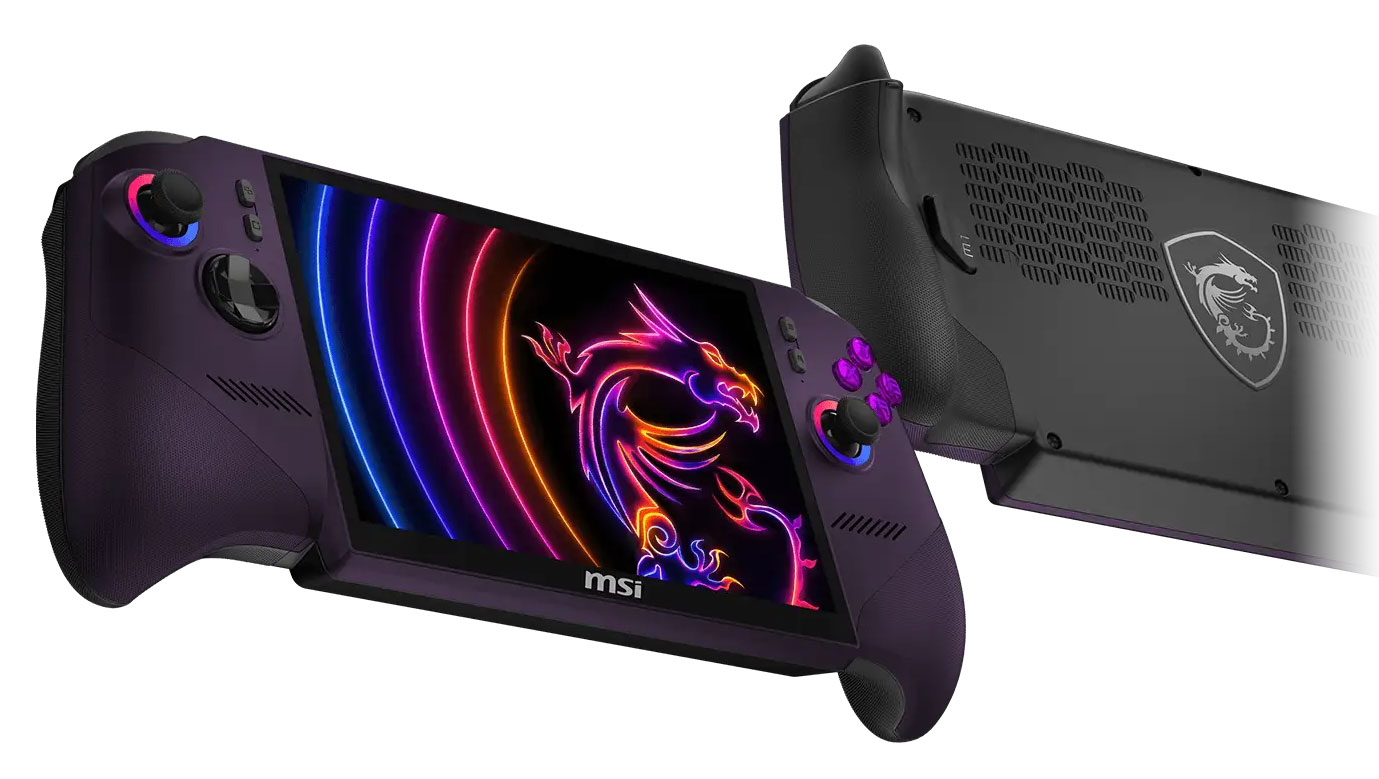 The MSI Claw 8 EX AI+ is the most important device here if you want to understand Intel’s handheld ambitions. MSI is using the Intel Arc G3 Extreme processor and Intel Arc GPU B390, which makes this device a direct test of whether Intel can compete seriously in premium Windows handheld gaming.
The hardware around the chip is also strong. The 8-inch 1920 x 1200 screen supports 48–120Hz VRR, which is useful in a handheld because performance can fluctuate more than on a desktop PC. The 80Wh battery is large for the category, the two Thunderbolt 4 ports are great for flexibility, and the M.2 2280 SSD slot is a practical win because full-size 2280 drives are easier to find and upgrade than smaller formats.
The big question is efficiency and whether it performs well at realistic power levels, usually around 15W to 25W, where battery life, fan noise, heat, and comfort matter more than short peak-performance numbers. If Intel Arc G3 Extreme is good in that range, the Claw 8 EX AI+ becomes very interesting. If it needs too much power to shine, the spec sheet will look better than the daily experience.
Read our MSI recap from COMPUTEX here: MSI Brought a Dragon Laptop to COMPUTEX, But the Claw 8 EX AI+ May Matter More
Acer Predator Atlas 8: another Intel challenger, with a different control story
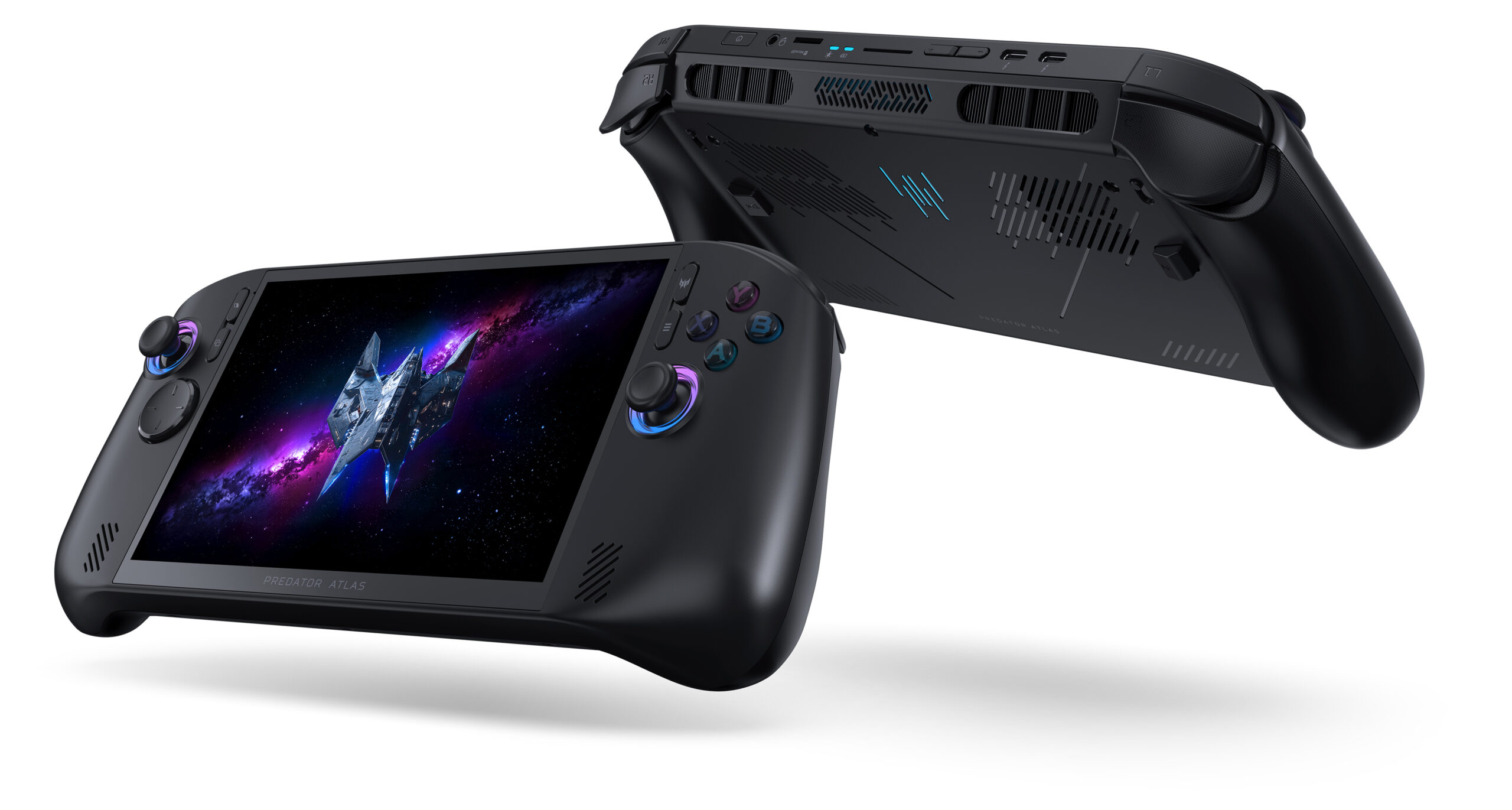 The Acer Predator Atlas 8 gives Intel Arc G3 Extreme a second major design win. With both MSI and Acer involved, Intel-based handhelds start to look like a real sub-category.
Acer’s approach is slightly different from MSI’s. The Atlas 8 still uses an 8-inch 1920 x 1200 120Hz VRR display, up to 80Wh battery capacity, Wi-Fi 7, dual Thunderbolt 4, and XeSS 3 support. But Acer also puts a lot of emphasis on controls: Hall-effect analog triggers, adjustable trigger modes, rear macro buttons, a PredatorSense button, and AeroBlade dual-fan cooling.
That is the right direction, because handhelds are won or lost in your hands. A better chip helps, but bad grips, weak triggers, poor button placement, loud fans, or unfinished software can ruin the whole product. The Atlas 8 has the right ingredients on paper, but Acer still has something to prove here: software polish, power profiles, cooling behavior, and long-session comfort.
Read our Acer recap from COMPUTEX here: Acer Put an X3D Chip in a Nitro Laptop, and That’s the Real Story
ROG Xbox Ally X20: the OLED route, with a bundle problem
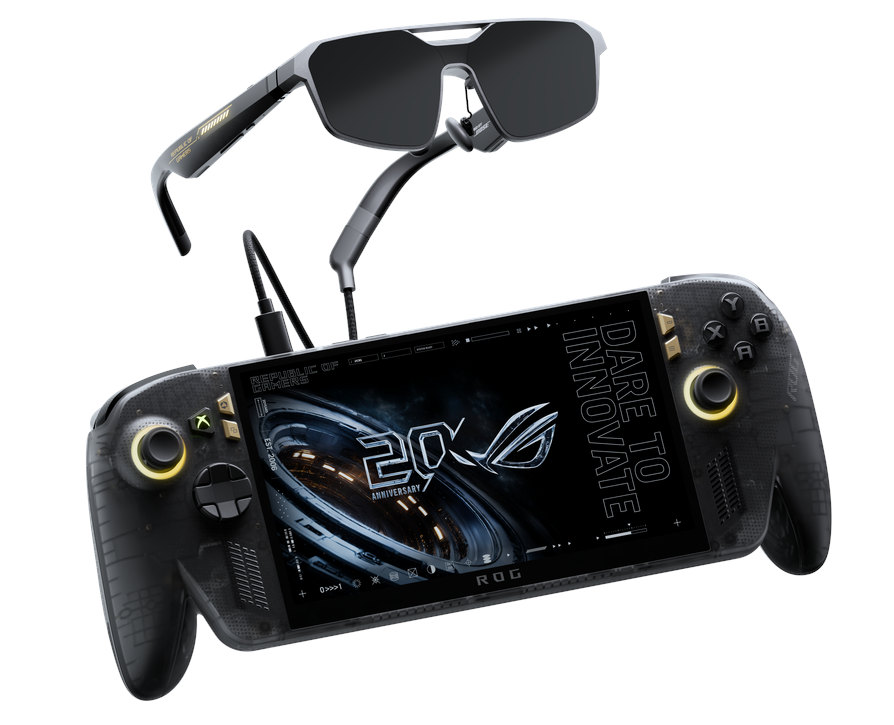
The ROG Xbox Ally X20 takes a different path. It is not part of the Intel Arc G3 Extreme wave. Instead, ROG is focusing on a more premium, console-like package built around a 7.4-inch OLED display, Xbox Mode, and a 20th Anniversary bundle with ROG XREAL R1 AR glasses.
The display is the strongest argument for the X20. A handheld screen sits close to your face, so OLED makes a real difference. Better contrast, faster response, HDR support, and higher perceived image quality become much more important. The 120Hz refresh rate, FreeSync Premium Pro, Dolby Vision, DisplayHDR 1000 support, and 1400-nit peak HDR brightness make the X20 the most attractive device here from a screen perspective.
The catch is the bundle. Many users wanted an OLED Ally. Not everyone wanted an OLED Ally forced into a premium package with AR glasses. The ROG XREAL R1 glasses make the product more memorable and more impressive in demos, but they also make pricing more complicated. If the bundle lands too high, the X20 may become a collector-style product instead of the obvious next step for mainstream Ally buyers.
Read our ROG recap from COMPUTEX here: ROG’s Wildest COMPUTEX 2026 Device Was a Laptop With Two Full OLED Screens
Display comparison: OLED versus larger 8-inch IPS panels
The display battle is not as simple as “OLED wins.” The ROG Xbox Ally X20 has the best panel technology on paper, with OLED contrast, HDR features, and much higher peak brightness. But the MSI and Acer devices use larger 8-inch 16:10 panels with 1920 x 1200 resolution, which gives them more vertical space and a slightly larger canvas for Windows UI and games.
OLED gives the X20 the premium visual edge, but the 8-inch 1200p screens on the Claw and Atlas may feel more comfortable for some PC-style use cases.
| Display factor | MSI Claw 8 EX AI+ | Acer Predator Atlas 8 | ROG Xbox Ally X20 |
| Size | 8-inch | 8-inch | 7.4-inch |
| Panel type | IPS-level | IPS | OLED |
| Resolution | 1920 x 1200 | 1920 x 1200 | 1920 x 1080 |
| Refresh / VRR | 48–120Hz VRR | 120Hz VRR | 120Hz, FreeSync Premium Pro |
| Brightness | 500 nits typical | 500 nits peak | Up to 1400 nits peak HDR |
| Best argument | Larger 16:10 screen with VRR | Larger 16:10 screen with VRR and durable glass | Best contrast, HDR, and premium visual feel |
What will actually decide the winner?
The spec sheets are exciting, but the handheld category is brutal because every weakness is felt immediately. A laptop can sit on a desk and get away with some compromises. A handheld is different. If it is too heavy, you feel it. If the fans are loud, they are close to your face. If the software is clunky, you deal with it before every game. If the controls are awkward, no benchmark can fix that.
That is why the real comparison will come down to a few practical areas.
Preliminary positioning
Based on the official specs, each device already has a clear identity. MSI looks like the strongest technical test for Intel’s new handheld platform. Acer looks like the more ergonomic Intel challenger, with a lot of attention on controls and cooling. ROG looks like the premium screen and ecosystem play, especially for users who want a more console-like experience.
| Device | Preliminary strength | Main risk |
| MSI Claw 8 EX AI+ | Strong Intel Arc G3 Extreme spec sheet, 80Wh battery, dual Thunderbolt 4, full-size M.2 2280 SSD slot | Needs to prove efficiency, price, fan noise, and real performance at practical wattages |
| Acer Predator Atlas 8 | Strong controls, 8-inch 120Hz VRR screen, up to 80Wh battery, dual Thunderbolt 4, PredatorSense controls | Needs to prove software polish, ergonomics, cooling, and long-term reliability |
| ROG Xbox Ally X20 | Best display story, OLED panel, Xbox Mode, premium design, AR glasses bundle | Bundle pricing, unknown official battery details, and whether users actually want the glasses |
Verdict
The handheld PC race is getting serious because MSI, Acer, and ROG are no longer just trying to prove that PC games can run in your hands. That part is already proven. The real question now is which company can make a handheld that feels good enough to use every day.
The MSI Claw 8 EX AI+ may become the most important test for Intel Arc G3 Extreme. The Acer Predator Atlas 8 gives Intel another serious handheld design and adds a stronger control-focused angle. The ROG Xbox Ally X20 has the most attractive display, but its premium bundle could make it harder to recommend as a mainstream handheld.
On paper, all three devices are interesting. In practice, the winner will be decided by the things that do not fit neatly into a spec table: comfort, fan noise, power behavior, UI, sleep/resume, display readability, and price.
 Author: Simeon NikolovEditor-in-Chief at LaptopMedia.com with 20+ years of experience in testing and analyzing laptops and mobile devices.

![[June 2026] Best-Selling Laptop Brands on Amazon Global – Apple’s Unrivaled Dominance in Units and Revenue](https://laptopmedia.com/wp-content/uploads/2026/07/GLOBAL-Best-Brands-400x225.jpg)
![[June 2026] Amazon Global: Top 10 Best-Selling Laptops – Apple’s New MacBook Neo Storms to #1, Reshaping the Market with Affordability](https://laptopmedia.com/wp-content/uploads/2026/07/Best-Selling-Laptops-GLOBAL-Top-10-400x225.jpg)
![[June 2026] Amazon Global: Top 10 Best-Selling Gaming Laptops – Acer’s Nitro V 16S AI Dominates Sales, While ASUS Leads Overall Revenue](https://laptopmedia.com/wp-content/uploads/2026/07/Best-Selling-Gaming-Laptops-GLOBAL-Top-10-400x225.jpg)
![[June 2026] Global Ranking of Best-Selling Laptop GPUs on Amazon – NVIDIA RTX 5060 is the Top-Selling Dedicated GPU](https://laptopmedia.com/wp-content/uploads/2026/07/Best-Selling-GPUs-GLOBAL-Top-10-400x225.jpg)
![[June 2026] Global Ranking of Best-Selling Laptop CPUs on Amazon – Apple M5 Dominates, AMD Ryzen 7 260 Gets Solid Premium Share](https://laptopmedia.com/wp-content/uploads/2026/07/Best-Selling-CPUs-GLOBAL-Top-10-400x225.jpg)